Unspeakable Fear

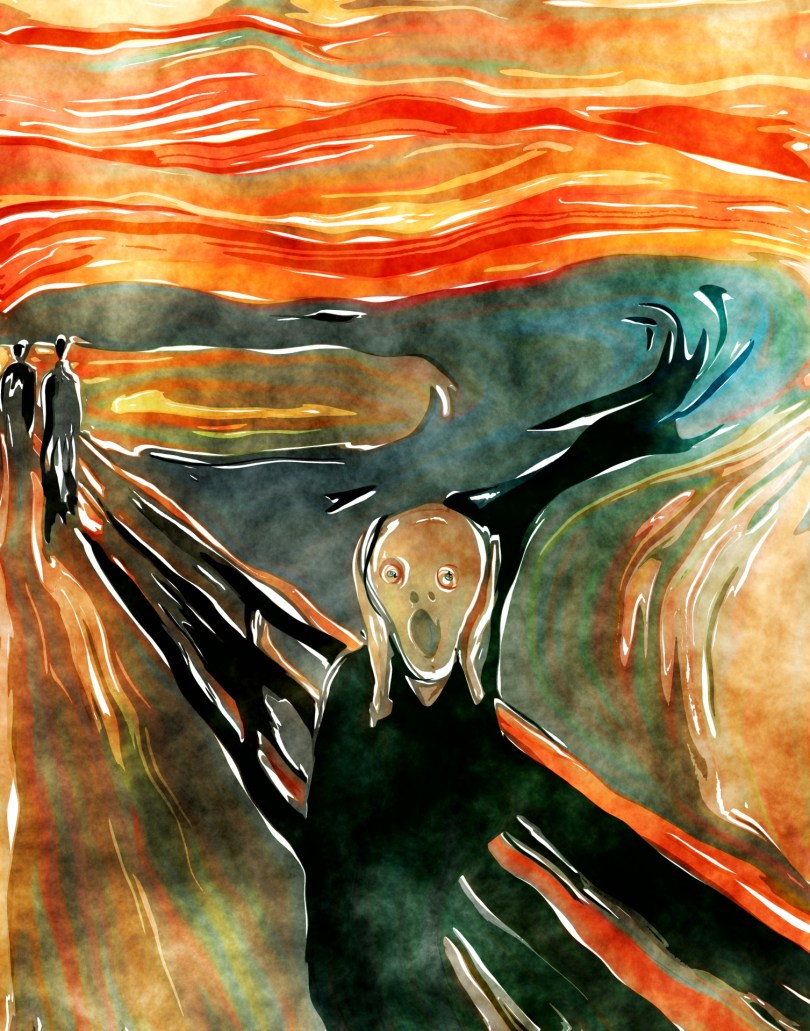
Scott Rasmussen’s Number of the Day for August 2 demonstrates the fear and distrust that grip our public discourse.  According to Rasmussen’s polling, 22% of voters are afraid to share their political views most of the time, with another 25% fearing to do so some of that time.  That means that 47% of voters are afraid to discuss politics with their co-workers, friends, neighbors, etc.

Of those voters polled, 39% who strongly approve of President Trump believe they are discriminated against because of their political views.

Read More »

FreeSpeech.TV Lineup Announced

Thanks to my brother for this nocturnal news update:  Gavin McInnes’s new subscription-based service, FreeSpeech.TV, is ready to launch.  Listeners to the excellent, hilarious Get Off My Lawn podcast know that Gavin has been planning this platform for some time now, so it’s exciting to see the lineup.  The most exciting part of that schedule:  the twice-monthly sit-downs with Milo Yiannopoulos to talk about the news.  Talk about throwing gasoline onto a raging fire of awesomeness.

The service is $10 a month, or $100 a year, which is on par with Steven Crowder’s Mug Club or Ben Shapiro’s subscription.  I just don’t think it comes with a Leftist Tears Hot-or-Cold Tumbler, much less a far superior hand-etched mug.  But with McInnes’s crazy, controversial, humorous observations about life and culture, I can live without a drinking vessel tossed in (although it would be hysterical to drink coffee from a mug made to look like McInnes’s bearded mug).

Because of constant censorship from techno-elites and their ever-shifting “terms of services,” conservative and Dissident Right voices have fewer and fewer options to raise funds.  Some sites, like immigration patriot website VDare.com, can’t even use PayPal anymore.  As such, more and more content creators are turning to alternative or free-speech-friendly services, or undertaking the cost of creating their own infrastructure, so they can continue to get their work to fans.

I am definitely a small fry in this game of commentary, but that’s why I’ve setup a page with SubscribeStar.  My goal isn’t too live off of subscriptions, but just to supplement my income slightly to make blogging more on a daily basis more feasible (and to reinvest some of the funds into maintaining and improving the experience).

For guys like Gavin McInnes, who has been hounded from even supposed safe havens like his old employer, CRTV (now BlazeTV), reliable income streams aren’t a passing lark—they’re absolutely crucial.

In a better timeline, McInnes would be hosting Red Eye.  But he’s a fighter, and I have no doubt his new service will continue to deliver the laughs.

Free speech isn’t free.  Support creators like McInness, Crowder, Shapiro, and Milo to the best of your ability to keep their content alive.

If you’d like to support MY content, consider signing up for a subscription to my SubscribeStar page.  New, exclusive content every Saturday, starting at just $1 a month.

Leftism in a Nutshell

You’ve got to admire the balls of the Left.  Yes, their wild policy prescriptions come from a combination of ignorance, wickedness, and magical thinking, but that doesn’t stop them from putting out some crazy ideas.

Take this piece from Gavin McInnes’s former rag, Vice:  “The Radical Plan to Save the Planet by Working Less.”  The headline says it all:  let’s just not work so hard, gah!

Naturally, click-bait headlines like that don’t tell the full story.  The “degrowth” movement the piece discusses is classic progressivism:  we should support a robust public transportation system and give generous welfare benefits so people can spend less time working.

The “degrowth movement” is an inversion of Obama-era economic thinking.  Recall the sluggish recovery following the Great Recession, and how Obama informed us that low-growth was the “new normal” we’d all have to learn to love in America.  Now that the economy is roaring under President Trump, progressives are flipping the script:  “oh, wait, too much growth is a bad thing because climate change!”

Like most Leftist economic ideas, it’s premised on denying people choice and subsidizing loafing with generous bennies:

Degrowth would ultimately mean we’d have less stuff: not as many people working and producing materials, so not as many brands at the grocery store, less fast fashion, and fewer cheap and disposable goods. Families would perhaps have one car instead of three, you’d take a train instead of a plane on your vacation, and free time wouldn’t be filled with shopping trips but with non-money-spending activities with loved ones.

Practically, this would also require an increase in free public services; people won’t have to make as much money if they don’t have to spend on healthcare, housing, education, and transportation. Some degrowthers also call for a universal income to compensate for a shorter work week.

I’m all about saving money and avoiding empty consumerism.  I’ve written that there is more to an economy than faceless efficiency units slaving away for plastic crap from China.  I’m not unsympathetic to the idea of taking more time for family and personal edification (as a good deal of the workweek is wasted in meetings and busy work).

But this “degrowth movement” is absurd.  It’s all premised on a government somehow funding a massive welfare state as the citizenry becomes less productive.  Even the sympathetic economist they interview for this ideological puff piece argues that cutting growth to reduce carbon emissions would only have a marginal impact environmentally, but would be devastating socially and economically.

It just goes to show you that the Left hates the idea of hard work.  For them, work is an imposition, and we’d all be better off enjoying endless relaxation and luxury.  It’s the seduction of never-ending childhood: a paternalistic state provides all the goodies so we can watch TV and pursue pleasure all day.

Work is ennobling.  It’s important to earn a living wage for honest, valuable, productive work.  But beyond that, work provides a sense of purpose and accomplishment (I think this is particularly true for men, although women derive great satisfaction from work, too, especially the difficult, important work of raising children).  There is an identity to holding a job, and a sense of satisfaction from doing that job well.

Can one enjoy a good quality of life by pursuing a more minimalist approach?  Yes, of course:  if anything, Americans spend far too much money, a good deal of it on empty baubles.

There is a simple joy to minimalism, and I enjoy “spending” money on savings (it’s very satisfying to watch savings and investments grow).  But subsidizing lollygagging and calling it “investing in infrastructure” is not the sign of a great nation or civilization.

TBT: Dissident Write

Last July, I wrote a post about some of my favorite writers on the Right, “Dissident Write.” At the time, I promised to write a Part II, but never did so. With Memorial Day just around the corner—and summer hot on its heels—it seemed like the perfect time to revisit these writers.

Further, tomorrow I’ll be posting “Dissident Write II,” which will include a list of several more writers I encourage you to read during those long days at the beach.

Of course, if you enjoy my writing, and would like to support the blog, I encourage you to check out my SubscribeStar page.

As for this list, it’s a testament to these authors’ staying power that I still read them regularly nearly a year later. The only exception is Gavin McInnes, who was unceremoniously dumped from CRTV when it merged with Glenn Beck’s company to become BlazeTV. I suspect that the arrival of the squishy poseur Beck led to McInnes’s sacking. Of course, McInnes had stopped writing for Taki’s Magazine already, and his controversial persona has gotten him trouble with the Left. Regardless, I now listen to his podcast regularly, and McInnes is even more entertaining in that format.

So fire up your favorite device and check out these excellent writers:

I possess the bad habit of reading constantly. That might seem like a virtue—or a lame rhetorical device to get your attention—but it has developed into a minor problem.

My tendency towards bookishness doesn’t just limit itself to the classic “chubby-bespectacled-kid-reading-in-the-car” stereotype, although that’s true. Ever since I got my first smartphone (a beautiful Lumia I picked up for $32.23 running the Windows Phone OS, well after Windows lost any kind of developer support) in 2016—I was very late to the game there—I can’t stop reading articles, op-eds, news stories, fiction, eBooks, and the like wherever I am.

That doesn’t make me particularly more intelligent (or interesting), but it has exposed me to some writers who are. More specifically, I’ve come to learn of a number of writers and websites whose writings are provocative, engaging, daring, and fun.

So much of what we read and consume online and in print media is dull, predictable, and morally indignant. There’s a great deal of lifeless writing and commentary, and it’s frustrating to read writers—on the Left and the Right—who fall into the same grooves.

The Left is full of examples, as they doctrinaire Leftists aren’t allowed to say anything outside of the fashionable-for-the-moment-until-we-condemn-it-in-a-few-years orthodoxy. If one of them ever-so-slightly speaks out of turn, they’re kicked out of the club.

The ones that bother me the most are writers on the Right who have fallen into predictable patterns (the biggest offender that pops immediately to mind for me is National Review‘s David French, the most noodle-wristed combat veteran I’ve ever read; with all due and much-deserved respect to French’s heroism and service, he’s grown increasingly lame and ineffectual as a writer). I understand writers have to carve out their niche, and that they shouldn’t violate their principles just to be different, but I want to see some gutsiness.

On that note, and in the spirit of my 2016 TPP Summer Reading List, I’d like to share with you some of my favorite writers, the ones that I clamor to read when I see they’ve written something new in my RSS feed (disclaimer: I don’t agree with all of these writers’ conclusions—of course!—which should go without saying):

1.) Patrick J. Buchanan – Pat Buchanan was President Trump’s John the Baptist, the voice crying in the wilderness at the dawn of a globalist era, warning of what was to come, and foretelling the coming of one greater than himself (please, don’t think I’m comparing Trump to Jesus; the metaphor breaks down at that point). Buchanan was calling out the shortcomings of massive free-trade zones and the like since the early 1990s. His book Death of the West is a must-read for every American—if you’re not worried about massive, unchecked immigration now, you will be after reading this prophetic tome.

Buchanan is more isolationist than I would be on foreign policy, but he brings an important perspective to the discussion of international relations. Buchanan has colored, if not entirely changed, my views on tariffs, family policy, immigration reform, and foreign policy.

He’s nationally-syndicated and appears on a ton of websites, including Taki’s Magazine, the home of several writers on this list, such as…

2.) Jim Goad – Holy crap. Talk about a gutsy, controversial, in-your-face writer. After reading one of Goad’s acerbic pieces, you practically have to wash your brain with holy water. But, damn, can he write.

Goad is the grandfather of modern dissident writers. He cut his chops as an ultra-edgy zine publisher in the early 1990s, back when weirdos who couldn’t fit into mainstream society could publish bizarre stories and borderline-pornographic material and become part of a cool counterculture.

Goad doesn’t pull any punches—he wrote a whole book called The Redneck Manifesto—and I can’t do better than to recommend you read him for yourself. Just make sure you’re not at work.

3.) Ann Coulter – I cut my l’il conservative teeth reading Ann Coulter, who was a hard-hitting conservative polemicist before it was cool. She completely and unabashedly called the 2016 election with an audacious level of confidence.

Coulter catches a lot of flack because she’s a.) super conservative and b.) incredibly caustic. Her writing is so satirical and witty, most Lefties often miss (or willfully misinterpret) her clear-as-a-bell message. I once got into a minor Facebook dispute with an ultra-hip progressive musician (buy his music; he’s an amazing songwriter) who drew the conclusion that Coulter was racist, even though she was denouncing racism in the very paragraph he posted. It was to no avail (but you really should buy his music).

Yes, she’s a bit prickly. Yes, she gets carried away with her political endorsements sometimes (she’s publicly stated her regret for being an early fan of disgraced New Jersey Governor Chris Christie—it’s okay, Ann, me, too). But, like Goad, she doesn’t pull any punches, and she will take the conservative message into the lion’s den and back—fearlessly.

Coulter’s two chapters on the French Revolution in her book Demonic consist of one of the best overviews of the topic I’ve ever read. Written in typically Coulter-ish style, she goes into macabre detail to illustrate how truly evil the French Revolution was. There are many excellent scholarly works on the French Revolution, but few offer so much intense, damning clarity to the calamitous 1790s.

4.) Gavin McInnes – current CRTV host and Vice co-founder Gavin McInnes is my hero. He’s single-handedly made traditional family values punk. McInnes possesses a boyish, mischievous spirit that public schools and soy-rich diets have bred out of modern men. His memoir, Death of Cool, had my sides splitting with every paragraph. If you want to know how to live hard and survive, pick up a copy.

McInnes is the son of Scottish immigrants to Canada, and he grew up pretty much doing whatever he wanted in a poorly-supervised suburb of Toronto. When his first child was born, he became a Christian—he’s Roman Catholic—when he saw her heel. He asked, “How did that come about by accident?” That was after a life of founding and losing several fortunes; sleeping—in graphically depraved ways, according to his telling—with what seems to be hundreds of women; taking lots of drugs; and fronting several popular Canadian punk bands.

And everyone says conservatives are boring old white dudes.

I don’t know if McInnes is writing now that he’s with CRTV, but you can find his archives on Taki’s Magazine.

5.) Christopher DeGroot – Rounding out our list is Christopher DeGroot, another regular at Taki’s Magazine. I don’t know much about DeGroot’s background, but he’s one of the best writers on issues of gender relationships out there. There’s a whole “manosphere” dedicated to promoting and discussing ideas of traditional masculinity, but a great deal of that world is dominated by pick-up artists (PUAs) and sex addicts—and even racists (real ones, not just normal conservatives who get called racist because we want people to have less government intrusion into their lives).

DeGroot is a wordy, philosophically-minded writer, and you can tell he thinks deeply about everything he pens. Most contributors to Taki’s write—I would guess—around 700-800-word essays, maybe hitting 1000-1200 now and then. I’m pretty sure everything DeGroot has written is at least 1200-1500 words. Talk about getting more bang for your buck.

Again, all I can do is recommend you check him out.

***

That finishes up this list. It’s certainly not exhaustive—I will have to do a “Part II” at some point—but it’s a good, quick look at who I’m reading on a daily or weekly basis.

One parting warning: I’m not responsible for blown minds from reading the works of the above writers. Draw your own conclusions, and share your favorite writers—non-fiction, fiction, poetry, etc.—below!

TBT: Banned! Techno-Elites Deplatform Alex Jones

It now seems like an eternity ago, but Alex Jones’s Infowars was banned from multiple social media platforms last August.  Given Facebook’s freedom-killing decision to deplatform “controversial” right-wing figures like Milo Yiannopoulos, it seemed germane to look back at the Infowars deplatforming, as it was an instructive moment.

Conservatives have been complacent on this issue.  Yes, many conservative bloggers and YouTube personalities have denounced the Facebook deplatforming, but there’s still this sense that, “Well, it’s just Milo and Gavin McInnes, they are pretty outrageous, and so dreadfully lacking in decorum.”  We can’t have that kind of cuckiness in the conversation.  Milo might be outlandish, and McInnes makes some over-the-top, overly general statements, but that’s the whole point of free speech.  Why are we giving these tech companies a pass?

It’s not going to stop at Milo.  Indeed, it’s unclear if it even started with him.  As I detail in the post below, even more mainstream figures like Stephen Crowder have struggled against YouTube demonetization and other “soft” forms of deplatforming.  I know Milo is crass and a bit of a troll—but he’s also right and factually accurate on almost every topic.

Note, too, how Facebook threw in anti-Semitic radical Louis Farrakhan as a clear smokescreen.  “Oh, we’re not just targeting conservatives—here’s a Leftist race-baiter, too!”  Nice try.  Notice that whenever there’s been a controversial conservative figure banned, the Right always points out that Farrakhan is still on [insert social medial platform here].  Facebook couldn’t have missed that, and went for the low-hanging fruit of Farrakhanean craziness.  But even Farrakhan should be able to say his wacky, hateful stuff—“sunlight is the best disinfectant,” as I wrote in August.

As for the cuckier types on the Right, I’m getting so sick of this excessive focus on presentation-as-message.  Milo and McInnes present their ideas in funny ways, but that doesn’t mean the ideas themselves are worthy of condemnation.  Further, we’re almost too good at policing our own on the Right.  Can’t we give Milo some leeway?  The stakes are too high to get caught up on semantics.  “Oh, he texted something mean.”  Who cares?  I’m not Milo’s mom, and Ben Shapiro shouldn’t be either.

This tweet from Dissident Right babe Lauren Southern sums it up nicely:

Free speech isn’t free, and just because Facebook is a “private company” doesn’t mean it should be able to trample our freedoms.  We’re in uncharted territory, but we have to do something to protect speech for all Americans.

So, here is August’s “Banned! Techno-Elites Deplatform Alex Jones,” sadly relevant once again:

The explosive news Monday was that tech giants Facebook, Spotify, YouTube, and Apple banned Alex Jones and Infowars from their respective platforms.  While Jones is a controversial figure who peddles in rumor, conspiracy, and innuendo, the concerted actionfrom separately-owned and -managed Silicon Valley entities is unsettling.

Historian Victor Davis Hanson wrote a piece for National Review arguing that Silicon Valley giants should be regulated—or even busted up—to prevent monopolistic and anti-competitive practices, drawing parallels to the muckraking reformers of the early twentieth century who brought down Standard Oil.   I’m wary of such solutions-by-government, but Hanson was anticipating a problem that has become all-too familiar:  the massive social and cultural clout the unmoored tech giants wield.

Steven Crowder of online late-night show Louder with Crowder often pokes fun at—and complains loudly about—the various murky “terms and services” and “community guidelines” rules that are ever-shifting in continuously updated apps and platforms.  A slight change in a Facebook algorithm—or a Twitter employee having a bad day—can lead to massive reductions in traffic for a YouTuber or blogger.  Reduced—or eliminated—traffic means less revenue.  YouTubers like Crowder who helped build the platform now find their videos demonetized for the most mysterious of reasons.

Candace Owens was kicked from Twitter because she rewrote recent New York Times hire and anti-white racist Sarah Jeong’s tweets by replacing disparaging uses of “white” with “black” or “Jew.”  Razorfirst posted a video some months ago of him literally just talking about nonsense for five minutes… and it was immediately demonetized.

Now Alex Jones is banned across multiple platforms from multiple platforms—which is absolutely chilling.  Jones is certainly not without controversy, and I wouldn’t take his ramblings to heart without a heaping helping of salt, but just because he’s a kinda nutty conspiracy kook who enjoys ripping his shirt off doesn’t make his situation any less terrible.  If we write off Jones because he was “asking for it” by being kooky, then we’re missing the whole point of free speech.

And, yes, the usual objections are inevitable:  “but, TPP, the First Amendment speech protections only apply to the government!  Companies can set whatever guidelines they want!  You can use some other platform!  He still has his website.”  Yes, yes, yes, and yes—all true.  Nevertheless, the arbitrary power we’ve voluntarily—if unwittingly—yielded to these tech elites is staggering.  And this preponderance of power may be where Hanson has a point.

Is not the function of the government to protect the rights of its citizens from threats and violations, both foreign and domestic?  In this case, arbitrary bans—particularly these coordinated attacks on controversial figures—seem to be a powerful means of preventing an individual and/or entity from delivering his message in the public square.  Like the street corner doomsayer, Alex Jones has a right to be heard, even if he’s sometimes insane (for me, the jury is out on Jones; I enjoy the entertainment value of his commentary, and I think he’s probably right about 80% of the time, but then he veers off into crisis actors, etc.—the danger of a man who is charismatic and convincing).

Today, it’s a relatively buffoonish character like Jones.  Tomorrow—who knows?  Do we really want to find out?  “Hate speech” is a code word for silencing conservatives.  It’s better to publish one racist screed from a lonely nut (not referencing Jones here, to be clear) than to muzzle millions because their innocuous, mainstream conservative viewpoint might been interpreted as a “dog-whistle.”

Sunlight is the best disinfectant, and it’s often better to give madmen the rope with which to hang themselves.  When we try to silence them, they only gain in credibility (indeed, when I read the news, I immediately went… to Infowars!).

Barr and the Deep State

Blogger photog at Orion’s Cold Fire has an excellent analysis of Attorney General Bill Barr’s handling of the Mueller Report, as well as an hysterical Congress’s insistence that he somehow lied about the Mueller Report because his summary didn’t adequately convey the tone of the report.  Apparently, the Democrats consider an accurate, straightforward summary constitutes “lying to Congress” because Barr didn’t include Mueller’s anti-Trump rhetoric.

The Democrats are grasping at straws here.  They’ve lost the collusion battle, which was supposed to be their Waterloo against President Trump.  Instead, it’s turned into their Gallipoli (and Trump’s Battle of Tours).  Their panic is palpable, so now they’re resorting to the “Trump-is-a-meanie-and-unpresidential” line, and that the president’s angry outbursts at news of the probe suggests he was up to no good.

Foolishness.  As AG Barr noted, you’d be mad, too, if you’d been accused of a crime you didn’t commit, and one that would hobble your presidency in its infancy.  The Democrats are essentially attacking President Trump for being a normal human being—all the more reason to oppose the Democrats at every turn.

photog’s piece is a reevaluation of Barr in the wake of his strong resistance to the Democrats and their perfidy.  In an earlier essay, photog argued that Barr was likely another swamp creature, and would wilt under the heat of his Deep State peers.

In the wake of his Senate testimony, however, that no longer seems likely.  The question now, as photog writes, is whether or not Barr will strike back against the Deep State and go after McCabe, et. al.—or even the Clinton crime family.

photog poses another interesting question:  are McCabe and Peter Strzok “fall guys” for the Deep State, the public figures willing to fall on their swords to save the whole rotten apparatus?  It’s an intriguing notion, and one I had not considered.

If they aren’t stooges, however, the implications are staggering.  To quote photog at length:

If McCabe turns state’s evidence then Comey, at least, is dead meat.  And after watching Jim Comey over the last few years I would be very surprised if he didn’t roll over and give up everyone involved up to and including his boss, Loretta Lynch.  After that, who knows?  Could these people be rolled up all the way to Obama.  I guess it’s possible.  But a thing that has to be remembered is that just because something can be done doesn’t mean it should be.  Convicting a former Attorney General of the United States of conspiracy to undermine the election of a U. S. President would be tantamount to starting a civil war between the left and right.  And I’m not saying it would be unjustified.  Basically, what has been done is treason.  But the consequences of pursuing this all the way will not be without severe consequences for both sides.

Those are some sobering conclusions.  What would it mean for the health of the body politic and our political system if we start imprisoning former AGs—and higher?  If legitimate crimes have been committed, they need to come to light and be prosecuted, but would doing so begin a treacherous round of tit-for-tat?

I understand photog’s concern here—I share it—but the lesson of recent political history seems to be that the Left will do whatever it takes to win, damn the consequences.  In a healthy system, such high crimes would be unfortunate and shocking, but they could be prosecuted fairly.  In our current system—the kind that enables such corruption and abuse of power—the Democrats would just be biding their time until they could purge the government of any remaining dissident patriots.

Just look at the purging of conservative and Dissident Right voices from the public square.  Facebook purged major Dissident Right figures, some of whom merely talked with Gavin McInnes outside of Facebook!  McInnes says some outrageous (and hilarious) stuff, but he’s not a hatemonger.  The Proud Boys are not a white supremacist group, much less a terrorist organization.  Yet claiming that Western Civilization is the best and that women are usually happier having children (but, of course, are free to live their lives as they choose) is somehow “hate.”  Yeesh!

Take some time this afternoon to read through photog’s reassessment of Barr.  It’s nuanced and thoughtful, and poses some interesting questions.  Here’s hoping Barr takes the fight to the Deep State, and begins rolling back the Deep State.

The State of the Right, Part II: Dissident Right and Civic Nationalists

Last week I wrote a piece about “The State of the Right.”  It’s inspiration were two essays, one from edgelord Gavin McInnes, the other from fellow blogger photog of Orion’s Cold Fire.  photog has done real yeoman’s work on teasing out the strands of the Right today, and he’s followed up that effort with a prescient essay, “Identity Politics and Civic Nationalism – Part 1.”  It’s the first in an interesting series exploring the friction between two major factions of the Right, broadly-defined, too:  the increasingly race realist Dissident Right, and the more traditional “BoomerCon” civic nationalist Right.

The former group has been very active since the 2015-2016 Trump Ascendancy, reading various intentions and motivations into the Trump campaign’s tough stance on immigration and border control.  As photog points out, the Dissident Right is the group that had the guts to call out neocons as Leftists-in-Conservative’s-Clothing.  Essentially, Bush-era neocons were playing into the progressive’s frame:  embrace massive and/or illegal immigration, dole out protections or favors to our preferred tribal interests, and we’ll give token conservatives a few crumbs from the dinner table.

The latter group, which photog defines well in his essay “What’s Right,” is not as active online as the Dissident Right, but is far more numerous.  These are the folks who love God and country, and want to see America strong and secure.  Civic nationalists believe that race and biology are not essential barriers to achieving the American Dream; rather, anyone who works hard, assimilates, and respects the Constitution can do well.  That understanding dominated postwar America, and when Leftists have pushed identity politics too far, the “Silent Majority” has risen up to push back.

In photog’s reading, Trump’s election was not, then, the triumph of the Dissident Right race realists; instead, it was the triumph of the silent CivNats pushing back against progressive tribalism.  Just like Nixon in 1968 and 1972 and Reagan in 1980 and 1984, millions of normal, traditional Americans rose up in 2016 against looming Leftist disorder and chaos.

The argument of the Dissident Right is that all the racial division and social breakdown we’ve seen in America is proof that different races and cultures cannot long function together in a healthy body politic.

Civic Nationalist, on the other hand, argue that government policies like affirmative action and paternalistic welfare systems encourage tribalist, racialist thinking, essentially ghettoizing certain groups (often along racial lines).  America is nation of ideas, not blood.  A key example is how the “post-racialist” Obama Administration exacerbated racial tensions through its policies.

President Obama’s Justice Department, headed by racemonger Attorney General Eric Holder, significantly worsened race relations in the United States every time “police violence” claimed a black man’s life:  rather than treating such incidences on a case-by-case basis, the Obama DOJ aggressively, publicly supported the view that “systemic racism” was the cause of the attacks.  A compliant media spun narratives like “hands up, don’t shoot.”  With cops second-guessing their every interaction with a potential black suspect, many just stopped doing their jobs effectively, breeding more criminality in black neighborhoods—further “proof” that the system was “rigged” against blacks.

Most Americans reacted to these shootings with sympathy, naturally, but as the details began to trickle out, many of them were not as they appeared.  Michael Brown of Ferguson, Missouri was not the “gentle giant” the media portrayed, but a dangerous felon.  The police shooting in Charleston, however, was a legitimate example where police went too far, though it’s not, logically, proof in and of itself of “systemic racism,” or even individual racism.

Regardless, the CivNat argument is that race is incidental, not a determining factor in one’s ability to participate in the grand experiment in self-government.

So, who is correct?  Like most things, there is truth to be found among both groups.  The Civic Nationalist wing of conservatism is often slow to react and is generally complacent in its slumber, but it won’t abide consistent tomfoolery or wickedness for long.

The Dissident Right, on the other hand, is willing to come out swinging at the myriad problems facing the nation today, particularly immigration.  They argue—I think, correctly—that we can’t swamp our nation with millions of unassimilated Third Worlders from peasant cultures that have no interest in, or even thoughtfulness about, our nation or its values.  Like it or not, Anglo-Saxon jurisprudence came out of, well, Anglo-Saxons, and it took hundreds of years to develop ideas like constitutionalism, rule of law, self-governance, separation of powers, etc.

That said, I don’t think the Dissident Right is correct that only white Anglo-Saxons can enjoy the fruits of the grand British tradition (although such patrimony seems better equipped to avoid tribalism).  The history of America suggests otherwise.  Millions of Americans of every skin color and culture have managed to assimilate into American culture (if anything, black Americans are the biggest example of the failure to assimilate, but that’s for complicated historical and cultural reasons, not to mention persistent legal action to separate blacks from the rest of American society for a hundred years after emancipation).

Tribalism, however, is a very real phenomenon, and a dangerous one.  The Dissident Right gets this correct as well.  If you transported all of El Salvador to Kansas today, the people wouldn’t suddenly become restrained corn farmers participating in quilting bees and box socials; they’d be El Salvadorans, their distinct cultural and national rivalries still playing out in bloody gang violence.  Take ten El Salvadorans, however, and spread them throughout the country, and they’ll have no choice but to assimilate.

What photog and I both reject, then, is the Dissident Right’s solution to our problems, which is, simply, to embrace identity politics and tribalism for whites—use the same tactics of the Left to get carve-outs and special favors for white Americans.  That seems like a surefire way to increase, not decrease, racial tension.

To close out this lengthy, meandering post, here is photog himself, on asking “Are [the Dissident Right] right?”:

I prefer to think that they’re not.  My read on this is that the situation has been exacerbated by Republican “leaders” who actually seem to buy into the fairness of minority identity politics out of some kind of ancestral guilt or because they see electoral advantage in joining the progressives.  The proof of this can be seen in the success of a civic nationalist like Trump who isn’t guilted into kowtowing to illegal immigration out of fear of being called a racist.  Once you disarm the Progressives of that weapon you find out that the majority of Americans, even in Blue States, want immigration laws to be obeyed.

I contend if the Right forcefully advocates for full enforcement of immigration laws and the elimination of reverse discrimination policies by the government and other entities, it will go a long way toward lowering tensions between the various groups living in the United States and will allow people to start thinking of each other as neighbors and not potential enemies.

photog and I, like many Americans, are walking a fine line between the truthful claims of the Dissident Right and the Civic Nationalists.  Both camps have much to offer, and the Dissident Right has been on the front lines of the Culture Wars the past three or four years.  The two factions can work together to reinvigorate conservative thought, to shake it loose from the dogma that’s dominated it since the end of the Second World War.

That said, that dogma, too, contains useful bits.  The point, then, seems to be that we should always be pondering what is truthful, good, and useful.  The neocons tossed fuel to the fire when they endorsed increase immigration and turned a blind eye to illegal immigration.  The Dissident Right and the Civic Nationalists can both agree that rolling back illegal immigration and limiting legal immigration, at least for a time, will be beneficial for the nation as a whole.

Proud Boys

An enduring challenge for conservatives is the constant campaign of disinformation from the Left regarding our organizations, tactics, and beliefs.  Conservatives are limited to a few bastions of barely-tolerated resistance:  the Republican Party, the Cato Institute, National Review, etc., organizations that fastidiously hold to an ever-more-narrow range of acceptable discourse.

That, of course, is a huge source of President Trump’s appeal—he smashed through the barriers the Right’s enemies imposed upon it, and it won him the presidency.  You could feel Americans breathing a nearly-audible sigh of relief that, finally, someone was saying the things we were all told we weren’t supposed to say.

It was in the heady days of 2016, then, that edgy, fun-loving dissidents like Milo Yiannopoulos and Gavin McInnes rose to prominence in the conservative movement.  McInnes tells some sordid stories about his wild, punk rock past, but largely his advice would have been deemed commonsensical just sixty years ago:  get married, have kids, work hard, love God, love Western civilization and the freedom it brings.

Now, uttering some of those same tenants gets you sent to the cultural gulags.  Take, for instance, McInnes’s fraternal organization, the cheekily-named Proud Boys.  The organization has come under fire lately as an allegedly sexist, racist, xenophobic order (it allows men, women, immigrants, and all races to join), and because it is proudly “Western chauvinist,” meaning it champions Western civilization as the best civilization.  Given Western civilization’s inherently universalist claims to human rights and liberty, it’s clearly open to all peoples of all backgrounds who accept its basic premises.

Primarily, however, it’s been criticized for engaging in self-defense.  Instead of taking beatings from radical, violent Antifa terrorists, the Proud Boys fight back.  Their whole maxim is that they don’t start fights, but they will fight back in self-defense.

Not surprisingly, noodle-wristed hand-wringers of the NR persuasion foppishly bemoan this completely reasonable response to unwarranted assaults with their usual appeals to decorum (the comments on that linked piece are instructive of how out-of-touch NR has become even with its own readers).  “Just take the beating” is apparently the primary admonishment.

While we could certainly have some discussion about Christ’s famous instruction to “turn the other cheek,” it seems completely permissible to strike back at the masked hooligan waving a piece of rebar at you.

At the risk of breaking my general injunction against telling people to watch lengthy videos twice in one month, I’d refer you to this excellent explanation from McInnes himself:

https://youtu.be/DGrPjx2V_TA

To alleviate the unnecessary legal suffering of some of the group’s members, McInnes reluctantly but decisively backs out of the organization.

For further reading, here is Milo’s piece about the libelous death of the Proud Boys:  https://www.dangerous.com/50463/i-too-must-bid-adieu-to-the-proud-boys-a-spunky-pro-western-mens-club-defamed-to-death/