Revival

My little church has been hosting revival services all week.  Tonight is the last night of services.

For those that are not familiar—and even here in the Deep South, I am finding lots of churchgoing Christians who have no idea what a “revival” is—revivals are annual or semi-annual events during which churches hold additional nights of services, usually with a guest preacher or preachers.  The purpose of revival is twofold:  1.) to revive the congregation (as the name suggests) with inspiring teaching and preaching and 2.) to encourage additional evangelism in the community.  While Jesus Calls Christians to the Great Commission all the time, revival makes going to church a bit more of an event—“come hear this dude from the town over preach tonight!”

My pastor has an extensive network of other pastors and Biblical scholars in the area, so he always finds some great preachers.  Some of them are the old-school Pentecostal types—lots of vocal crescendos and emotionalism—while others are more scholarly, with deep theological insights.  I tend to prefer the latter, but it’s always a good variety, swinging from passionate piety to intellectual rigor.

If you would, dear readers, say a prayer for revival tonight.  I have invited several people—some former students, mostly—to attend.  A number of them indicated they’d likely be able to come out tonight.  I know how these things sometimes go—not wanting to offend, vague quasi-commitments are made, only to be broken—often at the last possible moment—with various sudden emergencies and such.  I understand, but I would ask your prayers that these young men and women make an appearance, and that the Word delivered tonight strikes a chord and/or fulfills a need.  I don’t know the hearts of all of these invitees, nor do I know their spiritual condition, but if any are lost, please pray that for their salvation, either tonight or in the future.

I’m trying to evangelize more and to plant the seed of the Gospel in the hearts of others.  I’ve failed to do so far more often than I care to admit.  Please pray that the seed falls on fertile ground.

God Bless!

—TPP

Buddhism in Christianity

Last week my World History classes learned about three religions to come out of ancient India:  Hinduism, Jainism, and Buddhism.  These faiths are very complex—especially Hinduism—so as I stressed to my students, we were just covering the very basic facets of these faiths.

Of the three, Buddhism is perhaps the easiest to grasp, because its foundation is a series of logical propositions.  It consists of four basic principles, the Four Noble Truths, which essentially take the form of a logical argument with premises and conclusions:

  1. Life is suffering.
  2. Suffering is caused by desire.
  3. [Therefore], to escape suffering, one must end all desires.
  4. To end all desires, one must follow the Eightfold Path.

The Eightfold Path consists of obtaining and maintaining the following:  right views, right resolve, right speech, right conduct, right livelihood, right effort, right mindfulness, and right concentration.

Buddhism further offers three ways to pursue the Eightfold Path:  right thought, right action, and/or religious devotion (becoming a monk or nun, spending one’s life meditating and contemplating upon the Four Noble Truths and the Eightfold Path).

If that all sounds like a lot of work to Christian readers, it should:  we are fairly spoiled, given that our path to salvation comes through faith in Christ alone; it is a Gift freely given, although we do not deserve it in the slightest.

That said, faith without works is dead.  There is a certain seductive appeal to the asceticism of classical Buddhism, and it seems to offer a productive way for one to live one’s life.  Given that classical Buddhism is inherently atheistic, in the sense that it does not require worship of any particular gods, it theoretically could slot into almost any faith tradition.  Indeed, one reason Buddhism had a greater impact outside of its birthplace in India is because Hinduism was able to absorb Buddhist teachings (for the most part—the Buddhists were far more egalitarian than the highly-segregated Hindus with their exceptionally rigid caste system) into its existing spiritual hodgepodge.

Furthermore, in our troubled times, retreat from the world’s obvious sufferings seems like a pleasant, even necessary, choice.  That is essentially the argument of Rod Dreher’s influential—and hotly debated—The Benedict Option: A Strategy for Christians in a Post-Christian Nation:  conservatives have failed to prevent the secularization of culture, so it is time to batten down the hatches and retreat to cloistered religious enclaves.  In other words, we must separate from the world [note that the link to Dreher’s book is an Amazon affiliate link; should you make a purchase through that link, I receive a portion of the proceeds, at no additional cost to you. —TPP].

But Dreher’s prescription and the growing influence of Buddhist thought in modern Christianity are not the way forward, as seductive as they may seem.  Dreher may or may not be veering into despair, which is a sin (one of which I am frequently guilty); Christians who adopt Buddhist precepts—wittingly or unwittingly—are certainly veering into heresy.

Read More »

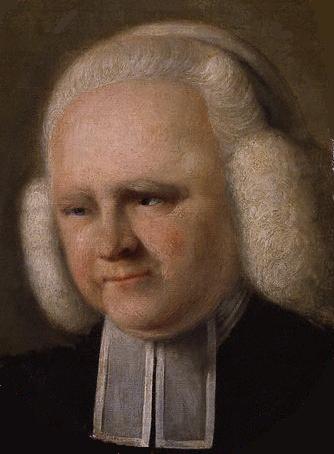
MAGAWeek2023: George Whitefield

This week is MAGAWeek2023, my celebration of the men, women, and ideas that MADE AMERICA GREAT!  Starting Monday, 3 July 2023, this year’s MAGAWeek2023 posts will be SubscribeStar exclusives.  If you want to read the full posts, subscribe to my SubscribeStar page for as little as $1 a month.  You’ll also get access to exclusive content every Saturday.

America is a Christian nation.  At least, it was.  The Christian roots of the nation run deep, not just to the Founding (if we take “The Founding” to be in or around 1776), but far back into the colonial period.  Most readers will know the well-worn story of the Pilgrims—a group of Puritan Separatists who, while not seeking religious freedom for others, at least sought it for their own peculiar version of Christianity—and their arrival in Massachusetts in 1620 (the Southerner in me will be quick to note that, despite the Yankee supremacist narrative, permanent English settlement began in 1607 with the founding of Jamestown in Virginia—the South; the earlier, albeit failed, attempt to settle Roanoke was also in the South, in what is now North Carolina, in 1585).

But there is more to the history of Christianity in America than the Puritans—much more.  The colonies of British North America struggled through some fairly irreligious times (colonial Americans were much heavier drinkers than we are), and while denominations abounded—Tidewater Anglicans, Scotch-Irish Presbyterians and Catholics, New England Puritans, and Mid-Atlantic sects of various stripes—the fervor of American religiosity was at a low ebb in the late 1600s.  Economic prosperity following difficult years in the 1670s—King Philip’s War in New England, Bacon’s Rebellion in Virginia—led many to move away from the church.  In Puritan New England, where voting rights and citizenship required church membership (and church membership was not as easy to obtain as it is today; it required proof of one’s “election”), the Puritan-descended Congregationalist churches began offering “half-elect” membership, as there were so few citizens who could prove their “election.”

Into this void stepped the revivalists of the First Great Awakening.  In the 1730s and 1740s (give or take a decade or two), a series of religious revivals swept throughout England and British North America (the colonies).  These men—Charles Wesley, John Wesley, Jonathan Edwards, and George Whitefield, among others) took difficult, strenuous tours throughout England and the colonies to deliver the Gospel in a powerful, compelling way.

Their impact was immense:  preaching salvation and a personal relationship with Christ, these men united the profusion of denominations and theologies in the colonies with the universal message of Christ’s Gospel.  Granted, denominational and theological differences persisted—indeed, they proliferated, with John Wesley’s Methodism among the plethora of new denominations—but the grand paradox of the First Great Awakening is that, even with that denominational diversity, Americans across the colonies developed a unified identity as Christians.  Protestant Christians, to be sure, and of many stripes.  But that tolerance of denominational diversity, coupled with the near-uniformity of belief in Christ’s Saving Grace, forged a quintessentially American religious identity.

Most readers will be quite familiar with the Wesley Brothers, especially John, and we probably all read Jonathan Edwards’s powerful sermon “Sinners in the Hands of an Angry God” in high school.  But most Americans know precious little about the revivalist George Whitefield, whose prowess as a speaker and evangelist brought untold thousands to the Lord.

To read the rest of today’s MAGAWeek2023 post, head to my SubscribeStar page and subscribe for $1 a month or more!