Lazy Sunday XLII: 2019’s Top Five Posts

2019 is winding down, and with this being the last Sunday of the year, it seemed like the perfect opportunity to look back at the most popular posts of 2019.

These posts aren’t necessarily the best posts—although that’s an entirely subjective measure—just the ones that received the most hits.

When looking through the most popular posts, there were a few surprises.  One thing I’ve learned from blogging is that posts I pour my heart and soul into may walk away with five views (and, oftentimes, only one!).  Then other posts that I dash off in a hurry to make my self-imposed daily goal take off like Rossini rockets, garnering dozens of hits.

Some of that is timing and promotion.  I find that the posts I have ready to launch at 6:30 AM do better on average.  But some generous linkbacks from WhatFinger.com really created some surprises here at the end of the year, surpassing even the exposure I received from Milo Yiannopoulos.  Writing posts about hot, current news items, the dropping links about said items in the comment sections of prominent news sites, also helps drive traffic, but I often lack the time required to do such “planting” (and it is a practice that can come across as spammy if not done with finesse).

Some posts take on a life of their own; I see consistent daily traffic from one of the posts on this list, “Tom Steyer’s Belt.”  Apparently, a bunch of people are as mystified as I am with Steyer’s goofy, virtue-signalling belt.

Well, it’s certainly been an adventure.  And while it may be premature—there are still two days left in the year!—here are the Top Five Posts of 2019:

Read More »

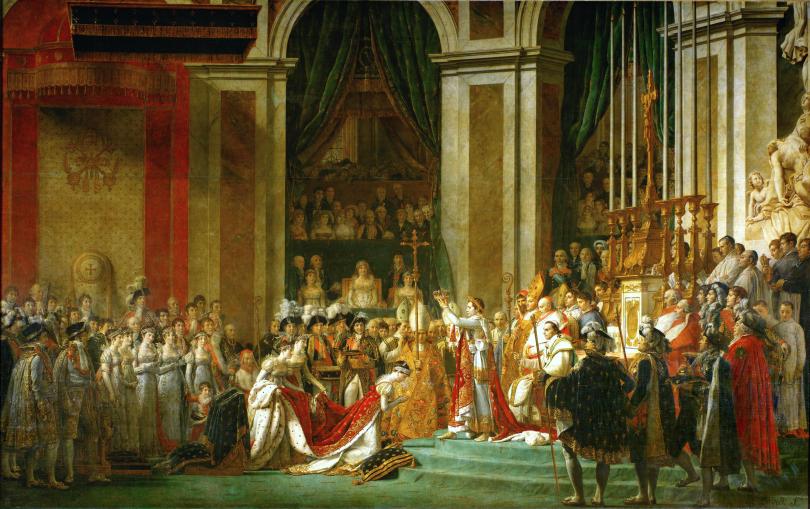
Napoleonic Christmas

It’s Christmas Week!  And what a glorious week it is.  It’s been raining persistently in South Carolina since Sunday morning, but I’m enjoying the coziness of the hygge—warm coffee and lazy reading.

PragerU had a little video up this morning from historian Andrew Roberts about Napoleon.  It’s an interesting take on the not-so-short French emperor—an apologia, really (for those that prefer reading—as I often do—to watching videos, here is a PDF transcript).

Roberts argues that Napoleon was not the necessary precursor to Hitler, et. al.; rather, Napoloen was “sui generis“—a man unto himself.  While I believe the ideas of the French Revolution did unleash the totalitarian forces of Hitlerism, Stalinism, Maoism, and all the rest—a murderous, bloody Pandora’s Box—I’ve never considered Napoleon among their ranks.

Read More »

SubscribeStar Saturday: O Holy Night

Today’s post is a SubscribeStar Saturday exclusive.  To read the full post, subscribe to my SubscribeStar page for $1 a month or more.  For a full rundown of everything your subscription gets, click here.

The unofficial theme of the blog this week has been Christmas music.  What better way to cap off the week than with a post about the best Christmas song ever written, Adolphe Adam’s “O Holy Night“?

Like its cousin “Silent Night,” the story of “O Holy Night” involves a village’s church organ.  In 1843, the church organ of the French village of Roquemaure had recently been renovated, so the parish priest asked a local wine merchant and poet, Placide Cappeau, to write a poem to commemorate the occasion.  That poem, “Cantique de Noël,” would be set to music a short time later by composer and music critic Adolphe Adam—and Christmas history would be made.

To read the rest of this post, subscribe to my SubscribeStar page for $1 a month or more.

TBT: “Silent Night” turns 200

The Christmas season—and a pending Christmas concert—has seen me waxing melodic on the holiday’s wonderful music.  As such, today’s TBT is predictable (if anyone were interested in predicting such a thing):  it’s a look back at a short post about the 200th anniversary of the classic carolSilent Night.”

Like “Joy to the World,” “Silent Night” is one of my favorite carols.  It’s sweet and simple, but can also be rocked up (the 6/8 time signature and three-chord structure lend the tune to bluesy interpretations, and I’ll occasionally slide in some blue notes when playing the song instrumentally).

It looks like it won’t make it into our Christmas program this year—a rarity—but I’ll be sure to make room for it next year.  Its more operatic cousin, “O Holy Night,” will be our finale, though.  I’ve always linked the two tunes mentally because of their similar names and themes (and they’re both in 6/8).  “O Holy Night” really lends itself to a hard rock interpretation, as my annual “O Holy (To)Night” cover version attests.

Without further adieu, here is Christmas 2019’s “‘Silent Night’ turns 200” (now closing in on 201):

One of my favorite Christmas carols, “Silent Night,” turns 200 this Christmas season.

The carol was originally written as a poem in the aftermath of the Napoleonic Wars by a village priest, Joseph Mohr, in the village of Oberndorf, Austria, in 1816. Two years later, Mohr approached the town’s choirmaster and organist, Franz Xaver Gruber, to set the poem to music. Gruber agreed, and the carol enjoyed its first performance to a small congregation, which universally enjoyed its simple sweetness.

Since then, the humble hymn has spread far and wide, and is probably the most recognizable Christmas carol globally today. It’s been covered (likely) thousands of times; it’s certainly become a staple of my various Christmas performances.

This simple, sweet, powerful carol beautifully tells the story of Christ’s birth, as well as the import of that transformative moment in history, that point at which God became Flesh, and sent His Son to live among us.

As much as I enjoy classic hard rock and heavy metal, nothing can beat the tenderness of “Silent Night”—except the operatic majesty of “O, Holy Night,” objectively the best Christmas song ever written.

Merry Christmas, and thank God for sending us His Son, Jesus Christ.

Memorable Monday: Veterans’ Day 2018, Commemoration of the Great War, and Poppies

Today is Veterans’ Day in the United States.  Veterans’ Day began as Armistice Day, which ended the First World War in 1918.

The past century was not great for Western civilization.  Most of the horror of the long twentieth century stemmed from the Great War and its mostly senseless destruction.  The sense of nihilism that engulfed the West—a civilization that was bestrode the world with confidence and panache—metastasized into the identity crisis of its nations today.

The piece below is adapted from a talk I gave to the Florence County, South Carolina GOP last year at its November 2018 monthly meeting.  I still think it’s one of the best Historical Moment talks I ever gave, but that’s mostly due to John McCrae’s powerful poem “In Flanders Fields“; the poem is reproduced in full below.

Thank you to all of our veterans for their service.

—TPP

Yesterday Americans, Europeans, and the world commemorated the 100th anniversary of the end of the Great War, what we call the First World War.  The Armistice that silenced the guns of one of the most brutal conflicts in human history was signed in the wee hours of 11 November 1918, but did not take effect until 11 AM—the eleventh hour of the eleventh day of the eleventh month.  That bit of numerical symmetry, while memorable, cost an additional 2738 lives, with 10,944 casualties—a pointless denouement to a destructive war.

Peace would ultimately come to Europe—after three prolongations of the Armistice—in 1920 with the ratification of the Treaty of Versailles (the United States, refusing to join the League of Nations, negotiated a separate treaty with Germany, the Treaty of Berlin, in 1921).  That treaty, which the Germans called the Diktat because of its severity, and because it pinned the war solely on the German Empire, was a reflection of the Armistice signed three years earlier.

In preparing tonight’s remarks, I came across an article that describes the first meeting between Marshall Foch, the commander-in-chief of the Allied forces, and Matthias Erzberger, a middle-aged German politician who had come to sue for peace.  The Frenchman looked stonily at the German peace delegation, and said, “Tell these gentlemen I have no proposals to make.”  Rather, Marshal Foch had a number of demands to issue, thirty-four in total, including Germany’s agreement to pay heavy reparations.

In hindsight, we know the folly of trying to squeeze blood and treasure from the turnip that was a starving, reduced Germany—and the radicalism it, in part, inspired.  But we have to understand, as best we can, the bitterness and weariness the Great War wrought.  Millions of men in Europe had lost their lives, or were maimed for life, fighting in the war.  The republican governments of France and Britain were not willing to accept peace without something to show for it; their people (and voters) would not have accepted it.  Indeed, Marshall Foch told his staff he intended “to pursue the Feldgrauen [field grays, or German soldiers] with a sword at their backs” until the moment the Armistice went into effect.  One cannot help but wonder that the fighting in this final hours was motivated, in part, by a mutual bloodlust, and an opportunity to settle scores one last time before the clock struck eleven.

From the grime and death of the Great War, however, grew new hope—a hope for peace, yes, but also a hope that humanity could avoid such a devastating conflict again.  That hope—and the enduring hope for a world built on peace and understanding—is poignantly symbolized in the flowering of the churned up “No Man’s Land,” the pock-marked area between Allied and German trenches.  Immortalized in Canadian Lieutenant-Colonel John McCrae’s “In Flanders Fields,” poppies were first flowers to bloom in that graveyard of Western civilization.  To this day, the crimson of the poppies serves as a reminder of the men who made the ultimate sacrifice for their countries, and that even in death, life endures.

I will close this somewhat grim Historical Moment with a brief reading of that poem; it can commemorate the men there far better than I:

In Flanders fields the poppies blow
Between the crosses, row on row,
That mark our place; and in the sky
The larks, still bravely singing, fly
Scarce heard amid the guns below.

We are the Dead. Short days ago
We lived, felt dawn, saw sunset glow,
Loved and were loved, and now we lie
In Flanders fields.

Take up our quarrel with the foe:
To you from failing hands we throw
The torch; be yours to hold it high.
If ye break faith with us who die
We shall not sleep, though poppies grow
In Flanders fields.

Lazy Sunday XXVIII: World History

Most of my pieces here at The Portly Politico focus on American politics and culture, with some occasional dabbling in British and European affairs.  But contrary to Ron Swanson’s historiographical claim, history did not begin in 1776 (though everything that came before may have been a mistake).

As such, I’ve written a few pieces about events, current and historical, that take place in more exotic locales.  While I am a parochial homebody, I appreciate travel and the contributions of other cultures (I still wish I’d seen London and Paris before they became part of the Caliphate).  I wish I had the time to do more of it (on that note, stay tuned for details of my trip to the Yemassee Shrimp Festival).

So, here’s some worldly pieces for your Lazy Sunday:

  • North Korea Reflections” – I wrote this little piece on the occasion of President Trump’s historic summit with North Korean dictator Kim Jong-un in Singapore.  My interpretation of the summit was cautiously optimistic.  It’s still unclear what the future holds for US-Nork relations, but the gambit seemed to work—North Korea is a still a bloodthirsty, repressive, totalitarian regime, but they aren’t lobbing missiles around constantly anymore.
  • The Impermanence of Knowledge and Culture:  The Great Library and Notre Dame” – this post was a synthesis of two events—the destruction of the Great Library at Alexandria, and the burning of a substantial portion of the Notre Dame Cathedral.  The fire at the latter riled up conservatives and traditionalists because the structure had endured for so long as a symbol of Christianity and of France’s faithfulness.  France is not a very faithful country now, but Notre Dame remains a powerful symbol of man’s capacity for focusing on the greatness of God.  The major point of this piece was to drive home how even great edifices eventually crumble, and that knowledge and culture must be preserved actively if they are to endure.
  • Sri Lankan Church Bombings” – coming on the heels of the catastrophic Notre Dame fire, the island nation of Sri Lanka was shaken on Easter Sunday of this year with Islamic terrorist attacks on churches.  Democrats referred to the slain Christians as “Easter worshippers” in what appeared to be a concerted effort to appear politically-correct.  Yeesh.
  • America’s Roman Roots” – I wrote this piece earlier in the week, based on an excellent op-ed a colleague sent my way.  Commentators often fixate on the similarities between the United States today and the Roman Empire, but often miss the parallels to the Roman Republic.  Those parallels exist because the Framers of the Constitution pulled heavily from Roman tradition, even naming key institutions like the Senate after their Roman counterparts.  The Roman Republic holds valuable lessons for Americans for how to craft a robust society that enables citizens to live worthwhile lives.

That wraps up this little tour around the globe.  Rome, France, Sri Lanka and North Korea—not a bad start, though I’d better get Africa and Latin America into the mix soon, lest I catch flack from the SJWs for lack of inclusion.

Happy Sunday!

—TPP

Other Lazy Sunday Installments:

The Impermanence of Knowledge and Culture: The Great Library and Notre Dame

On Sunday, blogger and antiquarian Quintus Curtius posted a piece about the famed Great Library at Alexandria.  The Library is considered one of the Seven Wonders of the Ancient War, and its destruction is an event that stands as one of the great cautionary tales of history.

Except, as Curtius points out, it wasn’t a single event.  Historians point to the accidental burning in 48 B.C., when Julius Caesar’s men’s burned Pompey’s fleet, and the flames spread, consuming a substantial portion of the Library’s connections.  Curtius mentions other events that may have damaged the Library, including Emperor Theodosius II’s decree to destroy pagan temples and buildings.

But, significantly, Curtius argues that it was centuries of neglect that destroyed the Great Library, rather than one single, spectacular event.  The burning of the Library in 48 B.C. makes for a dramatic story, but lack of maintenance, poor funding, and corrupt officials, Curtius contends, ultimately destroyed the Library.

To quote Curtius (emphasis is his):

The point is that libraries, like all institutions of culture, must be maintained and refurbished by every generation.  As I see it, the evidence points to a stark truth that tells us much about human nature.  The primary destroyer of the library, and perhaps of most cultural artifacts, was apathy.  How does this happen, in practice?  It is very simple.  It happens the same way official neglect happens today.  A new king or government minister would have said to himself, “I don’t think we need to allocate funds to the Alexandrian Library right now.  I have other priorities.  I would rather spend the money on ships, the army, or my new summer retreat.”  And this is how it starts.

Apathy—a general lack of care and concern for our cultural artifacts—destroys them far more effectively than book burnings.  Death by a thousand insouciant cuts, rather than the dramatic thrust of the sword, causes all things to wither away.

Having read Curtius’s piece (and a podcast related to it, which I cannot now locate), I very much had this topic on my mind when I heard about the tragic fire at the Notre Dame Cathedral on Monday.  I did not realize that the great cathedral is 850-years old.

Let that sink in:  it’s stood for nearly a millennium, surviving the Wars of Religion in France; the Thirty Years’ War; and the First and Second World Wars.  It also survived the French Revolution, which saw many churches destroyed or converted into blasphemous “Temples of Reason” throughout Paris and France.

Notre Dame is a powerful symbol of Western Civilization:  a bold testament of the faith and piety of a once-proud, Christian people.  A civilization that believes in itself and its God builds and maintains an edifice like Notre Dame.

We don’t yet know the source of the Notre Dame fire (at least, I don’t), and I’ve heard and read several explanations, from the careless (a dropped cigarette) to the, if true, quite wicked (Islamic terrorism; to reiterate, I am not claiming this was the cause of the fire, just that I’ve heard it insinuated).

What we do know is that France’s president, Emmanuel Macron, has promised to rebuild the destroyed roof and upper level of the cathedral “in a way consistent with our modern diverse nation.”  I let out a moan of despair upon reading that phrase.

Notre Dame is a not a symbol of a “modern diverse nation,” nor should it be.  The only universalism it embodies is Christ’s universal Love for all of humanity.  Beyond that, it is a symbol of the French people, and of Christendom.  I am not convinced that the “diverse” Maghreb and Bedouin tribesman of the banlieues are deserving of that patrimony.

The West is constantly bending over backwards to accommodate foreign cultures in a show of cosmopolitan hospitality, but the favor is never returned.  Unassimilated migrants and “refugees” don’t deserve architectural “representation” in a building that never would have been built were it not for Charles “The Hammer” Martel.

Knowledge and culture are both one generation away from darkness.  Westerners should understand the deep roots of our civilization, and protect it at all costs.  That means teaching it to our children, and instilling them a love of and reverence for our institutions, culture, and faith.