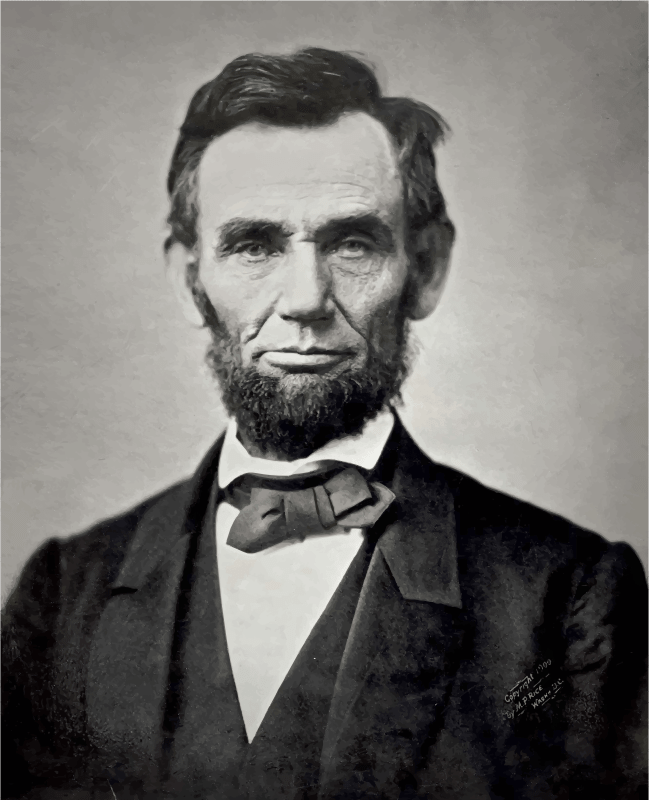
Lazy Sunday III: Historical Moments

My Internet is out at the house, and the technician won’t be out until Friday, so posting this week may be a bit dicey and inconsistent.  As a result, I’m phoning it once again this Sunday—the perfect way to start (or end, depending on your perspective) the week.

Brace yourself for “Lazy Sunday III:  Historical Moments” (read “Lazy Sunday” and “Lazy Sunday II“).  These posts are derived from a series of short talks I gave to the Florence County (SC) GOP in 2018.  They are presented in chronological order.

1.) “The Formation of the Republican Party” – this post was featured in “Lazy Sunday II:  Lincoln Posts,” as is the second piece in this list (sorry for the redundant recycling).  It’s a quick overview of the origins of the Republican Party in the 1850s.

2.) “Lincoln and Education” – another post from “Lazy Sunday II,” this Historical Moment explores Lincoln’s education, as well as his views on the subject.

3.) “Veterans’ Day 2018, Commemoration of the Great War, and Poppies” – like President George W. Bush, I am not one of the great orators of our time, but when I delivered this Historical Moment, it was probably the most powerful oratorical presentations I’ve ever given.  That is not due in any way to my own speaking abilities (although I do possess a rich, chocolate-y baritone when speaking), but to the emotional power of John McCrae’s “In Flanders Field.”  It was an arresting moment when I delivered the lines of that simple, sweet poem.

4.) “The Influence of Christianity on America’s Founding” – this talk was a longer-form version the usual Historical Moments, which are usually about five minutes long.  I was asked to give a slightly longer speech about the influence of Christianity on the founding of our nation at a joint FCGOP-Darling County GOP Christmas dinner.  It’s a complex topic, but, yes, Christianity was and is key to the American experiment in self-government.

So there you have it—more TPP greatest hits.  Enjoy, and have a restful Sunday!


Academic Leftism’s Sour Grapes

I received the following piece from a colleague at one of the schools where I teach.  The piece, entitled “The Academy is Unstable and Degrading. Historians Should Take over the Government Instead,” is indicative of how utterly clueless Leftist intellectuals are to their own dominance of not only academia, but the culture and government as well.

The author, Dr. Daniel Bessner, is an assistant professor of American foreign policy at the University of Washington, and, as he makes clear from the piece, an avowed socialist.  Indeed, the crux of the op-ed is as follows:  the academy is crumbling, as tenure-track jobs disappear (and, presumably, as Americans are wising up to its intense Leftist slant and poor track record in re: the job market), meaning Leftist “public intellectuals” need to find new worlds to conquer.  Dr. Bessner proposes the government.

In his diagnosis of the academy’s ills, he argues that the Left has focused too much on taking over the English Department (it’s at least refreshing to read a Leftist acknowledge that it was a self-conscious, deliberate march through the institutions), and not enough taking over the State Department, as it were.

He then proceeds to detail how libertarians moved from the fringes of political opinion to their relative ubiquity today, discussing the influence of Murray Rothbard and the Left’s favorite billionaire boogiemen, the Koch Brothers.

What’s rich about all this hand-wringing is the utter lack of self-awareness.  What about the legions of left-leaning banksters and billionaires pouring money into progressive organizations and schemes?  George Soros is our “boogieman” of the Left, but consider the entire entertainment, corporate (especially “Big Tech“), and academic apparatuses that are arrayed in favor of progressivism’s cause du jour.

The Left has dominated the culture from multiple perches for decades.  If the academy is falling into ruinous disrepair, it’s because Leftists have been running it since the 1960s.  They have only themselves to blame for the drying up of tenure-track gigs, rising tuition, and useless “assistant vice deans of diversity, inclusions, and LGBTQ2+MMORPG acceptance” positions.

One final note:  if President Trump were the dictator these Leftists soy boys make him out to be, they wouldn’t be identifying openly as socialists, nor would they be espousing a socialist agenda—as Dr. Bessner does in this piece—openly online.  That Dr. Bessner does so also demonstrates how successful his comrades have been at normalizing a fundamentally ruinous ideology in the United States (see also:  crazy-eyed Congressbabe Alexandria Ocasio-Cortez, poster-child for over-credentialed, arrogant college grads who base their entire lives off what they learned in an English 101 survey course from an angry, radical adjunct).

God help us all if Dr. Bessner and his ilk insinuate themselves further into the government.  Drain the Swamp, President Trump!

The State of Education

Last night I attended a program hosted by the Florence County (SC) Republican Party featuring Dr. Richard O’Malley, the Superintendent for Florence School District 1.  The topic of the evening was an upcoming referendum on increasing funds for the district, which would go toward improving existing facilities, building new ones, and constructing some additional structures (notably, three football stadiums for the three high schools in the district).  Naturally, those funds would come with a 25-year bond issue, which requires hiking property taxes in the district.

Not surprisingly, the place was packed.  It was a good talk that highlighted the need for physical plant improvements to the school district.  Dr. O’Malley is from New Jersey, and has both raised and lowered taxes as a school district superintendent and two-term mayor for a New Jersey town.  He sincerely seemed interested in maintaining a balanced budget for the district, and doing what he believed was best by the students.

I no longer reside in Florence County, so I don’t have a dog in the fight, per se, but it was interesting to hear the complexity of the problems that face the district.  Dr. O’Malley was insistent that he “didn’t come here to build new buildings,” although that often seems to be the goal of school districts.  The attendees were mixed in their thoughts about the referendum, but they mostly voiced their opinions and concerns respectfully.

It was serendipitous, then, that after I arrived home from this lengthy program, I stumbled upon this piece by a former New York City French teacher, Mary Hudson, entitled “Public Education’s Dirty Secret.”  It’s a long piece, but I highly, highly recommend you read it in its entirety.  It’s a shocking, though not surprising, look at the state of public education today.

Hudson’s piece details her difficult career as a well-intentioned high school French teacher, one who was extremely dedicated to her students (as public school teachers tend to be) despite overwhelming cultural and administrative resistance.  After reading Hudson’s piece, I have a grudging respect for her teachers’ union, UTF, which actually tried to back her up in disciplinary hearings with students (hearings that, despite horrendous student behavior, Hudson always lost).

As I wrote a few weeks ago, a major problem facing teachers is overbearing, micromanaging administrators.  Hudson’s piece clearly highlights that, not only are administrative burdens hindering teachers, the laws (at least in New York State) empower students to act like disrespectful asses.  There is a persistent fear that punishing students is implicitly racist (sadly, it’s not surprising to read that Hudson’s worst students and schools possess predominantly black student populations, but even the heavily white and Asian technical high school where she teaches is full of behavioral issues, as students adopt an attitude of staunch resistance to “the system”).

Beyond heavy-handed, mediocre administrators—the scourge of all things good and noble—the students themselves are truly deplorable (and not in the good, Trumpian way).  At one school, two Snapple vending machines were pushed from an upper mezzanine to the floor below—on two consecutive days.  Hudson relates that students were constantly berating and threatening her.  She snapped at one school when a large black male told her he was going to “cut yo’ ass.”  Hudson says that a black colleague told her that in her “culture,” that expression is not literal.  A cold comfort, I suppose.

One particularly insane event occurred at a high school “talent show,” in which students essentially dry-humped each other on-stage while the swarthy, undulating masses in the crowd grew increasingly frenzied.  Here is Hudson at length:

The most Dantesque scene I witnessed at Washington Irving was a “talent show” staged one spring afternoon. The darkened auditorium was packed with excited students, jittery guidance counselors, teachers, and guards. Music blasted from the loudspeakers, ear-splitting noise heightened the frenzy. To my surprise and horror, the only talent on display was merely what comes naturally. Each act was a show of increasingly explicit dry humping. As each group of performers vied with the previous act to be more outrageous, chaos was breaking out in the screaming audience. Some bright person in charge finally turned off the sound, shut down the stage lights, and lit up the auditorium, causing great consternation among the kids, but it quelled the growing mass hysteria. The students came to their senses. The guards (and NYC policemen if memory serves) managed to usher them out to safety.

I work with a colleague who once taught at a local area high school.  She told me the students flitted erratically between “rage and ecstasy”—constant, persistent anger at themselves, the people around them, the “system,” etc., coupled with an almost-animalistic pursuit of pleasure.  That’s in relatively rural South Carolina.  In urban New York City, that “rage and ecstasy” is apparent when, at one small school, ten girls end up pregnant—out of a school population of ninety!

There are many more heartbreaking examples.  Hudson, to be clear, is a “true believer” in the power of education to save students’ lives, and she is not some kind of racist or supremacist.  She is compassionate toward her students, and it kills her inside that she can’t do more.  But she’s also clear-eyed about the problems facing schools, and our culture generally.  Her account is full of examples of students who have given up completely, and are simply unable to articulate their rage in any other way than to lash out at a “system” that is designed to enable their worst instincts.

One final thought:  from reading Hudson’s account, it is apparent that some students are simply beyond help.  I imagine it’s an incredibly small minority—maybe 1-3%—but in attempting to educate the uneducateable, we bring down the rest of the students, making it almost impossible for them to learn.  Hudson complains throughout her piece about her inability to remove students from the classroom (that’s like Classroom Management 101—put a disruptive kid in the hallway for a few minutes and/or send him to the office in order to defuse his chicanery).

It’s controversial to say so, but there are some students we should probably just cut loose.  Again, those are the exception, but it’s clear from Hudson’s account, as well as talking to other public school teachers, that some students will simply refuse to ever learn.  It’s tragic, but public schools can’t heal a broken, poisoned culture, and it’s unreasonable to expect them to do so.

A comment that came up several times at last night’s forum was thus:  real change in education begins with the family.  Everyone agrees with this conclusion.  But what do we do about it?  The Left has systematically fought a cultural war against the nuclear family and bourgeois values like thrift and respect for institutions and authorities.  We’re reaping the bitter harvest their misguided policies have sown.

We should try to teach as many children as possible in healthy, safe environments, and teachers have a huge moral responsibility in the molding of young hearts and minds.  That said, teachers, schools, and administrators are not enough to fill the gap left by destroyed families and gutted communities.  No tax increase or bond measure can fill that void.  At this point, I think only a massive religious revival could aright America’s most toxic subcultures.

Teachers Quitting in Record Numbers – Reflections on Education

Today, I resume my teaching duties for the remainder of the 2018-2019 academic year.  In the spirit of that return from two weeks of glorious holiday loafing (and the prolific blogging it enabled, however briefly), the Wall Street Journal ran a piece over break about teachers quitting their jobs in record numbers.

I don’t plan on quitting education anytime soon—I rather enjoy teaching kids useful trivia and getting paid for it—but I would like to offer an “insider’s perspective” on the education field.  Granted, I teach in private school, but many of the issues teachers face are similar (albeit thankfully muted in a private school setting).

Generally, there seem to be two approaches to looking at the massive problems of education:  one is that we should spend more on education; the other is to pile more responsibilities onto teachers, and even to blame them for children’s lackluster performance.  Both of these approaches are, to different extents, flawed.

I’ll consider the second perspective first.  Conservative politicians will occasionally scapegoat teachers, sometimes fairly (as in the egregious examples from New York public schools with pedophiles on permanent, paid leave and the like), but usually without a solid understanding of what teaching entails.

I commonly see teachers—who get very prickly when people start noting the profession’s many perks—post online about how we don’t just get out at 3 everyday, etc.  There’s some truth to that; if you really do your job right, you’re spending a good bit of your time either before or after school, not to mention the weekends, grading or planning.  That’s especially true for first- and second-year teachers, who really have to do everything from scratch.

That said, if you stick with it—and if you don’t fall for the perennial educational fads that circulate every five years or so, all of which claim the previous fad was fatally incorrect, but that this one is the Brave New World of Education and is inerrant—you can pretty much tweak your lesson plans and approaches at the margins, rather than reinvent the wheel, from year to year.  I’ve known (and been taught by) many teachers that are overzealous about totally rebuilding their courses on a regular basis, but the perceived gains they see in the classroom are probably due more to their own passion than to whatever bold new system they’ve conjured up.

Which brings me to the other perspective mentioned above.  Progressives, who have an overly romantic view of education—and who see it as a means to indoctrinate generations to spew Leftist pabulum uncritically—think the education system can solve all of society’s ills if we just invest in it more.  Part of it comes from a desire to create more government jobs (and loyal Democratic voters) for people dubiously qualified to do anything productive.  Part of it comes from a sincere belief that they can save underprivileged kids.

That clearly doesn’t work.  So what is the truth when it comes to education, and how can we begin solving some of its problems?

For one, the complaints from those outside of the profession about our hours and summer vacation are not without merit, but they miss the point, too.  As noted above, good teachers—by which I mean teachers who will do their jobs as they should—will put in time over and beyond the classroom time.  You have to if you’re actually going to be prepared for class.

Summer vacation is a perk—we shouldn’t pretend otherwise.  Many teachers use it as an opportunity for professional development, but, c’mon, it’s also a time to hit the beach (I might be an exception to both—I do maintenance and grounds work at my school to make extra money, because I want to retire someday).  But it’s a big draw for many to the profession, especially women (and particularly mothers), who make up a huge portion of the teaching population.  As with the perennial debates about the mythical wage gap, teachers should acknowledge that less months worked = less pay.  The counterargument, one that I’ve made frequently, is that many of us put in twelve months’ worth of work in nine or ten.

As far as putting more money into schools, that’s all well and good—but where does the money go?  If it’s going to build some needless Mall of America school complex, or to hire another Assistant Vice-Principal of Islamic Outreach, it’s not doing much beyond feathering the nests of over-credentialed M.Ed. holders who took a couple of online classes in between naps and diversity seminars.

New technology and facilities are great, but they don’t teach kids.  All I need to teach history or music is some kind of board, something to write on, and some dog-eared notes.  I could probably get by without the board.  Jesus taught multitudes without a SmartBoard.  Aristotle taught Alexander the Great, probably with nothing more than some tablets and scrolls, and that guy conquered the known world.

More importantly, teachers need administrators to give us the space to do our jobs.  We all have little duties that cut into prep time, and that’s the nature of the beast.  But when politicians start decreeing ever-more tasks for schools to take on, they inevitably fall to the teachers.  The aforementioned AVP of Islamic Outreach isn’t the one writing the lesson plans about Muhammad’s views on marrying nine-year olds, even if xyr is forcing the Social Studies Department to add it; the Social Studies teachers are the ones figuring out how to make it happen, all the way complying with a thicket of misguided federal and State “guidelines.”

Ultimately, there are some behavioral issues that drive teachers from the biz, too; these are problems that, in part, begin at home (or, sadly, the lack thereof).  Those are social and cultural problems that are, frankly, beyond the power of educators and administrators to solve on the macro level.  We all do our part, to the extent we can, at the micro level.  I fear that some teachers overdo it, but that’s a topic I’d have to cover separately.

To summarize these stream-of-consciousness reflections, here are some things that would help aid retention in the field—and align educational goals more with reality:

  • Offer better pay if people are leaving; have flexible pay-scales that allow teachers with good track records (measurable in a variety of ways) better pay or bonuses (to be clear:  I don’t advocate blanket pay raises for all teachers in all districts—I’m sure some are well-compensated, and some not).  This doesn’t have to be pegged to test scores, but to a “holistic” assessment of a teacher.  If you’re teaching in Allendale County, South Carolina, you’re not going to have stellar test scores, so you can’t rely solely on those to assess the efficacy of a teacher.
  • Offer more flexible forms of alternative certification.  South Carolina currently has a severe shortage of teachers, but still insists that those without a teaching certificate endure a long, expensive, three-year process of alternative certification.  My proposal—which I pitched briefly to my former SC State Representative Jay Jordan—is to make it possible for private school teachers with, say, five years of classroom teaching to gain their certification automatically, or after taking the Praxis exam in their field or fields.  If the teacher holds a Master’s degree or Ph.D., knock two or three years off of that requirement.  You’d instantly have access to a huge pool of teachers, many of whom would be qualified from years of experience.  Also, there are a lot teachers that have their certification that are, quite frankly, crummy, so that magic piece of paper does not automatically a good teacher make.
  • Reduce administrative bullcrap.  Teachers quite principals, not schools—that’s a common maxim in education circles, and it’s true.  Administrators should realistically be support for teachers, and should avoid overloading their teachers with a bunch of paperwork (except where necessary).  Teachers can be whiny and catty—they tend to think they need more stuff to do their jobs than they actually do—but that just means you’ve got to have a firm but flexible hand steering the ship.
  • Allow teachers flexibility in lesson planning and sequencing.  A big complaint I hear from my public school teacher friends is that they can barely take time to answer an intriguing student question if the lesson plan doesn’t allow it.  As a private school teacher with a penchant for discursive asides, this blows my mind.  Nothing will kill a child’s interest in a subject (especially history) faster if he can’t ask some off-the-wall question and at least hope to get some interesting explanation or discussion.  Obviously, you can’t do this every class, but teachers shouldn’t live in fear of going “off script.”  Indeed, I don’t think there should be a script—just a broad, skeletal outline (of course, I recognize that this assumes the teacher is independently motivated and reasonably good at his or her job; sadly, I don’t think that’s the case with a substantial minority of public school teachers, per my comments above).

That’s a short, incomplete list of some possible proposals.  It’s not exhaustive, and as every teacher and wag will point out, there’s always an exception (I can’t tell you how many faculty meetings I’ve endured where some new policy has been discussed, and immediately dozens of exceptions or unique scenarios arise, to which I would say either a.) figure it out yourself or b.) just follow the policy as best you can, knowing weird exceptions will crop up—ask forgiveness, not permission).

If nothing else, I hope these reflections are useful (and, for any of my parents, colleagues, or school administrators who might be reading, know that I love my job and all of you, and that our little school is the best in South Carolina) and can spark some discussion.  Education is hugely important to the future of South Caroline and our nation; it deserves to be discussed frankly and dispassionately.

Lincoln on Education

The following is adapted from remarks to the Florence County (SC) Republican Party on the evening of 10 September 2018.  The monthly program featured members of and candidates for the local school board, so I spoke briefly about President Abraham Lincoln’s education, and his views thereof.

We’re gathered here tonight to hear from members of and candidates for School Board; in that spirit, I’d like to speak briefly about education, particularly the education of the first Republican President, Abraham Lincoln.

From what I’ve read, Lincoln’s entire formal education consisted of around a year of schooling.  He would have a week or two here and there throughout his childhood in Kentucky and Indiana, and then return to working on the family’s farm.

Despite little formal education, Lincoln taught himself throughout his life.  He loved to read, and would read deeply on a variety of subjects, obtaining books whenever and wherever he could.  One of his contemporaries commented that “I never saw Abe after he was twelve that he didn’t have a book in his hand or in his pocket. It didn’t seem natural to see a feller read like that.”  When he sat for the bar exam, he’d read law books on his own time to prepare.

Lincoln also believed in education as a source of patriotism, morality, and self-improvement—what we might call “upward mobility.”  He was not a man who wanted to stay on the farm, and his self-education was a means to escape poverty.

If you’ll indulge me, I’d like to quote Lincoln at length from his 1832 speech “To the People of Sangamo County”:

“Upon the subject of education, not presuming to dictate any plan or system respecting it, I can only say that I view it as the most important subject which we as a people can be engaged in. That every man may receive at least, a moderate education, and thereby be enabled to read the histories of his own and other countries, by which he may duly appreciate the value of our free institutions, appears to be an object of vital importance, even on this account alone, to say nothing of the advantages and satisfaction to be derived from all being able to read the scriptures and other works, both of a religious and moral nature, for themselves. For my part, I desire to see the time when education, and by its means, morality, sobriety, enterprise and industry, shall become much more general than at present, and should be gratified to have it in my power to contribute something to the advancement of any measure which might have a tendency to accelerate the happy period.”

Here we can see Lincoln’s belief that education lays the foundation for patriotism—we understand our freedoms better when we understood what they cost, and that others lack them.  We see, too, the power of education to teach us the virtuous and the good.  From that morality flows, as Lincoln said, “sobriety, enterprise, and industry,” the tripartite tools to improve our material conditions.

Patriotism, morality, and industry—these were the three benefits of education Lincoln espoused.  Coming from the man who wrote the Gettysburg Address, I think we should take Lincoln’s views on education seriously.

Back to School with Richard Weaver

Every year, I try to sit down and re-read at least the introduction to Richard Weaver’s seminal Ideas Have Consequences, probably the most powerful book I’ve ever read.  I tend to undertake this re-reading around the time school resumes, as it helps remind me why I teach.

In addition to Ideas Have Consequences, Weaver wrote some of the most eloquent essays on the South—and what it means to be Southern—in the twentieth century.  In 2014, I posted the following quotation on Facebook; I will allow it to speak for itself.

I’m undertaking my annual baptism in the works of Richard Weaver to focus my philosophical thinking for a rapidly approaching school year, and, as always, I’m presented with an embarrassment of riches. Few thinkers cram so many nuggets of truth into so little space. Every paragraph of Weaver’s writings yields insights that speak to the very heart of humanity.

Here’s an excerpt from “The South and the American Union,” an essay from _The Southern Essays of Richard Weaver_, published posthumously in 1987. It might clarify a few things for some of my Yankee friends who have expressed a certain bafflement with Southern mores and attitudes…:

“The Southern world-outlook was much like that which [Oswald] Spengler describes as the Apollonian. It knew nothing of infinite progressions but rather loved fixed limits in all things; it rejected the idea of ceaseless becoming in favor of ‘simple accepted statuesque becomeness.’ It saw little point in restless striving, but desired a permanent settlement, a coming to terms with nature, a recognition of what is in its self-sustaining form. The Apollonian feeling, as Spengler remarks, is of a world of ‘coexistent individual things,’ and it is tolerant as a matter of course. Other things are because they have to be; one marks their nature and their limits and learns to get along with them. The desire to dominate and proselytize is foreign to it. As Spengler further adds, ‘there are no Classical world-improvers.’ From this comes the Southern kind of tolerance, which has always impressed me as fundamentally different from the Northern kind. It is expressed in the Southerner’s easy-going ways and his willingness to things grow where they sprout. He accepts the irremediability of a certain amount of evil and tries to fence it around instead of trying to stamp it out and thereby spreading it. His is a classical acknowledgment of tragedy and of the limits of power.

“This mentality is by nature incompatible with its great rival, the Faustian. Faustian man is essentially a restless striver, a yearner after the infinite, a hater of stasis, a man who is unhappy unless he feels that he is making the world over. He may talk much of tolerance, but for him tolerance is an exponent of power. His tolerance tolerates only the dogmatic idea of tolerance, as anyone can discover for himself by getting to know the modern humanitarian liberal. For different opinions and ways of life he has no respect, but hostility or contemptuous indifference, until the day when they can be brought around to conform to his own. Spengler describes such men as torn with the pain of ‘seeing men be other than they would have them be and the utterly un-Classical desire to devote their life to their reformation.’ It happened that Southern tolerance, standing up for the right to coexistence of its way of life, collided at many points with the Faustian desire to remove all impediments to its activity and make over things in its own image. Under the banner first of reform and then of progress, the North challenged the right to continue of a civilization based on the Classical ideal of fixity and stability….”

There are so many great passages I could cite (“Man [to the Southerner] is a mixture of good and evil, and he can never be perfected in this life. The notion of his natural goodness is a delusive theory which will blow up any social order that is predicated upon it. Far from being a vessel of divinity, as the New England Transcendentalists taught, he is a container of cussedness.”), for almost all of Weaver is quotable.