Rationing and Abundance

Today’s post is a SubscribeStar Saturday exclusive.  To read the full post, subscribe to my SubscribeStar page for $1 a month or more.  For a full rundown of everything your subscription gets, click here.

Thanksgiving and related observations have been a running theme this week.  Thanksgiving reminds us of how much abundance we truly have.  It’s hard not to recognize when there are tables full of fattening, succulent dishes, enough to rival the feasts of medieval kings.

In spite of that marvelous abundance, however, rationing is still very much a reality.  The inescapable fact of economics—indeed, the whole purpose of the field—is that there are only so many resources to go around, and societies struggle to figure out how best to allocate those resources.

This problem is particularly true when it comes to our most valuable resource:  time.

To read the rest of this post, subscribe to my SubscribeStar page for $1 a month or more.

SubscribeStar Saturday: Shrinkflation

Today’s post is a SubscribeStar Saturday exclusive.  To read the full post, subscribe to my SubscribeStar page for $1 a month or more.

When Americans experience a sense that the world we live in is not what it should be, we’re often scolded for not being thankful for all of our material abundance.  Indeed, we are extremely blessed to live in an age with plenty of food, infrastructure, and novelties, and we accordingly enjoy a standard of living beyond the wildest dreams of most of our forebears.

That said, there’s a nagging sense that, for all that abundance, things are amiss.  There’s a strong tug of to that undercurrent among conservatives today.  Material abundance is great, but it hasn’t addressed deeper moral problems or battles in the culture wars, because those problems aren’t materialist in nature—they can’t be.

Even within the plane of the material world, things seem a bit off.  That was the crux of my post about the new Mustang, a redesign so beyond the scope of the name “Mustang” that it’s ludicrous to call it as such.  Everywhere we look, there seems to be disintegration and decay—of value, of standards, even of size.

To read the rest of this post, subscribe to my SubscribeStar page for $1 a month or more.

The Invasion and Alienation of the South

A few weeks ago, I wrote about the changing, dying rural communities I observed on a trip through western South Carolina.  You’re not supposed to say as much, but I don’t like that the culture and the world I grew up in are changing.  I’m not sure when it became taboo to say, “This is my home and these are my kin,” but apparently that’s no longer acceptable if you’re a conservative Christian in the American South, especially if you’re a white man.

Around the time I wrote that post, I stumbled upon two excellent posts from the Abbeville Institute that express that sentiment beautifully.  One, “Stranger in a Strange Land” by Leslie Alexander, is a poetic, heartbreaking glimpse at a personal sense of alienation:  the writer, a Louisiana native with deep roots, finds herself adrift in Dallas, a land that lacks not only has “no regional culture here—one of common language, mores and manners–there is not even an American one.”

The other, from Nicole Williams, is a more technical and historical dive into the emergence of the “New South,” the story of how an economically devastated postbellum region, in a search for economic opportunity, ultimately sold its culture and identity for a mess of pottage.  The title says it all:  “What Price Prosperity?

Read More »

Lazy Sunday XXX: Trump, Part I

It’s hard to believe we’ve reached thirty Lazy Sundays.  I’ve found these posts are an excellent way to link to multiple posts simultaneously; I’ve written so many now that I occasionally forget that I’ve written some of them, but Lazy Sunday is always there to curate and aggregate those forgotten posts.

Indeed, today’s post marks 280 days of consecutive posting.  That’s forty weeks of at least one post per day.  Noah would be getting off the Ark right about now.

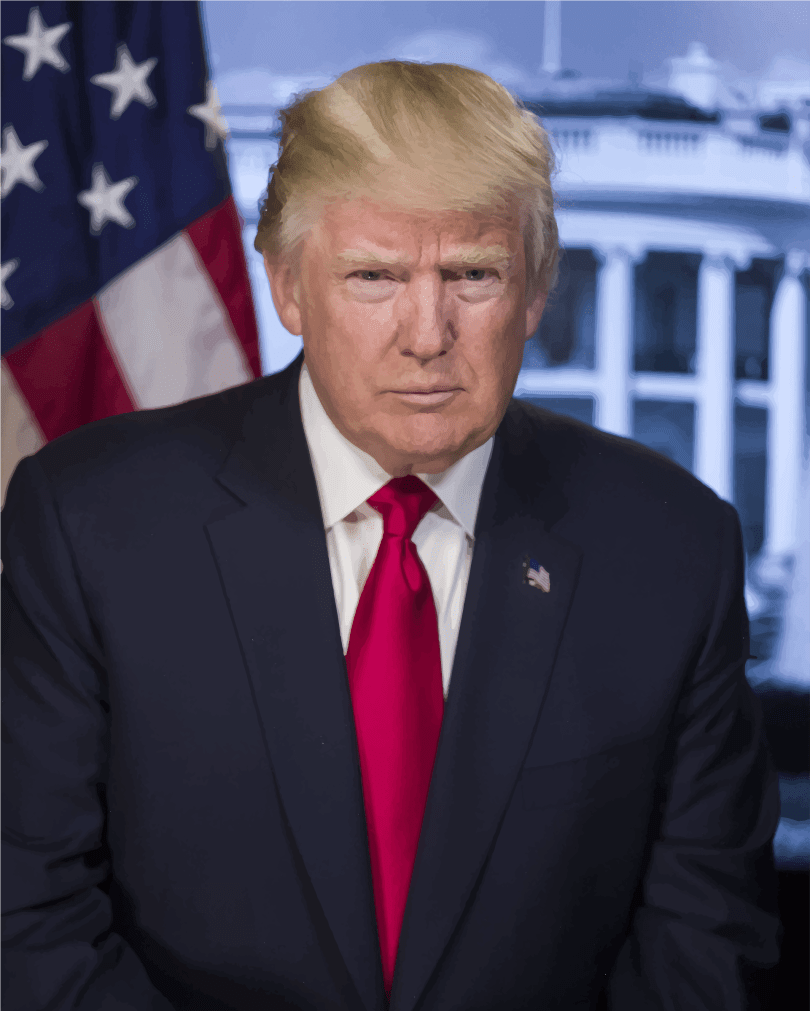
So, to celebrate the thirtieth week of posts—and to honor our amazing, if embattled, President—today’s edition of Lazy Sunday is dedicated to the God-Emperor himself, Donald J. Trump.

  • Indian Man Worships Trump as a God” – This little piece was a bit of a throwaway novelty, but I still find it amusing:  an Indian gentleman devoted himself to GEOTUS so intensely, his parents moved out of the house.  I was hoping some Twitter-savvy user would get this piece to Trump or Sarah Huckabee Sanders, and President Trump could use it as an opportunity to witness to this well-intentioned-but-misguided man.
  • Mueller Probe Complete, Trump Vindicated” – The subject of a recent TBT feature, I wrote this piece when the Mueller Report first broke and all indicators were that “Russian collusion” was, at best, way overblown.  Yes, yes—Mueller insisted that Trump wasn’t “exonerated,” but he and the Democrats had to admit sheepishly that the drum they’d been beating for nearly three years was busted (not that they actually did admit that).  Of course, now they’ve just changed from one scary Eastern European country to another with tales of “Ukrainian collusion” to bolster a bogus impeachment inquiry.  Sigh.
  • Symbolism and Trumpism” – An unfortunate side effect of Protestant efficiency and pragmatism is the lack of attention to symbols, which we tend to view with suspicion—“it might be an idol!”  But symbols matter immensely to uniting a people.  That’s the key insight this piece explores, care of an American Greatness essay about Trump’s ability to understand the need for and use of unifying symbols like the National Anthem, the American Flag, and so on.
  • Trump’s Economy and 2020” – President Trump can boast a hugely successful economy, almost directly as a result of his tax cuts and regulatory reforms.  After Trump’s election, I could almost physically sense a weight lifting off my shoulders, and those of millions of Americans—and I was doing okay even in President Obama’s moribund economy.  Even in 2016, with things gradually improving from the low-point of the Great Recession in 2009, the job market seemed tight.  By the time Trump was inaugurated in January 2017, phenomenal economic growth was well underway.  Here’s hoping that buoyant economy continues to roar through 2020.
  • “#MAGAWeek2019: President Trump’s Independence Day Speech“:  This post was a Subscribe Star exclusive, so you’ll have to pay a buck to read the full thing, but it’s about how great President Trump’s Independence Day speech was.  After all the hand-wringing from the Left and the noodle-wristed Right about Trump hosting a yuge military display on the Fourth of July (see also:  “Symbolism and Trumpism“), Trump delivered a speech that reminded us of why we can be proud to be a part of this incredible, unprecedented nation.  I didn’t hear the whole “airport at Yorktown” comment, but I’m also not attuned to picking up Trump’s every minor error and calling it treason the way Leftists are.

That’ll do it for this “big league” Lazy Sunday.  Enjoy your day off, and Keep America Great!

God Bless,

—TPP

Other Lazy Sunday Installments:

Monday Morning in America

The Portly Politico is striving towards self-sufficiency.  If you would like to support my work, consider subscribing to my SubscribeStar page.  Your subscription of $1/month or more gains you access to exclusive content every Saturday, including annual #MAGAWeek posts.  If you’ve received any value from my scribblings, I would very much appreciate your support.

The couple of weeks I’ve been feeling bleak about the future.  I’m a declinist by nature when it comes to the macro view, but the micro was starting to get to me.  How do we get through to people?  We don’t have the luxury for the old days of slow, steady relationship building and piecemeal red-pilling.  Further, it seems every step we take forward, the culture takes three steps back.

I wrote as much on Saturday, in a post where I gave full-vent to the frustrations I’ve experienced.  One of the problems with writing daily (and under self-imposed deadlines) is that it’s easy to let your emotions about recent events take over.  I’d been giving way to despair, and it started twisting my analysis.

Read More »

Trade War with China is Worth It

There’s a lot of disingenuous scuttlebutt flying around about a looming recession, the inverted yield curve, and the costs of the trade war with China.  I can’t help but think such doom and gloom reporting is part of an effort to undermine President Trump.  Investor and consumer confidence are emotional, fickle things, based as much on feeling as they are on hard economic data.

As such, I suspect that major media outlets are attempting a bank-shot:  scare investors and consumers enough, and they panic into a recession.  President Trump’s greatest strength at present is the booming economy and low unemployment rate; take that away, and loopy, socialist Democrats have a much better shot in the 2020 elections.  With Leftists like Bill Maher actually hoping for a recession to unseat President Trump, that’s not a far-fetched speculation at all.

Read More »

Trade War Favors the United States

Thanks to my dad for sending along this piece from stock guru and madman Jim Cramer about the trade war with China.  I’ve been writing a great deal lately about economics (including the “Lazy Sunday IX” and “Lazy Sunday X” compilations), and I share Cramer’s nuanced view of the trade war and Trump’s tariffsGlobalization of capital is not an unalloyed good.

Cramer gives a nuts-and-bolts rundown of this latest round in the trade war with China.  Monday saw a big selloff in the market, as investors panicked about China slapping tariffs on American goods.  As Cramer points out, the biggest loser is Apple, which is also reeling from a loss in the Supreme Court that will allow a class-action monopoly suit to go ahead against the tech giant.

The two other companies that will most be affected are Boeing and Caterpillar.  Cramer points out—as does President Trump—that there is a huge backlog of potential customers waiting to purchase jets from Boeing, and Caterpillar made a deal with the devil, so screw ’em.

Otherwise, the Chinese dragon looks a lot more like a paper tiger.  In addition to blocking imports of liquefied natural gas—like jets, a product that the rest of the world is clamoring to import from the United States—China targeted a laundry list of foodstuffs:

…[W]hen the Chinese unveiled their retaliation list it was pretty pathetic. I am going to list some of them because you are going to know how little ammo they really have. Here’s the guts of the list: beans, beers, Brussels sprouts, cabbage, carrots cauliflower, broccoli, cucumbers, potatoes, sweet potatoes, rabbit meat, frog legs, almonds, cashews, apples, pineapples, dates, figs, mandarin oranges-mandarin!-hazelnuts, pears, macadamia nuts, whey as in curds and whey although curds aren’t on the list, eggs, butter, pasta, rice, corn, eels, trout, chickens, turkeys, peanuts, cakes, wine, wheat and then here’s some odd ones: televisions, DVRs, and cameras.

Note that those farm products are the necessities of life.  The production of televisions, DVRs, and cameras, as Cramer notes wryly, has been wiped out Chinese competition already, so they’re absurd non sequiturs.

I had a friend lament the collapse of the soybean farmers because of the trade war.  While I sympathize with the farmers, one could be forgiven for thinking this an example of missing the forest for the soybeans.  Someone else will buy the soybeans, and our generous farm subsidies will dull the pain of any major losses.

That’s all to say that soybeans and temporary market disruptions are a small price to pay to restore the American economy and to hobble China’s.  China is a far more serious geopolitical and economic threat than the Russian boogeyman (not to say Russia isn’t a threat), yet we’ve kow-towed to their authoritarian corporatism for decades, with ruinous results.

Yes, some products will cost more.  I spoke with a repair technician about doing some work on an old saxophone, and he said, “Your buddy Trump is why parts are so expensive.  As soon as the trade war started, prices for parts jumped 1000%.”  Based on the value he placed on my pawn shop Noblet, I’m assuming he’s engaging in a bit of genuine hyperbole.

Regardless, the technician lamented the decline of the once-great American instrument-making industry (huge in Elkhart, Indiana), saying that parts are made in China and other countries, with only a few horns still assembled in Indiana.  He mentioned, too, that Gretsch “sold its soul to the devil” as a result of cutting corners and relocating abroad to save costs.

Again, his fixation was on the high price of parts—but those parts could be made here again, at a higher-quality and lower cost.  Elkhart could once again become the global capital of instrument manufacturing, and saxophones wouldn’t be cheap, leaky Chinese toys.

In the short-term, the trade war will be painful for some investors (although Cramer argues that this latest round will calm down as early as today, with investors getting over their textbook-based fear of a Smoot-Hawley Tariff situation), and in the long-term, trade wars tend to produce only losers.

But in the Chinese case, it’s worth some short-term pain, and the disruption of reallocating resources, to regain our economic dominance against China.  Anything we can do to hobble their rise is a net benefit for the United States, East Asia, and the world.

Lazy Sunday X: Economics, Part II

Last week’s edition of Lazy Sunday—“Lazy Sunday IX: Economics, Part I“—featured four pieces about economics.  As I wrote last week, my thinking on economics has evolved by degrees over the past decade.  To summarize:  I used to think that (mostly) unbridled capitalism could solve most of society’s problems through ever-more-efficient allocation of resources.

Now, I’d argue that capitalism is a great system that should benefit people, but which we shouldn’t worship as a panacea.  Put another way:  we shouldn’t be sacrificing people’s livelihoods and communities on the altar of efficiency.

Naturally, there’s a great deal of room for nuance in that position, and it opens up a tricky question:  who gets to make the decisions that ameliorate some of the excesses and disruptive side effects of capitalism?  What’s the limiting principle at play?

These are important questions, but their difficulty should not lead us to resignation—to worship efficiency by default.  This week’s three pieces are my small contributions to that discussion:

  • TBT: Capitalism Needs Social Conservatism” – this piece dates back to the old TPP website, from the TPP 2.0 Era, and I consider it one of the most important essays I’ve ever written.  Social conservatives are the punching-bag of the modern Right, and the least-respected “leg” of the traditional Republican Party “tripod” coalition between social, economic, and national security conservatives.

    That’s a shame, because without the values of social conservatism, capitalism cannot long endure.  Without traditional morality, capitalism becomes an asset-stripping free-for-all:  employers have no obligation to their employees beyond a crude economic exchange of value; businesses can cheat on contracts when they coldly calculate it’s worth the potential costs; and human life, especially unborn life, is valued in dollars, not spiritual worth.

  • Tucker Carlson’s Diagnosis” – Fox News host Tucker Carlson eloquently and forcefully expressed some of the ideas implied in the previous bullet point in a powerful monologue back in January 2019.  Carlson has become a major paleoconservative voice, one that offers a much-needed counterbalance to the capitalism-as-highest-good mentality dominant in the Republican Party.

    That Carlson’s show is highly popular demonstrates that these ideas have legs politically.  Again, Carlson doesn’t have a beef with capitalism, per se, but believes it should work for us, not the other way around.  This monologue powerfully points out how our elites have thrown the rest of us over the bus, and are enjoying the fruits of their corporatist, globalist schemes.  It’s a must-watch.

  • April Fool’s Day: A Retrospective” – this piece is a bit of a personal essay, looking back to 1 April 2009, the day I found out my teaching contract would not be renewed for another year.  It’s easy to forget how awful the years of the Great Recession were, and how bad the “recovery” was under President Obama.  This piece also serves as a nice counterbalance to the other two:  it shows how important robust economic growth is to sustaining strong societies.  If social conservatism is necessary to foster economic growth, that growth makes it easier for families to gain self-sufficiency (so long as we avoid the easy traps of prosperity).

There you have it—more essays on economics, a field we should consider a human science—part of the humanities—not a cold, deterministic hard science (the essay linked in this sentence, “Economics: A Human Science,” is another strong contender for today’s compilation).

Get out there and hustle!

–TPP

Other Lazy Sunday Installments:

Lazy Sunday IX: Economics, Part I

I followed a fairly standard political-philosophical trajectory to where I am now. Back in my salad days, I was a big Milton Friedman fanboy (in many ways, I still am).  His works, particularly Capitalism and Freedom, compelling made the case for many things I already believed, and made me love liberty even more.

I skewed heavily into libertarian territory (without every fully becoming a capital-L Libertarian), and came to believe that, in most cases, free markets could (and, in some golden future, would) solve virtually all of humanity’s problems, as history Whiggishly improved more and more with each passing year.  Efficiency would free humanity from drudgery, and we’d all have plenty.

Indeed, that is, in many ways, the story of the modern West:  greater efficiency and economic fluidity has yielded material wealth unparalleled in human existence.  Capitalism works quite well at alleviating material misery.

But there’s the rub:  as I’ve grown older, gradually amassing a nest egg and hustling constantly, I’ve come to understand that, as nice as material abundance is, it is a false god (as is the neoliberals’ lust for ever-greater efficiency).  Despite our great wealth and our cheap, shiny, plastic baubles from China, America’s are culturally, morally, and philosophically miserable.

So, for the next two Sundays I’ll be featuring posts on economics, a topic I believe should be regarded as one of the humanities, rather than a social science.  I still believe capitalism is the best possible economic system ever devised, and does a great deal to secure liberty for individuals and nations (as Milton Friedman wrote, economic freedom is a necessary precursor to political freedom).  That said, I’ve adopted Tucker Carlson’s formulation that capitalism should work for us, not the other way around.

To that end, here are this week’s pieces on economics:

  • 4.8% Economic Growth?!” – this very short post relaunched this blog.  The TPP 3.0 Era, as I call it, kicked off with my move to WordPress.  It trumpets the incredible growth of the Trump Administration and its economic policies. After years of sluggish “recovery” under President Obama, the Trump Renaissance breathed fresh life into our moribund economy.
  • Q&A Wednesday – Tax Cuts, Trade Wars, Etc.” – I adapted this post from a response I wrote to some Facebook comments from two of my most loyal readers.  It details my evolving views on tariffs—essentially, that instead of opposing nearly completely, I now see their utility.Towards the end of this essay, I address an idea I’ve been kicking around:  that it’s better to subsidize workers through protective tariffs (thereby giving them work, and a sense of purpose) than simply to hand out money or administer costly welfare programs.

    I developed that idea more fully in the next essay on this list.  It goes to the idea that people—and, I would argue, specifically men—derive a great deal of their sense of self from their work.  This understanding is closer to the term vocation than it is merely to “work,” the distinction being that vocation is work that is both productive and fulfilling—it’s work in a higher sense, beyond merely providing for one’s basic needs.

  • The Human Toll of Globalization” – this post was inspired by a lengthy Breitbart piece about the costs of globalization, and is of a piece with the previous essay.  Therein I explored the idea, mentioned directly above, that work is ennobling, and its benefits go beyond a paycheck.  There is a quiet, affirmative satisfaction to doing something and doing it well.  Why else would I blog daily with zero revenue?
  • Global Poverty in Decline” – lest you think I’ve jettisoned the old Friedmanian views completely, this short post—based on a Rasmussen Number of the Day—deals with the decline in global poverty in the last few decades.  That decline is, truly, astonishing.  A good chunk of it came with economic liberalization in China, which has come, in part, at the expense of the United States, but it also reflects the benefits of economic liberty across the globe, particularly in the former Soviet bloc countries.For all the potential moral hazards of excessive material wealth, there’s no denying the inherent morality of a system that prevents starvation, malnutrition, and homelessness, all with only minimal government coercion and interference.  That’s pretty remarkable, and one reason we should be careful to protect capitalism, even as we seek to rein in its more destructive tendencies.

That’s it for this XXL (that’s “Extra-Extra-Large”) edition of Lazy Sunday.  Enjoy!

–TPP

Other Lazy Sunday Installments:

Trump’s Economy and 2020

There’s been a spate of good economic news lately, largely thanks to President Trump’s economic policies.  US GPD grew 3.2% for the first quarter of 2019, blowing away economists’ projected 2.5% growth.  Of the 231 companies in the S&P 500 to report their Q1 earnings so far, 77.5% of them have exceeded analysts’ expectationsUS consumer spending increased 0.9% (0.7% when adjusted for inflation) during a quarter that is usually slower after the Christmastime rush.  All of that growth has occurred without a substantial increase in inflation.

That economic news is good for President Trump, but it might not be enough in and of itself.  In better times, any president with those economic numbers would breeze into a second term, but the perception among Democrats (no surprise) and some independents (more troubling) is that the economic growth we’re witnessing isn’t benefiting everyone, but instead favors the rich and powerful.

To be clear, Trump is in a strong position at the moment.  Having emerged battered but unbeaten from the Mueller investigation, he’s bested the greatest existential threat to his presidency.  Construction on the border wall has begun, and even progressive economist Thomas Friedman endorsing a “high wall” on the border.  And loony freshman Congress members like Ilhan Omar and Alexandria Ocasio-Cortez continue to commit bone-headed, unforced errors.

That said, the scuttlebutt on the Dissident Right is that economic success alone won’t secure Trump’s reelection, and that excessive focus on it might actually alienate the blue-collar workers that delivered Trump victory in 2016.  The general argument is that, unless Trump doesn’t come down hard on immigration, even economic growth won’t save him.

I don’t fully buy this argument, but there might be some truth to it.  When the economy is already good, voters begin looking at other issues more closely.  If a worker loses his job to an illegal immigrant, or if the plant moves to Mexico, it doesn’t matter how good the economy as a whole is doing.

One alarming sign of trouble:  former Vice President Joe Biden and Texan weirdo Robert Francis “Beto” O’Rourke both are competitive against Trump—in Texas!  Granted, it’s very early in this process—the 2020 election is an eternity away, politically speaking—and the media loves to trumpet Democratic victories in historically deep-red States.  But the situation in Texas, like other border and high-growth States, illustrates the importance of the immigration issue.

A quick summary:  ultra-progressive California taxes and regulates its most productive citizens out of the State, while importing cheap labor illegally (supporting it with sanctuary cities, etc.) so the uber-wealthy Silicon Valley tech titans have gardeners and nannies at slave wages.  Enough Lefties bleed out into Arizona, Texas, and other reddish States with low taxes and good law enforcement.  Those States also struggle with illegal immigration, and are demonized for trying to protect their borders.  The result:  the purpling of Texas.

To clarify:  I think President Trump is well-positioned to win in 2020, especially if the Democrats nominate a wacko or a blatant race-baiter (like Kamala Harris).  He’s got a tougher fight against a perceived moderate like Biden or Pete Buttigieg, but momentum and incumbency are on his side.

Regardless, it is vital that President Trump return to his key campaign promise from 2016:  securing the border.  Not only is that crucial for tapping into the populist discontent that catapulted him into the Oval Office, it’s the only way to preserve the United States we know and love.