
The State of the Right

A major topic of discussion among conservative and/or non-Left thinkers, bloggers, and political theorists is what exactly makes one a “conservative” (or, perhaps more accurately, what combination of values and axiomatic beliefs constitute “conservatism”).  For the philosophically-minded, it’s an intriguing and edifying activity that forces one to examine one’s convictions, and the sources thereof.

I’ve written extensively about the Left and what motivates it.  To summarize broadly:  the modern progressive Left is motivated, at bottom, by a lust for power (the more cynical of Leftists) and a zealous nihilism.  These motivations take on a Puritan cultural totalitarianism that cannot tolerate even the mildest of dissent.  Witness the many examples of how Leftists across time and nations have devoured their own.

That said, I haven’t written too much lately about what it means to be a conservative.  One reason, I’m sure, is that it’s always more difficult to engage in the oft-painful exercise of self-reflection.  Another is that the lines of conservative thought have been shifting dramatically ever since Trump’s ascendancy in 2015-2016, and the cementing of his control over the Republican Party—the ostensible vehicle for conservative ideology—since then.

As such, in the kind of serendipitous moment that is quite common in blogging, today’s post shares two pieces on the lay of the conservative landscape, and the various factions within the broader conservative movement (and, politically, the Republican Party).

One is, by the standards of the Internet, an old essay by Gavin McInnes, “An Idiot’s Guide to the Right.”  Written in 2014, one month before Republicans would win control of the US Senate, McInnes’s breakdown of the Right is still fairly prescient, although it’s always interesting reading discussions of the conservative movement pre-Trump (McInnes, like many conservatives, hoped and believed that Ted Cruz was the last, best hope of the movement; that was certainly my view well into 2016).

The other is a post from Tax Day, “What’s Right,” by an upcoming blogger, my e-friend photog of Orion’s Cold Fire.  He gives a detailed breakdown of the shifting coalition of the Right at present, and his own “red-pilling” is very similar to my own (indeed, photog and I both fall somewhat on the fringes of the “civic nationlist” camp, with toes cautiously dipped into the parts of the “Dissident Right,” a term itself coined by VDARE.com‘s John Derbyshire).

Traditionally (since the end of the Second World War, that is), the old Republican coalition was a three-legged stool, bringing together economic/fiscal conservatives, social conservatives, and national security conservatives.  In the wake of the Cold War, the first two legs ceded more ground to the national security conservatives, some whom consisted of the much maligned “neoconservatives,” themselves reformed progressives who had been “mugged by reality.”

The neocons would enjoy their ascendancy during the George W. Bush administration, and they tend to be the major proponents of the dying Never Trump movement.  Their vehement hatred of Trump (see also: Bill Kristol, Senator Mitt Romney, and George Will) has largely discredited them, and they’ve shown that their true loyalty is to frosty globalism, not the United States.  They also pine for a mythical form of “decorum” in politics that never truly existed outside of the immediate postwar decades.

photog characterizes this group as essentially less strident Leftists, a group that “doesn’t shrink or grow.”  They were the “we need decorum” crowd that went big for the Never Trumpers, but who have largely made an unsteady cease-fire with the president—for now.  Bill Kristol and Max Boot, the extreme of this group, have essentially become full-fledged Leftists (making Kristol’s latest project, The Bulwark—to protect “conservatism,” ostensibly—all the more laughable).

These are the people that don’t want to vote for Trump, but might anyway, because he’s “morally reprehensible,” which is just their way of saying they think he’s icky and boorish.  These are the upper-middle class white women of the Republican Party, the ones I constantly implore to get over their neo-Victorian sensibilities and stop destroying the Republic from their fainting couches.

The biggest group, per photog, are the Conservative Civic Nationalists.  These are the people that love God and country, and like Trump because he represents the best hope to defend those very things.  McInnes, less perceptively, just calls this groups “Republicans,” although his “Libertarians” might fall into this group, too.  To quote photog at length:

The next big class of people are the Conservative Civic Nationalists.  This is the bulk of the Non-Left.  These are the normal people who have always believed in God and Country and that America was the land of freedom, opportunity and fairness.  They believed that all Americans were lucky to be living in the greatest country on God’s green earth.  They believed that the rule of law under the Constitution and especially the Bill of Rights is what made this the closest thing to heaven on earth and anyone living here should be supremely grateful to the Founding Fathers for inventing it and his own ancestors for coming here.  This is the group that has had the biggest change occur in the last couple of years.  But to define the change let’s break this group into two sub-divisions.  Let’s call them Sleepwalkers and the Red-Pilled.  Back in the early 2000s all the Civic Nationalists (including myself) were Sleepwalkers.

The “Red-Pilled” and “Sleepwalkers” dichotomy is one of the most interesting interpretations I’ve read about the Right lately, and it’s certainly true.  Trump awoke a large group of these Civic Nationalists, people that were disgruntled with the government overreach of the Obama era, but weren’t certain about the way forward.

Like myself, photog is cautiously optimistic that these folks will continue to wake up, bringing along non-political Centrists—the squishy, non-ideological middle—to bolster Trump’s reelection in 2020.  The Left’s relentless push for socialism and transgender bathrooms have done much to red-pill these folks, who find themselves struggling to articulate values that they just implicitly know are good, but which the Left insists on destroying.

There’s still much to be said about the current state of the Right, and I will be delving into it in more depth as the weeks progress.  For now, read these two essays—particularly photog’s—and begin digesting their ideas.  American politics are undergoing a major realignment, and we need people of good faith and values to stand for our nation.  Understanding the state of play is an important part of arming ourselves for the struggle.
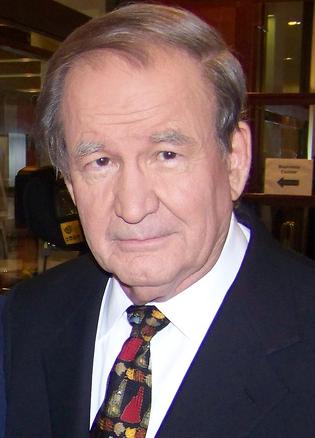
Buchanan on the National Emergency

One of my favorite writers, paleocon Pat Buchanan, has a piece on one of my favorite sites, Taki’s Magazine, about President Trump’s recent declaration of a national emergency.  That national emergency, you’ll recall, will allow the President to use existing funds within the federal bureaucracy to build a border wall, thereby circumventing Congress’s lackluster appropriation of funds for that purpose.

Critics argue that the president is undermining our Constitution, with its careful balance of powers between the branches, specifically its delegation of the “power of the purse” to Congress.  While I certainly share some of those concerns, Buchanan points out that Trump’s national emergency is only the latest (and one of the mildest) in a long line of the executive overreach.

More crucially, Buchanan places the blame for the extension of the executive power at Congress‘s feet.  In this regard, Buchanan is correct:  Congress, with the support of an activist federal judiciary, long ago realized that it could farm out key legislative functions to the executive branch (specifically, the federal bureaucracy), and thereby avoid catching the blame for the nation’s problems.  In the process, the executive and judicial branches have arrogated greater powers to themselves (thus, the tug-of-wars between unelected federal judges and the Trump administration on virtually every policy).

To quote Buchanan at length:

Yet while presidents have acted decisively, without congressional authorization and sometimes unconstitutionally, Congress has failed to defend, and even surrendered, its legitimate constitutional powers.

Congress’s authority “to regulate commerce with foreign nations” has been largely ceded to the executive branch, with Congress agreeing to confine itself to a “yeah” or “nay” vote on whatever trade treaty the White House negotiates and sends to the Hill.

Congress’s authority to “coin money” and “regulate the value thereof” was long ago transferred to the Federal Reserve.

Congress’s power to declare war has been ignored by presidents since Truman. Authorizations for the use of military force have replaced declarations of war, with presidents deciding how broadly they may be interpreted.

In declaring the national emergency Friday, Trump rested his case on authority given the president by Congress in the National Emergencies Act of 1976.

As I wrote over the weekend, I believe the president acted within his the scope of Article II of the Constitution in issuing the national emergency, as it pertains to powers inherent in the office of the executive:  national defense and border security.  I’m not completely comfortable with this method for funding a border wall, and I think the president and congressional Republicans blew an opportunity to build the wall during the two years of Republican control of the federal government, but action needed to be taken.

Buchanan’s piece is titled, chillingly, “Why Autocrats are Replacing Democrats.”  To answer his own question, he argues that voters internationally are weary of the plodding democratic process, and are eager for leaders who will deliver solutions to their problems.  Buchanan claims that republican forms of government have failed to fulfill their most basic functions—border and immigration control, national security, etc.—and the people demand solutions—action.

I don’t think President Trump is an autocrat or a fascist.  I also don’t entirely blame him for using powers Congress has delegated to his office.  Up to this point, President Trump has stayed very much within defined constitutional limits in the exercise of his authority.

We should, however, be ever vigilant about—and always on guard against—executive overreach.  While I think the president acted within accepted constitutional bounds here—and relied upon the poor decisions of a past Congress to shore up his case for the national emergency—I hope this method of governance does not became de rigeur habit, as it did under the Obama administration.

On the plus side, we’re getting a wall!

TBT: The Portly Politico Summer Reading List 2016

Two years ago, during the Second Era of Portliness, I wrote one of my most popular posts ever:  my recommended must-reads for conservatives (and everyone, for that matter).  With school starting back—yesterday!—I decided it was a good time to look back to this classic—nay, timeless—list.  Pick these up as soon as possible, and enjoy some end-of-summer reading.  –TPP

I’m at the beach–at the very desk at which I re-launched this blog after a six-year hiatus–and I figure it’s the perfect occasion to unveil the “Portly Politico Summer Reading List 2016.”

The books listed here are among some of my favorites.  I’m not necessarily reading them at the moment, but that doesn’t mean you shouldn’t!  These books have shaped my thinking about the many issues I’ve covered over the past two months.  I highly encourage you to check them out.

This picture accurately depicts high school students the night before classes start.
(Image Source:  Original doodle, 23 September 2012)

So, without further ado, and in no particular order, here are some of my all-time favorites:

1.) Richard Weaver, Ideas Have Consequences (1948) – I just wrote about this book in my last post (which I encourage you to read), and I’m including it on this list because it’s pretty much required reading, especially if you’re putting yourself through Conservatism 101.  The edition linked here is right around 100 pages, and while it’s a dense read, it’s not so overwhelming that you can’t finish it, making it perfect for long days at the beach.

Weaver’s writing is prophetic, especially if you’ve studied conservative thought, or even if you’ve just experienced a vague, gnawing sense of dislocation in the modern world.  It’s packed–nearly on every page–with brilliant, quotable gems.  I re-read the introduction to the book every August right before school starts back, because it reminds me why I teach, and helps to align my thinking morally and spiritually.

If you read just one book this summer—or even this year—make it Ideas Have Consequences.

2.) Dennis Prager, Still the Best Hope:  Why the World Needs American Values to Triumph (2012) – Few books have shaped my thinking about American values—what they are, why they matter, and why they’re worth defending—more thoroughly than this effort from conservative talk-radio host Dennis Prager.  Prager, a devout Jew with an Ivy League education and rich love of learning, outlines the so-called “American Trinity”—easily found on any coin—and argues that Americans are losing a three-sided battle against the Left and Islamism due to an inability to articulate why American values matter.

The “American Trinity”—liberty, trust in God, and e pluribus unum—is a brilliant and easy-to-digest device for understanding core American values.  In fact, I owe a huge debt to Prager; Still the Best Hope almost directly inspired two of my earliest come-back posts:  the much-read “American Values, American Nationalism,” and the follow-up “Created by Philosophy.”

Prager splits the book into three major sections:  outlines of the threats of radical Islamism and modern progressive Leftism, then an unpacking of the “American Trinity.”  By far, the largest chunk of the book is the second section, which is one of the most effective eviscerations of Leftist assumptions ever written.  It’s so long because it’s extremely thorough and well-documented.

At around 450 pages, it can be a longer read, but it’s written in a pleasing, engaging style.  Prager isn’t a blow-hard like so many talk-radio show hosts, and his inquisitive, inviting voice comes through on the page.  I also love Prager’s mind and the way he approaches topics; check out his other works here.

3.) Roger Kimball, The Long March:  How the Cultural Revolution of the 1960s Changed America (2001) – If you’ve got some time—and are prepared to be terrified by the excesses of 1960s radicalism and its heroes—you must read this excellent, damning collection of essays.  In fact, everything Kimball writes is required reading (I also recommend The Fortunes of Permanence:  Culture and Anarchy in an Age of Amnesia and The Survival of Culture:  Permanent Values in a Virtual Age, both from 2012; the latter is edited by Kimball and includes the works of other writers).

“[E]verything Kimball writes is required reading.”

Long March strips away the romantic facade of 1960s folk heroes and “radical chic” academics, exposing their fraudulent, dangerous theories and their continued influence on American society and institutions.  Kimball isn’t aiming for the easy targets or to satisfy the Sean Hannity crowd; he brings thorough research and intellectual heft to the proceedings.  As an art historian and critic, he offers a perspective that’s often lacking from conservative scholarship, serious or otherwise.

My only real beef with the book is that he takes a very dim view of rock ‘n’ roll.  That being said, his argument against it makes sense, and I can’t help but experience a twinge of introspection now whenever I listen to my beloved classic rock.

Regardless, Kimball is a strong, eloquent writer, and I can almost feel myself getting smarter when I read his works.  I’m currently reading The Rape of the Masters:  How Political Correctness Sabotages Art from 2005, and it’s a linguistic delight.

“If you read just one book this summer–or even this year–make it Ideas Have Consequences.”

Honorable Mention:  Greg Gutfeld, Not Cool:  The Hipster Elite and Their War on You (2015) – if you want a summer read that’s quick, digestible, and absolutely hilarious, pick up Not Cool.  Greg Gutfeld, co-host of Fox News’s The Five and former host of the excellent late-late-late-night round-table discussion show Red Eye with Greg Gutfeld, offers an unusual thesis:  everything awful that’s ever been done—such as adopting wasteful, inefficient, and redistributive government programs—for the past fifty years or so has been because people are afraid to look uncool.

It’s oddly compelling.  When you think about it, no one wants to be left out, and the Left constantly bludgeons society with the idea that if you don’t uncritically accept that the government should solve all of our problems through coercion (“compassion”), then you’re a mean, stingy racist.  If the parade of A-list celebrities at the Democratic National Convention last week (and the smaller cavalcade of B-list celebrities at the Republican National Convention the week before) is any indication, then it’s clear that it’s “cool” to be a progressive, but lethally uncool to be a conservative.  After all, what’s “cool” about saying no to “free” stuff?

Not Cool is a quick read, and Gutfeld’s humor and insight crackle on every page.  Sometimes you won’t know whether you should laugh or cry.

***

So, there’s your summer reading for 2016.  We’ve still got about a month of summertime fun left (although I’ll be heading back to the classroom in just a couple of weeks), so grab some of these books before you head out of town.  You’ll be glad you did.

Dissident Write

I possess the bad habit of reading constantly.  That might seem like a virtue—or a lame rhetorical device to get your attention—but it has developed into a minor problem.

My tendency towards bookishness doesn’t just limit itself to the classic “chubby-bespectacled-kid-reading-in-the-car” stereotype, although that’s true.  Ever since I got my first smartphone (a beautiful Lumia I picked up for $32.23 running the Windows Phone OS, well after Windows lost any kind of developer support) in 2016—I was very late to the game there—I can’t stop reading articles, op-eds, news stories, fiction, eBooks, and the like wherever I am.

That doesn’t make me particularly more intelligent (or interesting), but it has exposed me to some writers who are.  More specifically, I’ve come to learn of a number of writers and websites whose writings are provocative, engaging, daring, and fun.

So much of what we read and consume online and in print media is dull, predictable, and morally indignant.  There’s a great deal of lifeless writing and commentary, and it’s frustrating to read writers—on the Left and the Right—who fall into the same grooves.

The Left is full of examples, as they doctrinaire Leftists aren’t allowed to say anything outside of the fashionable-for-the-moment-until-we-condemn-it-in-a-few-years orthodoxy.  If one of them ever-so-slightly speaks out of turn, they’re kicked out of the club.

The ones that bother me the most are writers on the Right who have fallen into predictable patterns (the biggest offender that pops immediately to mind for me is National Review‘s David French, the most noodle-wristed combat veteran I’ve ever read; with all due and much-deserved respect to French’s heroism and service, he’s grown increasingly lame and ineffectual as a writer).  I understand writers have to carve out their niche, and that they shouldn’t violate their principles just to be different, but I want to see some gutsiness.

On that note, and in the spirit of my 2016 TPP Summer Reading List, I’d like to share with you some of my favorite writers, the ones that I clamor to read when I see they’ve written something new in my RSS feed (disclaimer:  I don’t agree with all of these writers’ conclusions—of course!—which should go without saying):

1.) Patrick J. Buchanan – Pat Buchanan was President Trump’s John the Baptist, the voice crying in the wilderness at the dawn of a globalist era, warning of what was to come, and foretelling the coming of one greater than himself (please, don’t think I’m comparing Trump to Jesus; the metaphor breaks down at that point).  Buchanan was calling out the shortcomings of massive free-trade zones and the like since the early 1990s.  His book Death of the West is a must-read for every American—if you’re not worried about massive, unchecked immigration now, you will be after reading this prophetic tome.

Buchanan is more isolationist than I would be on foreign policy, but he brings an important perspective to the discussion of international relations.  Buchanan has colored, if not entirely changed, my views on tariffs, family policy, immigration reform, and foreign policy.

He’s nationally-syndicated and appears on a ton of websites, including Taki’s Magazine, the home of several writers on this list, such as…

2.) Jim Goad – Holy crap.  Talk about a gutsy, controversial, in-your-face writer.  After reading one of Goad’s acerbic pieces, you practically have to wash your brain with holy water.  But, damn, can he write.

Goad is the grandfather of modern dissident writers.  He cut his chops as an ultra-edgy zine publisher in the early 1990s, back when weirdos who couldn’t fit into mainstream society could publish bizarre stories and borderline-pornographic material and become part of a cool counterculture.

Goad doesn’t pull any punches—he wrote a whole book called The Redneck Manifesto—and I can’t do better than to recommend you read him for yourself.  Just make sure you’re not at work.

3.) Ann Coulter – I cut my l’il conservative teeth reading Ann Coulter, who was a hard-hitting conservative polemicist before it was cool.  She completely and unabashedly called the 2016 election with an audacious level of confidence.

Coulter catches a lot of flack because she’s a.) super conservative and b.) incredibly caustic.  Her writing is so satirical and witty, most Lefties often miss (or willfully misinterpret) her clear-as-a-bell message.  I once got into a minor Facebook dispute with an ultra-hip progressive musician (buy his music; he’s an amazing songwriter) who drew the conclusion that Coulter was racist, even though she was denouncing racism in the very paragraph he posted.  It was to no avail (but you really should buy his music).

Yes, she’s a bit prickly.  Yes, she gets carried away with her political endorsements sometimes (she’s publicly stated her regret for being an early fan of disgraced New Jersey Governor Chris Christie—it’s okay, Ann, me, too).  But, like Goad, she doesn’t pull any punches, and she will take the conservative message into the lion’s den and back—fearlessly.

Coulter’s two chapters on the French Revolution in her book Demonic consist of one of the best overviews of the topic I’ve ever read.  Written in typically Coulter-ish style, she goes into macabre detail to illustrate how truly evil the French Revolution was.  There are many excellent scholarly works on the French Revolution, but few offer so much intense, damning clarity to the calamitous 1790s.

4.) Gavin McInnes – current CRTV host and Vice co-founder Gavin McInnes is my hero.  He’s single-handedly made traditional family values punk.  McInnes possesses a boyish, mischievous spirit that public schools and soy-rich diets have bred out of modern men.  His memoir, Death of Cool, had my sides splitting with every paragraph.  If you want to know how to live hard and survive, pick up a copy.

McInnes is the son of Scottish immigrants to Canada, and he grew up pretty much doing whatever he wanted in a poorly-supervised suburb of Toronto.  When his first child was born, he became a Christian—he’s Roman Catholic—when he saw her heel.  He asked, “How did that come about by accident?”  That was after a life of founding and losing several fortunes; sleeping—in graphically depraved ways, according to his telling—with what seems to be hundreds of women; taking lots of drugs; and fronting several popular Canadian punk bands.

And everyone says conservatives are boring old white dudes.

I don’t know if McInnes is writing now that he’s with CRTV, but you can find his archives on Taki’s Magazine.

5.) Christopher DeGroot – Rounding out our list is Christopher DeGroot, another regular at Taki’s Magazine.  I don’t know much about DeGroot’s background, but he’s one of the best writers on issues of gender relationships out there.  There’s a whole “manosphere” dedicated to promoting and discussing ideas of traditional masculinity, but a great deal of that world is dominated by pick-up artists (PUAs) and sex addicts—and even racists (real ones, not just normal conservatives who get called racist because we want people to have less government intrusion into their lives).

DeGroot is a wordy, philosophically-minded writer, and you can tell he thinks deeply about everything he pens.  Most contributors to Taki’s write—I would guess—around 700-800-word essays, maybe hitting 1000-1200 now and then.  I’m pretty sure everything DeGroot has written is at least 1200-1500 words.  Talk about getting more bang for your buck.

Again, all I can do is recommend you check him out.

***

That finishes up this list.  It’s certainly not exhaustive—I will have to do a “Part II” at some point—but it’s a good, quick look at who I’m reading on a daily or weekly basis.

One parting warning:  I’m not responsible for blown minds from reading the works of the above writers.  Draw your own conclusions, and share your favorite writers—non-fiction, fiction, poetry, etc.—below!