Lazy Sunday LXV: Rioting

The rioting and looting in major American cities continues as mobs continue to demand—and get—the “defunding” (effectively, the abolition) of police departments and occupy city blocks as “autonomous zones.”  It’s a dark time for the United States, but we’ve been through worse and have survived.  I’ve been a bit blackpilled these past couple of weeks with everything going on, but it’s important to remember that God is in control.

It’s also important that we don’t forget about these violations when the Leftist mobs inevitably (one hopes) disintegrate in a couple of weeks or so.  As such, this week’s Lazy Sunday looks back at some of my recent posts on the looters:

  • Disorder” – Americans love to focus on our rights and our freedoms, but we often do so at the cost of understanding our obligations that flow from those rights.  We also tend to neglect that Burkean wisdom that liberty, to be truly liberty, must be ordered.  One of the most shocking elements of these riots is the continued violation of legitimate authority—of order.  The disorder and chaos these looters have unleashed threatens not just real people and property, but the very foundations of a stable, free society.
  • Lessons from the Riots” – In school, occasionally some student will have the perennial insight that “we can’t all get in trouble.”  As usual, the Code of the School Yard has some kernel of Truth to it.  The Leftists have demonstrated that their sheer numbers (as well as having all of officialdom on their side in some of these cities) have made them somewhat impervious to police action.  But a determined show of resistance from conservatives can bolster the police and keep wild Lefties at bay.
  • Dignity” – Never grovel to the Left.  It does not work, and they will only demand more.  Maintain your dignity.  Apologizing to the Left is like being a medieval flagellant, constantly whipping yourself in a vain attempt at progressive salvation.
  • SubscribeStar Saturday – Leftist Utopia” – The “Capitol Hill Autonomous Zone,” or “CHAZ,” is an example of Leftist mob foolishness that is so cartoonish, it’s as if a conservative created it as a rhetorical straw man in some collegiate debate.  Unfortunately, this cartoonish nightmare is all too real—and the animation is coming our way if we don’t act now.

Well, that’s it for this Sunday.  Hopefully it’s not too much of a downer.  On the plus side, the horrid humidity here in South Carolina has broken, at least briefly, so it’s possible to go outside again without immediately gaining a dewy aura of salty sweat.

Happy Sunday!

—TPP

Other Lazy Sunday Installments:

TBT: Conservative Inheritance

With the Summer 2020 session of History of Conservative Thought in full swing, I’ve been reviewing the Summer 2019 archives pertaining to the course.  Among the various class summaries and overviews of great conservative thinkers, I came across this short essay, “Conservative Inheritance.”

I’d largely forgotten about it, which is a shame—I think it might be one of my better analytical pieces (although you, dear reader, will be the ultimate judge).  I go back to the dominance of “Rooseveltian liberalism” following the Second World War, and how conservatism morphed into a political program that largely accepted the premises of that liberalism, but acted as something like the more cautious junior partner—“a tapping of the brakes, not a full stop or reversal” of liberalism.

The debate over what exactly is conservatism has grown thornier and more immediate over the last year.  There is a sense among the intellectual Right that the prevailing orthodoxy of Buckleyism is inadequate and outmoded, that it can’t really address the problems of our age and culture.  Indeed, this essay explores the idea that conservatives essentially abandoned the culture in favor of political victories.  The sad commentary on that decision, which made sense in the 1950s and 1960s, is that our political victories are hollow.  Without the culture, political victory merely forestalls progressive dominance for a season—the brakes are tapped, but the machine doesn’t stop.

These are sobering but necessary ideas to consider.  I spoke with a friend on the phone earlier in the week; he claimed that traditional conservatives and Christians have lost the culture wars.  I prefer to think that we’re losing the culture wars, but that there is still hope of a rear-guard action or some kind of renewal.  Either way, it’s an uphill battle, a Pickett’s Charge.

With that, here is June 2019’s “”Conservative Inheritance“:

Read More »

Lazy Sunday LXIV: Grab Bag

After taking last weekend off due to severe migraines, I’m finally getting back to normal.  My fever seems to be getting lower each day, so I’m praying it’s finally running its course.  I’ve also been trying to improve my diet, with less salt and more fruits and veggies in the mix.  That’s helped with my blood pressure a bit, though I still need to get that down.  Finally, I’m seeing a neurologist Tuesday afternoon just to make sure these migraines are merely related to my fever, so I appreciate your prayers.

For this weekend, I figured I’d just grab some different posts and throw ’em up.  These are some of my classics, posts that I think were pivotal in the history of The Portly Politico:

Here’s hoping my personal health and our nation’s health both improved markedly over the next few days.  Thanks for your patience this past week with the lackluster and brief posts.

Happy Sunday!

—TPP

Other Lazy Sunday Installments:

TBT: What is Conservatism?

I’m still struggling with fever and migraines, although both seem to be improving and growing milder.  Fortunately, I received word today that I do not have The Virus.  So now I have to get to the bottom of whatever malady plagues me.

Yesterday I launched the Summer 2020 session of History of Conservative Thought online; you can read about our discussion here.  As such, it seemed a good time to look back 2019’s What is Conservatism?,” the first post from the Summer 2019 run.

The post here details Russell Kirk’s “Introduction” to The Portable Conservative Reader, which has also been repackaged as “Ten Conservative Principles.”  It’s an important essay that details the general principles and attitudes of the conservative as he attempts to make sense of the world.

It’s influential, too, though Kirk’s influence has suffered somewhat versus Buckley-style fusionism.  The Z Man dedicated an entire podcast to the essay a few weeks ago.

It’s well worth a read.  But for now, here’s my summary of it in “What is Conservatism?“:

Today I’m launching a summer class at my little private school here in South Carolina.  The course is called History of Conservative Thought, and it’s a course idea I’ve been kicking around for awhile.  Since the enrollment is very small, this first run is going to be more of an “independent study,” with a focus on analyzing and writing about some key essays and books in the conservative tradition.  I’ll also be posting some updates about the course to this blog, and I’ll write some explanatory posts about the material for the students and regular readers to consult.  This post will be one of those.

Course Readings:

Most of the readings will be digitized or available online at various conservative websites, but if you’re interested in following along with the course, I recommend picking up two books:

1.) Richard Weaver‘s Ideas Have Consequences ($6.29):  this will be our “capstone” reading for the summer.
2.) The Portable Conservative Reader (edited by Russell Kirk):  we’ll do some readings from this collection, including Kirk’s “Introduction” for the first week.

Course Scope:

I’ll be building out the course week-to-week, but the ultimate goal is to end with 2016 election, when we’ll talk about the break down of the postwar neoliberal consensus, the rise of populism and nationalism in the West, and the emergence of the Dissident Right.

After the introductory week, we’ll dive into Edmund Burke, then consider the antebellum debates about States’ rights.  I haven’t quite worked out the murky bit during the Gilded Age, but we’ll look at the rise of Progressivism in the early twentieth century, then through the conservative decline during the Great Depression and the Second World War.

After that, it’s on to Buckley conservatism and fusionism, as well as the challenges of the Cold War and international communism.  Paleoconservatives like Pat Buchanan and (if I’m feeling edgy) Sam Francis will get shout-outs as well.

Week 1:  What is Conservatism?

That’s the basic outline.  For the first day, we’re going to look at the question in the title:  what is conservatism?  What makes one a conservative?  Feel free to comment below on your thoughts.

After we see what students think conservatism is, we’ll begin reading through Russell Kirk’s “Introduction” in The Portable Conservative Reader.  It’s an excellent overview of the question posed.  The first section of the lengthy “Introduction” is entitled “Succinct Description,” and it starts with the question, “What is conservatism?”

Not being one to reinvent what others have done better—surely that is part of being a conservative (see Principle #3 below)—I wanted to unpack his six major points.  Kirk argues that though conservatism “is no ideology,” and that it varies depending on time and country, it

“may be apprehended reasonably well by attention to what leading writers and politicians, generally called conservative, have said and done…. to put the matter another way, [conservatism] amounts to the consensus of the leading conservative thinkers and actors over the past two centuries.”

Kirk condenses that grand tradition into six “first principles,” derived largely from British and American conservatives.  To wit:

1.) Belief in a Transcendent Moral Order – conservatives believe there is higher authority or metaphysical order that human societies should build upon.  As Kirk puts it, a “divine tactic, however dimly descried, is at work in human society.”  There is a need for “enduring moral authority.”  The Declaration of Independence, for example, draws on the concept of “natural law” to complain about abuses of God-given rights.  The implication is that a good and just society will respect God’s natural law.

2.) The Principle of Social Continuity – Kirk puts this best:  “Order and justice and freedom,” conservatives believe, “are the artificial products of a long and painful social experience, the results of centuries of trial and reflection and sacrifice.”

As such, the way things are is the product of long, hard-won experience, and changes to that social order should be gradual, lest those changes unleash even greater evils than the ones currently present.  Conservatives abhor sudden upheaval; to quote Kirk again:  “Revolution slices through the arteries of a culture, a cure that kills.”

3.) The Principle of Prescription, or the “wisdom of our ancestors” – building on the previous principle, “prescription” is the belief that there is established wisdom from our ancestors, and that the antiquity of an idea is a merit, not a detraction.  Old, tried-and-trued methods are, generally, preferable to newfangled conceptions of how humans should organize themselves.

As Kirk writes, “Conservatives argue that we are unlikely, we moderns, to make any brave new discoveries in morals or politics or taste.  It is perilous to weigh every passing issue on the basis of private judgment and private rationality.”  In other words, there is great wisdom in traditions, and as individuals it is difficult, in our limited, personal experience, to comprehend the whole.

It’s like G. K. Chesterton’s fence:  you don’t pull down the fence until you know why it is built.  What might seem to be an inconvenience, a structure no longer useful, may very well serve some vital purpose that you only dimly understand, if at all.

4.) The Principle of Prudence – in line with Principles #2 and #3, the conservative believes that politicians or leaders should pursue any reforms only after great consideration and debate, and not out of “temporary advantage or popularity.”  Long-term consequences should be carefully considered, and rash, dramatic changes are likely to be more disruptive than the present ill facing a society.  As Kirk writes, “The march of providence is slow; it is the devil who always hurries.”

5.) The Principle of Variety – the “variety” that Kirk discusses here is not the uncritical mantra of “Diversity is Our Strength.”  Instead, it is the conservative’s love for intricate variety within his own social institutions and order.

Rather than accepting the “narrowing uniformity and deadening egalitarianism of radical systems,” conservatives recognize that some stratification in a society is inevitable.  Material and social inequality will always exist—indeed, they must exist—but in a healthy, ordered society, each of these divisions serves its purpose and has meaning.  The simple craftsman in his workshop, while materially less well-off than the local merchant, enjoys a fulfilling place in an ordered society, one that is honorable and satisfying.  Both the merchant and the craftsmen enjoy the fruits of their labor, as private property is essential to maintaining this order:  “without private property, liberty is reduced and culture is impoverished,” per Kirk.

This principle is one of the more difficult to wrap our minds around, as the “variety” here is quite different than what elites in our present age desire.  Essentially, it is a rejection of total social and material equality, and a celebration of the nuances—the nooks and crannies—of a healthy social order.  “Society,” Kirk argues, “longs for honest and able leadership; and if natural and institutional differences among people are destroyed, presently some tyrant or host of squalid oligarchs will create new forms of inequality.”

Put another way:  make everyone equal, and you’ll soon end up with another, likely worse, form of inequality.

6.) The Principle of the Imperfectibility of Human Nature – unlike progressives, who believe that “human nature” is mutable—if we just get the formula right, everyone will be perfect!—conservatives (wisely) reject this notion.  Hard experience demonstrates that human nature “suffers irremediably from certain faults…. Man being imperfect, no perfect social order ever can be created.”  An Utopian society, assuming such a thing were possible, would quickly devolve into rebellion, or “expire of boredom,” because human nature is inherently restless and rebellious.

Instead, conservatives believe that the best one can hope for is “a tolerably ordered, just and free society, in which some evils, maladjustments, and suffering continue to lurk.”  Prudent trimming of the organic oak tree of society can make gradual improvements, but the tree will never achieve Platonic perfection (to quote Guns ‘n’ Roses:  “Nothing lasts forever, even cold November rain”).

Conclusion

Kirk stresses in the rest of the introduction that not all conservatives accept or conform to all of the six principles again; indeed, most conservatives aren’t even aware of these principles, or may only dimly perceive them.

That’s instructive:  a large part of what makes one conservative is lived experience.  “Conservatism” also varies depending on time and place:  the social order that, say, Hungary seeks to preserve is, of necessity, different than that of the United States.

Conservatism, too, is often a reaction to encroaching radicalism.  Thus, Kirk writes of the “shop-and-till” conservatism of Britain and France in the nineteenth century:  small farmers and shopkeepers who feared the loss of their property to abstract rationalist philosophers and coffeeshop radicals, dreaming up airy political systems in their heads, and utterly detached from reality.

If that sounds like the “Silent Majority” of President Richard Nixon’s 1968 and 1972 elections—or of President Trump’s 2016 victory—it’s no coincidence.  The great mass of the voting public is, debatably, quietly, unconsciously conservative, at least when it comes to their own family, land, and local institutions.  Those slumbering hordes only awaken, though, when they perceive their little platoon is under siege from greater forces.  When they speak, they roar.

But that’s a topic for another time.  What do you think conservatism is? Leave your comments below.

–TPP

SubscribeStar Saturday: The Conservative Revolution

Today’s post is a SubscribeStar Saturday exclusive.  To read the full post, subscribe to my SubscribeStar page for $1 a month or more.  For a full rundown of everything your subscription gets, click here.  NEW TIER: $3 a month gets one edition of Sunday Doodles every month!

Friday’s post, “The Cultural Consequences of the American Civil War,” has enjoyed more traffic than my usual posts thanks to a.) the controversial topic of the American Civil War (gasp!—someone’s not denouncing the South!) and b.) and Dr. Rachel Fulton Brown graciously sharing the post far and wide.  Thanks, Doc!

It’s put me in a bit of a historical mood.  In history, the important points—the Truth—is often in the details, but I’ve always appreciated the contemplation of the philosophical implications of historical events.  Thus, my mini-essay on the American Civil War focused more on the cultural and political costs of the war than the nitty-gritty details.

The costs were, of course, considerable.  Historians of a conservative bent will sometimes refer to “reconstitutions” in United States history, with the Progressive Era and its immediate offspring, the New Deal, often cited as a major “reconstitution.”  The 1964 Civil Rights Act, which elevated anti-racism and social justice above the freedom of association, was another such reconstitution.

Similarly, the American Civil War, as I detailed yesterday, resulted in a reconstitution of the Constitution, as it served to centralize more power in the hands of the federal government, curtailing States’ rights in the process.

An observant reader will note that each of these “reconstitutions” reflected some revolutionary fervor or upheaval:  the horror of war, the agitation of Progressive reformers, the privations of the Depression, and the struggle for equal rights.  They almost all resulted in an increase in federal power, too, often to intrusive degrees.  In each instance, the ratchet turned towards more centralization and fewer liberties overall.

But the American Revolution—which made the Constitution possible—is nearly unique in the annals of modern history—much less American history—in that it was a conservative revolution.  That is, it was a revolution that sought to conserve—or, perhaps more accurately, to preserve—a set of traditions and privileges, rather than to tear them up, root and branch.

To read the rest of this post, subscribe to my SubscribeStar page for $1 a month or more.

Richard Weaver in the Age of The Virus

In the Age of The Virus, we’re beginning to reevaluate the way we live.  I’ve written quite a bit about distance learning, and photog has a piece up on his blog predicting a larger shift to remote work.  That transition would threaten micromanaging middle managers everywhere, though, and one doesn’t become a micromanaging middle manager without a knack of occupational self-preservation.

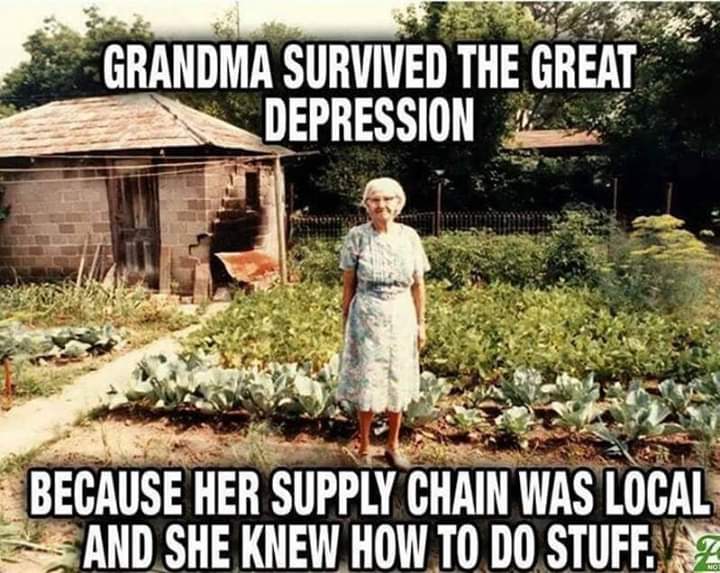
I’ve also been interested in the potential cultural impact.  Already there seems to be a minor revival in interest in gardening.  Part of that is prudent:  we need to have some food to fall back on should the supply chains face further disruption.

But I also suspect some of it is spiritual.  Modern man has become divorced from his roots in the soil—in Creation.  Modernity has liberated us from the constant fear of want, but that liberation came with a price:  we traded the liberty of the soil for the chains of comfort.  Growing a little vegetable garden, however meager, is a way to reconnect with the land, and with the beauty of God’s Creation.

Read More »

SubscribeStar Saturday: Family Time

Today’s post is a SubscribeStar Saturday exclusive.  To read the full post, subscribe to my SubscribeStar page for $1 a month or more.  For a full rundown of everything your subscription gets, click here.

This weekend’s SubscribeStar Saturday is a bit delayed due to some increased family time, particularly the celebration of my nephew’s third birthday.  One of the upsides to this disastrous coronavirus situation has been the sudden renewal of home life.

As we’ve reoriented our attitudes about and our relationships to work in such a dramatic way, the increased time at home and with loved ones has really highlighted how much happier our lives can be with the proper work-life balance.  Indeed, I’ve been more energized in my work than I have been in years in part because of the greater flexibility this otherwise terrible plague has afforded.

I’m cautiously optimistic that this shift could be more enduring than a couple of months of social distancing.  Indeed, “social distancing” may very well result in a renaissance of family togetherness.

To read the rest of this post, subscribe to my SubscribeStar page for $1 a month or more.

High-Tech Agrarianism

The coronavirus situation—which I am convinced is both quite serious, but also inspiring some huge overreactions—has created a world that feels almost entirely different than it did even a few days ago.  This time last week, I was convinced that the whole thing was way overblown, and that life would largely continue apace, minus some school closures here and there.

By Friday evening I was growing more concerned, as everything began to get closed or cancelled.  I proctored the SAT Saturday morning and even went out of town that evening.  At that point, I thought the risk of my school closing was greater than it had been even two or three days before, but I still figured it was a relatively remote possibility.

Then Governor McMaster announced the closure of all South Carolina public schools (I teach at a private school, but we always follow gubernatorial closures)—and a bunch of other stuff shut down.  I picked up dinner at a Hardee’s in Florence, South Carolina Monday evening after a guitar lesson, and it was surreal—everything was gone from the front, and the cashier had to give me a lid and straw according to their new cleanliness guidelines.

(Let’s take a moment to thank all those service industry folks and long-distance truckers who are continuing to work and risking exposure; they are unsung heroes.  Also, spare a thought to people in those industries that are out-of-work at the moment.  They need our love and charity now more than ever.)

That’s all to say that, in a remarkably short period of time, the United States has undergone a major paradigm shift.  The world of Saturday, 14 March 2020 at 2 PM—when I emerged from the cocoon of extended time SAT testing—was a different than the world of Wednesday, 18 March 2020 at 9 PM (when I’m writing this very belated blog post).

One trend—that I think will be positive if it endures—is the implicit rejection of globalism.  People are suddenly awakening, dramatically, to the manifold downsides of open borders and excessive global economic integration.  Suddenly, localism is back in vogue.

Read More »

The God Pill, Part III

I’ve written a couple of pieces (here and here) about the so-called “God Pill,” and specifically Roosh V‘s remarkable conversion to (Orthodox, it seems?) Christianity.  Roosh’s conversion, it seems, is quite sincere, and he’s put his money where his belief is by unpublishing many of his books dealing with “game,” the art of seduction.

Roosh wrote an essay about a month ago, “How I Turned To God,” in which he explains the events and influences that led to his conversion.  Roosh was the archetype of the atheist materialist:  an evolution-espousing microbiologist, who then began a successful—if only in the material sense—career as a professional Don Juan.

He literally had sex and wrote about it for a living.  As he writes, “How could a man who was so far from God come to have complete trust in Him practically overnight?”

Read More »

TBT: Lazy Sunday – APR Pieces

This coming Sunday’s edition of Lazy Sunday will mark the fiftieth installment of that venerable tradition (also, yesterday’s post marked the 500th post of all-time for the blog), so I thought I’d take a look back to the very first one, from 24 February 2019.

The first Lazy Sunday was aptly titled.  As I wrote at the time, I was “phoning in” the post; thus, the necessitous title for the unplanned series.

The posts looked back to my days writing and contributing to American Patriot Radio, an online streaming station that never quite took off, despite lofty plans and an impressive roster of hosts.  It seems some folks still participate in its chatroom, but it has that weird feeling of a place that no one really visits anymore, except for a handful of cranks.

But I digress.  I wrote some pretty good material (I think) for the website, and I hate to see it lost to the cranks.  So aside from celebrating the approaching fiftieth Lazy Sunday, I figured this would be a good way to draw attention back to those classic posts.  I also can’t help but appreciate the idea of a “reblog within a reblog.”

With that, here is the first “Lazy Sunday – APR Pieces“:

It’s been a busy weekend, so I’m very far behind on today’s post (about twelve hours late!).  That said, I’m worn out, so I’m phoning in this Sunday’s post.

I used to be associated with an online radio station, American Patriot Radio, in a mild way:  I would occasionally fill-in for the station’s most popular host, and I contributed some pieces for the site’s blog.

There’s no good way to navigate to these pieces on the site now, but they are, remarkably, still there.  I do not know the current status of the station, but while seeking out these pieces, I heard some streaming audio, so it may still be active, or it may be recycling old content.

Regardless, I thought it would be worthwhile to link to my writings there, as they reflect the heady days of early 2017, when the young Trump presidency seemed full of promise, and it looked as though populist uprisings would continue all over the globe.

Enjoy this grab-bag/impromptu archive of TPP submissions to APR.

8 May 2017 – “A Disheartening, but Expected, Defeat” (about the defeat of National Front candidate Marine Le Pen to France’s current president, Emmanuel Macron): https://americanpatriotradio.com/2017/05/08/a-disheartening-but-expected-defeat/

8 May 2017 – “Pat Buchanan’s America” (about the impact of Pat Buchanan’s economic and foreign policy thought on the Trump ascendancy): https://americanpatriotradio.com/2017/05/08/pat-buchanans-america/

9 May 2017 – “A New Conservatism?” (a rumination on the future of conservatism, and the possibility of a new “fusionism” to include Trumpism): https://americanpatriotradio.com/2017/05/09/a-new-conservatism/

10 May 2017 – “Comey-tose” (about the firing of former FBI Director James Comey, as well as a brief discussion of my frustration with National Review‘s hand-wringing over decorum):  https://americanpatriotradio.com/2017/05/10/comey-tose/

Enjoy this self-indulgent blast from the recent past.

–TPP