Christmas and its Symbols

It’s Christmas!  Imagine “Hark! The Herald Angels Sing” played on an uptempo French horn and a crackling fire.  That’s how I imagine Christmas morning—like a 1970s Christmas variety show.

In all seriousness, it’s truly the most wonderful time of the year.  Christ is born!  It’s a day for celebrating His Birth with family and friends.  Just like the Wise Men of yore, we exchange presents to celebrate (and to stimulate the economy).

Read More »

Christmas Eve

It’s hard to believe it, but Christmas is nearly here!  As a child, the anticipation seemed too much to bear, and the calendar from Halloween to Christmas seemed to stretch into endless, soggy days.

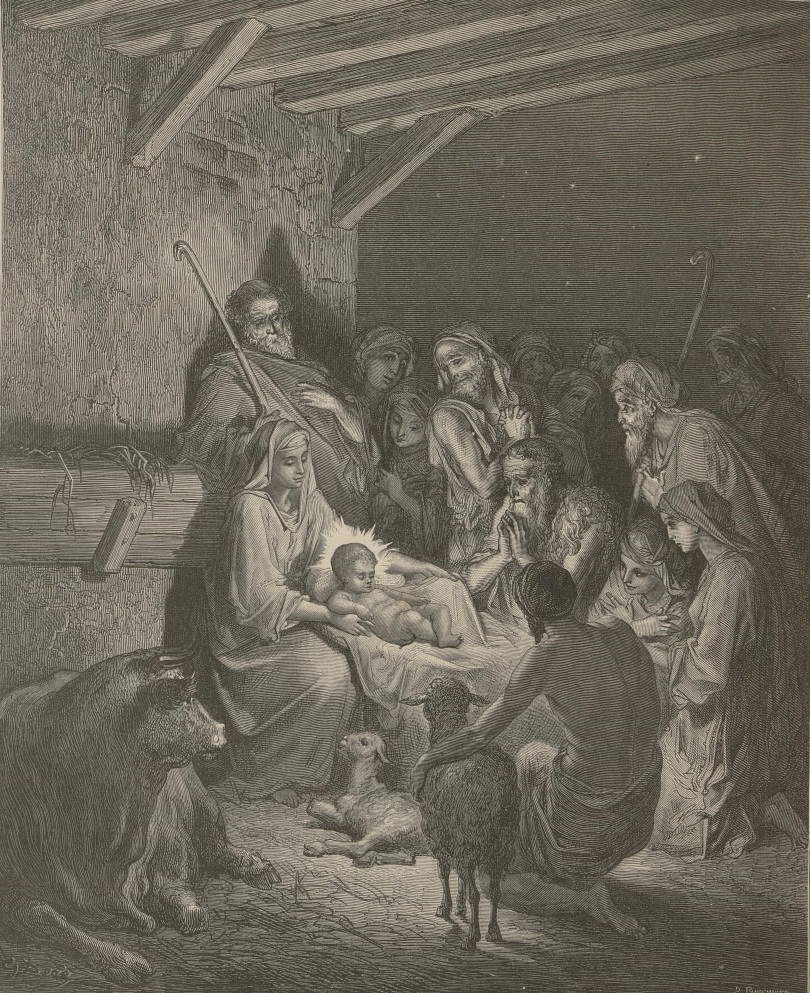
Christmas Eve is always the most magical, mystical part of Christmas time.  Popular depictions of Jesus’ Birth take place, presumably, on Christmas Eve—the angels bursting into the black, silent night above Bethlehem.  The whole event is supernatural—the Virgin Birth, the Star guiding the way to the manger, the angels appearing to the shepherds and singing.  Tradition has it that even the animals in the manger talked at the moment of Christ’s birth (at exactly midnight, of course).  If the rocks can cry out, singing praises to Him, why not some donkeys?

Read More »

Napoleonic Christmas

It’s Christmas Week!  And what a glorious week it is.  It’s been raining persistently in South Carolina since Sunday morning, but I’m enjoying the coziness of the hygge—warm coffee and lazy reading.

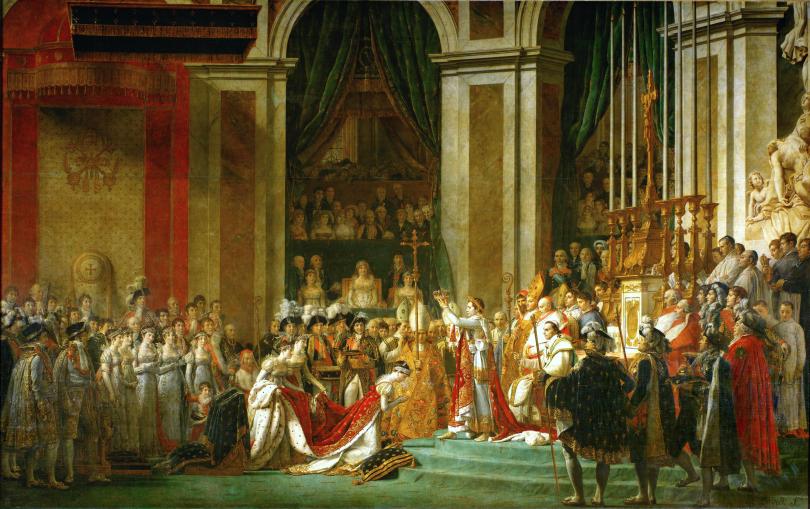
PragerU had a little video up this morning from historian Andrew Roberts about Napoleon.  It’s an interesting take on the not-so-short French emperor—an apologia, really (for those that prefer reading—as I often do—to watching videos, here is a PDF transcript).

Roberts argues that Napoleon was not the necessary precursor to Hitler, et. al.; rather, Napoloen was “sui generis“—a man unto himself.  While I believe the ideas of the French Revolution did unleash the totalitarian forces of Hitlerism, Stalinism, Maoism, and all the rest—a murderous, bloody Pandora’s Box—I’ve never considered Napoleon among their ranks.

Read More »

Lazy Sunday XLI: Food

‘Tis the season for excessive consumption, dear readers.  For a blog with a synonym for “fat” in the title, I’ve yet to feature a Lazy Sunday about food.

Well, that’s about to change.  Here are four succulent pieces about food—and my favorite vice, gluttony:

  • #MAGAWeek2019: Fast Food” – One of the pieces from MAGAWeek 2019 (all exclusive to my SubscribeStar Page with a $1/month subscription), this little essay is an ode to the glories of fast food.  Fast food truly is a modern-day miracle, bringing together advancements in agriculture, food preparation, logistics, etc., into one gloriously low-priced, high-fat package.
  • The Future of Barbecue” – The inspiration for this post was a piece at the Abbeville Institute, which detailed the deleterious effect of “mass,” or mass-market, barbecue chains on mom and pop barbecue joints, as well as the tradition of community barbecue.  It’s one of the many interesting chapters in the negative consequences of unbridled economic growth and efficiency at the cost of tradition and community.
  • Shrinkflation” – Another SubscribeStar Saturday exclusive, this piece examines the shrinking size of beloved foodstuffs.  Did you know a two-liter Coke isn’t really two-liters anymore?  Ever noticed how Twinkies don’t seem as big as they used to appear?  Well, in an effort to cut cost (and, presumably, to bamboozle consumers), many food processors cut the sizes of their products in order to hide cost increases from customers.  I’ve had the gnawing feeling lately that the future we live in is far less amazing than it’s supposed to be; here’s another example of reality disappointing us yet again.
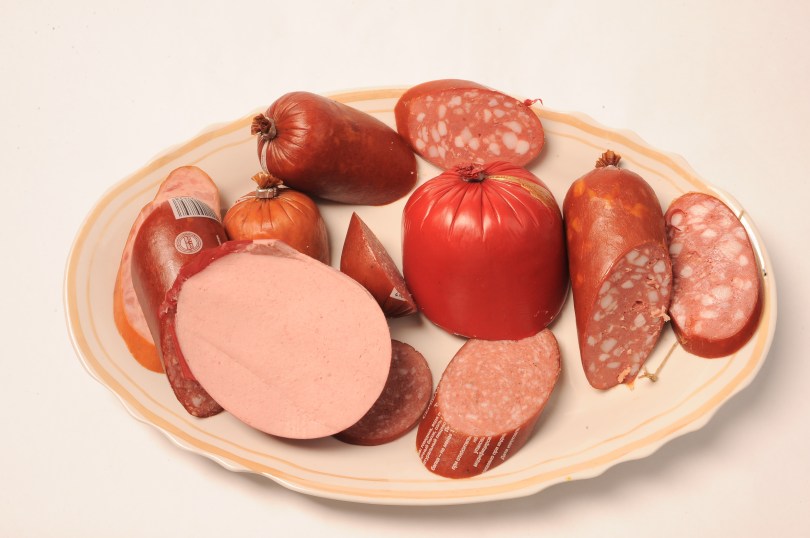
  • Bologna” – I was really stretching when I wrote this post (just this past Friday), but, well, I love bologna.  In our current age of hyper-politicization, even the sandwich meat we consume says something about socio-economic status and our outlook on life.  Bologna is the humble mystery meat of the workingman, and I cherish its delicious, cost-effective flavor.

That’s it!  I’m looking forward to stuffing my face with gleeful abandon over the next few days (you know, to celebrate the Birth of Jesus).  Then I’ve got to reverse course; my jeans are ever-snugger, and my double-chin has slowly made a comeback.  Yikes!

Happy Eating—and Merry Christmas!

—TPP

Other Lazy Sunday Installments:

Bologna

The long national nightmare is over.  No, not the impeachment farce; it’s the end of the semester!  Grades are in the books, work is done, and teachers and students are heading out for two weeks of glorious Christmas Break.

It’s been an eventful week.  As the House was fulminating about Trump’s alleged “crimes,” I was playing a gig with our community jazz band.  I play second alto sax with the group, but I asked to sing a song on this concert.

It’s long been a dream of mine to sing with a full jazz swing band behind me, and that dream came true Wednesday evening.  I sang Andy Williams’s “It’s the Most Wonderful Time of the Year,” and was a nervous wreck (if you’ve seen the lyrics to that tune, you’ll understand why—what a mouthful!).  But I got through it admirably enough, even with a low-grade sinus infection.

The gig was during the dinner hour at a large church in town.  The first alto player indicated how hungry he was, and wondered if he could get a plate.  I told him (unhelpfully) that I’d eaten a bologna sandwich in my car before coming in (which sounds like a joke and/or the most mundane, pathetic detail in the world, but it was true).  All the old guys in the band—it’s a swing band, so there are a lot of them—expressed their enthusiasm for bologna sandwiches, and asked how it was prepared:  did I use mustard?  “Nope, Duke’s mayonnaise, with cheese.”  Murmurs of approval followed.

Read More »

TBT: The Bull on the Roof

It’s been a cheery, musical mood here at The Portly Politico.  I’ve been tearing through popular Christmas carols, offering up some histories of these beloved tunes, as well as a little musical analysis.  Thanks to Milo sharing my piece “Milo on Romantic Music,” I enjoyed a large surge in traffic that has now settled into a nice daily trickle (nothing huge, but it’s helped).

University of Chicago medievalist Rachel Fulton Brown also linked to the post in a piece on her blog, Fencing Bear at Prayer.  The success of that piece, plus the beauty of Christmas music and the general cheeriness of the season, has inspired me to write more about music.

This week, then, I’ve cast back to this summer, when I wrote a little piece about a whimsical piece of modern classical music, “The Bull on the Roof.”  As I recall, I wrote the piece on my phone—never ideal—while playing with my little niece.  I’d heard the tune on public radio on the drive to my parents’ house, and was so taken with its charm—and lacking any other suitable topic, or the proper conditions to write about them—I jotted out this short piece.

“The Bull on the Roof” is a marvelous example of modern classical music.  And for all I rail against cosmopolitanism, it’s a fine example of the ideal of cosmopolitanism:  a French composer celebrating the vibrant, lively traditions of Brazilian folk music.  That’s the “salt in the stew,” as John Derbyshire calls it—the pinch of cultural diversity that makes the broth more delicious.

Yesterday was spent teaching History of Conservative Thought, painting a classroom floor, and rushing around the Pee Dee region teaching four music lessons, before finally heading out of town for a few days. Needless to say, there wasn’t any time to get a post ready for this morning.

The news has also been light. The first round of Democratic presidential primary debates is tonight, but who cares other than the candidates?

There was a bit of a diplomatic imbroglio with Iran last week, but did anyone really think war was going to break out? Trump handled it Trumpishly; that is effectively, letting the mullahs sweat it out a bit before giving them an out (and signalling to Iranians that he cares more about their lives than the Ayatollah).

That’s why I’ve been sticking to the history and culture posts lately. There just hasn’t been much to say on politics, because there’s so much good happening. Illegal immigration is still a major problem, but otherwise the only “bad” news is that the economy is still growing, just not as quickly as a year ago.

So, brace yourself for another self-indulgent post (this publication is a blog, after all). While driving last night, I hit a classic rock and talk radio dead zone, so I resorted to public radio. I was pleasantly surprised.

The program featured a concert recording of the Greenville (SC) Symphony performing French composer Darius Milhaud’s delightful “Le Bœf sur le toit,” or “The Bull on the Roof.”

Fans of Civilization VI who have played as Brazil will hear some similar themes and styles, as the composition quotes dozens of Brazilian folk songs. The tune is full of Latin-inspired motifs, and it is a charming, fun piece.

Milhaud wrote the piece in 1920 for a silent Charlie Chaplin film that was never made, though the ballet has apparently been staged. I particularly enjoy these kinds of jaunty, popular modern classical pieces (I adore Gustav Holsts’s The Planets because they are pleasing and interesting, but never pretentious). If I’m going to listen to something for nearly twenty minutes, don’t make it a Philip Glassian nightmare experiment in purposeful atonality.

If you have twenty minutes, I highly recommend listening to this piece. It will be a more enjoyable use of your time than watching the Democratic debates.

O Little Town of Bethlehem and the Pressures of Songwriting

Somewhere—I think it was in one of the Civilization games, but I can’t seem to find the exact quotation—I heard a pithy saying, something along the lines of “Genius is a combination of pressure and time.”  It’s one of those expressions that instantly rings true.

Years ago, a coffee shop in a nearby town (it’s now become a hip, upscale dining spot—and it axed the live music) used to host a quirky songwriting competition.  The premise was simple—every month, participants would pay $5 entry fee into a pot, and a “secret judge” would pick a winner, who would win that evening’s pot.  Sometimes there would be a small “second round” of the top three contenders for that evening (I won once, back in January 2014, when I believe I debuted “Greek Fair“; I was surprised, but also thankful that I wouldn’t spend $5 a month for the rest of the year).

Read More »

Away in a Manger

The political scene still strikes me as incredibly boring—a sad testament to how jaded our politics have become, that we don’t get more riled up about impeachment proceedings.  It’s also a testament to the perfidy and disingenuous of congressional Democrats:  everyone knows the articles of impeachment are a politically-motivated farce and, to use GEOTUS’s preferred name, a “witch hunt.”

It’s sad that President Trump will be impeached, and I’m nervous that squishy neocons and RINOs in the Senate will betray him.  That would be the ultimate kick in the teeth—the elites backhanding their own citizens for daring to challenge their aloof rule.  I shudder to contemplate the fall out should conviction and removal in the Senate occur.

Until then, it’s all a distracting media circus, with the Democrats and press engaged in a frenzied dance around the cannibal’s pot.  Even then, it manages to be incredibly dull.  At least actual cannibals have some conviction.

All that said, let’s look at more Christmas carols!  Next up:  “Away in a Manger.”

Read More »

Lazy Sunday XL: Christmas Carols

No, it’s not an “extra large” edition of Lazy Sunday, dear reader:  it’s the fortieth edition of this hallowed tradition.  That’s forty Sundays of thematic reflections, gazing back at the output of fifty weeks of consecutive daily posts.  Yep—today marks the 350th consecutive day of posts here at The Portly Politico.  We’re just fifteen days away from reaching the one-year mark.

Just as yesterday’s SubscribeStar Saturday post on “O Holy Night” (subscribe today for just $1 a month to read it and dozens of other pieces) should have come as no surprise to readers, this Lazy Sunday continues with that theme.  Indeed, we’re looking back at the posts this week (and from last December) about Christmas music:

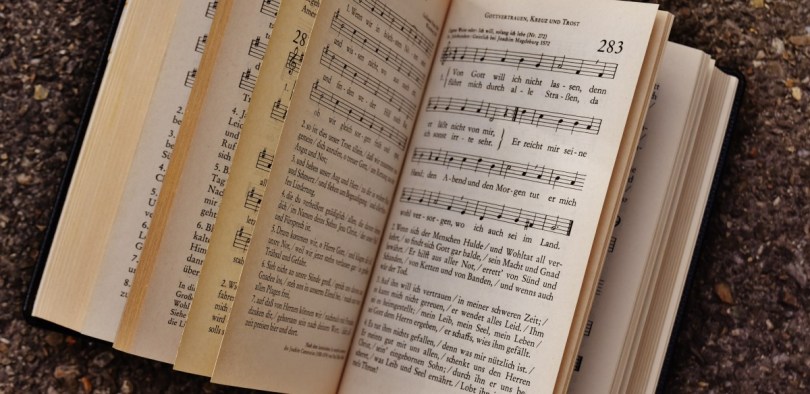
  • ‘Silent Night’ turns 200” (and “TBT: ‘Silent Night’ turns 200“) – I wrote this post on Christmas 2018.  At the time, the world was celebrating the 200th anniversary of a sweet, simple Christmas carol, and one of my all-time favorites.
  • The Joy of Christmas Carols” – This piece is a reflection on the sheer joy of playing and singing Christmas carols.  Like traditional hymns, carols possess wonderful staying power, and they stick with you powerfully.  I’ve often caught myself singing “Joy to the World” (more below) in the middle of July.  They also beautifully and simply tell the story of Christ.
  • Joy to the World” – “Joy to the World” is somewhere in my Top 5 Favorite Christmas Carols (if such a list actually existed).  The Number One slot goes to our next entry, but “Joy” is up there, for sure.  In this post I analyze the simple but effective use of a descending D major scale to kick off the melody of a song that leaps and bounds across those eight notes, much like the soaring tones of the angels that appeared over Bethlehem that night some 2000 years ago.
  • SubscribeStar Saturday: O Holy Night” – I believe that, objectively, “O Holy Night” is the greatest Christmas song ever.  I used to say the “objectively” part as a joke—how can an opinion be objective reality?—but now I’ve come to believe it.  It’s powerful.  It’s operatic.  And for $1 a month, you can find out why.

That’s it!  We’re closing in on Christmas, rapidly.  Enjoy your Sunday, and Merry Christmas!

—TPP

Other Lazy Sunday Installments:

SubscribeStar Saturday: O Holy Night

Today’s post is a SubscribeStar Saturday exclusive.  To read the full post, subscribe to my SubscribeStar page for $1 a month or more.  For a full rundown of everything your subscription gets, click here.

The unofficial theme of the blog this week has been Christmas music.  What better way to cap off the week than with a post about the best Christmas song ever written, Adolphe Adam’s “O Holy Night“?

Like its cousin “Silent Night,” the story of “O Holy Night” involves a village’s church organ.  In 1843, the church organ of the French village of Roquemaure had recently been renovated, so the parish priest asked a local wine merchant and poet, Placide Cappeau, to write a poem to commemorate the occasion.  That poem, “Cantique de Noël,” would be set to music a short time later by composer and music critic Adolphe Adam—and Christmas history would be made.

To read the rest of this post, subscribe to my SubscribeStar page for $1 a month or more.