TBT: There is No General Will

Yesterday’s post about the Electoral College—and why the American constitutional system generally eschews raw majoritarianism at the national level—reminded me of an essay I wrote in 2016 about Rousseau’s idea of the “general will.”  It was probably the least popular post of the summer, but it highlights the dangers of succumbing to “mob rule,” a system of radical egalitarian democracy that inevitably results in tyranny and violence.

It was Rousseau’s notion of the general will—and the idea that “Man is born free, and everywhere he is in chains“; therefore, men must be forced to be free—that unleashed the horrors of the French Revolution and, by extension, the destructive, totalitarian regimes of the twentieth century.

The essential idea behind Rousseau’s political philosophy is that, in the absence of social constraints, man would be inherently noble—the “noble savage” idea.  As such, society exists as a way to keep the elites ensconced in power.  Whereas Lockean empiricists (that’s pretty much all Americans in the Anglo-American philosophical tradition) argue that property rights are necessary to protect the weak from the strong, and that human nature is inclined toward sinfulness (especially in the absence of law and order), Rousseauean idealists argued that property rights oppress the weak for the benefit of the strong.

Therefore, society needs to be tweaked—legally, socially, culturally, economically, etc.—until the desired outcomes are achieved.  Naturally, the “desired outcomes” shift constantly, as they would inevitably have to under a regime purportedly based on the fickle whims of the people.  Regardless, the Rousseauean view is that man, at bottom, is perfectible, and that changes to external factors will make him truly free.

Thus, we see the never-ending arguments on the Left for adopting this new policy or that new right.  Sometimes, of course, policies need changing, adopting, or repealing, but the Left doesn’t seem to have any end-goal in mind; rather, it marches on a perpetual track of “progress” that, we’re told, will one day immanentize the eschaton and bring paradise on Earth.

The conservative is naturally skeptical of these claims.  Evangelical and traditional Christians understand well man’s “sin nature,” and hard experience has taught us that, in the absence of social and legal order, life would become an orgiastic free-for-all in which the strong oppressed the weak and took what they could.  Believers also understand that paradise on this world is impossible (although that doesn’t mean we shouldn’t try to improve our world; it just means that, ultimately, we’re fallen, and only Christ can make us whole—what civilization we do enjoy, and the tolerant form Western civilization has traditionally taken, is a product of Christianity).

(For a related illustration of this phenomenon, consider how much dating and marriage have changed since the advent of the Sexual Revolution, which “freed” men and women of traditional social boundaries regarding sexuality, courtship, and marriage.  Sixty years ago, a relatively meek “beta male” could more or less be assured marriage, as promiscuity was frowned upon and women were encouraged to take one partner; now, an “alpha male”—the “strong” of the Sexual Revolution—cultivates multiple partners, while bookish “betas”—the “weak”—struggle to find mates.)

I always come back to G.K. Chesterton’s fence:  before you tear it down, you need to know why the fence is there.  It may very well serve a useful purpose that, to your eye, might not be immediately apparent (an endorsement for studying history!).  Or it could be useless and in need of discarding.  Either way, do your research first, and be wary of swift, radical changes.

With that, I give you 3 August 2016’s “There is No General Will“:

I’ve been watching the television series Wayward Pines (don’t worry; no spoilers), which raises tons of great questions about how a society–particularly a closed one under duress–should function.  What’s the proper balance between freedom and security?  How much should governing elites reveal to the folks, and what should be concealed?  Should people fulfill specific roles in a society to benefit the greater goals of that society, or should they be free to choose their professions (and, for that matter, their mates, homes, schools, etc.)?

These are interesting and complicated questions.  Indeed, the question of the proper balance between freedom and security has puzzled republics since Periclean Athens.  The question itself is misleading, I would argue—and likely will in a future post—that the two are not mutually exclusive.

“[T]here is no such thing as the general will.”

But I digress.  All of these questions seem to pose a larger one:  what is the “general will” or “greater good” of a society, and how should a society go about pursuing it?  My answer is that there is no such thing as the general will.

Now, to be clear, this statement does not mean that I think there’s no merit in a society pursuing some common goals, or that I deny that sometimes in a majoritarian system there will be policies that some people don’t like, but that are beneficial for society as a whole.  Our whole constitutional system in the United States is carefully balanced to make sure that the “will of the people” is well-represented at the local, State, and national levels, while still guaranteeing and protecting the basic rights of individuals—even when those rights aren’t particularly popular.

But here’s the rub—while our constitutional order protects against the tyranny of the majority, the broad notion—from French philosopher Jean-Jacques Rousseau—of the “general will” acknowledges no such limiting principle against the power of the majorityIt is against this sense that the “will of the people” is the be-all, end-all of social good that I stand.
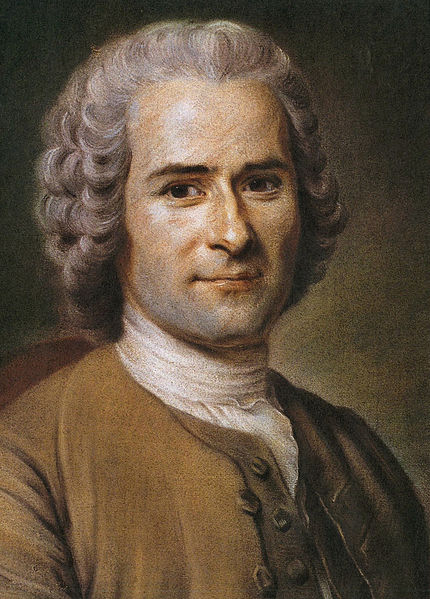
Jean-Jacques Rousseau, Philosophical Super Villain.
(Image Sourcehttps://en.wikipedia.org/wiki/File:Jean-Jacques_Rousseau_(painted_portrait).jpg, portrait by Maurice Quentin de La Tour)

The people, as a whole, are fickle.  It’s very difficult to get ten people to agree about what to eat for dinner; note how difficult it is for 330 million to agree on even the most basic of issues (in South Carolina, we still haven’t reached any kind of consensus about how to pay for and fix our roads, something virtually everyone wants done).

Even if you can get ten reasonable people to agree to, say, a long-term weekly dining schedule, at some point one or two will start to say, “Well, maybe we could have spaghetti on Wednesday nights instead of tacos.”  Imagine that conversation happening loudly and angrily across fifty States.  It’s a recipe—pardon the pun—for disaster.

Raw majoritarianism—what Rousseau appears to be calling for when he argues that society should be based on the “general will” of the people—is an unworkable scheme on anything but the smallest levels of society.  Rousseau’s chilling dictum that men are “forced to be free” reveals the inevitable consequence of unbridled democracy:  ultimately, the inexpressible “general will” becomes expressed through a demagogic tyrant, or through a legislator uninhibited by any restraints on its law-making authority beyond what the people want.

“[T]he ‘general will’ acknowledges no… limiting principle against the power of the majority.”

I’ve long viewed Rousseau as one of the great villains of modern philosophy, and I would argue that one can draw a more-or-less straight line from Rousseau and the French Revolution through fascism, communism, and totalitarianism, all the way to modern illiberal progressivism.  Rousseau—like modern progressives—believes in the mutability of human will, arguing that laws, not human nature, make people bad or good.  Get the laws right–or tweak the system enough–and you can spit out completely virtuous people.

Thus we see the conceit of the modern Left that no one commits crime out of greed or evil; instead, they’re “victims of circumstance” or subject to “systems of oppression” that cause them to do evil.  If only we created more programs or redistributed more wealth—or, if taken to the logical extreme, if only we did away with private property altogether, since the state and its laws exist to protect it—then, finally, man would be perfect.

Such notions are not only absurd; they are hugely injurious to both individual freedom and the health of society at large.  A virtuous society is one that cultivates a virtuous culture, which is only sustainable if it educates its people to live virtuously, recognizing that there will always be failures because, after all, to err is human.

(Note:  I do acknowledge that sometimes people are driven to commit typically immoral deeds out of necessity; however, I believe our society hugely exaggerates the extent to which such motives drive criminality and wickedness; just ask any wealthy person who’s ever been convicted of shoplifting or embezzlement why they stole, and you’ll quickly realize that even people with plenty of material safety are tempted to sin.)

“Raw majoritarianism… is an unworkable scheme….”

Expecting pure perfection is dangerous and unrealistic.  Mistakes are the inevitable price of freedom.  You can ignore reality for a time and get by with it, but eventually it will catch up.

Rather than idealistically seek after a non-existent “general will,” we should instead govern ourselves—and resist tyranny in the process.  To do so requires decentralization of power (and more local decision-making), a shared understanding of American values, and an education rich in morality, virtue, and philosophy.

(To read more about Rousseau’s thought–and, perhaps, to correct my errors and oversimplifications, read more at http://plato.stanford.edu/entries/rousseau/.)

TBT: Capitalism Needs Social Conservatism

On Tuesday, I wrote about the “Human Toll of Globalization“—the dire consequences, both economic and moral, that befall a community when its primary economic engine is gutted through a naïve faith in unbridled free trade and globalization.  Another title for that piece might be almost a mirror of this essay’s from 2016:  “Civil Society Needs Cash.”

I don’t want to take that argument too far, though.  In the case of Danville, Virginia—and countless other American towns that have seen their prosperity flee abroad, or to bicoastal urban cloisters—a decaying economy wrought decaying morality, civil society, and civic pride.  That would suggest that prosperity, in and itself, cannot sustain true morality and virtue.

Indeed, as I argue in the essay below, “Capitalism Needs Social Conservatism,” excessive prosperity and material comfort breed a kind of moral complacency, what Kenneth Minogue likened to widespread Epicureanism (an excellent essay, and well worth reading if you don’t mind subscribing to The New Criterion, which is also worth the price).  Richard Weaver—one of my intellectual heroes—compared the material comfort of the then-mid-twentieth-century West to a drunk who, having grown addicted to alcohol, and requiring ever-greater quantities of it, no longer has the capacity to obtain the very substance he craves.

Milton Friedman famously argued that economic liberty is a necessary precursor to political liberty.  Similarly, I would argue that morality and virtue are necessary pillars to sustaining economic liberty for any length of time.  Indeed, George Washington argued that religion and public morality were “indispensable” to a self-governing republic.

In my mind, the orthodox libertarian (in the political sense, not the “free-will” libertarianism of the free-will-versus-determinism debate in modern philosophy) commits the same error as the orthodox Marxist in relying too much on economic analysis of behavior.  The idea of the “rational man” or “man as a rational animal” is a uniquely modern concept, and while Westerners have tried hard to shoe-horn themselves into that mold, the inner, teeming depths of our souls are still pre-rationalist.  We need God, and we still live according to symbols, rituals, and virtues.

As I wrote in 2016, “Without moral common ground and shared values that stress self-control, liberty rapidly turns to libertinism.  Libertinism without a great deal of wealth leads to shattered lives, which in turn wreck families and communities.”  I’ll explore these ideas further in my upcoming eBook, Values Have Consequences.

***

For the past week, I’ve written about the decline of the nuclear family, with follow-up posts about divorce and sex education, and about the negative impact of the of the welfare state on family formation.  These post have generated some wonderful discussions and input from followers, and I’ve been surprised by their popularity.

As I wrote in “Values Have Consequences,” I’m devoting Friday posts to discussions of social conservatism.  Social conservatism is increasingly the red-headed stepchild of the traditional Republican “tripod” coalition that also includes national security and economic conservatives (with the rise of Trump, populist nationalism could count as a fourth leg).  Politically, this marginalization makes some sense, as it’s not likely that fifty or sixty years of cultural attitudes and values will be changed at the ballot box.

Nevertheless, social conservatism is an important leg of the tripod.  Indeed, I would argue that the three coalitions are not at odds, but create logical synergies that allow each leg to stand.  The stool is much more stable when the three legs work together.

Economic conservatism–by which I mean the belief that freer markets, fewer and lighter regulations, and lower taxes, or what is more properly called neoliberalism (after the classical liberalism of the 18th-century thinkers like Adam Smith)–is wonderful and hugely important.  It’s led to massive gains domestically and globally, lifting untold millions off people out of poverty.  It allows people to enjoy a greater variety of goods and labor-saving devices, and provides more leisure time (and plenty of things to do during that time).

But free markets unmoored from guiding principles, strong and stable institutions, and the rule of law can morph into mindless Mammon worship.  Without a shared sense of trust and belief in human dignity, capitalism becomes cold and abstract.

Further, full-fledged economic liberalization without the limiting principles applied by constitutionalism and a morality supported by strong families and a robust civil society can lead to socially-destructive disruptions and behaviors.

As I’ve argued many times, making mistakes or bad choices is the necessary price of liberty.  But for self-government to work effectively–and to avoid social instability–a healthy dose of social conservatism is the best medicine.

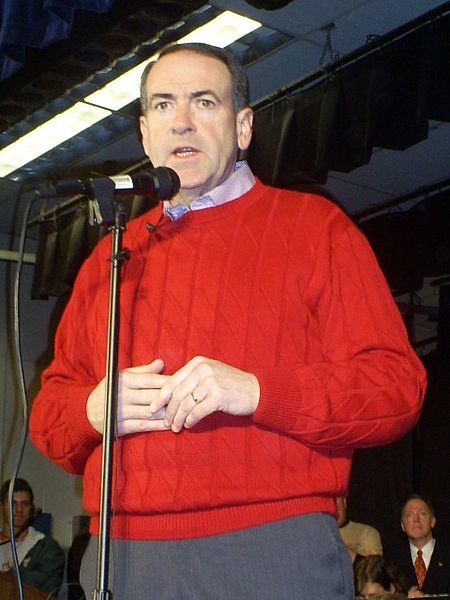
Former Arkansas Governor Mike Huckabee wears the most socially conservative outfit ever; later, he played bass on Fox News.
(Image Sourcehttps://en.wikipedia.org/wiki/File:Huckabeemike.JPG; photo by Craig Michaud)

To offer an illustration from recent history, contrast the post-Soviet experiences of Poland (and most of Eastern Europe) with that of Russia.  Despite decades under Communism–an ideology that was aggressively atheistic, stressing loyalty to the state and Communist Party over all else–Poland roared back into the West.  It adopted neoliberal (modern conservative) economic policies, and was one of the few European nations not to suffer severely during the Great Recession.

Russia similarly adopted “shock therapy” after the Soviet Union collapsed for good in 1991.  Rather than experiencing a huge economic boom, however, well-connected former Communists and others close to the old regime made off like bandits, leaving most Russians left holding the bag.

What’s the difference?  For one, the Russians lived under Communism for nearly a generation longer than the Poles, meaning there were several generations of downtrodden, state-dependent Russians by the time the USSR collapsed.  Many of these Russians were unable to adjust to a free-market system after living in a closed economy for so long.

Another key difference–and one that I think is extremely significant–is that Russians lost any scrap of civil society they might have possessed prior to the Bolshevik takeover in late 1917.  Civil society–the institutions between the basic family unit and the government, like churches, schools, clubs, civic organizations, etc.–was automatically preempted when every club, organization, or activity became part of the Soviet government.  The severely crippled (and, as I understand it, collaborationist) Russian Orthodox Church was unable or unwilling to push back against Soviet rule, providing little in the way of a spiritual alternative to the totalizing influence of Communism.

“[F]ree markets unmoored from guiding principles, strong and stable institutions, and the rule of law can morph into mindless Mammon worship.”

Poland, on the other hand, managed to maintain its deep Catholic faith.  The Catholic Church as an international organization (and with powerful, influential popes, most notably the Polish anti-Communist John Paul II) could never be wiped out completely by Soviet Communism.  Further, the Poles formed the Solidarity trades union movement, which offered an alternative to official Communist organizations.

Thus, after the dissolution of the Soviet Union, Poland emerged with a strong civil society anchored in a richly Christian worldview and ethic.  The shared sense of morality–one that stresses mutual respect, the dignity of human life, and the importance of honesty–allowed the complex deals and uptempo economic exchanges of capitalism to occur smoothly and rapidly.  From these civil and religious values came a firmer grasp of and respect for the rule of law, making predictable economic activity and long-term planning possible.

Russia, on the other hand, devolved into a fast-paced, nationwide run on the national cupboard.  Those with good connections grabbed whatever public funds and goodies they could.  Normal Russians couldn’t figure out why their government checks and free lunches stopped coming, and couldn’t understand why (or how) to pay taxes.  With the collapse of the Soviet Union, all civic organizations ceased to exist, because they were all part of the Soviet government.  Without any civil society or other enduring institutions to model good behavior and to stress and enforce moral values, Russia struggled–and continues to do so–to adapt to global capitalism and democracy.  Not surprisingly, they’ve turned to a dictatorial strongman for guidance.

***

What of the American context?  As I’ve written before, I’m skeptical of full-fledged libertarianism–what I would broadly define as the marriage of economically conservative and socially liberal views–because it fails to acknowledge the need for strong moral values to uphold its own economic assumptionsLiberty and self-government can only really work when coupled with self-imposed order and restraint.  Without moral common ground and shared values that stress self-control, liberty rapidly turns to libertinism.  Libertinism without a great deal of wealth leads to shattered lives, which in turn wreck families and communities.

Eventually, unbridled, unchecked lasciviousness–even among (formerly) responsible adults–results in social chaos, requiring a dwindling number of hardworking, honest, and thrifty individuals to pay for the ramifications of poor moral choices that have been magnified many times over.

“[L]ibertarianism… fails to acknowledge the need for strong moral values to uphold its own economic assumptions.  Liberty and self-government can only really work when coupled with self-imposed order and restraint.”

Capitalism’s blessing of unparalleled abundance is also a potential curse.  Without a strong civil society that stresses good moral values–and without proper historical perspective–it becomes easy to take that abundance for granted.

That abundance also allows, for a time, more and more individuals to pay for the price of bad decisions.  Prior to the modern era, few people were wealthy enough to risk the negative consequences of immorality.  Now, Americans and Westerners enjoy a level of material comfort and well-being that can absorb at least some of the unpleasantness of questionable choices.  Over time, however, that security breaks down.

Richard Weaver likened the situation to an alcoholic who is so addicted to his drink, he’s unable to do the work necessary to pay for his addiction.  The more he needs the alcohol, the less capable he becomes of obtaining it.  Likewise, the more individuals become addicted to luxuries, the less able they are to work hard to maintain them.

To avoid the fate of Weaver’s drunk, we must recognize the importance of social conservatism.  While we should maximize individual liberty as much as possible, and within the bounds of the Constitution, we should also stress the moral and religious underpinnings that make that liberty both possible and responsible.

Indian Man Worships Trump as a God

Bussa Krishna, a 31-year old Indian man living in Hyderabad, has spent the last three years worshipping President Donald Trump.  His devotion to the God-Emperor is so intense that his parents have moved out of the house—almost the reverse of the parents who sued their 30-year old son to move out.

It seems that the social alienation Trump supporters face is an international phenomenon.

While I’m glad to see the President has admirers overseas, I pray that this gentleman will downgrade his admiration from “god worship” to “avid supporter.”

I also see an opportunity for President Trump here to evangelize.  All it would take is a quick tweet, something along these lines:

“Thanks for the love, Bussa!  But while we’re still winning and Making America Great Again, there is One far greater than me. Jesus Christ is our Lord and Personal Savior, and He deserves your praise.”

Y’all forward this along to Sarah Huckabee Sanders and see if we can’t make this happen.