Hungarian Border Wall is 100% Effective

Pundit Dick Morris has a short piece on his website, DickMorris.com, about the Hungarian border fence.  It’s a quick read, but here are the key excerpts:

Along its 109-mile border with Serbia, Hungary has built a 13-foot-high fence featuring concertina wire (barbed wire in circles). It took six months to build (July-December of 2015) and cost $106 million. It was built by contractors and 900 Hungarian soldiers.

The fence consists of three rows of razor wire with a sturdier 11.5-foot-tall barrier inside….

And the Hungarian fence works! Before the barrier was built, in September of 2015, 138,396 migrants entered Hungary over the Serbian border. Within the first two weeks of November, the average daily flow had dropped to only 15 people.

Hungary and its populist-nationalist leader, President Viktor Orban, have faced a great deal of backlash and scorn from the progressive, bureaucratic autocrats of the European Union for their border control and immigration measures.  But Hungary is intent on keeping itself culturally Hungarian—it cannot effectively absorb the millions of potential migrants that began pouring into Europe from Syria and North Africa a few years ago.

President Orban is often cast as some latter-day Hitler, but he’s merely doing his job:  he’s putting the people of Hungary and their interests first, behind the interests of foreign vagabonds.

While researching this post, I learned that the European People’s Party—an umbrella party of “center-right” parties (as many outlets described it) running in the European Parliament’s elections this May—is barring Orban’s Fidesz Party from participating.  Apparently, part of their concern is that Orban’s Fidesz Party has posted humorous ads depicting George Soros and Jean-Claude Juncker (the Leftist super-villain billionaire and the President of the European Commission, respectively), suggesting the two are in cahoots to control Europe.

Well… aren’t they?  Isn’t the “center-right” European People’s Party supposed to represent a challenge to the Eurocrats (if anyone knows, I’m only asking semi-rhetorically)?

Two takeaways:

1.) Leave Viktor Orban alone.  He’s helped protect his country at a time when other European nations turn blind-eyes to Muslim rape gangs.

2.) The original point of this post:  President Trump can follow the Hungarian model and build an effective wall on the cheap.  Granted, we have more than 109 miles, but copy-paste that approach along our long border with Mexico, and could get the job done quickly and efficiently.

Open borders and progressive politics are the real dangers to liberty and prosperity, not an unabashed nationalist in Central Europe—or one in the United States.  Build the Wall, Drain the Swamp, and Leave the European Union!

TBT: Brexit: The Antidote to Supranational Tyranny

The first indication that a major sea-change in Western politics was underway was the historic Brexit vote in June 2016.  The mere fact that Britain voted to leave the European Union boosted nationalist movements in Europe, and reflected the growing discontent of Britons with the policies of their elites.  That frustration manifested itself outside of Britain, and seemed to presage—at least in hindsight—Trump’s unlikely, underdog victory in November of that year.

The following is my first piece on Brexit, dated 13 June 2016.  I wrote it in response to a student’s inquiry.  That launched a series of pieces on Brexit that I will—eventually—compile into an eBook, the title of which will draw from a phrase I coined for this article:  “supranational tyranny.”

In essence, I argued then (and still argue now) that Brexit was, at bottom, a referendum on national sovereignty.  Issues like trade and immigration, while quite important, were merely the outgrowth of that fundamental issue.  Brexit, in so many words and in so many ways, simply asked, “Can a country make its own decisions about its own destiny?”  Like so many fundamentals, that we even have to ask the question demonstrates how far postmodern deconstructionism has taken us.  Regardless, the people of Britain resoundingly answered, “YES!”  The vote to leave was not an endorsement of xenophobia or anything else:  it was a vote for national sovereignty.

The European Union was a classic bait-and-switch:  Britain joined under the pretense that it was entering an economic free trade zone.  That morphed—it seems, based on the EU’s charter and its goal of “ever closer union”, deliberately and by design—into the supranational, undemocratic behemoth it is today, with decisions largely dictated from Germany and its toadie, France.  When the people lost the ability to control their own borders and immigration policies—the bare-bone essentials of what constitute a “nation” and “national sovereignty”—they seized the opening and voted for liberty and sovereignty over continued acquiescence in exchange for goodies.

Here is June 2016’s “Brexit:  The Antidote to Supranational Tyranny“:

I’ve been planning to do a few pieces on the question of “Brexit”–whether or not the United Kingdom should leave the European Union, or to remain a part of it–but originally intended to wait until the 23 June referendum drew closer.  However, over the weekend I received this e-mail from a student:

A summer vacation well spent.
In case you can’t read the e-mail, here’s the text in full:
Dear Mr[.] Cook (Self entitled defender of Rock & Roll),
I know this isn’t the average email you get from a student, political. However, with one of the most impactful votes to effect [
sic] the US economy to take place in just 11 days, June 23, I would like to ask how you felt on the United Kingdom’s vote on whether to stay in the EU or leave it. US news has refused to cover this major event due to irresponsibility and foolishness. Just wanted to know your thoughts on this vital subject.

(Please note that I am blessed to teach some very bright students.)

Brexit is a hugely complicated issue; however, viewed through the lens of national sovereignty versus the dubious claims of supranational organizations, the ultimate solution is, in my mind, a no-brainer:  the people of Great Britain should vote “Leave” this June.

Now for some preliminary disclaimers, lest I be burned in effigy:

To any British readers, please do not presume that an upstart, boorish American is preaching at you about what to do with your national destiny.  If the situation were reversed, I’d rightfully scoff at any attempts from “Europeans” to tell my country how to function.  However, I ask that all readers approach my arguments for Brexit in a philosophical and rational way; that is, treat them in the context of one mind reasoning from a set a premises, not as an American lecturing foreign nationals about their sovereign politics.

(British readers–if you exist–please feel free to leave your comments, reflections, reactions, and bitter recriminations below; I respect and welcome your perspective, which is far more accurate and attuned to the realities of the situation than my own.)

I’d also like to acknowledge the influence of a book review I read over the weekend in the 9 May 2016 edition of National Review(Volume LXVIII, No. 8).  The review, written by John Fonte and entitled “The EU’s Soft Utopia,” is of the book The Totalitarian Temptation:  Global Governance and the Crisis of Democracy in Europe by Todd Huizinga, a long-time observer of European Union politics.  I highly recommend you seek out this review.  I intend to read the book soon.

 ***

Now that those pleasantries are out of the way, I’d like to lay out my case, clumsy though it may be.  My remarks are adapted from those I sent to the young man above.

The Brexit issue is one of huge importance to the US, the UK, and Europe, and while it has not been covered heavily in the mainstream media, I’ve read a number of articles about it in both National Review and the Weekly Standard.

The question of whether or not to vote “Remain” or “Leave” really depends on your perspective and your goals, or what you think the European Union is supposed to do.  The EU itself tries to appear unsure of its goals, but its mission clearly states that it seeks “ever closer union” of the various member nation-states.

The EU began life as essentially a large economic free trade zone that gradually expanded, and which then adopted a common currency in the late 1990s (a move, we now know, that was fraught with peril, especially as it is very difficult for disparate nations at different points of economic development and national sovereignty to share a single currency effectively; see also Greece).  My perception is that the EU wants to become, ultimately, the “United States of Europe”; indeed, this goal is straightforwardly expressed by many pro-Europe observers.  The question, then, is this goal desirable or not?

 The United States of Europe, where six-weeks paid vacation is a basic human right.

It certainly has elements that are attractive.  In theory, a politically unified Europe becomes a powerful check against Vladimir Putin’s Russia.  Many of the “far-right” populist parties in European nations (France’s National Front, Germany’s Alternativ für Deutschland, etc.) are gaining traction now due to the flood of (often violent) Islamic “refugees” into Europe, and many of those groups view Putin’s ultra-nationalistic Russia warmly (some, too, are allegedly bankrolled by Russia).  Moving toward greater union would help resolve the economic problems the euro faces, as it would allow the EU to change monetary and fiscal policy in its member states, which would no longer look like America under the Articles of Confederation, but would instead look more like America under the Constitution.

At least, that’s how we’re supposed to view it.  Unfortunately, that comparison quickly falls apart under scrutiny.  The constitutional order our Framers carefully constructed in 1787 functions verydifferently than the European Union conceived of by its architects.  The EU is largely run by an unelected, globalist-progressive bureaucracy that is both unaccountable to the peoples and sovereign member states of Europe, and which has already acted to oust democratically-elected leaders (see also:  Italy).  Sure, there’s the European Parliament, which is currently (and ironically) dominated by members from Euroskeptic parties like UKIP, but it has only limited functions and can essentially only vote to block decisions made by the European Commission, itself made up of unelected commissioners.

The EU, then, cares not for democratic input, national sovereignty (and, therefore, borders), or federalism.  A United States of Europe would be a heavily centralized unit that might allow some state sovereignty in some limited areas, but would ultimately have vast, unchecked control over its members, with little regard for what the people in those member states want (just look at Germany and Angela Merkel’s increasingly unpopular–and arguably dangerous–stance on the refugee crisis).

So, while a large, intact European Union would present a unified front against Russia, it would also be a largely undemocratic front against the United States.  Some have argued that the EU is necessary to keep NATO viable, but I don’t buy this argument.  NATO has functioned well, if somewhat inconsistently, with a couple of dozen or so sovereign states for decades.  If Britain votes “Leave,” how would this dynamic substantially change in the long-run?

A United States of Europe would be a heavily centralized unit that might allow some state sovereignty in some limited areas, but would ultimately have vast, unchecked control over its members, with little regard for what the people in those member states want….”

Ultimately, the Brexit vote is a referendum on national sovereignty.  If national sovereignty has any meaning and significance for the people of Britain–and for the world–British voters will resoundingly vote “no” to the EU.

Would such an outcome have ripple effects politically and economically?  Absolutely.  Britain might struggle temporarily because of the (admittedly) huge institutional and economic disruptions, but it would soon rock back to its feet, as it would find itself freed of the EU’s overbearing economic regulations and rules.  Britain is also well-positioned to leave, as it prudently maintained the British pound, and could very likely continue to accept euros for everyday economic exchanges.

The European Union might callously block trade with Britain, but Britain’s large financial and consumer markets would quickly erode any such vindictive measures.  President Obama has darkly warned that Britain would be at “the back of the queue” for future trade deals, which would be a slap to the face to the Churchillian, Anglo-American “special relationship.”  Our next president would, if he or she is wise, quickly embrace a “most-favored nation” treaty with Britain to keep trade open and affordable between our nations.

Putin might take advantage of the situation temporarily, but Europe and Britain would likely come together rapidly in the face of any Russian aggression.  Putin is wily and will take any advantage he can, which is all the more reason for the Obama administration to put aside its pro-EU stance and to support an independent Britain should the British people vote “Leave.”

Just because Putin might benefit doesn’t mean that Brexit is ultimately a bad idea.  A “Leave” vote would, in a paradoxical way, be healthy for the EU, as it would likely lead to the exit of nations that have no business being under the euro, such as Greece and Spain.  It would also inspire and embolden other nations to push for greater transparency, accountability, and democratization from the European Union’s leaders and institutions.

Most importantly, though, it would strike a blow against the totalizing, globalist elitism of the EU bureaucracy.  Brussels might see itself as enlightened, progressive, cosmopolitan–and, as a result, more humane–but it’s still authoritarian and anti-democratic-republican in the way it functions and pursues its vision.

Therefore, while I recognize the potential geopolitical and economic risks, I sincerely pray that the good people of the United Kingdom will strike a blow for republican self-government, national sovereignty, and liberty, and vote “Leave” this June.

The time for Brexit is now.  Like ripping off an old bandage, the initial pain will sting, but only briefly.  The old wound will heal, and a new, freer nation will enjoy the fruits of its sovereignty.

The League of Nations

For the past five years, Western civilization has been observing and memorializing the Great War, what we now call the First World War. That war was so destructive, it single-handedly cost the West its mojo. Before the war, Western civilization was supremely confident, believing in the rightness and righteousness of its own ideals. After it, self-doubt and nihilism gripped the hearts of once-great nations.

Some of that antebellum self-confidence was founded on the sandy foundation of positivist idealism, and some of it on the misguided internationalism that tied European nations together in a strangling, inflexible web of secret alliances and global brinksmanship. But for all its faults—and the mostly pointless slaughter of millions of young men on the battlefields of Europe—the West was (and is) the best.

Friday, 25 January 2019 quietly marked another milestone in the rolling commemoration of the Great War: the opening, 100 years ago, of the Versailles Peace Conference, the gathering that planted the seeds for the Second World War. New Criterion published a short essay on the anniversary that discusses the maneuvering at the Conference with lively detail; it’s even more impressive when you realize the author, Daniel M. Bring, is still in college.

The League of Nations was the precursor to the United Nations, and the godfather of various supranational entities. In that context, it is rather inauspicious, and is the root of many evils. It was a stunningly ineffective organization, too, that failed to uphold its obligations to collective security.

The United States famously did not join the League, as the Senate refused to ratify the Treaty of Versailles, which included membership in the organization. Senator Henry Cabot Lodge of Massachusetts led the charge against ratification, arguing that Article X of the League charter would compel the United States to join in foreign wars that may have little bearing on actual American interests.

Such a degree of foreign policy realism would be refreshing in today’s political climate; as it was, Lodge’s reservations were entirely consistent with American foreign policy dating back to George Washington and John Quincy Adams. The United States did not formally make peace with Germany until 1921, with the signing of the Treaty of Berlin.

Without American support—and in the wake of the global Great Depression—the League of Nations floundered and failed. To quote Bring:

In discussions of (especially, recent) history, there is much said by historians about hindsight and counterfactual scenarios. What if the United States had lent its strength to the League’s success? What if the League had levied more effective sanctions and even executed military countermeasures? But in the end, these hypotheticals cannot change the past.
“All that matters is that which occurred. Within thirty years from the League’s creation, tens of millions, both soldiers and civilians, were dead in a second great war.”

The post Second World War global order has endured reasonably well, with its broad commitment to global security underpinned with American might. That order flourished, however, in the face of the long Cold War and the mostly-united fronts of a long ideological struggle with Soviet Communism. In the absence of such a major external threat—radical Islamism notwithstanding—the raison d’etre for open-ended, supranational regimes is largely gone, and such organizations are ineffective at best or tyrannical at worst.

The United Nations is a clown college for Third World dictators and their lackeys. The European Union is an undemocratic dystopia under German rule (didn’t we fight two world wars to prevent that outcome?). NATO (perhaps inadvertently) antagonizes Russia by extending into the Baltic region, and American lives are obligated to prop up those very regions should Russia interfere. Further, NATO is only truly effective with American backing and support—a major sticking point for President Trump, who wants member nations to meet their obligations to funding it (and they even balk at that minimal request).

Nineteenth-century isolationism no longer appears to be a viable option for the United States, but constant interventionism and multilateralism come with all the costs and none of the benefits of empire, and severely stretch America’s blood and treasure. An earnest reevaluation of the effectiveness of our international institutions is long overdue; kudos to President Trump for questioning the orthodoxy and probing new possibilities.

As part of that re-examination, let us look back to the idealistic, but unhappy, failure of the League—and the costs its failure entailed for humanity.

TBT: The European Union is NOT the United States

With Brexit back in the news—and Theresa May’s recent no-confidence test—it seemed like an opportune time to revisit this old chestnut from the 2016 era of the TPP blog.

Brexit should have been easy—the people voted, Europe can’t plausibly force Britain to stay in, so Britain’s out!  Great Britain owes the European Union nothing.  As I argued in 2016, Europe needs Britain.  Some kind of trade agreement could have been hammered out, as well as some basic understanding about moving between Great Britain and the EU.

I realize these issues are more complicated than I’m making them out to be, but, ultimately, can’t Britain just rip off the Band-Aid and be done?  It seems like that would be imminently doable.  Of course, that’s not what the globalist masters of Britain’s cosmopolitan elite want.

Perhaps Britons will soon get their true, hard-fought, “hard” Brexit.  I still think they struck a powerful blow against supranational tyranny, and have inspired similar movements in Europe.  The world feels much different today, in the waning hours of 2018, than it did in that hot, sticky summer of 2016.

Post-Brexit (yes, yes, I know I promised on Wednesday that I’d be moving away from Brexit posts, and you’ll soon find I wasn’t lying… completely), I’ve heard several arguments that boil down to “the European Union is good because unity will make Europe stronger.  Just look at the United States!  It was a mess under the Articles of Confederation, but came together to become a world power under the Constitution.”

The comparison is tempting and not without merit.  Certainly, the United States benefited greatly when the sovereign States ceded some of their power–such as that over the coinage and printing of money and defense–to the national government.  Putting the power to regulate interstate commerce eliminated the practice of States placing different tariff levels on British goods, for example, and aided in the creation of of a common national market.  The formation of the Supreme Court, and the subsequent creation of the federal judiciary under the Federal Judiciary Act of 1789, allowed States to adjudicate disputes more fairly.  Why couldn’t Europe achieve the same “more perfect union” with its goal of “ever closer union”?

“American nationalism derives primarily from a shared set of ideas.”

Unfortunately for Europhiles, the comparison breaks down quickly upon closer inspection.  There are three key areas of difference between the United States and the vision of a “United States of Europe”:  common language and culture; a common legal tradition grounded in the rule of law; and a legacy of representative, democratic-republicanism.  The young United States possessed these three qualities; modern Europe lacks them.

The first point–common language and culture–will be a contentious one.  There are myriad, if predictable, objections:  Americans came from many sources, not just England;  colonials expanded into territories that either belonged to American Indians, or to European competitors (notably the Dutch and the Swedes, but also the Spanish and French); settlers to different parts of British North America came from different cultural and religious groups in the British Isles; and so on.  Indeed, German almost became the official language of a young United States.

I discussed the ethnic and religious diversity of colonial and early republican America at some length in my essay “Created By Philosophy,” and previously argued that American nationalism derives primarily from a shared set of ideas (in “American Values, American Nationalism“).  However, despite this vivid and ubiquitous diversity, English culture and values ultimately became the overwhelming norm in British North America, and morphed into a distinctly American identity in the 18th century (though one that was, until independence, decidedly English).  English may not be the constitutionally official language of the United States, but it is the lingua franca of the nation (and the world), and has been so for centuries.  Every wave of immigrants (until relatively recently) has understood that mastery of English is a prerequisite to long-term success in and assimilation to American culture.

English Protestantism–infused with Scottish Calvinism and German piety–was a unifying force in the colonies.  When the First Great Awakening hit in the late 18th century, it cemented America’s culture, even as it spawned multiple new denominations.  The ultimate denominator, however, was a broadly Protestant Christian worldview (one that gradually and unevenly came to tolerate, and then to accept, Catholics, Jews, and believers and non-believers of all stripes).

“English Protestantism… was a unifying force in the colonies.”

The story of America, ideally, is that of unity within a culture that values diversity of viewpoints, but insists upon an acceptance of a basic, common, Judeo-Christian morality; thus, “E Pluribus Unum.”  That morality, in turn, informs the legal system, one descended from centuries of English common law.  Respect for the rule of law–the notion that no man, even the king, is above the law–guided the English people toward increasing freedom.

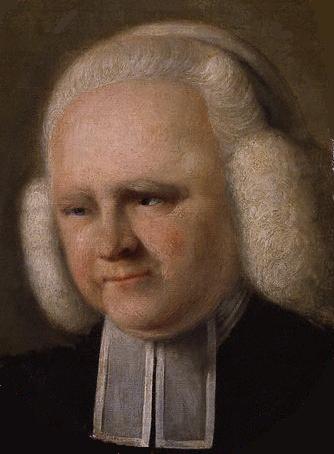
Evangelist George Whitefield knew how to preach to the masses of British North America, and he had the hair to prove it.

So, too, did it lead Americans to their independence.  The American Revolution–and the various conflicts between colonial assemblies and royal governors–of the 18th century in many ways echoed the struggles between Parliament and the Stuart monarchs in 17th-century England.  Americans did not revolt because they rejected bad tea or because they resented taxation–they revolted because they weren’t represented.  Americans did not have a say in the taxes that were (not unfairly) levied on the colonies to help pay for the French and Indian War (the similarities to the Leave campaign should be obvious).  Rule of law was circumvented, and Americans would not abide such a trampling of their rights

Thus, we come to the English–and then American–commitment to representative rule.  The United States really took the lead here, though Great Britain began expanding the franchise and reforming parliamentary representation in the 19th century as white manhood suffrage became the norm in Jacksonian America.  (Here’s a fun aside:  there used to exist parliamentary seats that represented places with no people in them.)  Regardless, the notion that the people should be represented in their government–and should be able to hold it accountable with fair, free, and frequent elections–is an important part of America’s constitutionally-limited, representative, federal republic.

Europe as an entity lacks all of these qualities.  Yes, certain members states have some of these qualities to varying degrees, but the European Union as a whole is sorely lacking in these areas.

Culture and Language:  The United States had the unique opportunity to create a nation afresh.  Europe has had no such luxury, and seems to be inexorably divided into different languages and cultures.  This division is not necessarily bad, but it makes unity much more difficult.  It explains the natural struggle against “ever closer union,” a struggle that is often visceral because people sense there is something artificial and disingenuous about the Europhile vision of a united Europe.  There are, after all, still traditionalists living (and voting) throughout Europe.

 “[S]ecularism is the new, unifying religion of Europe.”

The long, oft-ancient histories of these nations makes it even more difficult for them to share a common worldview.  Even secular, progressive Europe still experiences the lingering cultural effects of centuries of faith.  France might have thrown out God with the French Revolution, but the “First Daughter of the Church” is still suffused, albeit in a subtle, weakened way, with centuries of faith.  Such a faith culture, even hollowed out, will naturally, if imperceptibly, struggle to  reconcile itself with that of other, contradictory traditions.

I suspect this explains why the European Union seems hell-bent on advancing as many socially progressive causes as possible:  secularism is the new, unifying religion of Europe.  But there will always be push-back against this dehumanizing, nihilistic vision of man’s place in the universe.

Language, too, transmits the ideas and values of a people.  I am no linguist, but–unlike French theorists like Jacques Derrida–I believe that words have power and transmit meaning.  Such meaning is deep, part of the warp and woof of life.  Why else would educated societies devote so much time to learning and analyzing language and literature?  There’s no need to read Shakespeare if you just want to a basically literate workforce.  No, there must be some power in language.  Linguistic diversity, therefore, is a beautiful thing, but it also means that different cultural values are transmitted differently throughout Europe.  No one associates Russian, for example, with greater freedom and sober living.

But I digress.

Rule of Law:  Of course different nations in Europe have rule of law (except Belarus).  The European Union, however, does not.  Yes, it might have European law, but this law is promulgated by an unelected committee of elites, figures who don’t identify strongly with their nations of origin, but rather with a vague, secular-progressive idea of Europe, one that barely tolerates dissent or input from the people.  Furthermore, how does one reconcile, say, French civil law with English common law?  The deep divisions of history are huge hurdles to overcome.

Representative Government:  As I’ve stated many times, the European Union is not representative.  That’s why the Brexit vote was so important, and why it has drawn so many comparisons to the American Revolution:  the normal people of Britain rose up against an unelected, unaccountable elite and boldly proclaimed their right to self-determination.  Brits seized back the ability to hold their elected leaders accountable.

The elite, Europhile vision of a United States of Europe is one of non-representative, coerced redistribution.  Give the proles bread and circuses, and they will submit on bended knee to the edicts of Brussels.  Remember, the “Remain” side of the Brexit debate was primarily premised on maintaining access to EU goodies, not about the people’s ability to choose such a course.

Nothing could be further from the vision of America’s Founders and Framers.  They possessed a healthy skepticism about unbridled democracy, but recognized that the people were the source of government’s authority; that the people govern themselves most effectively; and that the people should be able to hold their leaders accountable.  Yes, liberty comes at a price–many prices, in fact.  One of those is the ever-present risk that the people will make mistakes.

Inevitably, they will.  But a common, tolerant culture; a shared respect for the rule of law; and an understanding of the rights and responsibilities of republican government will guide voters to wisdom more often than folly.

Self-government does not always fit neatly into the schemes of elite technocrats and busy-body regulators.  But it ultimately makes for a happier, freer, and more prosperous society.

Phone It in Friday – Musings & Reflections on NATO, Brexit, Etc.

Happy Friday, TPP loyalists!  Normally I’d offer up a well- (or hastily-)crafted essay for your enjoyment, but it’s been an unusually busy week here, so I thought I’d do something a bit different and offer some brief reflections on the week.  It’s been a late night a-rockin’, and I’ve got classroom walls to paint in the morning.

I was planning on writing a bit about socialist babe Alexandria Ocasio-Cortez, but I’ll have to hold off on that until next week (the gist of my analysis:  she’s a hot Millennial Latina in a congressional district with the demographics of downtown San Salvador; her primary victory isn’t that shocking in context).

A typical post takes about an hour to churn out, although it can be quicker.  Finding links to cite my sources typically takes about 10-15 minutes, depending on the complexity of the topic or what I need to cite (since, let’s be honest, a lot of this information is coming from years of reading and teaching history, and I have to fact-check myself or try to hunt down obscure snippets of old National Review articles I read eight years ago).

So, here are some of my quick takes on the news of the week, mostly on international events.  Just a warning—these are going to be delivered in a quick, jocular, talk-radio style.

NATO Summit

I know folks on the Left and Right are going to argue that President Trump’s remarks to German Chancellor Angela Merkel’s toady at that breakfast earlier this week were overly hostile, but, c’mon, the president is right—the United States has been shouldering Europe’s security for almost seventy years.  The least Germany can do is meet its 2% defense spending obligation.

European nations seem to be taking the not-so-subtle hint and doing just that.  I would argue we should probably stay with NATO, but Trump brought up a good point when he was still a candidate—what purpose does the alliance serve now?  Yes, it’s a bulwark against Vladimir Putin’s plodding expansionism, and it represents the ideal of multilateral, collective security, but it’s also a relic of the Cold War.  I’m not one to throw the baby out with the bathwater, but the baby needs to grow up, get a job, and move out of Dad’s basement.  Europe has been suckling at our nuclear-armed teat (talk about mixing metaphors) for decades, and needs to take national defense seriously.

A proud moment, though:  one of my former students, who has now become an elite Washington insider (one of the good swamp creatures), has a much more thoughtful analysis of the NATO summit; read it:  https://americasfuture.org/what-to-watch-for-at-the-2018-nato-summit/

Turkey

Speaking of NATO, why is Turkey still in NATO?  It definitely should not enter the European Union, for it’s own sake, but for the EU’s as well.  It’s a nation that has slipped back into an aggressive form of Islamism under President Erdogan, and it mainly seems to be holding the European Union hostage over the migrant crisis issue.  Let ’em fight their shadow religious war with Iran and be done with it.

Brexit

What is Prime Minister Teresa May and the noodle-wristed PMs in the Conservative Party thinking?  Brexit should have taken a week, tops, to work out—after the vote in 2016, the Brits could literally have just left the European Union.  Oh, the EU still wants Brits to follow European Court rulings?  Tough—we’re independent now.  That should be the attitude and approach.  Then Britain could work out trade deals and other details on its terms.

Of course, that’s what you get when a former Remainer—who badly bungled snap elections that cost her party seats—is in charge of overseeing an exit from a quasi-tyrannical supranational entity.

Boris Johnson was right to jump ship.

Trump in England

Meanwhile, Trump is meeting with the beleaguered Prime Minister this week.  Some Lefties made a big baby balloon of the President, and a nation that regularly violates the free speech of its citizens is letting that fly in the name of—wait for it—free speech.  Where’s the consistency?

First Lady Melania Trump is charming as ever, and looks like a Disney princess.  I’ll be honest, one (small) reason I was hoping Trump would win in 2016 is because I loved the idea of having an Eastern European supermodel as our First Lady.

***

That’s all for this morning’s post, TPP fans.  We’ll get back to our regularly-scheduled standards of excellence Monday.  Enjoy a safe, fun weekend, and be careful on this Friday the 13th.  Don’t squander your liberty—use it well!


TBT: Economics: A Human Science

The unofficial, unintentional theme of this week’s posts have been about economics in general (other than Tuesday’s SCOTUS piece)—the power of tax cuts, the potential upsides to tariffs, etc.  In that spirit, I thought for week’s post about diving back into a piece that reflects my gradually evolving thinking about economics.

The summer before my sophomore year of college, I read the second edition of Milton Friedman’s Capitalism and Freedom, a work that completely revolutionized how I thought about the world and economics.  Free-market principles became my lodestar, and colored my ideology for a decade.  Indeed, I still adhere to these principles when it comes to economic questions.

However, as I grew older and (hopefully) more experienced, I began to realize that neoliberal economic theory, while elegant, is not always hard-and-fast, and that there are many more wrinkles to economic issues than appear at first glance.  I don’t believe in overcomplicating things—again, cutting taxes tends to stimulate economic growth—but most issues contain a frisson of nuance that is easy to miss.

I’d long held to the idea that free trade is a largely unalloyed good, and that the short-term costs of lost jobs or reduced wages in some industries domestically would be made up for by increased efficiency of production and the rise of new, better industries.  Sure, there’d be some friction in the duration, but people will manage, and we can always throw some funds for reeducation their way.

While I think such disruption is inevitable, I don’t think we should embrace it so blindly that we forget about the people who find themselves out of work, or in a position that they can’t modify their skillsets to find a new job.  I live in the rural South, and there are hundreds of little towns that dried up once the mill the left, the railroad shut down, or the big family farms sold off.  Part of that story is the onward march of Time and economic progress—and the drama of human history.  But part of it is the story of globalist elites selling out Middle America.

This situation is not one merely of tariffs, taxes, and the like, but also of a radical ideology that would see national borders dissolved and massive immigration—even illegal immigration—encouraged.  I am libertarian on many issues, but the pitfall of modern economic libertarianism—and there are many—is that it only conceives of issues in terms of economic efficiency (and, if you get right down to it, it’s inverted Marxism, to the extent that, for Marxists, everything is about economics—or, more properly, materialism).  And, yes, generally greater efficiency means greater quality of life, but economics is not always the clean, elegant science that its proponents claim it to be.

To that end, I argue that economics, properly considered, should be considered part of the humanities, as it deals in a direct, visceral way with the people’s lives.

I don’t know the precise balancing act, or what should be achieved.  I highly recommend reading Patrick J. Buchanan’s The Death of the West for a more complete treatment of how to revive wages for workers while maintaining a high degree of quality and efficiency.  I don’t agree with all of Buchanan’s proposals, which are heavily influenced by Catholic social teachings, but there is an appeal to the idea that, if the government is going to interfere in the economy (and it is, and does), then it should be in favor of workers and families, not at their expense.

Finally, I wrote this essay in the context of the Brexit vote—which I intend to write an eBook on soon—and the arguments I was hearing about the economic catastrophe Brexit would be (that hasn’t been the case yet).  I argued, essentially, that the liberty and national sovereignty are more important than sweet European Union bennies and transfer-of-wealth payments.  The EU is a despicable organization as it currently operates, and as a lover of liberty, I’m thrilled to see nationalist-populist movements rising in major European countries.  I don’t agree with all of these groups or their policies (many of which are socialistic in nature), but the impulse towards greater national sovereignty is, in general, a healthy one in our age of excessive globalization and unelected supranational tyrants.

With that lengthy introduction, I give you 24 June 2016’s “Economics: A Human Science“:

If you’ve read my blog the past couple of weeks, you know that I am strongly in favor of Brexit, or Great Britain voting to “Leave” the European Union.  I’ve laid out my reasons here and here.  As I write this post, results are trickling in on that historic vote, and I am intermittently checking them with great interest–and not a small bit of trepidation.  Right now (about 10:30 PM EST/-5 GMT), “Leave” has a slight edge, but the outcome is too close to call.

Already, though, the British pound and the euro have taken a beating in value, as gold prices soar (this blog is conservative in viewpoint, so I probably should start urging you to buy gold, guns, and freeze-dried food reserves; sourcehttp://www.bloomberg.com/news/articles/2016-06-23/pound-surge-builds-as-polls-show-u-k-to-remain-in-eu-yen-slips).  One of the major bogeymen of the “Remain” side in the referendum was the threat of economic downturn.  As I conceded in both of my previous posts on Brexit, there will no doubt be major economic disruption should Britain vote to “Leave.”  However, a (likely temporary) drop in the value of the pound sterling is a price well paid for restored national sovereignty.

God Save the Queen… and Great Britain from the clutches of Eurozone bureaucrats

As conservatives, we’re accustomed to viewing economics–or, at least, economic growth–as a positive good.  After all, we believe in the power of free markets to satisfy human needs and desires, and to innovate new ideas and products that alleviate human suffering, drudgery, and toil.  Conservative politicians tend to focus on job growth and prudent deregulation–often coupled with tax and spending cuts–as perennial, bread-and-butter issues that directly affect voters’ pocketbooks for the better.

 “…these [fiscal] policies are not about making gobs of cash… but about what those gobs can do to improve lives.”

But economics, like much else, is not a means unto itself.  The reason conservatives like economic growth–besides, well, making money–is that it demonstrably improves people’s lives.  Deregulation, similarly, can work beneficially (if you doubt me, just ask anyone who has ever dealt with the Affordable Care Act and the Department of Health and Human Services).  In essence, these policies are not about making gobs of cash–although that is certainly nice–but about what those gobs can do to improve lives.

Thus, we have a stark contrast between the organic, healthy, occasionally unpredictable economic growth of a free market and the regimented, inequitable, limited economic growth of progressive corporatism.  Our current economic environment, I fear, is far closer to the latter than the former.  Complex, heavy regulations benefit larger firms and discourage the formation of smaller, newer firms by raising the upfront costs of entry.  Perverse incentives raise the costs of healthcare for young, fit Americans, while making it unrealistically cheaper for older, sicker, chubbier patients.  Overly-generous social safety benefits (some of which, like the food stamp program SNAP, the government actively advertises and encourages people to use) discourage able-bodied Americans from pursuing work.

I could go on (and on… and on).  In short, conservatives are used to being correct on principle and on economic outcomes.  Typically, conservative fiscal policies align with, rather than try to manipulate, economic realities, so the outcomes of those policies tend to be both principled and positive.

“As fiscal conservatives… let us never lose sight of the human side of economics.”

In the case of Brexit, however, the quest for restored sovereignty–a stand on an important first principle–will result in some negative economic outcomes.  A major argument of the “Remain” side is that staying in the European Union will preserve Britain’s economic stability and ensure it a place in a European common market.

Such an argument is seductive, but it leads to a gilded cage.  Nobel Prize-winning economist Milton Friedman famously said that economic freedom is a necessary precursor to, though not a guarantor of, political freedom.  With Brexit, the axiom is almost reversed–by reclaiming its political freedom, Britain will then be able to pursue renewed economic freedom.

As fiscal conservatives–or those that support free markets, freer trade, and light regulations–let us never lose sight of the human side of economics.  We too often treat economics as a science.  Instead, it should find a home alongside the humanities.

Our chief aim should be to unleash human potential.  So liberated, its creativity and ingenuity can lift human life to greater heights.

We already have a model:  we’ve been doing it in the United States for over 200 years.

European Disunion

Back in 2016, I wrote a series of essays on the then-approaching Brexit vote.  Just like the American presidential election that autumn, there was a great deal of misinformation and obfuscation about the “Leave” side—the Leavers were racist and xenophobic; voting “Leave” would cause the world to collapse and the Universe to fold in upon itself; boorish working-class Brits would rebel once they realized they’d lost their sweet European Union bennies.

Even I—a profoundly pro-Brexit advocate—predicted there’d be a long-term economic downturn as a result of voting “Leave” (but I believe liberty is worth far more than material security).

Of course, the Brexit vote was a major blow against supranational tyranny, and a major victory for liberty and national self-interest.  The European Union does not function like the United States and its federal system of semi-sovereign entities; rather, it’s largely ruled and governed by a small cadre of unelected, hyper-progressive, cosmopolitan bureaucrats with little regard for national differences or interests.

It was this philosophical and foundational tack that I sought to take with Brexit.  Brexit was not a policy matter that presented two sets of pros-and-cons, although that was part of the discussion.  Rather, Brexit posed a fundamental question:  does a nation have the right to determine its own national destiny—to act in its own self-interest, as it and its people see fit?  Further, did the European Union provide a framework in which nations could maintain sovereignty while enjoying the benefits of union?

I believe the Brexit vote—and the ongoing discussions about what Brexit will look like—reflected these timeless questions, and though the vote has long-since passed, the topic maintains a perennial quality for those interested in political philosophy.

To that end, I’ll be compiling, re-editing, and otherwise modifying my 2016 Brexit essays into a new eBook, Tyranny Denied:  Reflections on Brexit.  I’ll also be adding some chapters and historical notes.

That book, along with my long-planned eBook on social conservatism, Values Have Consequences, should appear later this summer or autumn—just in time for Christmas.