SubscribeStar Saturday: Homesteading in the City

Today’s post is a SubscribeStar Saturday exclusive.  To read the full post, subscribe to my SubscribeStar page for $1 a month or more.  For a full rundown of everything your subscription gets, click here.

Recently I’ve taken subscriptions to Backwoods Home Magazine and its sister publication, Self-Reliance.  Both magazines are treasure troves of information on how to be, well, self-reliant.  Backwoods Home focuses more on handy projects around the homestead and garden, sprinkled with articles containing recipes for canning veggies and baking homemade bread.  Self-Reliance seems to cover many of the same topics, just maybe with fewer recipes.

A major emphasis of both publications is establishing and maintaining a functioning homestead that is as self-supporting and sustainable as possible.  The authors often acknowledge that such an ideal may be impossible to realize in its truest, Platonic form, but point out that it is still an ideal worth striving toward.  Besides that grand ideal, though, the publications are very practical—how does one go about doing all of the tasks and completing all of the myriad projects that maintaining an independent homestead requires?

The goal of near-self-sufficiency is maximal liberty—if you can grow your own food and raise your own livestock, who cares if your employer mandates The Vaccine for work?  You can just live off your land, at least until you can find a job that doesn’t force you to inject yourself with an experimental drug.  That requires a great deal of hard work and focus, but the reward is freedom from the whims of the workplace and the world.  We all know corporations and even smaller employers are growing more woke by the day; in the case of big corporations, following the popular “morality” of the day to keep up appearances is more important than the well-being of their employees.

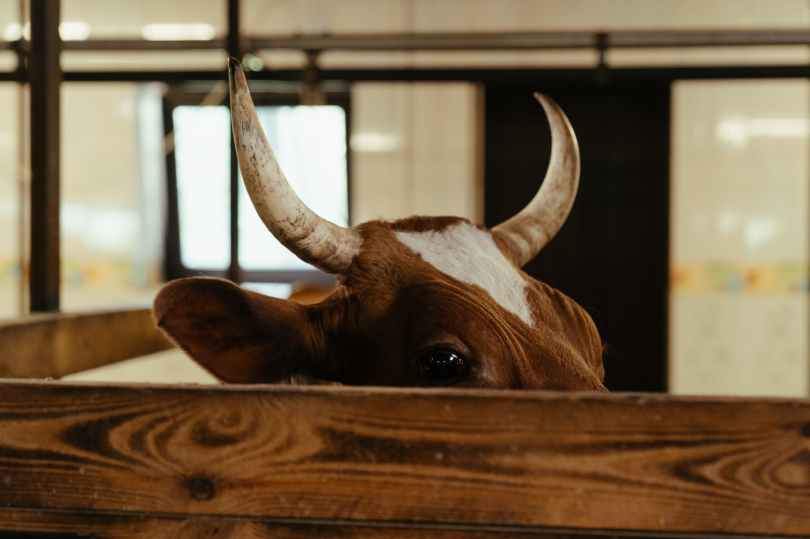
As someone who would like to raise a few crops and maybe some chickens on my little half-acre, a local story here in Darlington County, South Carolina, caught my attention.  A couple in Society Hill, the Dukes, has around thirty-one animals on their forty-four-acre property, which sits within the town limits of Society Hill.  Their livestock includes “chickens, goats, cows, horses, hens, a duck and a rooster.”

The Town Council for Society Hill passed an ordinance limiting livestock to six chickens and two “equines”—horses, mules, donkeys, etc.—on property within town limits.  The Dukes were apparently in violation of an older ordinance from the 1970s that limited livestock numbers on property within town limits.  I’m not sure what those limits were, but it seems Society Hill’s Town Council believed it needed to update the ordinance.

There are multiple issues here, which are reflected in the Council’s 3-2 split on the ordinance.  The Dukes claim that the current Mayor of Society Hill, Tommy Bradshaw, is targeting them because Dwayne Duke seeks to challenge Bradshaw for mayor.  The Dukes also claim that their animals are used for emotional support therapy for trouble kids.

Neighbors, however, fear that the Dukes plan to turn their home into a petting zoo of some kind, and there have apparently been repeated complaints about the livestock (no one wants a rooster waking them up at the literal crack of dawn).  Even before the new ordinance was passed, the Dukes were already in violation of the older ordinance, which was nearly fifty years old (a reminder to town governments to update their ordinances periodically, lest they be forgotten from lack of use).

So, who is right?  Should the Dukes give up their livestock—and their chance at homesteading freedom?—so their neighbors can get some peace?  Or should they be allowed to keep the animals they raise?

To read the rest of this post, subscribe to my SubscribeStar page for $1 a month or more.

Major Loot

In 2014, Hobby Lobby purchased a tablet containing an excerpt from the Epic of Gilgamesh, perhaps the oldest epic work of literature in Western Civilization.  The tablet is 3500-years old, and Hobby Lobby won the tablet in a Christie’s auction, paying $1.6 million for it.  Hobby Lobby displayed the tablet in its Museum of the Bible, which houses a number of rare and ancient artifacts.

Now, Hobby Lobby has forfeited the tablet to the US Department of Justice due to it shady provenance.  It seems that the original seller falsified a letter of provenance to show that the tablet had entered the United States before laws against importing rare artifacts were enacted.

To make matters worse, Christie’s apparently knew that the letter was questionable, but withheld that information.

Unfortunately, that means Hobby Lobby took one on the chin financially.  I’m not sure what the fate of the original smuggler is, but I imagine he’s long gone and living the sweet life.

The bigger question, though, is what should be done with such artifacts?  Current US policy seems to be to return them to their country of origin.  While that might seem to the be simplest policy, is it really best for the preservation of the artifacts—and our cultural heritage?

Read More »

Monday Morning Movie Review: Near Dark (1987)

August is an odd time be writing about vampires.  With the intense heat and humidity of the brutal South Carolina summer beating down upon us, it doesn’t feel like vampire weather.  But the crisp autumnal nights of October are closer than we realize, even if they seem impossible right now.

That said, the Southern vampire is a particular niche of Southern gothic horror.  All the mystery and romance of “moonlight and magnolias” is enhanced with these mysterious, romantic creatures stalking about crumbling old plantation houses in the night.  I’ve been reading Anne Rice’s novel Interview with the Vampire (the film version of which I reviewed last fall), and the titular vampire and narrator, Louis, is from Louisiana.  The exotic setting of New Orleans plays a prominent role in the first half of the book, and provides the perfect backdrop for Louis, Lestat, and Claudia’s lethal nocturnal escapades.

This week’s film, 1987’s Near Dark, isn’t exactly about Southern vampires, but Midwestern vampires.  That doesn’t exactly fit into the mold of the seductive, mysterious vampire, but that’s one of the film’s strengths:  these vampires are crazy Nebraskan (or Oklahoman?) low-lives, terrorizing the prairie in a aluminum-foil-covered panel van.

Read More »

SubscribeStar Saturday: East Coast, West Coast

Today’s post is a SubscribeStar Saturday exclusive.  To read the full post, subscribe to my SubscribeStar page for $1 a month or more.  For a full rundown of everything your subscription gets, click here.

An enduring question—perhaps the enduring question—of our present age is whether or not a peaceful political solution is possible to resolve our current issues.  Any casual observer of national politics cannot help but notice that there is a deep division in the United States, one grounded in (at least) two fundamentally opposed philosophies.

To the dissident—that catch-all term to encompass of any number of alternative philosophies or worldviews to the prevailing “progressive-conservative” dynamic—both modern progressivism and modern conservatism are two sides of the same coin.  Indeed, Buckleyite neoconservatism accepts, essentially, the basic tenants of Franklin Roosevelt’s New Deal, ideas that serve as the foundation for modern progressivism, though the two interpret that foundation in wildly different ways.

Thus, there is a paradox:  modern conservatives largely share a worldview that is incompatible with that of modern progressives’; yet, there roots originate in the same soil of the interventionist state.  The difference, perhaps, is the fertilizer:  the Leftist progressive overwaters with “equality” (now, increasingly, “equity”); the conservative presents a more balanced mixture of equality, liberty, justice, etc.

(Indeed, these shared roots likely date back even further, to the liberalism of the eighteenth- and nineteenth-centuries; again, both the Left and the Right evoke the tenants of such liberalism [“all men are created equal”] while disagreeing vehemently on how those tenants should be expressed in public policy [equality for the Left means egalitarianism and equality of outcomes; equality for the right means “equality before the God and the law”].)

That might make the possibility of some reconciliation seem possible—with shared roots comes some shared values, some shared history.

That’s the most optimistic view.  It’s one I do not share, but nor do I adopt the view that all is lost.  I believe that a blend of hyper-federalism, radical decentralization, and institutional control by dissidents could tip the balance in a positive direction.

The problem, of course, is that none of those goals is easy to achieve; some of them are currently inconceivable.  The federal government is unlikely to devolve more powers to the States (and many States probably secretly don’t want more); radical decentralization means losing out on corrupting but succulent federal largesse; and the institutions are firmly controlled by the Left—and not likely to rewrite the rules to let us challenge their supremacy.

So we come to a fundamental divide among dissidents:  what Curtis Yarvin calls the divide between West Coast dissidents (that includes Yarvin) and East Coast traditionalists (like me and, I suspect, photog at Orion’s Cold Fire) in his essay “The real Great Reset.”  The East Coast traditionalists believe that local control and working within the system can swing things in our favor and reverse course in the Culture Wars, what he calls voice; the West Coast dissidents believe that voice is useless at present, and instead reset—a total regime change of reset and replace is the answer.

“To read the rest of this post, subscribe to my SubscribeStar page for $1 a month or more.

Supporting Friends Friday: The Music of John Pickett

The local music scene in the Pee Region of South Carolina is surprisingly robust, with some truly stellar musicians.  The creative heart of this scene rests in several open mic nights at local coffee shops.  Currently, the two big open mics to have resumed are at The Purple Fish Coffee Company in Darlington, South Carolina, and at Crema Coffee Bar in Hartsville, South Carolina.  The Fish hosts its open mic on Friday evenings, and Crema hosts its on Tuesday nights.

The other major open mic—probably the most enduring of the current Big Three—was at Lula’s Coffee Company in Florence, South Carolina.  Lula’s, however, has not resumed its legendary Thursday night open mic night—an open mic so artistically fervent, it inspired an entire book of poetry—much to the chagrin and bafflement of its most devoted performers, yours portly included.

But before there were any of these establishments, there was Bean Groovy, a now-defunct coffee shop that used to occupy a magical little bit of strip mall in Florence.  I know the former owner of Bean Groovy—himself a studio engineer in the distant past—and despite some attempts to reopen the establishment at other locations, it’s never made a return.

Nevertheless, Bean Groovy was where I got my start in local music in the Pee Dee, way back in the hazy, halcyon days of circa 2012-2013.  It, along with The Midnight Rooster in Hartsville (still in business, but it’s shifted from being a quirky coffee house into a frou-frou upscale dining establishment) were my old stomping grounds as I broke my way into the region’s open mic scene.

It was at Bean Groovy sometime in probably 2012 or 2013 that I met one of my best friends, John Pickett.  John is an excellent guitarist and singer, and he possesses one of the best ears for music I’ve ever encountered.

Read More »

TBT: Phone it in Friday XI: Coronavirus Conundrum, Part IV: Liberty in the Age of The Virus

Earlier this week I was having a conversation with someone on Milo’s rollicking Telegram chat, in which we were trying to figure out the name of a short story involving people living in underground cells, communicating only via the Internet.  I had a feeling I had written about it before, but could not remember the name of the story.

Turns out it was E.M. Forster’s novella “The Machine Stops,” originally published in 1909, and I wrote about it in this catch-all post from the early days of The Age of The Virus (so early, in fact, I was not capitalizing the first “the” in that moniker, which I have texted so much, my last phone auto-predicted “The Age of The Virus”).  I compared the story to Kipling’s “The Mother Hive”–a story that apparently is assigned regularly in India, because pageviews for it always seem to coincide with large numbers of site visitors from the subcontinent.

But I digress.  The story sounded eerily like what our elites asked us to do during The Age of The Virus:  stay home, get fat, consume mindless entertainment, and don’t socialize.  Granted, some of us could go outside and plant gardens (I still got fat, though), but the messaging was not “become more self-sufficient so we can mitigate disaster” but “buy more stuff and don’t do anything fun.”  It was depressing to me how many people embraced this line of reasoning, turning government-mandated sloth into some kind of perverted virtue.

I appreciated the break that The Age of The Virus afforded us, but it came with the severe curtailment of liberty—and Americans ate it up!  Instead of people boldly throwing ravers and partying down, laughing at our elites, we instead retreated into our hovels, shuddering in the dark.  When I did through a big Halloween bash, it was a massive success—because, I suppose, people had finally had it.

I guess that’s the silver lining.  With that, here’s 3 April 2020’s “Phone it in Friday XI: Coronavirus Conundrum, Part IV: Liberty in the Age of The Virus” (perhaps the longest title of any blog post ever):

Read More »

Modern Art and Influence

Most readers of this blog will likely agree with the following sentiment:  “modern art is terrible.”  In my more intellectually generous moments, I’d add “most” as a qualifier to start that phrase, but with age comes orneriness, and orneriness does not lend itself to intellectual generosity.

Perhaps the best treatment of this sentiment in a scholarly—dare I say “intellectually generous”—way is Roger Kimball‘s The Rape of the Masters: How Political Correctness Sabotages Art.  The book is a quick read, but even in 200 pages, it’s depressing seeing the increasingly bizarre, flat-out wrong interpretations politically-motivated Leftists bring to classic works of art.  The unfortunate trend of comparing everything that ever happened to Harry Potter is no-doubt the watered-down, pop cultural version of this academic shoehorning of the ideology du jour into artistic interpretation.

Of course, there is a corollary to the maxim that “modern art is terrible.”  It’s that “modern art is only successful because wealthy dupes want to look cool.”  That’s a bit of a mouthful, we all know it’s true.

So it is that two close relatives to the current Pretender’s regime—scandal-ridden, sister-in-law-loving drug addict Hunter Biden, and not-pretty-enough-to-be-a-model model Ella Emhoff (Vice President Kamala Harris‘s stepdaughter) have made good money peddling “art.”

Read More »

Let’s Get Biblical: The Wisdom of Exodus 22

This past Sunday we had a guest speaker at church, a pastor with a children’s home ministry.  The ministry began with a home in southwestern Virginia, and has expanded to an orphanage in Tuxtepec, Oaxaca, Mexico.  Both children’s homes are in poor, mountainous communities—the former the region where my late great-grandmother lived.  Both orphanages do amazing work with the kids, combining work (like gardening, feeding donkeys, and the like) with play—even a band!

In giving his talk about the ministry, the guest pastor referenced a few passages of Scripture.  Aside from the famous passage from Matthew 19:14 in which Jesus told the disciples to “Let the little children come to Me, and do not forbid them; for of such is the kingdom of heaven,” the pastor also referenced Exodus 22:22-24, which deals with how widows and orphans are to be treated:

22You must not mistreat any widow or orphan. 23If you do mistreat them, and they cry out to Me in distress, I will surely hear their cry. 24My anger will be kindled, and I will kill you with the sword; then your wives will become widows and your children will be fatherless.

It’s a pretty powerful passage, and a reminder that God doesn’t mess around with sin, especially against the weakest and most defenseless.  We like to think that God has “mellowed out” since sending Jesus to die for our sins, but that’s dangerously wishful thinking.  God doesn’t change, and His Wrath is still mighty.

Read More »

SubscribeStar Saturday: Dog Days: Early Reflections on Dog Ownership

Today’s post is a SubscribeStar Saturday exclusive.  To read the full post, subscribe to my SubscribeStar page for $1 a month or more.  For a full rundown of everything your subscription gets, click here.

Note to subscribersI am still working on last Saturday’s post.  It should be up later today.

As I noted in the title to Wednesday’s post, this blog is going to the dogs.  Don’t worry—not forever, and not always.  But with the experience of fostering sweet Murphy still fresh, I wanted to take some time today to reflect on the past two days of dog ownership.

Naturally, it’s a bit early yet—the term of the foster is thirty days, and after which I am allowed to adopt the old girl if I so choose—but it’s already been a positive experience, both for myself and, more importantly, the dog.

Murphy is an old girl—she is eight-years-old as of June—and was caught up in, as far as I can gather, some family drama, leading to her placement in a shelter in Havelock, North Carolina.  The Bull Terrier Rescue Mission swooped in and got in touch with me, just a week after I’d put in an application to become a foster for the organization (you can read that story here).  As such, she’s been through a great deal in the past week, and is already inclined to be a bit more relaxed, given her advanced age (the life expectancy for bull terriers, per the American Kennel Club, is between twelve and thirteen years, though I frequently hear of bull terriers passing around the age of ten).

That means we’ve enjoyed a lot of short walks and long naps.  She’s definitely my kind of girl.

To read the rest of this post, subscribe to my SubscribeStar page for $1 a month or more.

Delayed Monday Morning Movie Review: Day of the Dead (1985)

After much delay, here is this week’s Monday Morning Movie Review of George A. Romero‘s 1985 zombie classic Day of the Dead (not to be confused with the festive Mexican holiday of the same name).

When I first pulled up the flick on Shudder, I was hoping for 1978’s Dawn of the Dead, the supposedly “fun” Romero Dead movie.  That’s the one with survivors of a zombie apocalypse live it up in a mall, enjoying all the materialism the late 1970s could afford.

Despite my efforts, though, I can’t seem to locate that flick on any streaming service I use, so Day of the Dead it was.  By now the trope of “humans are the real monsters” is familiar to viewers—and readers of virtually any Stephen King novel—but Day of the Dead delivers that trite message in a taut, unsettling way.

Read More »