Flight 93 Election Follow-Up

In September 2016, just two months prior to Donald Trump’s unlikely-but-historic election to the presidency, Michael Anton, writing under the pseudonym “Publius Decius Mus,” penned a groundbreaking essay, one that sounded like a thunderclap through the Right, and which doubtlessly swayed a number of independents.  The now-famous essay was “The Flight 93 Election,” and it spelled out the high stakes of the then-pending election.  If you haven’t read it, do so now.

(If my proposed History of Conservative Thought summer course makes, it will be one of the readings for the final week of class, which will cover the 2016 election and the various branches of conservative and Dissident Right thought surrounding the election.)

Anton has a new piece now, “What We Still Have to Lose” (thanks to photog at Orion’s Cold Fire for linking to this piece on his excellent blog), which serves as a follow-up of sorts to his original essay.  The piece serves as reminder of what is still at stake for the United States, and to promote, somewhat mildly, Anton’s new book, After the Flight 93 Election:  The Vote that Saved America and What We Still Have to Lose.

According to Anton, critics of the original essay argued that he had no positive view for America, and merely argued that electing Trump was a desperation play—gamble on the dark horse, because the known evil of Hillary Clinton is too great—to prevent further disaster.  Anton concedes that even he underestimated candidate Trump, and that President Trump has exceeded his expectations.

As such, Anton sets out in this essay (an excerpt from the book) that he does, indeed, possess a positive vision for how America and conservatism can advance.  This essay doesn’t get much into that vision, but it does highlight that there is still much to lose.

To prove that point—and to defend against claims of “apocalypticism” in his analysis of the 2016 election—Anton points to the infamous Kavanaugh confirmation hearings:

What the Kavanaugh affair has made clearer to me than ever is that the Left will not stop until all opposition is totally destroyed. The harm they do to people, institutions, mores, and traditions is, in their view, not regrettable though unavoidable collateral damage; it is rather an essential element of the project. It’s a bit rich to be accused by nihilists of lacking a positive vision. But such is life in 2018. To stand up for truth, morality, the good, the West, America, constitutionalism, and decency is to summon the furies.

America cannot long go on like this. Something’s gotta give, and something will. What that “something” will be depends in no small part on the actions of men and women of good character, good judgment, and goodwill. Among the most heartening things I’ve seen in my lifetime was the way the president, the Republican establishment, and most of the conservative movement stood together in the face of what a few took to calling “the Flight 93 Confirmation.” In that instance, justice was done. Many more tests are coming. Victory will require not just spirit and spine but the right arguments that explicate the right principles.

I agree that “something’s gotta give.”  I generally despise using the verb “to feel” in writing—it’s weak and transient—but I certainly feel as though we’re on the verge of some cataclysmic paradigm shift.  The political and cultural atmosphere certainly seem different since the 2016 election, and the Left is showing its true colors—its penchant for violence, its destruction of the reputation of an innocent man, its dominance of Silicon Valley to deplatform rivals—as the levers of power slip away.

I’ll have to pick up Anton’s book to read more of his vision for America.  If it’s as bold as his “The Flight 93 Election” essay, it could wake up many more Americans to the continued perils we face from a bitter, Cultural Marxist Left.


Happy Monday: President Trump’s Approval Rating at 52%

It’s a damp, dreary Monday morning here in South Carolina, but we’re all smiles here at The Portly PoliticoRasmussen’s daily presidential tracking poll has President Trump at 52%, Trump’s highest approval ratings since shortly after his Inauguration.  That puts President Trump two points above President Barack Obama’s approval ratings for the same point in his presidency.

39% “Strongly Approve” and “Strongly Disapprove” of President Trump’s performance, giving him a “Presidential Approval Index rating of 0,” according to Rasmussen’s poll.

I’ve followed the Rasmussen daily tracking poll intermittently since President Trump’s inauguration in 2017, and it’s heartening to see the Presidential Approval Index rating at 0 (it’s been negative most of Trump’s presidency).

The president’s tour de force State of the Union performance surely has helped his numbers.  It seems, too, that ending the government shutdown has improved his approval ratings, and the promise of a deal to prevent another one this Friday probably helps.  If the $5.7 billion the president requested for border barriers at key points on the US-Mexican border is part of the deal, Trump will be sitting pretty with his base and independents (that said, I rather relish another extended shutdown, just to slow the Deep State down a bit).

Public opinion polls are fickle, especially daily ones, but if Trump can keep this momentum going, he’ll have no problem winning reelection in 2020.  November 2020 is still a lifetime away, and I have concerns about some of the declared Democratic hopefuls, but you can’t argue with a robust economy, a strong national defense, and greater border security.

TBT: Happy Birthday, America!

Two years ago, I dedicated my Fourth of July post to analyzing Lincoln’s Gettysburg Address.  In the spirit of MAGA Week 2018—and to preserve the TPP TBT tradition—I’m re-posting that classic post today.

A major theme of the blog posts from that summer was the idea of America as a nation, an idea I still find endlessly compelling.  The election of President Trump in November 2016 has reinvigorated public debates about the nature of American nationalism, as well as revived, at least partially, a spirit of unabashed patriotism.

As a child, I took it for granted that America was a special place.  When I learned American history as a child, I learned the heroic tales of our Founders.  While revisionist historians certainly have been correct in pointing out the faults of some of these men, I believe it is entirely appropriate to teach children—who are incapable of understanding such nuance—a positive, patriotic view of American history.  We shouldn’t lie to them, but there’s nothing wrong with educating them that, despite its flaws, America is pretty great.

Today the United States of America celebrates 240 years of liberty.  240 years ago, Americans boldly banded together to create the greatest nation ever brought forth on this earth.

They did so at the height of their mother country’s dominance.  Great Britain emerged from the French and Indian War in 1763 as the preeminent global power.  Americans had fought in the war, which was international in scope but fought primarily in British North America.  After Britain’s stunning, come-from-behind victory, Americans never felt prouder to be English.

Thirteen short years later, Americans made the unprecedented move to declare their independence.  Then, only twenty years after the Treaty of Paris of 1763 that ended the French and Indian War, another Treaty of Paris (1783) officially ended the American Revolution, extending formal diplomatic recognition to the young United States.  The rapidity of this world-historic shift reflects the deep respect for liberty and the rule of law that beat in the breasts of Americans throughout the original thirteen colonies.

America is founded on ideas, spelled out in the Declaration of Independence and given institutional form and legal protection by the Constitution.  Values–not specific ethnicity–would come to form a new, distinctly American nationalism, one that has created enduring freedom.

***

Rather than rehash these ideas, however, I’d instead like to treat you to the greatest political speech ever given in the English language.  It’s all the more remarkable because it continues to inspire even when read silently.  I’m writing, of course, about Abraham Lincoln’s Gettysburg Address.  Here is the transcript (Source:  http://www.gettysburg.com/bog/address.htm):
“Four score and seven years ago, our fathers brought forth on this continent a new nation: conceived in liberty, and dedicated to the proposition that all men are created equal.

“Now we are engaged in a great civil war. . .testing whether that nation, or any nation so conceived and so dedicated. . . can long endure. We are met on a great battlefield of that war.

“We have come to dedicate a portion of that field as a final resting place for those who here gave their lives that that nation might live. It is altogether fitting and proper that we should do this.

“But, in a larger sense, we cannot dedicate. . .we cannot consecrate. . . we cannot hallow this ground. The brave men, living and dead, who struggled here have consecrated it, far above our poor power to add or detract. The world will little note, nor long remember, what we say here, but it can never forget what they did here. It is for us the living, rather, to be dedicated here to the unfinished work which they who fought here have thus far so nobly advanced.

“It is rather for us to be here dedicated to the great task remaining before us. . .that from these honored dead we take increased devotion to that cause for which they gave the last full measure of devotion. . . that we here highly resolve that these dead shall not have died in vain. . . that this nation, under God, shall have a new birth of freedom. . . and that government of the people. . .by the people. . .for the people. . . shall not perish from the earth. “

 ***
The Gettysburg Address is elegant in its simplicity.  At less than 300 words, it was a remarkably short speech for the time (political and commemorative speeches often ran to two or three hours).  Yet its power is undiminished all these years later.  President Lincoln was only wrong about one thing:  the claim that the “world will little note, nor long remember, what we say here” has proven untrue.
I will likely write a deeper analysis of the Address in November to commemorate its delivery; in the meantime, I ask you to read and reread the speech, and to reflect on its timeless truths.
God Bless America!
–TPP
To read different versions of the Gettysburg Address–there are several versions extant–check out this excellent page from Abraham Lincoln Online:  http://www.abrahamlincolnonline.org/lincoln/speeches/gettysburg.htm.

#MAGAWeek2018 – Thomas Jefferson & The Declaration of Independence

Happy Independence Day, America!  242 years ago, the Second Continental Congress declared independence from Great Britain, changing the course of history and spawning independence movements all over the globe.

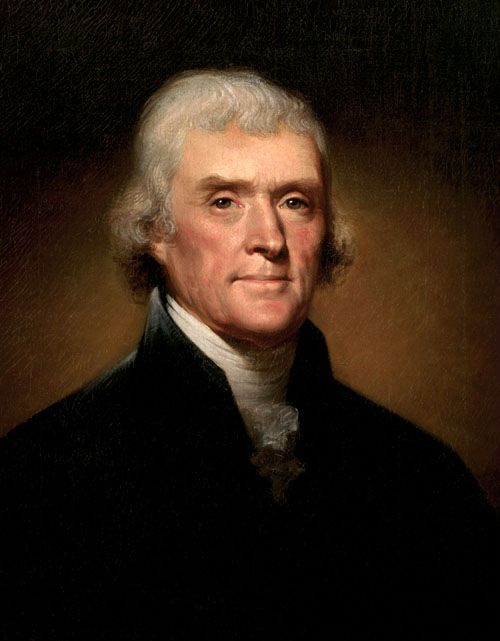
As such, it’s only fitting that today we look at the author of the Declaration of Independence, Thomas Jefferson.

Few figures in the period of the Early Republic have inspired as much debate as Jefferson, who clashed frequently with President Washington’s Secretary of Treasury, Alexander Hamilton, while serving as Secretary of State.  His friendship with John Adams turned into a bitter, acrimonious rivalry, as the two parted ways on the proper response to the French Revolution, then squared off against one another in the 1796 and 1800 presidential elections.  The two would make amends later in life, exchanging some of the liveliest, most insightful correspondence of the period.

After the publication of Thomas Paine’s revolutionary pamphlet “Common Sense” electrified pro-independence sentiment throughout the colonies, the Second Continental Congress put aside any hopes of reconciliation with Britain, and instead decided to declare independence.  To draft the document that would take the colonies across the Rubicon, the Congress selected Jefferson.

Jefferson wrote the Declaration with his fellow countrymen and other European nations in mind, although it was addressed to Parliament and King George III.  The Declaration is one of the most brilliant documents ever written, and its opening paragraphs are almost more important than the specific list of grievances against the English government.

Jefferson’s claim—radical at the time—that “all men are created equal”—shook the world, and its reverberations through history are well-documented.  There are, however, some other key phrases.  The phrase “When in the Course of human events” seems innocuous on the face, but carries an important meaning:  the “unalienable” rights are not unique to any one people, nation, or time in history, but are universal.  All peoples enjoy natural rights that are woven into the fabric of the universe—and which were “endowed by [our] Creator.”

Jefferson was likely a Deist, believing that a God created the universe, but afterward left it to work and unfold according to physical laws of nature.  Nevertheless, Jefferson believed—as did many of the Founders, who were often products of the Scottish Enlightenment (and, fortunately, not the more destructive French Enlightenment)—that the Creator imbued the physical universe with natural rights, just as He created gravity.

Regardless, after some revisions—the congressional committee that commissioned Jefferson had him change “Life, Liberty, and Property” to “Life, Liberty, and the pursuit of Happiness”—the Declaration was adopted as both a specific list of grievances detailing America’s case to “a candid world,” and as a timeless expression of America’s belief in natural rights.  The usual disclaimers apply—women and free blacks, not to mention slaves, were left out of this consideration at the time, despite objections from Abigail Adams, wife of our second president (and mother of yesterday’s subject)—but the Declaration paved the way for all Americans to enjoy greater liberty.

When time permits, I will dive into a deeper, lengthier discussion of Jefferson’s legacy; as it is, it’s taken me several hours just to write this much, as I’m fulfilling my avuncular duties of watching my niece and nephew.  For now, I will end on one final anecdote:

On 4 July 1826, Thomas Jefferson passed away—the fiftieth anniversary of the signing of the Declaration of Independence.  A few shorts hours, in what is likely the most serendipitous event in American history, an aged John Adams slipped away, too.  Moments before his passing, Adams said, “Thomas Jefferson still survives,” although Jefferson had passed just hours before.  An attendant by Adams’s side said that, at the moment of the great man’s death, a sudden thunderstorm whipped up, as if the artillery of Heaven were welcoming him home.

***

To read a full transcript of the Declaration of Independence, I recommend this version at Archives.gov:  https://www.archives.gov/founding-docs/declaration-transcript

#MAGAWeek2018 – George Washington

It’s July Fourth week here in the glorious United States, and in the spirit of good, old-fashioned patriotism, I’m dubbing this week “MAGA Week 2018” (and adopting the hashtag in celebration—please share this post with the appropriate dose of shameless promotion I crave).  Each day I’ll be highlighting some historic individual who, in his or her own way, made America great again in their respective time.

George Washington

As with all American firsts, we’re starting with the first President of the United States, George Washington.  A bit cliche, perhaps, but I believe that we take George Washington’s legacy for granted.  Yes, he’s ubiquitously arrayed on our currency, and he shows up around Presidents’ Day in commercials for local car dealerships (“I cannot tell a lie—the price on these 2018 Chevy Silverados is unbeatable!”), but Washington has suffered at the hands of social justice warrior academics and white-male bashers.

Of course, none of those Gender Studies majors could even bash our first President were it not for his choices in and before taking office.  Indeed, we owe an immense debt of gratitude to George Washington for the system of government we enjoy today.

Surrendering Power

Washington is not some kind of patriotic demigod—he more or less blundered the British Empire into the lengthy and expensive Seven Years’ War/French and Indian War with France—but he did something that few military men have ever done in history:  he voluntarily gave up power.

George Washington received a commission from the young Continental Congress to lead the Continental Army in 1775.  On 23 December 1783, General Washington resigned his commission, surrendering his commission back to the civilian authority that originally granted it.

Historically speaking, it is hard to articulate how rare such an action is.  Washington could have gone the direction of the “George Washington of South America,” Simon Bolivar, and continued to fight for more power, or to expand the Revolution abroad.  Many men in his position—a position of immense popularity and holding the keys to the nation’s fighting force—would have forced the Continental Congress at gun point to extend “emergency powers” or the like to them.  Washington could easily have made himself King of the United States.

Instead, Washington followed the model of the humble Roman farmer Cincinnatus, who saved the young Roman Republic and promptly returned to his plow.  Thus, Washington is remembered to this day as “The American Cincinnatus.”

The Newburgh Conspiracy

Before he surrendered his commission, Washington narrowly saved the fledgling young Republic once again.  In Newburgh, New York, a group of disgruntled soldiers, upset that they had gone unpaid for so long, began to foment a conspiracy to march on Philadelphia, demand their wages on gunpoint, and, should the Continental Congress refuse, overthrow the assembly by force.  Such an uprising would have been disastrous, and could have ushered in a military junto, supplanting the Articles of Confederation.

Despite his best efforts, Washington could not win over the hardened veterans with eloquence.  He produced a letter from a soldier to read aloud to the rowdy bunch of soldiers, then fumbled about in his coat pocket for his glasses.

As he put on his glasses, Washington remarked, “Gentleman, you must pardon me, for I have not only grown gray but almost blind in service to my country.”  Washington’s soldiers had never seen him in such a light, and began to weep openly.  Thus, General Washington prevent a military coup simply by donning his glasses.

Shays’ Rebellion

After Daniel Shays’ Rebellion in 1786-87, Washington again—reluctantly—returned to public life, and was among the handful of men who began to push for a stronger national government.

Shays’ Rebellion shook many leading Americans to the core.  The State of Massachusetts, which was diligently and vigorously paying off its debts from the American Revolution, placed heavy demands on the limited resources of farmers in the western portion of the State (a recurring theme in American history—the tension between eastern commercial elites and western farmers).  As many farmers were unable to pay their debts—much less in the hard currency specie the law required—they faced debtors’ prison or confiscation of their property.

Their backs against the wall, the young Daniel Shays led an ad-hoc army of about 4000 men to occupy courthouses to prevent foreclosures and seizures of property.  Ultimately, the State of Massachusetts had to raise a private militia, as no other States would send troops to assist what they saw as a matter exclusive to Massachusetts.

Shays’ Rebellion highlighted the need for a stronger central government than the Articles of Confederation provided.  The Articles did not give the federal government the ability to tax the States or imports, and while a national army technically existed, it could only requisition troops from the States, and it had no way to compel the States to provide troops (seeing as it lacked a national military).

Reluctantly, Washington came out of retirement, and presided over the Constitutional Convention in 1787.

First President

Once the Constitution was ratified in 1789, the nation faced a number of problems that had gone unresolved during the long years under the Articles of Confederation.  America in the 1780s was economically depressed and suspicious of national authority (the latter is not entirely a bad quality), and it had failed to fulfill several of its obligations to Great Britain under the Treaty of Paris of 1783, the treaty that ended the Revolutionary War.  Additionally, the French Revolution broke out in 1791, creating a sticky situation between the young Republic and its technical Revolutionary allies.

The only man who could engender the support of all thirteen States was George Washington, who won unanimously in the Electoral College.  At his Inauguration, Washington wore a simple, brown suit—the attire of a common but respectable gentleman of the time—and eschewed any regal titles.  Vice President John Adams, knowing the difficulty of the job any President would face, proposed the unwieldy, monarchical title “His Highness, President of These United States, and Protector of Their Liberties” (in response, congressmen snickered that Adams should be called “His Rotundity”).  Washington wisely adopted the simple “Mr. President.”

The Whiskey Rebellion

In 1795, during his second term, George Washington faced the Whiskey Rebellion in Pennsylvania.  Like Shays’ Rebellion, the uprising pitted the interests of the nationalists against rural farmers.  Western farmers, lacking reliable transportation and long transport times, relied on converting their corn into whiskey, which would survive the long, arduous trip to market.  The Federalist-dominated Congress placed an excise tax on whiskey as a way to increase revenue, placing a heavy burden on western farmers (who, incidentally, tended to vote for Thomas Jefferson’s new Democratic-Republican Party).

Farmers began refusing to pay the tax, and assembled a militia to prevent its collection.  This time, however, things went differently—George Washington, as Commander-in-Chief, personally led the Army to face the farmers.  At the sight of the American military, the farmers threw down their weapons and dispersed.  Washington—in one of his multiple instances of magnanimity and mercy—pardoned the leaders of the rebellion, sparing them the hangman’s noose.

The lessons of the Whiskey Rebellion were clear:  good order must be maintained; armed insurrection is not tolerated; change must occur at the ballot box, not by force of arms.  Washington’s response to the Whiskey Rebellion cemented the authority of the Constitution, which had survived one of its first major tests.

End of Presidency

Washington served ably as President, keeping America out of France’s costly and radical revolution, establishing good government, and uniting a young country that was suspicious of centralized power.  And, once again, Washington yielded power, opting to serve only two terms—an important precedent that every President followed until Franklin Delano Roosevelt.

That final act cannot be dismissed too quickly.  Had Washington served a third term, he would have died in office.  The precedent would have been set that any President should try to hold onto power as long as was electorally feasible—or by extra-constitutional means, if necessary.

In his Farewell Address, Washington spelled out the ingredients that make a good government work.  He wrote, “Of all the dispositions and habits which lead to political prosperity, religion and morality are indispensable supports…. It is substantially true that virtue or morality is a necessary spring of popular government.”

We would do well to remember his words—and, I fear, we have forgotten many of them.

Fortunately, God blessed the United States with George Washington, and worked through him to make ours a more perfect union.  At multiple times in our young Republic’s history, George Washington Made America Great Again!

Quick References

TBT: Created by Philosophy

On 10 June 2016, I posted this short piece on the idea—taken from the famous Margaret Thatcher quotation—that “America was created by philosophy.”  This post was part of an ongoing examination of American nationalism, which I believe is distinct from other forms of nationalism.  Over the past two years, I have grown more convinced that culture plays a key role in defining a national identity, but I still believe in the ideational notion of America, that one can adopt the ideas of America to become part of the national fabric.

In a future post, I will likely explore further the fracturing of that national fabric, as it seems there are increasingly two—and, perhaps, three—cultures competing with one another, making even everyday communication strained.  Conservatism and Progressivism represent two opposing worldviews that share almost entirely different philosophical and cosmological foundations.  Unchecked immigration, especially from the Third World, represents another potential cultural bloc.  Without time to assimilate—to be “baked into” America’s national culture and to absorb American ideals—that third group presents its own threat to national unity, and to the very concept of liberty itself.

***

Near the end of my last post, I included a quotation from the late British Prime Minister Margaret Thatcher.  To recap, it was her famous dictum that “Europe was created by history.  America was created by philosophy.”  What exactly does that mean, and why is it important?

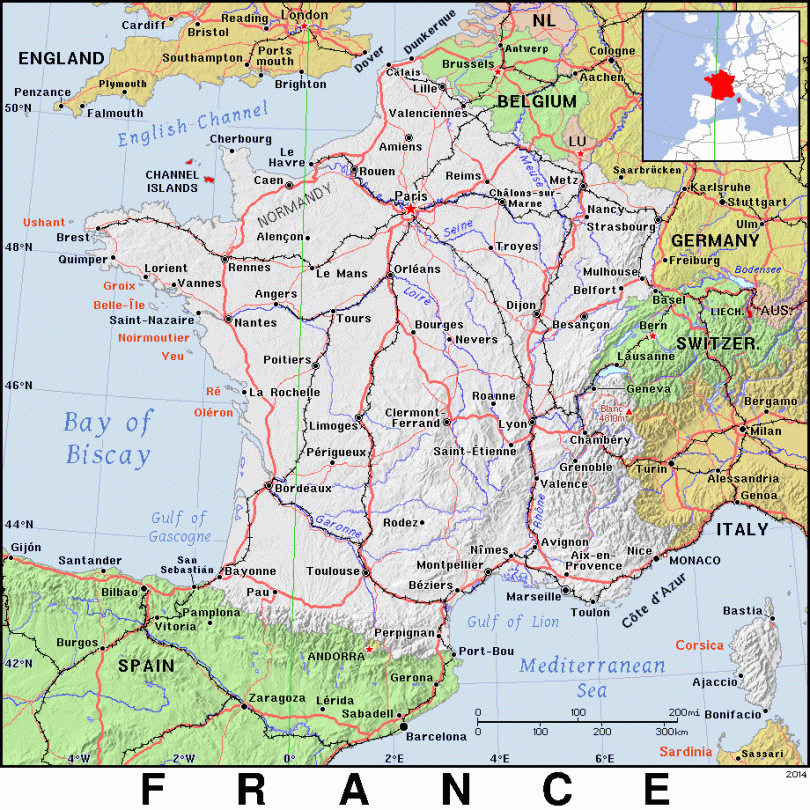
As I also pointed out in my last post, European nationality (and, by extension, the European nation-state) is built on notions of blood and soil.  In other words, being French means you are descended from a group of people broadly defined as “French” and you reside within the French “hexagon” (or at least claim that as your home).  Obviously, not every European nation-state still pursues this model–in some cases to their detriment–but some, like Italy, strenuously do.

 Now that is one sophisticated hexagon.

(Post-colonialism, being “French” includes many people outside of this geographic region, and now the French would more broadly define their nationality through shared language and culture–a model that moves closer to what I perceive to be the American model of nationalism).

In the United States–or, more specifically, in colonial British North America–Americans had a unique opportunity to define their national identity far more broadly.  Indeed, one could argue Americans did so out of necessity:  colonial British North America was a tapestry of cultures, languages, and ethnic groups.  Most hailed from the British Isles and Northern Europe, but the 18th century saw large influxes of Germanic and Scotch-Irish immigrants, not to mention the unfortunate forced immigration of the trans-Atlantic African slave trade.  Most were Protestant of various stripes–the German settlers in particular brought a rich and baffling array of spiritualism and religiosity to a young America–but Catholics and even a small number of Jews also made the trek to the colonies.

The massive Irish and German immigration brought by the Irish Potato Famine and the failed democratic revolutions of 1848, respectively, brought even more diversity to the land at that point known as the United States, and so-called “New Immigration” after the Civil War saw immigrants from Italy, Lithuania, Poland, Russia, Greece, and beyond.

By the time those “New Immigrants” began arriving in the 1870s until the tide was stemmed in the 1920s, the United States had already developed a model for nationality born of its colonial experience.  Indeed, the young United States proclaimed its nationality at the very moment it proclaimed its independence from Great Britain.

In writing the Declaration of Independence, Thomas Jefferson laid down the framework for what it means to be an American.  Jefferson, like all of the Founding Fathers, believed in the universal rights of men, rights derived not from any worldly, temporal authority, but from God Himself.  Every civics student is familiar with the ringing declaration that “We hold these truths to be self-evident, that all men are created equal, that they are endowed by their Creator with certain unalienable Rights, that among these are Life, Liberty and the pursuit of Happiness.”  Herein we see the roots of American values, birthed through the centuries by the tenacity of independent-minded Englishmen and bolstered by the more admirable claims of the Enlightenment.

However, many modern readers miss the first paragraph of the Declaration, which opens with the phrase “When in the Course of human events….”  This seemingly innocuous phrase holds within it deep wells of significance.  Jefferson here is saying that these ideals and rights are not specific to one place or one time.  The “human” here refers, rather, to all of humanity.  The phrase “in the Course of human events” refers to the timeless quality of these values–the self-evident truths of the Declaration apply yesterday, tomorrow, and forever–ad infinitum.

Thomas Jefferson, Babe Magnet

This simple phrase, then, goes a long way in explaining why the young United States was able to hold together in spite of its broad diversity of ethnic groups and religions, while the similarly diverse Austro-Hungarian Empire, which attempted to balance the interests of different ethnic groups by favoring some and oppressing others, ultimately collapsed.  The universal truths of the Declaration, espousing universal rights bestowed by the very Creator of the universe, give all men the opportunity to live their lives as they wish, confident in their liberty and free to pursue happiness and fulfillment as they please.

No doubt this philosophy of God-given liberty has bolstered the United States economically, allowing it become the richest, most prosperous nation on Earth–surely a carrot for future and continued immigration.  Ultimately, however, the most successful and fulfilled Americans, both native-born and immigrant, are those that come to embrace the core philosophy of the American experience.

A sad note in parting:  the increasing ignorance of these God-given rights, and the increasing balkanization of the American nationhood into favored classes and victim groups as a result of said ignorance, is undermining the universal vision of the Founders.  America today looks more and more like the Austro-Hungarian Empire of the early 20th-century:  decadent and splendid on the surface, but torn by internal turmoil and ethnic strife within.

To avoid a similar state, the United States must make a concerted effort to revive the Founders’ understanding of the American philosophy enshrined in the Declaration of Independence.

TBT: American Values, American Nationalism

Each Thursday, I’ll be digging through the Portly Politico Archives to bring you classic content from the old Blogger site.  This week’s essay re-launched the blog back in 2016.  Two years later, I still believe that our nation is built on ideas, rather than links of common blood, though I have to come to believe, too, that our borders are crucial, and that the Anglo-Saxon traditions of rule of law are essential to the maintenance of our republic.  While those traditions derived from a particular people—the English—they are inherently universalist in nature, and with the right cultural, religious, and moral framework, can be adopted by any people that will accept them.

That universality does require certain pre-conditions.  As I point out to my students, it took 561 years from the Magna Carta in 1215 to the Declaration of Independence in 1776, and the development of ideals of liberty and rule of law from a feudal arrangement to a universal declaration of individual rights occurred within the framework of English culture.

That’s why, for example, unchecked levels of immigration, both legal and illegal, undermine the delicate social and historical fabric of our nation.  It takes time for people to assimilate to these ideals, and some ethnic and cultural groups do so more quickly than others (for example, Jamaicans and East Indians in Britain were model assimiliationists, while Pakistani Muslims still struggle to assimilate—or even choose actively not to do so—into British culture and society).  But, ultimately, I do believe the ideational notion of American nationalism holds true in general—but we probably shouldn’t keep trying to plant modern democratic-republics in the Middle East (more on that another time).

Without further ado, here is 2016’s “American Values, American Nationalism“:

I’ve been teaching American history and government for six years (and continuously since 2011).  Part of my regular teaching duties includes US Government, a standard survey course that covers the Constitution, federalism, the three branches of the federal government, and other topics of interest.  It’s a simple, semester-long course that, while not terribly novel, is absolutely essential.

Before we even read the Preamble to the Constitution, though, I introduce the students to the idea of America.  This lesson plan is not a unique creation; it comes from the textbook Government By the People by David Magleby and Paul Light, which I used to use for the course (I don’t know Magleby and Light’s political leanings, but the book is a fairly straightforward and useful primer on the mechanics of US government).  I follow the authors’ course by starting with what they call the “Five Core Values” of America, which are as follows:

1.) Individualism

2.) Popular Sovereignty

3.) Equality of Opportunity

4.) Freedom of Religion

5.) Economic Liberty

Why do I start each semester in this fashion?  I’ve found that many Americans—and not just teenagers and young adults—aren’t exactly sure what makes American special.  Sure, many can point to our military dominance and our economic clout, but during a time when both appear to be losing ground to other nations, we can’t solely make our case on those grounds.

Others might point to our superior educational system, our extensive infrastructure, or our superior health.  The United States certainly is blessed with these qualities, but study after study shows that we’re falling behind the rest of the world academically, and everyday experience (especially here in South Carolina) demonstrates that our roads are crumbling.  And don’t get me started on the mess that is the Affordable Care Act.

So if we can’t rest our claims for American greatness on these grounds—or, if we can only hope to do so temporarily—what really does make the United States special?  Is American exceptionalism only truly relatively, as President Obama implied in April 2009 when he proclaimed, “I believe in American exceptionalism, just as I suspect that the Brits believe in British exceptionalism and the Greeks believe in Greek exceptionalism”?

The answer—as you’ve probably guessed—are the very values listed above, the values enshrined in our founding documents, in our political culture, and in our hearts.  The powerful but fragile legacy of liberty handed down from English common law, these values still energize the United States.

What makes the United States unique, too, is that these values form the basis of our sense of nationhood.  No other nation—at least, not prior to the declaration of the United States in 1776—can claim a similar basis.

The term “nation” itself refers to a specific tribal or ethnic affiliation based on common blood, and usually linked to a specific (if often ill-defined) bit of soil.  The nation-states of modern Europe followed this course; for example, French kings over centuries gradually created a “French” national identity, one that slowly subsumed other ethnic and regional identities (Normans, Burgundians, etc.), into a single, (largely Parisian) French culture and nation.

The United States, on the other hand, is not a nation built on ties of blood and soil (although we do owe a huge debt of gratitude to the heritage of Anglo-Saxon political culture for our institutions), but, rather, founded on ideas, ideas that anyone can adopt.

We believe, further, that these ideals are universal, and are not, ultimately, specific to our place and time.  Sure, some countries might lack the institutional stability and political culture to sustain a constitutional republic like ours, but, ultimately, we believe that any people, anywhere in the world, can come to adopt our American values.

The concept of American nationhood, therefore, is flexible and adaptive to many contexts, but is ultimately grounded in firm absolutes.  Often these values butt up against one another, or there is disagreement about their importance.  When, for example, does the will of the individual become so out-sized that it threatens, say, popular sovereignty, or freedom of religion?

The Constitution was designed to adjudicate these disputes fairly and transparently—with a Supreme Court acting in good faith and in accord with the Constitution—to protect individual rights from the tyranny of the majority, and to protect the majority from the tyranny of minority special interest groups.

In this regard, perhaps, American nationalism has faltered.  The consistent undermining of our carefully balanced constitutional order—the centralization of federal power, the aggrandizement of the executive and judiciary, the delegation of legislative powers to the federal bureaucracy, the equivocation of Congress—has served to damage our national identity and our national values, turning the five core values above into distorted perversions of their proper forms.

To wit:

1.) Individualism—the protection of the individual’s rights—has become a grotesque, licentious individualism without any consequences, one that expects the state to pick up the tab for bad decisions, which can no longer be deemed “bad.”  Alternatively, actual constitutional rights are trampled upon in the name of exorcising “hate speech.”

2.) Popular sovereignty—authority flowing upward from the people—has been flipped on its head, becoming, instead, a top-down sovereignty of the enlightened technocrats and un-elected government bureaucrats.

3.) Equality of opportunity—an equality that recognizes that everyone is different but enjoys the same legal and constitutional safeguards to fail and to succeed—morphs into equality of outcome, a radical form of egalitarianism that brought us the worst excesses of the French and the Russian Revolutions, and ultimately breeds authoritarianism and demagoguery.

4.) Freedom of religion—the most important of our constitutional rights, as it rests both at the foundation of our republic and of our very souls, the freedom of conscious itself–now becomes a vague “freedom of worship,” which is really no freedom at all.  Religious observation is to be a strictly private affair, one (impossibly) divorced from our public lives.

5.) Economic liberty—the freedom to spend and earn our money as we please, with a token amount paid in taxes to support the infrastructure we all use and to maintain the military and police that protect our freedoms abroad and domestically–becomes excessive economic regulation, with many potential economic opportunities simply regulated out of existence.  Rather than laws forming in response to new technologies or ideas, regulations are crafted to protect existing firms and well-connected special interests.

With such a distorted view of our national values and our rights—stemming, in many cases, from ignorance of them—many Americans find it difficult to articulate what exactly it means to be an American.  In this light, problems like illegal (and, in some cases, excessive legal) immigration take on a whole new tenor:  how can we expect foreign migrants to adopt our values—to become part of the American nationif we ourselves cannot articulate what American nationhood and values are?

The solution starts with proper education and a realignment of our thought toward the proper definitions and forms of our values.  As Margaret Thatcher said, “Europe was created by history. America was created by philosophy.”  Understanding our national philosophy—our “Five Core American Values”—will allow us to rediscover our exceptional nationhood.