


Summer is drawing to a close, and with it free time for reading. One of my enduring frustrations as a student was the lack of time to read what I enjoyed (even though my English and history courses in high school and college often presented me the opportunity to read many excellent works).
As an adult, the situation has improved only marginally, as work often eats up most of my time, both during the day and at night. As a blogger and politics junkie, I also tend to read vast quantities of quick news stories and opinion pieces, while neglecting longer-form works that would be more satisfying.
Reading short articles on the Internet is like scarfing down a box of Cheez-Its: it’s enjoyable in the moment, but it just raises my blood pressure and leaves me unfilled: an unhealthy indulgence in large quantities. A good book, or even a well-crafted short story, is like a steak dinner: filling, satisfying, and sustaining.
I’ve released two reading lists, in 2016 and 2019 (the full 2019 list is a SubscribeStar exclusive), but I thought this Sunday I’d feature some recent posts on books, short stories, and pieces I’ve enjoyed:
- “McClay & Sheaffer on American History” – This piece examines a new American history textbook from Wilfred McClay, who once mailed me a copy of the Italian novel The Leopard after I wrote to him (he’d written about the book for a conservative publication). My girlfriend’s father actually owns a copy of this book, and I had an opportunity to flip through its glossy pages while in New Jersey. My post offers up an analysis of the state of American history education.
- “Summer Reading: The Story of Yankee Whaling” – I was still in the process of reading The Story of Yankee Whaling, a fascinating account of America’s whaling heyday aimed at younger readers, when I wrote this post. It was a charming—and hugely informative—book, which gave me access to an entire forgotten industry and its role in American history. The book dealt with its subjects sympathetically and unapologetically; there is no hand-wringing about whether or not it was right to kill whales for their blubbery oil. Instead, it simply detailed—and what thrilling detail!—the tough lives of whalers, and the gory particulars of their bloody, necessary trade.
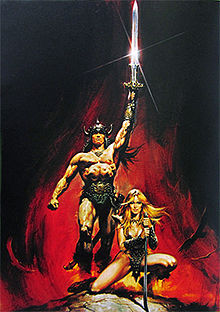
- “Reblog: Conan the Southerner?” – This post dealt with an interesting piece from the Abbeville Institute, a Southern history website with a strong Jeffersonian streak. The original post details the influence of rural Texas and its mores upon the creation of the Conan the Barbarian character. Strength, honor, integrity, hard work—these are the hard-won morals of the titular barbarian king, and they are deeply rooted in the Southern tradition.
- “Rudyard Kipling’s ‘The Mother Hive’” – my History of Conservative Thought class read this chilling short story one morning as an icebreaker. It’s about the insidious infiltration of a dangerous foreign element into a proud but aging beehive. The infiltrator—a wax-moth—fills the heads of the young bees with abstract claims of a utopian society, all-the-while laying its eggs and creating great strains on the hive. Fewer healthy bees are born, much less willing to work to support the colony, so more and more work is shouldered by a diminishing number of healthy workers. It all ends in a fiery blaze, with hope for the future, as a young Princess and her loyal retinue escape to rebuild. Written in 1908, the story sounds like it describes the modern West today—a terrifying warning that, I fear, we have not heeded.
So, there you have it. A little extra summertime reading for you before the academic year resumes. Teachers at my school report back in the morning, and students are in the following week. Yikes! Where did the summer go?
Enjoy your Sunday,
TPP
Other Lazy Sunday Installments:
- Lazy Sunday – APR Pieces
- Lazy Sunday II – Lincoln Posts
- Lazy Sunday III – Historical Moments
- Lazy Sunday IV – Christianity
- Lazy Sunday V – Progressivism, Part I
- Lazy Sunday VI – Progressivism, Part II
- Lazy Sunday VII – Deep State
- Lazy Sunday VIII – Conservatism
- Lazy Sunday IX – Economics, Part I
- Lazy Sunday X – Economics, Part II
- Lazy Sunday XI – Walls
- Lazy Sunday XII – Space
- Lazy Sunday XIII – Immigration
- Lazy Sunday XIV – Gay Stuff
- Lazy Sunday XV – Work
- Lazy Sunday XVI – #MAGAWeek2018
- Lazy Sunday XVII – #MAGAWeek2019
- Lazy Sunday XVIII – SubscribeStar Posts
- Lazy Sunday XIX – Music
- Lazy Sunday XX – The Laziest Sunday
- Lazy Sunday XXI – Travel

 The Portly Politico