Last night’s first round of Democratic presidential primary debates was what I expected—a contest between largely identical candidates competing to see who could promise each other more free goodies. Cory Booker came off as a bit light in the loafers, with a bulging lazy eye and a peeved reaction to Robert Francis O’Rourke’s cringe-inducing Spanish (per the rumors that Senator Booker is a closeted homosexual, I thought the look on his face was a mix of annoyance and arousal, but who can say). Senator Elizabeth Warren of Massachusetts just came across as an angry scold. When will Democrats learn that running a nagging woman is not going to win them elections?
Only Tulsi Gabbard, the mega-babe from Hawaii, seemed interesting, but she barely received any screen time. Then there were cookie-cutter dudes like Mayor Bill de Blasio and Washington Governor John Inslee who just looked the same, not to mention that guy from Ohio. In fact, the forgettable dude from Ohio got one of the biggest applauses with a quintessentially Trumpian promise to restore manufacturing (never mind that The Donald has already accomplished that).
Tonight we’ll get more of the same, though hopefully entrepreneur and math nerd Andrew Yang will spice things up with Asiatic wonkery. Otherwise, the only thing to see will be how many racial gaffes Vice President Joe Biden makes (I would love it if he made reference to Yang’s “Asiatic wonkery”).
So far, it all looks like good news for Trump. Of course, a weak, generic Democratic field might attract some doomed third-party hopefuls. That’s why for this week’s #TBT, I thought I’d look back to a lengthy piece from 2016 about the structural disadvantages of third party candidates, “Third Party Opportunity?“
Yesterday was spent teaching History of Conservative Thought, painting a classroom floor, and rushing around the Pee Dee region teaching four music lessons, before finally heading out of town for a few days. Needless to say, there wasn’t any time to get a post ready for this morning.
The news has also been light. The first round of Democratic presidential primary debates is tonight, but who cares other than the candidates?
There was a bit of a diplomatic imbroglio with Iran last week, but did anyone really think war was going to break out? Trump handled it Trumpishly; that is effectively, letting the mullahs sweat it out a bit before giving them an out (and signalling to Iranians that he cares more about their lives than the Ayatollah).
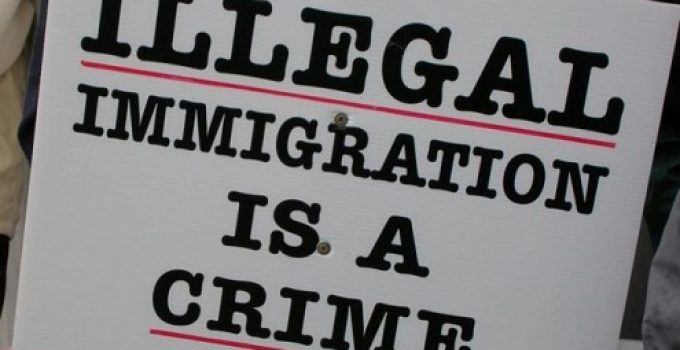
That’s why I’ve been sticking to the history and culture posts lately. There just hasn’t been much to say on politics, because there’s so much good happening. Illegal immigration is still a major problem, but otherwise the only “bad” news is that the economy is still growing, just not as quickly as a year ago.
So, brace yourself for another self-indulgent post (this publication is a blog, after all). While driving last night, I hit a classic rock and talk radio dead zone, so I resorted to public radio. I was pleasantly surprised.
President Trump officially kicked off his 2020 reelection campaign earlier this week, and it’s been almost exactly one year since the post below. I’ve been quite impressed with President Trump, who has governed far more conservatively than I and many other conservatives could have ever hoped. While there is still much to be done on immigration—border crossings have accelerated due to misguided progressive policies that encourage child trafficking—and the wall seems to be more an abstraction than a concrete reality, Trump has slashed taxes, created jobs, and strengthened national security.
His record speaks for itself. President Trump has taken the reins of the Republican Party and has done much to shore up the Republic. Here’s looking to four more years—and to Keeping America Great!
I was, initially, a Trump skeptic, and I voted for Texas Senator Ted Cruz in the South Carolina primaries the following February. When Trump first announced, I wrote him off—as so many others—as a joke. I appreciated his boldness on immigration, but I still thought the PC Police and the campus Social Justice Warriors were firmly in control of the culture, and that no one could speak hard truths.
I also remembered his brief flirtation with running in 2012, and thought this was just another episode in what I learned was a long history of Trump considering a presidential bid. At the South Carolina Republican Party’s state convention earlier in 2015, I asked two young men working on Trump’s pre-campaign (this was before The Announcement) if he was reallyserious this time. The two of them—they looked like the well-coifed dreamboat vampires from the Twilight franchise—both assured me that Trump was for real, and I left with some Trump stickers more skeptical than ever (note, too, that this was before the distinctive but simple red, white, and blue “Trump” lawn signs, and definitely before the ubiquitous “Make America Great Again” hats).
I even briefly—briefly!—considered not voting for Trump, thinking that he was not a “real” conservative. I still don’t think he’s a conservative in the way, say, that a National Review columnist is (although, the way they’ve gotten so noodle-wristed lately, that’s a good thing; I’ve just about lost all respect for David French’s hand-wringing, and Kevin Williamson went off the deep-end), but rather—as Newt Gingrich would put it—an “anti-Leftist.” That’s more than enough for me.
But my conversion to Trump came only belatedly. I can still find a notebook of notes from church sermons in which I wrote, “Ted Cruz won the Wyoming primary. Thank God!” in the margins.
Then something happened—something I predicted would happen on the old TPP site—and I couldn’t get enough of the guy. It wasn’t a “road to Damascus” epiphany. I started listening to his speeches. I read up on his brilliant immigration plan (why haven’t we taxed remittances yet?). I stopped taking him literally, and began taking him seriously.
And I noticed it happening in others all around me. Friends who had once disdained the Republican Party were coming around on Trump. Sure, it helped that Secretary Hillary Clinton was a sleazebag suffused with the filth of grasping careerism and political chicanery. But more than being a vote against Hillary, my vote—and the vote of millions of other Americans—became a vote for Trump—and for reform.
Trump made politics interesting again, too, not just because he said outrageous stuff on live television (I attended his rally in Florence, South Carolina before the SC primaries, and I could feel his charisma from 200 feet away; it was like attending a rock concert). Rather, Trump busted wide open the political orthodoxy that dominated both political parties at the expense of the American people.
Take trade, for example. Since World War II, both Democrats and Republicans have unquestioningly supported free trade. Along comes Trump, and suddenly we’re having serious debates again about whether or not some tariffs might be beneficial—that maybe it’s worth paying a little more for a stove or plastic knick-knacks if it means employing more Americans.
That’s not even to mention Trump’s legacy on immigration—probably the most pressing issue of our time, and one about which I will write at greater length another time.
Regardless, after over 500 days in office, the record speaks for itself: lower taxes, fewer regulations, greater economic growth, greater security abroad. At this point, the only reasons I can see why anyone would hate Trump are either a.) he’s disrupting their sweet government job and/or bennies; b.) they don’t like his rhetorical style, and can’t get past it (the Jonah Goldbergite “Never Trumpers”—a dying breed—fall into this group); or c.) they’re radical Cultural Marxists who recognize a natural foe. Folks in “Option B” are probably the most common, but they’re too focused on rhetoric and “decorum”—who cares if he’s mean to Justin Trudeau if he gets results? The folks in “Option C” are willfully ignorant, evil, or blinded by indoctrination.
As the IG report from last Thursday revealed—even if it wouldn’t come out and say it—the Deep State is very, very real. That there were elements within the FBI willing to use extralegal means to disrupt the Trump campaign—and, one has to believe, to destroy the Trump presidency—suggests that our delicate system of checks and balances has been undermined by an out-of-control, unelected federal bureaucracy. Such a dangerous threat to our republic is why we elected Trump.
President Trump, keep draining the swamp. We’re with you 100%.
On Monday, President Trump announced the deportation of millions of illegal aliens beginning “next week,” vowing that ICE agents would remove such aliens “as fast as they come in.”
Here are the two pertinent tweets from the president:
Next week ICE will begin the process of removing the millions of illegal aliens who have illicitly found their way into the United States. They will be removed as fast as they come in. Mexico, using their strong immigration laws, is doing a very good job of stopping people…….
….long before they get to our Southern Border. Guatemala is getting ready to sign a Safe-Third Agreement. The only ones who won’t do anything are the Democrats in Congress. They must vote to get rid of the loopholes, and fix asylum! If so, Border Crisis will end quickly!
Critics and supporters alike are asking for details on how Immigration and Customs Enforcement will process the millions here illegally. As I write this post, I’ve just listened to part of Ben Shapiro’s podcast on the announcement; he argues that a surgical, case-by-case approach is preferable, as some illegal aliens possess skills we would want in the United States.
While I appreciate Shapiro’s measured response, I can’t agree. As I wrote in “Deportemal,” the time for half-measures has passed. A lengthy review process of the millions of illegal aliens—which could be anywhere from 11 to 33 million (PDF; that document shows an illegal population of 12 million as of 2015), and maybe higher (that no one can know for sure is a major part of the problem)—would bog down for years, if not decades. Another visa process ladled on top of inherent law-breaking will merely exacerbate the problem.
Consider: our current catch-and-release system—migrants show up to one court date, get a temporary visa and orders to report back to court, then disappear into the countryside, never darkening an immigration court again—already gives migrants an easy in. Essentially, touching American soil is like tagging home base: once you’re here, you’re in.
Now, imagine adding an individual review process to that. First, you’d have to assume good-faith on the part of illegals in the country. They have virtually no incentive to come to another hearing. Yes, they have the opportunity to be absolved of their illegal status (I’m assuming that’s what Shapiro is proposing), but if they think they don’t, they’ll avoid the process.
Second, a whole cottage-industry of gaming the individual amnesty system will emerge. Lawyers skilled in the ins-and-outs of this fresh bureaucratic hell will profit at the expense of their countrymen and poor illegals. Appeals—and you know with the federal government there would be a lengthy appeals process—would linger on for months, even years, further adding to the administrative load of ICE and our courts.
If we were dealing with a few thousand people, we could demonstrate some mercy and approach this issue with a lighter touch. Unfortunately, we’ve failed to enforce our border laws for so long that we’ve allowed this crisis to metastasize, to the detriment of American citizens and potential immigrants alike.
Republicans squandered a golden opportunity to make some real strides on immigration reform during the 2017-2019 congressional session. President Trump has moved mountains since then via constitutional executive orders and international diplomacy, particularly his threat of slapping hefty, incremental tariffs on Mexico. Increased enforcement of Mexico‘s southern border has, according to Shapiro, already eased the number of arrests on the American border.
In the wake of President Trump’s massive 2020 reelection campaign launch last night in Orlando, Florida, it is imperative for immigration patriots to run (and win!) in 2020, and for Americans to support Trump’s reelection. It’s our best hope to resolve this crisis, to the benefit of Americans and the world.
It was a glorious weekend at Casa de Portly, deep in the heart of Dixie. It was the kind of weekend that saw a lot of non-blog- and non-work-related productivity; in other words, I loafed a great deal, then did domestic chores around the house.
In case you missed it, on Saturday I released my Summer Reading List 2019. If you want to read the whole list—and it’s quite good—you have to subscribe to my SubscribeStar page at the $1 level or higher. There will be new, subscriber-exclusive content there every Saturday, so your subscription will continually increase in value.
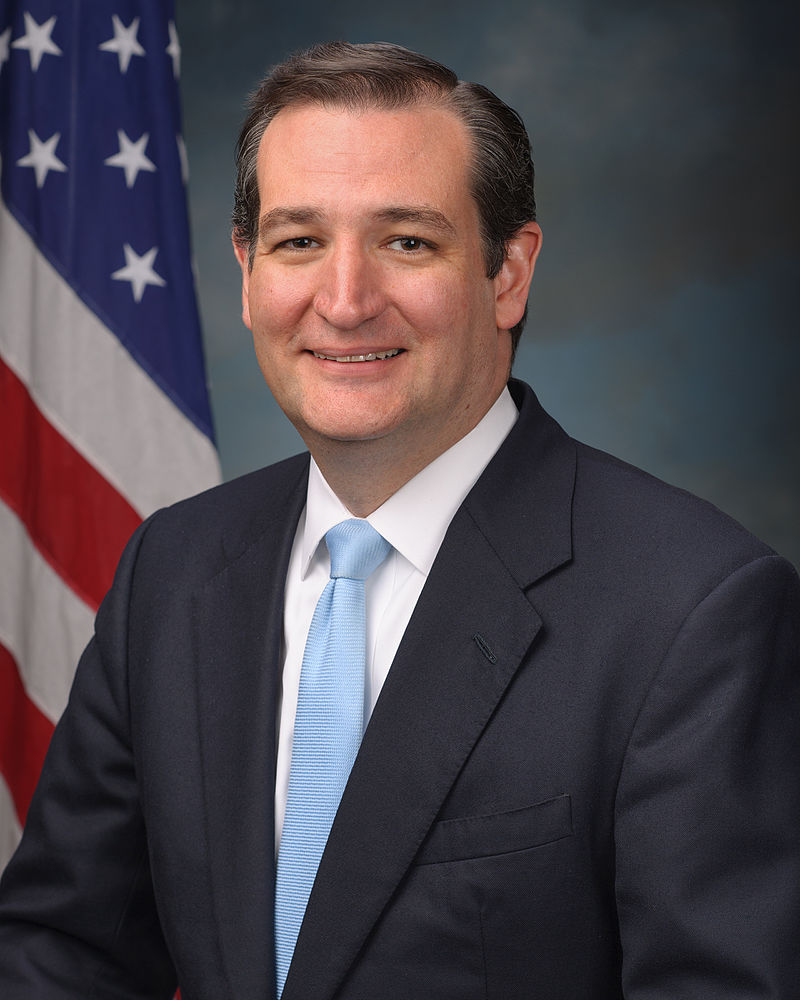
I was a big fan of Cruz in the 2016 Republican presidential primaries, and I voted for him here in South Carolina. Cruz intuited the populist mood of the electorate the way that President Trump did, and combined it with policy innovation and constitutionalism.
There’s a reason Cruz hung in there as long as he did against Trump: he’s a canny political operator, but he also knew how to pitch a conservative message that was appealing to many voters. I sincerely believe that had he clinched the nomination, he would have won the 2016 election (and, perhaps, by an even wider Electoral College margin than did Trump).
Cruz catches a lot of flack because he’s a little dopey and looks odd—a whole meme emerged in 2015-2016 claiming that Cruz was the Zodiac Killer—but he’s been an influential voice in the Senate. He possesses a supple, clever mind, and has urged Republicans to make some bold, innovative reforms to the Senate (he vocally champions and has proposed a constitutional amendment for congressional term limits).
The hour-long interview with Ben Shapiro—which opens with a question about his alleged identity as the Zodiac Killer—shows how affable and relaxed Cruz really is. I’ve never seen him appear more relaxed and genuine (and I never took him for a phony—I’ve seen him speak live at least once at a campaign rally in Florence, and spoke very briefly to him afterwards) than in this interview.
Granted, it’s friendly territory—Shapiro was a big supporter of Cruz in the primaries—but Cruz spelled out some important ideas, as well as his projections for 2020. If you don’t have a full hour, fast forward to about the forty-minute mark for his discussion of Trump’s reelection prospects.
To summarize them briefly: Cruz thinks it all comes out to turnout, and that Democrats will “crawl over broken glass” to vote against Trump. He even points out that his own race against Democrat Robert Francis “Beto” O’Rourke was as close as it was because Beto ran against Trump more than he did against Cruz. He also thinks Joe Biden is going to flame out, and one of the more radical, progressive Dems will clinch the nomination, making the prospect of a truly socialistic administration terrifyingly possible.
That said, Cruz is optimistic. Discussing his own narrow victory over Beto in 2018, he points out Beto’s massive fundraising and staffing advantages (Cruz had eighteen paid staffers on his campaign; Beto had 805!), but explains that a barn-burning bus tour of the State of Texas pulled out conservative and middle-class voters in a big way for his reelection.
That points to one of Trump’s strengths: the relentless pace with which he campaigns. Trump held three and even four rallies a day in key battleground States in the final days of the 2016 election, which likely made the difference in Michigan, Wisconsin, and the Great White Whale of Republican presidential elections since the 1980s, Pennsylvania. If Trump can get his pro-growth, pro-American message out there as effectively in 2020 as he did in 2016 and can excite voters who want to protect their nation and their prosperity, he could cruise to reelection.
Cruz’s optimism, tempered by practical challenges ahead for Republicans, really came through in the video. Really, the entire interview reminded me why I liked Ted Cruz so much the first time. I’d love to see him remain a major presence throughout the next five years, and to see him run for the presidency again in 2024 (him, or Nikki Haley).
Regardless, I encourage you to listen to this interview. Take Cruz’s warning to heart: don’t get complacent, because the Democrats aren’t.
To celebrate “pride”—which I take to mean loudly proclaiming who you like to sleep with while wearing ass-less chaps in public—this week’s Lazy Sunday looks back at the influence of gay stuff on our body politic. Enjoy!
“Gay Totalitarianism” – This post discussed the prevalence of homosexual hate-crime hoaxes, the most ubiquitous being Empire actor Jussie Smollett’s claim that a couple of white Trump supporters assaulted him with bleach and nooses in a tony, largely gay Chicago neighborhood early in the morning. I linked to Pedro recent piece for American Greatness, “Our Queer Decline,” which deftly analyzed this phenomenon: if homosexuals really faced persecution, they wouldn’t feel safe lying to the authorities about being attacked. Instead, they know they’ll have the full support of and sympathy from the government, corporations, and the media.
As the Smollett case showed, agents within the government would simply refuse to enforce the law via prosecution. The issue here is not that gays are receiving legal protection—like all Americans, they should be protected from assaults on their persons—but that there is a dual-standard at play. Jussie Smollett received egregious preferential treatment in part because he is gay (and, presumably, because he’s black and connected to the Obamas).
“Buttigieg and Buchanan: Redefining Morality” and “Bland and Gay” – These twin screeds explore South Bend, Indiana Mayor Pete Buttigieg’s appeal to voters—and his ungodly misinterpretation of Scripture regarding his homosexual lifestyle. The former essay pulls heavily from a piece Pat Buchanan wrote for Taki’s Magazine about Buttigieg’s radical redefinition of Christian teaching on homosexuality (essentially, Buttigieg’s argument is “God made me this way, so I’m supposed to ignore His teachings on homosexuality”).
The latter essay attempts to explain Buttigieg’s appeal to voters, which seems to be waning a bit. At the time, I argued that Buttigieg’s popularity was due to his blandness—he speaks largely in indefinable generalities, a la Barack Obama’s “Hope and Change” slogan—mixed with the mildest splash of exoticism—his homosexuality. Now that same-sex marriage is legal and homosexual behavior is largely normalized in the United States—but still, we all tacitly acknowledge, abnormal—Buttigieg’s gayness offers the slightest frisson of excitement for voters. The thought process seems to be “oh, he’s a safe, non-offensive, boring white guy, but I can virtue-signal on the cheap because he’s gay!”
“First They Came for Crowder” – This piece covered the demonetizing of conservative comedian Steven Crowder, all because a flamboyant “journalist” at Vox pitched a hissy-fit. If that’s not proof that being gay aligns you with the full power and influence of big corporations and our techno-elites, then there’s no convincing you.
There you have it! Some celebratory reading for Pride Month 2019. Here’s hoping your Sunday is as fabulous as Milo Yiannopoulos.
In the Culture Wars, the Right struggles with a commitment to principles, decorum, and intellectual honesty. In every area of life, those qualities are virtues, but in the battle against the progressive Left, those virtues quickly become liabilities.
Nowhere is this handicapping more apparent than on the “Never Trump” Right. In some cases—think neocon loons Max Boot and Bill Kristol—these figures are not even properly part of the “Right.” In other cases, they’re effete elites—like George Will—who comprise the “loyal opposition” to the dominant Leftist paradigm.
In still others, the Never Trumpers are overly-literal ideologues who can’t accept anything but 100% ideological purity. These are the Libertarians or “libertarian Republicans” that love 99% of what Trump has accomplished as president, but can’t abide tariffs or border control. They point to Trump’s seemingly “authoritarian” rhetoric as evidence that the freedom-loving real estate mogul is not-so-secretly an American Mussolini.
Such is the case with Michigan Congressman Justin Amash, the self-styled “libertarian Republican,” who announced on Twitter that President Trump has committed impeachable offenses (without identifying what those offenses may be).
There are also rumors that Amash might run for president in 2020 as a Libertarian. Given his tenuous but significant popularity in Michigan, he could siphon away enough votes from President Trump to cost him a crucial State and its electoral votes.
And herein rests the problem with so-called “libertarians” like Amash: they’re willing to sacrifice the good—in Trump’s case, the overwhelmingly great—for the perfect. “I can’t have Milton Friedman for President, so I’ll make sure the depraved socialists take office.”
Further, Amash has spent his entire career in politics, with the exception of one year working for his father’s company. That’s not necessarily a bad thing, but it definitely doesn’t fit with the Randian Übermensch ideal of spergy libertarianism. Libertarianism works great if you’re shielded completely from the vagaries of the real-world job market.
The most generous interpretation is that Amash sincerely believes that the president’s reactions to the Mueller probe constitute what he calls “impeachable conduct” (never mind that the Constitution doesn’t identify “conduct” as worthy of impeachment, just “high crimes and misdemeanors”). I can accept that Amash has applied his ideology so rigidly—and his distaste for real political brawlers so completely—that he believes the president should be impeached.
On the other hand, given his utter lack of real-world experience, it could be that Amash is attempting to make a name for himself after he leaves Congress (or gets voted out). There are a number of Never Trumpers who, I’m convinced, are biding their time. Should Trump lose in 2020—or when he leaves office in 2025—they look forward to resuming their place atop the political ruling class, getting back to their ineffectual, noodle-wristed “opposition” to official, state-sanctioned Leftism.
The news has been a bit slow over the weekend. Other than the Facebook deplatforming controversy—a major issue—and the trade war with China, there hasn’t been much going on.
As I peeled back the layers of this brief fluff piece, though, I began to realize the news is not as good for Democratic hopefuls as the optimistic headline lead me to believe. The media loves to play up the possibility of a major, unexpected “spoiler” for Democrats in deep red States. Every four years, I always hear some scuttlebutt about South Carolina going for the Democratic candidate—“they really have a chance this year if enough black voters turn out”—but it never happens.
West Virginia, though, was reliably, solidly Democratic for decades, thanks in part to the outsize influence of the late Senator Robert Byrd. Senator Byrd secured billions in federal funding for various projects in the Mountain State, a State that tops the charts for economic privation. As the Democratic Party increasingly abandoned rural voters, however, and Secretary Hillary Clinton promised to destroy the coal mining industry—effectively ruining her chances in the State (which her husband won in 1992 and 1996)—West Virginia shifted towards the Republicans.
President Trump’s victory came amid a promise to restore the coal mining industry, to protect American jobs, and to fight the opioid crisis. It’s on that last point that Senator Elizabeth Warren received applause.
Warren is a canny politician, but her hatred for conservatives is palpable—you can see the barely-restrained rage on her face when she talks about us. But it seems that, unlike Minnesota Senator Amy Klobuchar, Warren can control that anger when doing so will benefit her politically. Going to the stronghold of the enemy of opining on a major problem within that stronghold is a shrewd act of reinvention: “I’m not a crazy Leftist, I just get angry when good folks are taken advantage of” seems to be the idea.
Politico is quick to point out one woman who will change her vote from Trump to Warren (assuming Warren wins the Democratic nomination, a possibility that seems remote), and pettily notes the small “Support Trump” rally held near Warren’s speech (remember: this is a town of a few hundred people), but here was a key section of the piece:
The 63-year-old fire chief, Wilburn “Tommy” Preece, warned Warren and her team beforehand that the area was “Trump country” and to not necessarily expect a friendly reception. But he also told her that the town would welcome anyone, of any party, who wanted to address the opioid crisis. Preece was the first responder to a reported overdose two years ago only to discover that the victim was his younger brother Timmy, who died.
Preece said after the event that he voted for Trump and that the president has revitalized the area economically. But he gave Warren props for showing up.
“She done good,” he said.
What you have here is not Trump voters abandoning the candidate who has revitalized their State’s sagging economy; instead, it’s Trump voters enthusiastic that others are taking note of the opioid crisis gripping their community. As Fire Chief Preece said in the quotation above, the town of Kermit, West Virginia, is willing to host anyone wanting to discuss the opioid crisis.
Still, this trip to MAGA Country was a smart move for Warren. It also suggests that voters are increasingly attracted to any populist message, be it from the Left or Right. Remember, Senator Bernie Sanders won 51.41% of the votes in the Democratic primary election in West Virginia. Voters in rural America seem eager to embrace populist figures who will at least pay lip service to their struggles.
Trump will easily win West Virginia and its five electoral votes in 2020—as he will the electoral votes of many rural States—but he shouldn’t let up on his populist message, especially in difficult swing States like Pennsylvania (and—dare I consider them swings?—Wisconsin and Michigan).
There’s been a spate of good economic news lately, largely thanks to President Trump’s economic policies. US GPD grew 3.2% for the first quarter of 2019, blowing away economists’ projected 2.5% growth. Of the 231 companies in the S&P 500 to report their Q1 earnings so far, 77.5% of them have exceeded analysts’ expectations. US consumer spending increased 0.9% (0.7% when adjusted for inflation) during a quarter that is usually slower after the Christmastime rush. All of that growth has occurred without a substantial increase in inflation.
That economic news is good for President Trump, but it might not be enough in and of itself. In better times, any president with those economic numbers would breeze into a second term, but the perception among Democrats (no surprise) and some independents (more troubling) is that the economic growth we’re witnessing isn’t benefiting everyone, but instead favors the rich and powerful.
That said, the scuttlebutt on the Dissident Right is that economic success alone won’t secure Trump’s reelection, and that excessive focus on it might actually alienate the blue-collar workers that delivered Trump victory in 2016. The general argument is that, unless Trump doesn’t come down hard on immigration, even economic growth won’t save him.
I don’t fully buy this argument, but there might be some truth to it. When the economy is already good, voters begin looking at other issues more closely. If a worker loses his job to an illegal immigrant, or if the plant moves to Mexico, it doesn’t matter how good the economy as a whole is doing.
One alarming sign of trouble: former Vice President Joe Biden and Texan weirdo Robert Francis “Beto” O’Rourke both are competitive against Trump—in Texas! Granted, it’s very early in this process—the 2020 election is an eternity away, politically speaking—and the media loves to trumpet Democratic victories in historically deep-red States. But the situation in Texas, like other border and high-growth States, illustrates the importance of the immigration issue.
A quick summary: ultra-progressive California taxes and regulates its most productive citizens out of the State, while importing cheap labor illegally (supporting it with sanctuary cities, etc.) so the uber-wealthy Silicon Valley tech titans have gardeners and nannies at slave wages. Enough Lefties bleed out into Arizona, Texas, and other reddish States with low taxes and good law enforcement. Those States also struggle with illegal immigration, and are demonized for trying to protect their borders. The result: the purpling of Texas.
To clarify: I think President Trump is well-positioned to win in 2020, especially if the Democrats nominate a wacko or a blatant race-baiter (like Kamala Harris). He’s got a tougher fight against a perceived moderate like Biden or Pete Buttigieg, but momentum and incumbency are on his side.
Regardless, it is vital that President Trump return to his key campaign promise from 2016: securing the border. Not only is that crucial for tapping into the populist discontent that catapulted him into the Oval Office, it’s the only way to preserve the United States we know and love.
The Democratic field for 2020 is a circus of tribal interests. Each candidate represents some special interest group in the rainbow coalition of the Democratic Party: Kamala Harris is the Queen of Black Voters; Cory Booker is the closeted, melodramatic homosexual; Elizabeth Warren is the shrill, angry white lady; Joe Biden is the Old Obama Perv; Tulsi Gabbard is the ethnically-ambiguous babe (and the least bad of all of them).
But the candidate that has everyone all a-titter is South Bend, Indiana Mayor Pete Buttigieg, the platitudinous gay man. Everyone seems to love this guy, notably upper-middle class white people and the tech industry. Breitbart‘s Allum Bokhari has a piece attempting to explain Buttigieg’s appeal to Big Tech and the closeted Leftists of the Never Trump movement.
There’s something to this analysis, I think. I’m continually frustrated with alleged conservatives who say they like President Trump’s policies, but cannot support him “on principle” because he’s “morally reprehensible.”
I recall a conversation with a friend and his wife—both devout Catholics—who dislike President Trump, largely (I perceived) for rhetorical reasons. The husband is given to virtue-signalling to the pieties of the day, but the wife is a bit more based. I pleaded with her to get over her distaste for Trump’s “meanness” and to cast her vote for him in 2020, as he’s the only candidate who is going to fight against abortion and for religious liberty. She told me she did not oppose the president for being a “meanie,” but because she finds him “morally reprehensible.”
I thought about that comment, and realized it’s nonsense. Saying the president is “morally reprehensible”—and, therefore, you’re not going to vote for him—is the same thing as saying you won’t support him because he’s a meanie; it just sounds better to frame it in moral tones.
Yes, yes, President Trump has done some immoral stuff, things many of us would shudder to contemplate. But who among us isn’t a sinner? What I care about are results. Cyrus the Great wasn’t a God-fearing man, but he restored the Jewish people to their homeland and paid to rebuild the Temple.
It’s a shame we have to keep reminding other Christians that a.) God uses all people to achieve His ends and b.) God forgives—and, as Christians, we believe in forgiveness!
But I digress. I intuit that what these cosmopolitan, upper-middle class whites want is, simply, a blandly non-offensive guy to say nice things and to appear “presidential.” In the current mix, the only figure that really fits that “Platonic ideal” of a president is Pete Buttigieg.
Add in a splash of mildly exotic gayness, and he pushes all the right buttons for these folks: they get to virtue-signal their support for a now-acceptable “alternative lifestyle,” while bowing to a vapid, clean-cut nice guy.
Pathetic. In a better age, we’d reject Mayor Pete for his Wildean antics. Instead, we’re elevating a Midwestern mayor with a slim record to presidential heights because it makes country club types feel good about themselves. “He’s nice—oooh, and gay! I like that combination.” Please.





 The Portly Politico