Conservative Inheritance

In 1950, literary critic Lionel Trilling wrote in The Liberal Imagination (PDF) the following about conservatism, which he viewed as being virtually extinct following the Second World War:

In the United States at this time liberalism is not only the dominant but even the sole intellectual tradition. For it is the plain fact that nowadays there are no conservative or reactionary ideas in general circulation. This does not mean, of course, that there is no impulse to conservatism or to reaction. Such impulses are certainly very strong, perhaps even stronger than most of us know. But the conservative impulse and the reactionary impulse do not, with some isolated and some ecclesiastical exceptions, express themselves in ideas, but only in action or in irritable mental gestures which seek to resemble ideas.

It’s probably the most frequently cited quotation from a liberal among conservatives, because it did, in 1950, offer a practical assessment for the state of conservatism in the United States.  The twin struggles of the Great Depression and the war led to a triumph of what Russell Kirk called “Rooseveltian liberalism,” which sought to use the power of the government to address economic problems.  With the defeat of Nazism and Japanese imperialism, and entering the long Cold War with the Soviet Union, Americans placed great faith in the ability of their government to solve basic problems.

Indeed, the experience of conservatism since the Second World War has largely been that of accepting liberalism’s underlying propositions.  “Conservatism,” then, came to be more of reaction to the excesses of liberalism—a tapping of the brakes, not a full stop or reversal—rather than a cogent philosophical and social system on its own.

While that’s a controversial statement with many exceptions—there remained many conservatives, like Arizona Senator Barry Goldwater, who continued to resist Rooseveltian liberalism—consider that the first Republican President since 1932, Dwight Eisenhower, accepted much of the New Deal, and left it virtually intact.  His signature achievement as president, other than ending the Korean War, was to champion the construction of the Interstate Highway System.  That was a worthy undertaking, to be sure, but the legacy of a major Republican president was to spend millions, rather than rolling back the interventionist state.

Since then, conservatism has gone through a number of permutations, many of which I’ll cover throughout my History of Conservative Thought course this summer.  My point here, however, is that conservatism, strictly speaking, cannot exist in the dominant framework of modern liberalism.

I’m not rejecting the tenants of classical liberalism—equality before God, the possession of God-given natural rights, the freedom of association—per se.  But conservatism is an empirical, rather than a rationalistic, endeavor.  Indeed, Russell Kirk argued that conservatism is not an ideology, as such, but the result of millennia of human experience.

Or, as Ted McAllister writes in “Toward a Conservatism of Experience” for RealClearPolicy, “Conservatism is an inheritance, not an ideology.”  He continues:

American conservatism emerged out of our experiences as a self-governing people who love their inherited liberties rather than abstract rights; whose laws have historically emerged out of our norms rather than a specious theory of justice; whose gift for creating and protecting political freedom (the freedom to govern ourselves, our communities, our associations) has served as the primary obstacle to the relentless drive toward an egalitarian administrative state.

McAllister’s essay—which is really a book review of Patrick Deneen’s book Why Liberalism Failed—makes a compelling case for a conservatism based not on metaphysical abstractions but on the “discovery, articulation, and defense of a reality we experience and of affections formed long before we needed to defend them.”  McAllister argues that conservatism had to adopt a more universal, ideological paradigm during the Cold War to face the major existential threat of international communism, but should return the localized, particularized forms of organic social arrangements America enjoyed prior to 1945.

Part and parcel to this restoration is a rejection of democracy’s excesses.  McAllister writes that “democratic culture overindulges a love of equality and abstract moral truths,” that it encourages a leveling of all people into bland masses and, paradoxically, hyper-atomistic individuals.  In such a culture, perverse individualism separates Americans from their communities and their heritage.  Instead, our churches, schools, social clubs, and other institutions have fallen prey to progressive ideologues, rather than serving as the glue that binds society together.

There’s a lot to chew on in McAllister’s review.  Permit me one more extended quotation:

American conservatism is rooted in inheritance, in the rough guidance of experience over abstract idealism, and in the protection of the pluralism found in voluntary association and in self-governing communities. This is why something profoundly American is lost when conservatives embrace abstraction and universal slogans in their struggle with either liberalism or progressivism….

Suffice it to say that today we lack a strong and traditionally conservative intellectual — and specifically academic — class. The easiest measure of this weakness is found in both the number and the intellectual range of conservative academics. Of particular importance here is the dearth of conservatives in the humanities. Indeed, the number of conservative scholars devoted to such studies as philology, literature, theology, philosophy, and history as well as themes such as imagination, beauty, and truth, has dwindled both in raw numbers and as a percentage of conservative academics. Of course, outside the academy, there are journals and institutions that engage the moral, literary, historical imagination, which offer some reason for hope. But the overall trend on the Right has been toward intellectual work geared toward contemporary and immediate concerns — more about power than about beauty.

In essence, McAllister argues that, while we often appeal to abstractions in our never-ending battle against progressivism, we adopt their rationalist framework by doing so, albeit out of necessity and expediency.  That said, our focus on the immediacy of political power has led conservatism to sacrifice culture—a key reason, I would argue, as to why progressives are so dominant there.

McAllister overstates the problem slightly—just look at New Criterion to see “conservative scholars devoted to… themes such as imagination, beauty, and truth”—but the Left certainly dominates our culture.

At this point, though, I wonder how we can get back the old conservatism.  It’s a worthy goal, but it seems unlikely in an age in which progressive and postmodern dogma reign supreme.  The extent to which the progressive frame infects conservatism—even down to our mental processes—is disheartening, and explains the capitulatory approach of once-great conservative publications like National Review, which can barely contain its eagerness to run and apologize to Leftists for challenging them.

In the long-run, though, conservatism’s foundation—its groundedness—in objective reality, as opposed to rationalist abstractions, will allow it to prevail in all its beautiful, localized, variegated permutations.  That “long-run” just might take a very long while to arrive.
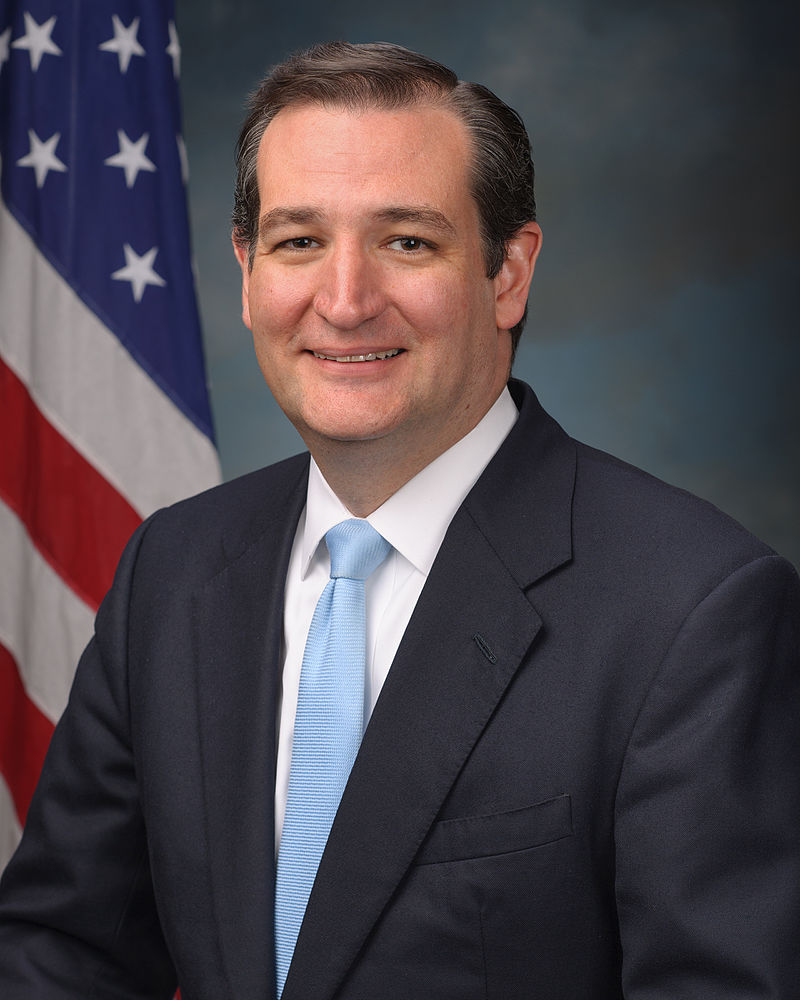
Ted Cruz on Ben Shapiro

It was a glorious weekend at Casa de Portly, deep in the heart of Dixie.  It was the kind of weekend that saw a lot of non-blog- and non-work-related productivity; in other words, I loafed a great deal, then did domestic chores around the house.

In case you missed it, on Saturday I released my Summer Reading List 2019.  If you want to read the whole list—and it’s quite good—you have to subscribe to my SubscribeStar page at the $1 level or higher.  There will be new, subscriber-exclusive content there every Saturday, so your subscription will continually increase in value.

Anyway, all that loafing and cleaning meant that I was unplugged from politics.  I did, however, manage to catch the Ben Shapiro Show “Sunday Special” with Texas Senator Ted Cruz.

I was a big fan of Cruz in the 2016 Republican presidential primaries, and I voted for him here in South Carolina.  Cruz intuited the populist mood of the electorate the way that President Trump did, and combined it with policy innovation and constitutionalism.

There’s a reason Cruz hung in there as long as he did against Trump:  he’s a canny political operator, but he also knew how to pitch a conservative message that was appealing to many voters.  I sincerely believe that had he clinched the nomination, he would have won the 2016 election (and, perhaps, by an even wider Electoral College margin than did Trump).

Cruz catches a lot of flack because he’s a little dopey and looks odd—a whole meme emerged in 2015-2016 claiming that Cruz was the Zodiac Killer—but he’s been an influential voice in the Senate.  He possesses a supple, clever mind, and has urged Republicans to make some bold, innovative reforms to the Senate (he vocally champions and has proposed a constitutional amendment for congressional term limits).

The hour-long interview with Ben Shapiro—which opens with a question about his alleged identity as the Zodiac Killer—shows how affable and relaxed Cruz really is.  I’ve never seen him appear more relaxed and genuine (and I never took him for a phony—I’ve seen him speak live at least once at a campaign rally in Florence, and spoke very briefly to him afterwards) than in this interview.

Granted, it’s friendly territory—Shapiro was a big supporter of Cruz in the primaries—but Cruz spelled out some important ideas, as well as his projections for 2020.  If you don’t have a full hour, fast forward to about the forty-minute mark for his discussion of Trump’s reelection prospects.

To summarize them briefly:  Cruz thinks it all comes out to turnout, and that Democrats will “crawl over broken glass” to vote against Trump.  He even points out that his own race against Democrat Robert Francis “Beto” O’Rourke was as close as it was because Beto ran against Trump more than he did against Cruz.  He also thinks Joe Biden is going to flame out, and one of the more radical, progressive Dems will clinch the nomination, making the prospect of a truly socialistic administration terrifyingly possible.

That said, Cruz is optimistic.  Discussing his own narrow victory over Beto in 2018, he points out Beto’s massive fundraising and staffing advantages (Cruz had eighteen paid staffers on his campaign; Beto had 805!), but explains that a barn-burning bus tour of the State of Texas pulled out conservative and middle-class voters in a big way for his reelection.

That points to one of Trump’s strengths:  the relentless pace with which he campaigns.  Trump held three and even four rallies a day in key battleground States in the final days of the 2016 election, which likely made the difference in Michigan, Wisconsin, and the Great White Whale of Republican presidential elections since the 1980s, Pennsylvania.  If Trump can get his pro-growth, pro-American message out there as effectively in 2020 as he did in 2016 and can excite voters who want to protect their nation and their prosperity, he could cruise to reelection.

Cruz’s optimism, tempered by practical challenges ahead for Republicans, really came through in the video.  Really, the entire interview reminded me why I liked Ted Cruz so much the first time.  I’d love to see him remain a major presence throughout the next five years, and to see him run for the presidency again in 2024 (him, or Nikki Haley).

Regardless, I encourage you to listen to this interview.  Take Cruz’s warning to heart:  don’t get complacent, because the Democrats aren’t.

TBT: A New Hope

The TBT two weeks ago was about former South Carolina Governor and Congressman Mark Sanford, whose political career was a roller coaster of (often humorous) controversy.  While going through the deep-but-scant archives from the TPP 1.0 era (circa 2009-2010), I came across an old TPP “Two-Minute Update” about Sanford’s successor in the governor’s office:  Nikki Haley.

The post, which dates to 17 June 2009, was about the then-unknown Haley, at the time a State Representative from Bamberg, South Carolina.  I remember reading about Haley and being impressed immediately.  I assumed she was a long-shot—remember, this was before Trump and only shortly after Obama, so political upsets by unlikely outsiders were still considered rare—but I had an inkling that she could win it all.  As is rarely the case when calling elections, I was right.

As I’ve noted many times in these TBT pieces, it’s fascinating looking back to just ten years ago and noting how much the political and cultural landscape has changed.  Nikki Haley would go on to win the South Carolina gubernatorial election in 2010 after a tough primary, in which she suffered a number of malicious, mendacious attacks (one blogger even claimed to have had an “inappropriate physical relationship” with her).

I remember even lifelong Republicans voting for Haley’s Democratic opponent, Vincent Sheheen, in a fairly close election.  I can’t fully remember what the concern was, although the sense I got was that she was perceived as too much of a firebrand.

You have to recall:  these were the early days of the Obama Administration, when people still believed in the possibility of political compromise with the Left.  Ideological conservatives like Sanford and Haley were seen as a bit “tacky” (the same way Trump is by Establishment Republicans now), and I suspect that VP candidate Sarah Palin’s endorsement of Haley probably made her gauche-by-association.  Also, Sheheen cast himself (as a statewide Dem in SC must) as a congenial moderate.

Long-story short:  Haley destroyed Sheheen in a 2014 rematch, and then famously was appointed the United States’ United Nations Ambassador when President Trump took office in 2019.  That elevated Lieutenant Governor Henry McMaster—the first public official in South Carolina to endorse Trump during the campaign—to the governor’s office.

Haley had been opposed to Trump, favoring Florida Senator and robot Marco Rubio in the SC primaries in 2016, but she served as one of our gutsiest UN Ambassadors since Daniel Patrick Moynihan.

After Trump, I’m hoping that Haley throws her hat into the ring for the Republican presidential nominations in 2024.  Isn’t it time we had a woman president?

So, here is 2009’s “Two-Minute Update: A New Hope,” which is shorter by far than this preamble:

I was pleasantly surprised to read about a fresh new face in South Carolina politics, gubernatorial candidate Nikki Haley, a State Representative from Bamberg. The daughter of immigrants, Haley appears to be the philosophical heiress-apparent to Governor Mark Sanford’s brand of fiscal conservatism. While it’s still pretty early in the game–the next gubernatorial election isn’t until 2 November 2010–Haley looks to be a promising candidate for supporters of Sanford’s commitment to limited government and political responsibility.

Again, it’s too early for The Portly Politico to give its support to any one candidate, but I will certainly have my eye on Haley’s candidacy over the next seventeen months. Hopefully she will be spared the ire that is so often heaped upon conservative female politicians by the liberal news media (see also: Sarah Palin).

For more information on State Representative Haley, check out this excellent write-up by Moe Lane at www.redstate.com“Speaking with Nikki Haley – (R-CAN, SC-GOV).”

The State of the Right

A major topic of discussion among conservative and/or non-Left thinkers, bloggers, and political theorists is what exactly makes one a “conservative” (or, perhaps more accurately, what combination of values and axiomatic beliefs constitute “conservatism”).  For the philosophically-minded, it’s an intriguing and edifying activity that forces one to examine one’s convictions, and the sources thereof.

I’ve written extensively about the Left and what motivates it.  To summarize broadly:  the modern progressive Left is motivated, at bottom, by a lust for power (the more cynical of Leftists) and a zealous nihilism.  These motivations take on a Puritan cultural totalitarianism that cannot tolerate even the mildest of dissent.  Witness the many examples of how Leftists across time and nations have devoured their own.

That said, I haven’t written too much lately about what it means to be a conservative.  One reason, I’m sure, is that it’s always more difficult to engage in the oft-painful exercise of self-reflection.  Another is that the lines of conservative thought have been shifting dramatically ever since Trump’s ascendancy in 2015-2016, and the cementing of his control over the Republican Party—the ostensible vehicle for conservative ideology—since then.

As such, in the kind of serendipitous moment that is quite common in blogging, today’s post shares two pieces on the lay of the conservative landscape, and the various factions within the broader conservative movement (and, politically, the Republican Party).

One is, by the standards of the Internet, an old essay by Gavin McInnes, “An Idiot’s Guide to the Right.”  Written in 2014, one month before Republicans would win control of the US Senate, McInnes’s breakdown of the Right is still fairly prescient, although it’s always interesting reading discussions of the conservative movement pre-Trump (McInnes, like many conservatives, hoped and believed that Ted Cruz was the last, best hope of the movement; that was certainly my view well into 2016).

The other is a post from Tax Day, “What’s Right,” by an upcoming blogger, my e-friend photog of Orion’s Cold Fire.  He gives a detailed breakdown of the shifting coalition of the Right at present, and his own “red-pilling” is very similar to my own (indeed, photog and I both fall somewhat on the fringes of the “civic nationlist” camp, with toes cautiously dipped into the parts of the “Dissident Right,” a term itself coined by VDARE.com‘s John Derbyshire).

Traditionally (since the end of the Second World War, that is), the old Republican coalition was a three-legged stool, bringing together economic/fiscal conservatives, social conservatives, and national security conservatives.  In the wake of the Cold War, the first two legs ceded more ground to the national security conservatives, some whom consisted of the much maligned “neoconservatives,” themselves reformed progressives who had been “mugged by reality.”

The neocons would enjoy their ascendancy during the George W. Bush administration, and they tend to be the major proponents of the dying Never Trump movement.  Their vehement hatred of Trump (see also: Bill Kristol, Senator Mitt Romney, and George Will) has largely discredited them, and they’ve shown that their true loyalty is to frosty globalism, not the United States.  They also pine for a mythical form of “decorum” in politics that never truly existed outside of the immediate postwar decades.

photog characterizes this group as essentially less strident Leftists, a group that “doesn’t shrink or grow.”  They were the “we need decorum” crowd that went big for the Never Trumpers, but who have largely made an unsteady cease-fire with the president—for now.  Bill Kristol and Max Boot, the extreme of this group, have essentially become full-fledged Leftists (making Kristol’s latest project, The Bulwark—to protect “conservatism,” ostensibly—all the more laughable).

These are the people that don’t want to vote for Trump, but might anyway, because he’s “morally reprehensible,” which is just their way of saying they think he’s icky and boorish.  These are the upper-middle class white women of the Republican Party, the ones I constantly implore to get over their neo-Victorian sensibilities and stop destroying the Republic from their fainting couches.

The biggest group, per photog, are the Conservative Civic Nationalists.  These are the people that love God and country, and like Trump because he represents the best hope to defend those very things.  McInnes, less perceptively, just calls this groups “Republicans,” although his “Libertarians” might fall into this group, too.  To quote photog at length:

The next big class of people are the Conservative Civic Nationalists.  This is the bulk of the Non-Left.  These are the normal people who have always believed in God and Country and that America was the land of freedom, opportunity and fairness.  They believed that all Americans were lucky to be living in the greatest country on God’s green earth.  They believed that the rule of law under the Constitution and especially the Bill of Rights is what made this the closest thing to heaven on earth and anyone living here should be supremely grateful to the Founding Fathers for inventing it and his own ancestors for coming here.  This is the group that has had the biggest change occur in the last couple of years.  But to define the change let’s break this group into two sub-divisions.  Let’s call them Sleepwalkers and the Red-Pilled.  Back in the early 2000s all the Civic Nationalists (including myself) were Sleepwalkers.

The “Red-Pilled” and “Sleepwalkers” dichotomy is one of the most interesting interpretations I’ve read about the Right lately, and it’s certainly true.  Trump awoke a large group of these Civic Nationalists, people that were disgruntled with the government overreach of the Obama era, but weren’t certain about the way forward.

Like myself, photog is cautiously optimistic that these folks will continue to wake up, bringing along non-political Centrists—the squishy, non-ideological middle—to bolster Trump’s reelection in 2020.  The Left’s relentless push for socialism and transgender bathrooms have done much to red-pill these folks, who find themselves struggling to articulate values that they just implicitly know are good, but which the Left insists on destroying.

There’s still much to be said about the current state of the Right, and I will be delving into it in more depth as the weeks progress.  For now, read these two essays—particularly photog’s—and begin digesting their ideas.  American politics are undergoing a major realignment, and we need people of good faith and values to stand for our nation.  Understanding the state of play is an important part of arming ourselves for the struggle.

Lazy Sunday VI: Progressivism, Part II

Last week’s Lazy Sunday shared four of my pieces about the excesses and abuses of Leftist progressivism.  This week, I’m reheating three TPP classics for your Sunday morning consumption.  Enjoy!

1.) “Logic Breakdown and the Kavanaugh Hearings” – the meltdown of the Left was on full display during the Kavanaugh confirmation hearings.  Here you had a straight-as-an-arrow judge who had been through multiple confirmations without incident.  What most frustrated me about the Kavanaugh hearings was how women began reasoning this way:  “because something bad happened to me, Kavanaugh must have done something to Dr. Blasey-Ford.”  How can we have the presumption of innocence—and rational, impartial weighing of evidence—if people make such absurd, illogical leaps in their “reasoning”?

2.) “Sanctimonious Leftism” – this piece was about a smarmy letter from Rich Harwood of the Harwood Institute about how disgraced Virginia Governor Ralph Northam can redeem himself.  It basically boils down to a lot of “feel-good crap,” as my mom would say.  Who cares what Northam did at a party thirty-plus years ago?  His heinous views on post-birth infanticide should be ring way more alarm bells.  The black-face/Klan hood incident is a distraction, but it’s one that makes the Left feel virtuous and smug about its own perceived righteousness.  Remember, for the Left, killing babies is good, but wearing a costume is bad.

3.) “Academic Leftism’s Sour Grapes” – this piece detailed a disturbing, outright pro-socialist piece from a college professor, in which the prof urged his fellow academic socialists to abandon the academy and to get into the government—as if they don’t already dominate both.  The Left must have total domination of every aspect of society, as well as the levers of power in the government.  If they lose the government, they lose control, even if they still dominate in the media, academia, the culture, etc.

So there’s your weekly dose of warmed over Leftist insanity.  More to come (assuming my Internet gets fixed in a timely fashion).

Happy Sunday!

–TPP

Other Lazy Sunday Posts

How the Reformation Shaped the World

There’s a video up on Prager University called “How the Reformation Shaped the World” (PDF transcript for those who prefer to read).  Stephen Cornils of the Wartburg Theological Seminary gives an adequate, broad overview of the impact of the Protestant Reformation (albeit with some noise about Martin Luther’s anti-Semitism, which, while accurate, smacks of throwing a sop to politically-correct hand-wringers).  You can view the video in full below.

I’ve written about the influence of Christianity (and it was, notably, Protestant Christianity) on the founding of America, and I’ve discussed how shared Protestantism helped create an American identity.  Indeed, I would argue that, without Protestantism, there would be no America, as such.

I would also argue—perhaps more controversially—that America’s commitment to Protestantism as opposed to Catholicism allowed the nation to avoid the anticlerical upheavals seen in France and other predominantly and officially Catholic countries.  While there were official, established churches at the State level into the 19th-century—which I wrote about in “The Influence of Christianity on America’s Founding“—the lack of federal establishment, and the general movement towards greater religious liberty, ensured a proliferation of Protestant denominations in the early Republic.

Catholicism inherently insists upon a top-down hierarchy of control.  Luther’s view of man’s relation to God is horizontal, as Bishop James D. Heiser argues in his extended sermon The One True God, the Two Kingdoms, and the Three Estates (one of my Christmas gifts, incidentally, and a good, quick read for just $5).  That is, every man is accountable to God directly, and is responsible for accepting Christ and maintaining his relationship with God.  That horizontal, rather than vertical, relationship infuses Western Civilization with a sense of individualism, the effects of which have been far-reaching and both positive and negative.

Regardless, the impact of the Protestant Reformation is staggering to consider.  The Catholic Church in the 16th century was an increasingly sclerotic and corrupt institution, one that had fallen from its great height as the pacifying influence upon a barbaric, post-Roman Europe (of course, the Counter Reformation reinvigorated and, in part, helped purify the Church).  With the advent of the printing press and translations into national languages, conditions were ripe for an explosion of religious reform in the West.  The ripple effects of the Reformation still pulse through Western life and culture.

That said, I’m not anti-Catholic, nor is that the intent of this post.  In today’s political and theological climate, committed followers of Christ must band together, be they Catholic or Protestant.  I don’t “buy” Catholic theology in toto, but I respect the Catholic Church’s longstanding traditions and consistent institutional logic.  Thomas Aquinas’s cosmological argument in the Summa Theologica is pretty much what I learned growing up as an Evangelical Protestant.  And I’m broadly sympathetic to the traditional Catholic argument that the Reformation busted up the orderly cosmos of medieval European society (see Richard Weaver‘s various essays for further elucidation of this idea).  A side effect of the Reformation naturally includes many of the cons of modernity.

Ultimately, too, Christians face the double-threat of modern progressive ideology and radical Islamism.  I’ve written about the former in detail, but not so much the latter.  For the moment, suffice it to say that the two are temporary, uneasy, but powerful allies against a traditionalist, conservative, Christian worldview, and both are deeply antithetical to Western values and culture.

These are some broad and slapdash thoughts, ones which I will gradually develop in future posts as necessary.  Any useful resources or insights are welcome—please share in the comments.

Happy New Year!

HSAs are A-Okay

My Congressman, Tom Rice, sends out little e-mail updates on a regular basis.  In his latest newsletter, the South Carolina US-7 representative included a link to a video (below) of his statements before Congress about expanding Health Savings Accounts, or HSAs.

The gist of the proposal is to expand health-savings accounts to allow account holders to contribute more to them.  The current legal annual contribution (in FY2018) for a single individual is $3450, up from $3400 last year and $3350 the year before.  That comes out to $287.50 a month, which can be contributed pre-tax directly from an account holder’s paycheck.

The way the law is currently written, HSAs are excellent both to cover medical expenses before reaching your deductible (and, naturally, most HSA-compliant plans are high deductible ones) and to save and invest for retirement.  You can accrue a qualified medical expense today—say, a visit to the emergency room—and you can submit that receipt in a decade (or longer—there’s no apparent time-limit) to take out that amount.

To give a hypothetical:  let’s say you have a medical bill for $3000.  Yes, your annual contribution to your HSA could cover that.  But, let’s say you’ve built up a good emergency fund, and elect to pay the bill out-of-pocket through that fund.  In, say, five years, you need to tap your HSA funds for some reason.  If you’ve kept the receipt (and credit card statements help, too), you can file that with your HSA and withdraw the $3000.

Why go through the trouble?  Because many HSA administrators—including my own, HealthSavings Administrators—allow you to invest in mutual funds with your HSA contributions.  If you’re making an 8% annual return on those contributions, that $3000 today will be worth around $4100 in five years (investment math folks, please check my numbers; regardless, you get the point—money grows).

Alternatively, if you don’t tap that money for decades—and keep contributing—you’ll have a very nice retirement account growing tax-free for all those years.

My current health insurance carries a $6550 deductible—which I didn’t even come close to hitting in 2017 when I broke my left wrist, although it was still expensive—but I’ve accrued enough of an emergency fund that I could meet that expense should the need arise (I pray it doesn’t).  If my emergency fund were sunk into something else—say, a new car, or a less flood-prone house—then I could tap into my HSA contributions from the past few years.

And here is the other benefit of HSAs, the one that I’m sure Congressman Rice as in mind:  they help you reach your deductible, and bring some market forces to bear on healthcare costs.

I suspect that one of the culprits of high healthcare costs is the lack of transparency—no one knows how much anything costs, and everything is fungible.  When I broke my wrist, I received a hefty ER bill (about $3000) about four months after the fall (I don’t understand the delay on that; it seems like they could just tally it all up and print it out at the time of the accident).  I called the hospital, and they told they were “running a special”—if I paid in full that day, they’d knock HALF of the cost off the bill.  Because I’m an extreme budgeter and have an emergency fund, I could do it, and leaped at the “special.”

Most people don’t have enough money saved up to even meet a $500 emergency, but an HSA makes it more doable.  Even without an emergency fund, if an account holder were making monthly contributions, he’d be able to take advantage of such price reductions.

HSAs aren’t a magic bullet to bringing down healthcare costs, but they would go a long way to addressing the problem.  If we lived in a pre-Obamacare age, you’d be able to get a high-deductible, HSA-compliant plan for probably $50-100 a month, depending on age and health.  Even if you didn’t want to manage the money in various investments, the incentives to save—namely, the pre-tax benefit—are enough that many Americans would likely take contribute to their HSA.

When Secretary of Housing and Urban Development Ben Carson was running for president in 2015-2016, he proposed transferable, minimally-funded ($5000 at birth, I believe) HSAs be issued for all Americans.  The ability to transfer funds between family members and to grow that wealth over time would be huge.

Similarly, President George W. Bush proposed giving Americans the option to contribute their Social Security contributions into personally-managed investment accounts.  That would reduce the astronomical costs of that federal boondoggle and give Americans much greater returns on their investments.  Naturally, Democrats rejected that plan out of hand, and accused Bush of hating old people.  Yeesh.

The takeaway is this:  whether it’s in healthcare or retirement savings, the American people know best.  Yes, we’d need some additional financial education—which we desperately need anyway—but, c’mon, are you going to continue running the same inefficient, wasteful systems just because a small percentage of people won’t adequately manage their money?

Liberty works in nearly every arena, and it would work in healthcare and health insurance, too.  HSAs are the wave of the future, and I’m glad to see Tom Rice is championing them.

Civilization is Worth It

The New Criterion, which I have touted before on this site, is an excellent, conservative publication dedicated to the arts and culture in all their forms.  I picked up a subscription (since lapsed, sadly) a couple of years ago at a deep discount, and enjoyed its strong, engaging writing immensely.  I don’t know anything about—nor have I ever seen—an opera, but the critics at New Criterion make me want to attend one.

One great resource at New Criterion is their “Media” page, which includes all of their audio articles.  These are articles read aloud by professional readers, and they make for wonderful listening while you’re going about your day, from painting walls to picking through the soggy remnants of your life.

Monday evening, New Criterion posted an audio article written by the publication’s editors.  It’s title:  “Is Civilization Overrated“?  Their conclusion, by way of reductio ad absurdum, is that, no, it isn’t, but I highly recommend you give it a listen; there’s a lot of John-Jacques Rousseau bashing, as the piece explores the destructive philosopher’s impish assertion that we were all better off foraging for berries and getting killed by saber-toothed tigers.

That question, though—is civiliation “overrated” or “worth it”—is an interesting one nonetheless.  I suspect that most everyone would say, “Well, sure,” and not give it much more thought.  But the contra argument is, at least fleetingly, interesting.  It’s also highly instructive of the thought-process of the modern Left.

I occasionally adjunct teach at a local technical college, and some years ago I had the opportunity to teach the first portion of Western Civilization survey course.  That course, naturally, started with a quick overview of prehistoric times and people in the Near East, and what pre-agricultural societies were probably like.  We then looked at the Neolithic Revolution and the rise of settled or semi-nomadic agriculture.

It was at this point that I caught a subtle but distinctive bit of the “civilization-isn’t-worth-it” mindset.  The textbook—which, sadly, I cannot quote from directly because flooding displaced me from my humble, scholarly bungalow—featured a section that went something like this:  with the advent of agriculture and settled societies came social hierarchies (true); that increase inequality (true enough, but the book makes it seem like an inherently negative development), including inequality between genders (that probably existed before agriculture); and settled agriculture began environmental degradation (again, probably true, but it also meant more human lives entering the world).

The whole passage—which I will have to quote at length when I have the book back in my possession—heavily insinuates that civilization was a raw deal; that the whole thing was a sham to bamboozle the weak into following the strong; and that men and women somehow existed in a mythical state of equality that would make the most strident radical feminist cry tears of pure Subaru Outback engine oil.

This mindset, I suspect, pervades a chunk of the modern Left, who un-ironically decry global warming (or is it cooling, or climate change?) while jetting around in gas-guzzling private jets to climate conferences.  There’s a certain naturalistic fallacy at play that is highly seductive, but ultimately facile.

I remember a conversation with my father when I was maybe seventeen, an age full of angsty brooding and doughy fatness.  I basically said, “Dad, I feel like I shouldn’t have to worry about trigonometric functions, and instead should let those motivated to solve them do it while I live in a state of naturalistic ecstasy” (okay, that wasn’t verbatim what I said, but you get the gist of it).  At seventeen, such an idea is seductive, and largely reality—someone else is bringing in the money while you play Civilization II instead of doing your math homework—but you grow out of it.

Except, apparently, for academics, the only folks educated enough to believe in fifty-three different genders and that “democratic” socialism works.  I (thankfully) grew out of my whining, which was really just an elaborate scheme to avoid doing any actual work myself—which might be the motivating factor behind Leftism after all.

Regardless, civilization seems imminently worth it.  Just ask anyone who has ever had a loved one saved through the miraculous technology of modern medicine.  Consider, too, that you’re probably reading this piece while streaming music from your phone, checking the weather, and eating a breakfast you didn’t have to kill with your bare hands after running it down for eight hours.

Are you wearing glasses right now?  At one point, you probably would have been left in the cold to die—your weakness was too costly for the rest of the tribe.  Do you have weird, probably made-up gluten allergies?  Well… maybe you would have been okay in a pre-agricultural age, but they still should have shunned you.

Ultimately, I’d much rather live in a world that produced J.S. Bach than a Stone Age pit full of atonal grunting.  It says something about the state of our civilization that the atonal grunts are back in vogue.

Hyper-dependence on technology is not without its pitfalls, and we should work to improve civilization to work more efficiently and to put humanity first (only after God), but a base reversion to an anarchic, Rousseauian “state of nature” is a fool’s dream.  It would only result in more death and heartache.

So get out there and compose some sonatas.  Civilization is worth it!

Dissident Write

I possess the bad habit of reading constantly.  That might seem like a virtue—or a lame rhetorical device to get your attention—but it has developed into a minor problem.

My tendency towards bookishness doesn’t just limit itself to the classic “chubby-bespectacled-kid-reading-in-the-car” stereotype, although that’s true.  Ever since I got my first smartphone (a beautiful Lumia I picked up for $32.23 running the Windows Phone OS, well after Windows lost any kind of developer support) in 2016—I was very late to the game there—I can’t stop reading articles, op-eds, news stories, fiction, eBooks, and the like wherever I am.

That doesn’t make me particularly more intelligent (or interesting), but it has exposed me to some writers who are.  More specifically, I’ve come to learn of a number of writers and websites whose writings are provocative, engaging, daring, and fun.

So much of what we read and consume online and in print media is dull, predictable, and morally indignant.  There’s a great deal of lifeless writing and commentary, and it’s frustrating to read writers—on the Left and the Right—who fall into the same grooves.

The Left is full of examples, as they doctrinaire Leftists aren’t allowed to say anything outside of the fashionable-for-the-moment-until-we-condemn-it-in-a-few-years orthodoxy.  If one of them ever-so-slightly speaks out of turn, they’re kicked out of the club.

The ones that bother me the most are writers on the Right who have fallen into predictable patterns (the biggest offender that pops immediately to mind for me is National Review‘s David French, the most noodle-wristed combat veteran I’ve ever read; with all due and much-deserved respect to French’s heroism and service, he’s grown increasingly lame and ineffectual as a writer).  I understand writers have to carve out their niche, and that they shouldn’t violate their principles just to be different, but I want to see some gutsiness.

On that note, and in the spirit of my 2016 TPP Summer Reading List, I’d like to share with you some of my favorite writers, the ones that I clamor to read when I see they’ve written something new in my RSS feed (disclaimer:  I don’t agree with all of these writers’ conclusions—of course!—which should go without saying):

1.) Patrick J. Buchanan – Pat Buchanan was President Trump’s John the Baptist, the voice crying in the wilderness at the dawn of a globalist era, warning of what was to come, and foretelling the coming of one greater than himself (please, don’t think I’m comparing Trump to Jesus; the metaphor breaks down at that point).  Buchanan was calling out the shortcomings of massive free-trade zones and the like since the early 1990s.  His book Death of the West is a must-read for every American—if you’re not worried about massive, unchecked immigration now, you will be after reading this prophetic tome.

Buchanan is more isolationist than I would be on foreign policy, but he brings an important perspective to the discussion of international relations.  Buchanan has colored, if not entirely changed, my views on tariffs, family policy, immigration reform, and foreign policy.

He’s nationally-syndicated and appears on a ton of websites, including Taki’s Magazine, the home of several writers on this list, such as…

2.) Jim Goad – Holy crap.  Talk about a gutsy, controversial, in-your-face writer.  After reading one of Goad’s acerbic pieces, you practically have to wash your brain with holy water.  But, damn, can he write.

Goad is the grandfather of modern dissident writers.  He cut his chops as an ultra-edgy zine publisher in the early 1990s, back when weirdos who couldn’t fit into mainstream society could publish bizarre stories and borderline-pornographic material and become part of a cool counterculture.

Goad doesn’t pull any punches—he wrote a whole book called The Redneck Manifesto—and I can’t do better than to recommend you read him for yourself.  Just make sure you’re not at work.

3.) Ann Coulter – I cut my l’il conservative teeth reading Ann Coulter, who was a hard-hitting conservative polemicist before it was cool.  She completely and unabashedly called the 2016 election with an audacious level of confidence.

Coulter catches a lot of flack because she’s a.) super conservative and b.) incredibly caustic.  Her writing is so satirical and witty, most Lefties often miss (or willfully misinterpret) her clear-as-a-bell message.  I once got into a minor Facebook dispute with an ultra-hip progressive musician (buy his music; he’s an amazing songwriter) who drew the conclusion that Coulter was racist, even though she was denouncing racism in the very paragraph he posted.  It was to no avail (but you really should buy his music).

Yes, she’s a bit prickly.  Yes, she gets carried away with her political endorsements sometimes (she’s publicly stated her regret for being an early fan of disgraced New Jersey Governor Chris Christie—it’s okay, Ann, me, too).  But, like Goad, she doesn’t pull any punches, and she will take the conservative message into the lion’s den and back—fearlessly.

Coulter’s two chapters on the French Revolution in her book Demonic consist of one of the best overviews of the topic I’ve ever read.  Written in typically Coulter-ish style, she goes into macabre detail to illustrate how truly evil the French Revolution was.  There are many excellent scholarly works on the French Revolution, but few offer so much intense, damning clarity to the calamitous 1790s.

4.) Gavin McInnes – current CRTV host and Vice co-founder Gavin McInnes is my hero.  He’s single-handedly made traditional family values punk.  McInnes possesses a boyish, mischievous spirit that public schools and soy-rich diets have bred out of modern men.  His memoir, Death of Cool, had my sides splitting with every paragraph.  If you want to know how to live hard and survive, pick up a copy.

McInnes is the son of Scottish immigrants to Canada, and he grew up pretty much doing whatever he wanted in a poorly-supervised suburb of Toronto.  When his first child was born, he became a Christian—he’s Roman Catholic—when he saw her heel.  He asked, “How did that come about by accident?”  That was after a life of founding and losing several fortunes; sleeping—in graphically depraved ways, according to his telling—with what seems to be hundreds of women; taking lots of drugs; and fronting several popular Canadian punk bands.

And everyone says conservatives are boring old white dudes.

I don’t know if McInnes is writing now that he’s with CRTV, but you can find his archives on Taki’s Magazine.

5.) Christopher DeGroot – Rounding out our list is Christopher DeGroot, another regular at Taki’s Magazine.  I don’t know much about DeGroot’s background, but he’s one of the best writers on issues of gender relationships out there.  There’s a whole “manosphere” dedicated to promoting and discussing ideas of traditional masculinity, but a great deal of that world is dominated by pick-up artists (PUAs) and sex addicts—and even racists (real ones, not just normal conservatives who get called racist because we want people to have less government intrusion into their lives).

DeGroot is a wordy, philosophically-minded writer, and you can tell he thinks deeply about everything he pens.  Most contributors to Taki’s write—I would guess—around 700-800-word essays, maybe hitting 1000-1200 now and then.  I’m pretty sure everything DeGroot has written is at least 1200-1500 words.  Talk about getting more bang for your buck.

Again, all I can do is recommend you check him out.

***

That finishes up this list.  It’s certainly not exhaustive—I will have to do a “Part II” at some point—but it’s a good, quick look at who I’m reading on a daily or weekly basis.

One parting warning:  I’m not responsible for blown minds from reading the works of the above writers.  Draw your own conclusions, and share your favorite writers—non-fiction, fiction, poetry, etc.—below!

TBT: There is No General Will

Yesterday’s post about the Electoral College—and why the American constitutional system generally eschews raw majoritarianism at the national level—reminded me of an essay I wrote in 2016 about Rousseau’s idea of the “general will.”  It was probably the least popular post of the summer, but it highlights the dangers of succumbing to “mob rule,” a system of radical egalitarian democracy that inevitably results in tyranny and violence.

It was Rousseau’s notion of the general will—and the idea that “Man is born free, and everywhere he is in chains“; therefore, men must be forced to be free—that unleashed the horrors of the French Revolution and, by extension, the destructive, totalitarian regimes of the twentieth century.

The essential idea behind Rousseau’s political philosophy is that, in the absence of social constraints, man would be inherently noble—the “noble savage” idea.  As such, society exists as a way to keep the elites ensconced in power.  Whereas Lockean empiricists (that’s pretty much all Americans in the Anglo-American philosophical tradition) argue that property rights are necessary to protect the weak from the strong, and that human nature is inclined toward sinfulness (especially in the absence of law and order), Rousseauean idealists argued that property rights oppress the weak for the benefit of the strong.

Therefore, society needs to be tweaked—legally, socially, culturally, economically, etc.—until the desired outcomes are achieved.  Naturally, the “desired outcomes” shift constantly, as they would inevitably have to under a regime purportedly based on the fickle whims of the people.  Regardless, the Rousseauean view is that man, at bottom, is perfectible, and that changes to external factors will make him truly free.

Thus, we see the never-ending arguments on the Left for adopting this new policy or that new right.  Sometimes, of course, policies need changing, adopting, or repealing, but the Left doesn’t seem to have any end-goal in mind; rather, it marches on a perpetual track of “progress” that, we’re told, will one day immanentize the eschaton and bring paradise on Earth.

The conservative is naturally skeptical of these claims.  Evangelical and traditional Christians understand well man’s “sin nature,” and hard experience has taught us that, in the absence of social and legal order, life would become an orgiastic free-for-all in which the strong oppressed the weak and took what they could.  Believers also understand that paradise on this world is impossible (although that doesn’t mean we shouldn’t try to improve our world; it just means that, ultimately, we’re fallen, and only Christ can make us whole—what civilization we do enjoy, and the tolerant form Western civilization has traditionally taken, is a product of Christianity).

(For a related illustration of this phenomenon, consider how much dating and marriage have changed since the advent of the Sexual Revolution, which “freed” men and women of traditional social boundaries regarding sexuality, courtship, and marriage.  Sixty years ago, a relatively meek “beta male” could more or less be assured marriage, as promiscuity was frowned upon and women were encouraged to take one partner; now, an “alpha male”—the “strong” of the Sexual Revolution—cultivates multiple partners, while bookish “betas”—the “weak”—struggle to find mates.)

I always come back to G.K. Chesterton’s fence:  before you tear it down, you need to know why the fence is there.  It may very well serve a useful purpose that, to your eye, might not be immediately apparent (an endorsement for studying history!).  Or it could be useless and in need of discarding.  Either way, do your research first, and be wary of swift, radical changes.

With that, I give you 3 August 2016’s “There is No General Will“:

I’ve been watching the television series Wayward Pines (don’t worry; no spoilers), which raises tons of great questions about how a society–particularly a closed one under duress–should function.  What’s the proper balance between freedom and security?  How much should governing elites reveal to the folks, and what should be concealed?  Should people fulfill specific roles in a society to benefit the greater goals of that society, or should they be free to choose their professions (and, for that matter, their mates, homes, schools, etc.)?

These are interesting and complicated questions.  Indeed, the question of the proper balance between freedom and security has puzzled republics since Periclean Athens.  The question itself is misleading, I would argue—and likely will in a future post—that the two are not mutually exclusive.

“[T]here is no such thing as the general will.”

But I digress.  All of these questions seem to pose a larger one:  what is the “general will” or “greater good” of a society, and how should a society go about pursuing it?  My answer is that there is no such thing as the general will.

Now, to be clear, this statement does not mean that I think there’s no merit in a society pursuing some common goals, or that I deny that sometimes in a majoritarian system there will be policies that some people don’t like, but that are beneficial for society as a whole.  Our whole constitutional system in the United States is carefully balanced to make sure that the “will of the people” is well-represented at the local, State, and national levels, while still guaranteeing and protecting the basic rights of individuals—even when those rights aren’t particularly popular.

But here’s the rub—while our constitutional order protects against the tyranny of the majority, the broad notion—from French philosopher Jean-Jacques Rousseau—of the “general will” acknowledges no such limiting principle against the power of the majorityIt is against this sense that the “will of the people” is the be-all, end-all of social good that I stand.

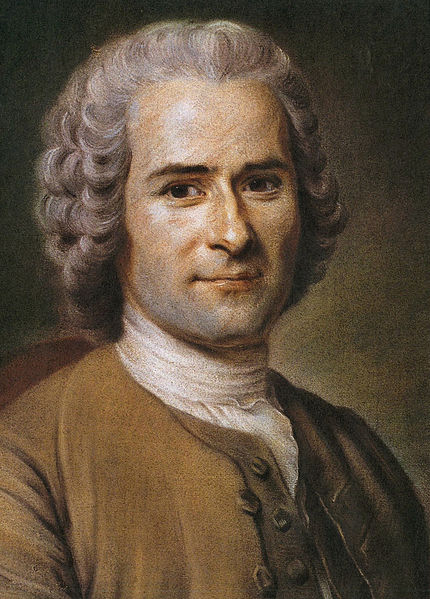
Jean-Jacques Rousseau, Philosophical Super Villain.
(Image Sourcehttps://en.wikipedia.org/wiki/File:Jean-Jacques_Rousseau_(painted_portrait).jpg, portrait by Maurice Quentin de La Tour)

The people, as a whole, are fickle.  It’s very difficult to get ten people to agree about what to eat for dinner; note how difficult it is for 330 million to agree on even the most basic of issues (in South Carolina, we still haven’t reached any kind of consensus about how to pay for and fix our roads, something virtually everyone wants done).

Even if you can get ten reasonable people to agree to, say, a long-term weekly dining schedule, at some point one or two will start to say, “Well, maybe we could have spaghetti on Wednesday nights instead of tacos.”  Imagine that conversation happening loudly and angrily across fifty States.  It’s a recipe—pardon the pun—for disaster.

Raw majoritarianism—what Rousseau appears to be calling for when he argues that society should be based on the “general will” of the people—is an unworkable scheme on anything but the smallest levels of society.  Rousseau’s chilling dictum that men are “forced to be free” reveals the inevitable consequence of unbridled democracy:  ultimately, the inexpressible “general will” becomes expressed through a demagogic tyrant, or through a legislator uninhibited by any restraints on its law-making authority beyond what the people want.

“[T]he ‘general will’ acknowledges no… limiting principle against the power of the majority.”

I’ve long viewed Rousseau as one of the great villains of modern philosophy, and I would argue that one can draw a more-or-less straight line from Rousseau and the French Revolution through fascism, communism, and totalitarianism, all the way to modern illiberal progressivism.  Rousseau—like modern progressives—believes in the mutability of human will, arguing that laws, not human nature, make people bad or good.  Get the laws right–or tweak the system enough–and you can spit out completely virtuous people.

Thus we see the conceit of the modern Left that no one commits crime out of greed or evil; instead, they’re “victims of circumstance” or subject to “systems of oppression” that cause them to do evil.  If only we created more programs or redistributed more wealth—or, if taken to the logical extreme, if only we did away with private property altogether, since the state and its laws exist to protect it—then, finally, man would be perfect.

Such notions are not only absurd; they are hugely injurious to both individual freedom and the health of society at large.  A virtuous society is one that cultivates a virtuous culture, which is only sustainable if it educates its people to live virtuously, recognizing that there will always be failures because, after all, to err is human.

(Note:  I do acknowledge that sometimes people are driven to commit typically immoral deeds out of necessity; however, I believe our society hugely exaggerates the extent to which such motives drive criminality and wickedness; just ask any wealthy person who’s ever been convicted of shoplifting or embezzlement why they stole, and you’ll quickly realize that even people with plenty of material safety are tempted to sin.)

“Raw majoritarianism… is an unworkable scheme….”

Expecting pure perfection is dangerous and unrealistic.  Mistakes are the inevitable price of freedom.  You can ignore reality for a time and get by with it, but eventually it will catch up.

Rather than idealistically seek after a non-existent “general will,” we should instead govern ourselves—and resist tyranny in the process.  To do so requires decentralization of power (and more local decision-making), a shared understanding of American values, and an education rich in morality, virtue, and philosophy.

(To read more about Rousseau’s thought–and, perhaps, to correct my errors and oversimplifications, read more at http://plato.stanford.edu/entries/rousseau/.)