Reblog: The Falling Down Revolt

Blogger photog of Orion’s Cold Fire has written a trenchant, insightful essay about the political and cultural revolution occurring in the United States now.  It’s called “The Falling Down Revolt,” taking its name from the 1993 film Falling Down, starring Michael Douglas.

In that film (as photog explains in a follow-up essay, “I’m the Bad Guy? How Did That Happen?“), Douglas plays a disgruntled private defense contractor who, despite obeying all the rules and following the script that was meant to guarantee a decent life, has lost his job, his family, and, ultimately, his sanity.  After facing numerous obstacles and inconveniences of post-modern life—gang violence, traffic jams, fast-food bureaucracy, etc.—the protagonist snaps, going on an intense, cathartic killing spree.

For photog, the film serves as a metaphor for average Americans who do everything they’re supposed to do—work, support their families, pay their taxes, obey the law—but are, in turn, rewarded with scorn, derision, and indifference (or even hatred) from political and cultural elites.  Those elites don’t see these Americans as the backbone of the country, but as “backwards” rubes who cling to outmoded, bourgeois and traditional social values.

Neither photog or myself are suggesting that working- and middle-class Americans should erupt into a bev-rage this summer; rather, the frustration many Americans (including ourselves) feel is that of being hoodwinked.  Instead of the beautiful cheeseburger in the picture, we got a squishy, shriveled mess.

In a comment on photog’s essay, I drew a parallel to the 2018 remake of Death Wish starring Bruce Willis.  To self-indulgently and arrogantly quote myself:

[T]his guy [Willis’s character] that did everything right was screwed by an elite indifferent to and incapable of addressing a rising tide of criminality and violence. He finally broke and took matters into his own hands. I’m not endorsing vigilantism, but he realized he was a chump.

I think (metaphorically) the country has woken up to the chumpitude our elites foisted on us for so long. Tucker Carlson’s monologue diagnoses this malady thoroughly, as you and I have both written about.  (Hyperlink added)

The “Falling Down Revolt” is an excellent name for this movement of normal, traditional Americans who just want a fair shake—and who are tired of being blamed for everyone else’s problems while their own are steadfastly ignored or ridiculed.  Kudos to photog for coining and applying such an apt metaphor.

Put Your Money Where Your Poll Is

According to a 2018 Gallup poll, 16% of Americans said they want to leave the United States permanently.  Not surprisingly, you can guess who most of these borderless, loyalty-deficient Americans are.

National Review reports that “Those who said they wanted to leave the U.S. tended to be members of groups that lean Democratic, such as women, youth, and low-income people.”  Indeed, 20% of women told Gallup they want to live permanently in another country, compared to just 13% of men; 30% of Americans aged 15 to 29 want to move.

So, young radical feminists, why don’t you put your money where your poll is?  I’d wager less than 1% of those who indicated they want to leave will actually do so.

The most generous argument, of course, is that relocating to another country is expensive and a lengthy process (the result of properly enforcing a nation’s immigration laws).  Also, American citizenship is, despite cheapening from birth-right citizenship and massive immigration, a golden ticket, one that people are willing to move across oceans and deserts to gain.

The real reason is that no person with a shred of common sense would ever give up the sweet bennies and lavish standard of living the United States provides, or at least not for merely political reasons.  Remember all those progressive celebrities who vowed hollowly to leave the country should Trump win?  Why is Lena Dunham still here?

What this polling boils down to, then, is a reverse of the “Trump Effect” from 2016 presidential polls.  A major, compelling theory for why those polls were so wrong is that Trump voters were afraid or embarrassed to tell a pollster they intended to vote for Donald Trump.

In the case of this Gallup poll, the opposite is occurring:  progressives are eager to virtual-signal their disdain for their country and president; thus, the inflated numbers.

Let’s put this out there for consideration:  the government could purchase cheap plane tickets for anyone who wants to relocate.  I’m sure Justin Trudeau will take in these “refugees.”  This policy, while initially expensive, would drain off some of America’s Leftists (they’d find plenty of jobs in Canada’s multicultural, social justice bureaucracy), and would be almost as beneficial as erecting the border wall.  Leftists would love getting free, permanent travel to another land, with the added benefit of feeling cool and sophisticated.


Reblog: The Normalization Of Ugliness Inevitably Becomes The Denigration Of Beauty

A piece demonstrating the virtue-signalling of our techno-elites, c/o Chateau Heartistehttps://heartiste.wordpress.com/2019/01/02/the-normalization-of-ugliness-inevitably-becomes-the-denigration-of-beauty/

In short, Facebook rejected an ad because it either idealized a healthy body type, and/or portrayed flabby abs and belly fat in a negative light.

Beauty is in the eye of the beholder, to be sure, but there are certainly qualities broadly accepted and recognized as beautiful—so much so that we could reasonably assume these qualities to be universal. The “body positivity” movement, like most such Leftist sacred cows, has a sympathetic appeal at its heart, but is otherwise a potentially lethal lie.

The appeal is simple, and good: we shouldn’t be needlessly mean to people based on their appearance. The lie, however, takes that appeal to good-natured sympathy and twists it into a forced acceptance—indeed, a celebration—of habits and lifestyles that are inherently unhealthy (and, dare I write it, ugly).

As a Formerly Fat American (FFA), I’m not unsympathetic to the difficulty of losing and keeping off weight. I understand that, for some Americans, glandular issues, or weight-gain stemming from other conditions, make losing weight harder than normal.
But these are the exceptions, not the rule. Healthy habits are difficult to maintain, and require self-discipline—a quality once considered virtuous. Now, rather than urge people to stop overeating or to go for a walk, we applaud them for their poor health, or try to make excuses.  I can also safely assert that I was fat for so many years because I lacked the discipline and willpower not to be—it was my own fault!

Beyond physical beauty, I fear this “normalization of ugliness” is prevalent in the arts, notably the visual arts, but also in music, dance, poetry, etc. Any sense of objective standards, of an understanding of and appreciating the great masters that came before, is abandoned for politically-correct drivel. “Art,” in the truest sense of that word, should not be willfully, knowingly ugly. We may produce bad art in the pursuit of learning our crafts, but we shouldn’t set out to create more ugliness (and, by extension, chaos) in the world.

These are some off-the-cuff reflections. Again, my goal is not to get some clicks at the expense of chubby Americans. Rather, we should be willing to recognize that obesity, like many social maladies, should be treated seriously, and should be gently but firmly discouraged, rather than celebrated as a “lifestyle choice.”

Teachers Quitting in Record Numbers – Reflections on Education

Today, I resume my teaching duties for the remainder of the 2018-2019 academic year.  In the spirit of that return from two weeks of glorious holiday loafing (and the prolific blogging it enabled, however briefly), the Wall Street Journal ran a piece over break about teachers quitting their jobs in record numbers.

I don’t plan on quitting education anytime soon—I rather enjoy teaching kids useful trivia and getting paid for it—but I would like to offer an “insider’s perspective” on the education field.  Granted, I teach in private school, but many of the issues teachers face are similar (albeit thankfully muted in a private school setting).

Generally, there seem to be two approaches to looking at the massive problems of education:  one is that we should spend more on education; the other is to pile more responsibilities onto teachers, and even to blame them for children’s lackluster performance.  Both of these approaches are, to different extents, flawed.

I’ll consider the second perspective first.  Conservative politicians will occasionally scapegoat teachers, sometimes fairly (as in the egregious examples from New York public schools with pedophiles on permanent, paid leave and the like), but usually without a solid understanding of what teaching entails.

I commonly see teachers—who get very prickly when people start noting the profession’s many perks—post online about how we don’t just get out at 3 everyday, etc.  There’s some truth to that; if you really do your job right, you’re spending a good bit of your time either before or after school, not to mention the weekends, grading or planning.  That’s especially true for first- and second-year teachers, who really have to do everything from scratch.

That said, if you stick with it—and if you don’t fall for the perennial educational fads that circulate every five years or so, all of which claim the previous fad was fatally incorrect, but that this one is the Brave New World of Education and is inerrant—you can pretty much tweak your lesson plans and approaches at the margins, rather than reinvent the wheel, from year to year.  I’ve known (and been taught by) many teachers that are overzealous about totally rebuilding their courses on a regular basis, but the perceived gains they see in the classroom are probably due more to their own passion than to whatever bold new system they’ve conjured up.

Which brings me to the other perspective mentioned above.  Progressives, who have an overly romantic view of education—and who see it as a means to indoctrinate generations to spew Leftist pabulum uncritically—think the education system can solve all of society’s ills if we just invest in it more.  Part of it comes from a desire to create more government jobs (and loyal Democratic voters) for people dubiously qualified to do anything productive.  Part of it comes from a sincere belief that they can save underprivileged kids.

That clearly doesn’t work.  So what is the truth when it comes to education, and how can we begin solving some of its problems?

For one, the complaints from those outside of the profession about our hours and summer vacation are not without merit, but they miss the point, too.  As noted above, good teachers—by which I mean teachers who will do their jobs as they should—will put in time over and beyond the classroom time.  You have to if you’re actually going to be prepared for class.

Summer vacation is a perk—we shouldn’t pretend otherwise.  Many teachers use it as an opportunity for professional development, but, c’mon, it’s also a time to hit the beach (I might be an exception to both—I do maintenance and grounds work at my school to make extra money, because I want to retire someday).  But it’s a big draw for many to the profession, especially women (and particularly mothers), who make up a huge portion of the teaching population.  As with the perennial debates about the mythical wage gap, teachers should acknowledge that less months worked = less pay.  The counterargument, one that I’ve made frequently, is that many of us put in twelve months’ worth of work in nine or ten.

As far as putting more money into schools, that’s all well and good—but where does the money go?  If it’s going to build some needless Mall of America school complex, or to hire another Assistant Vice-Principal of Islamic Outreach, it’s not doing much beyond feathering the nests of over-credentialed M.Ed. holders who took a couple of online classes in between naps and diversity seminars.

New technology and facilities are great, but they don’t teach kids.  All I need to teach history or music is some kind of board, something to write on, and some dog-eared notes.  I could probably get by without the board.  Jesus taught multitudes without a SmartBoard.  Aristotle taught Alexander the Great, probably with nothing more than some tablets and scrolls, and that guy conquered the known world.

More importantly, teachers need administrators to give us the space to do our jobs.  We all have little duties that cut into prep time, and that’s the nature of the beast.  But when politicians start decreeing ever-more tasks for schools to take on, they inevitably fall to the teachers.  The aforementioned AVP of Islamic Outreach isn’t the one writing the lesson plans about Muhammad’s views on marrying nine-year olds, even if xyr is forcing the Social Studies Department to add it; the Social Studies teachers are the ones figuring out how to make it happen, all the way complying with a thicket of misguided federal and State “guidelines.”

Ultimately, there are some behavioral issues that drive teachers from the biz, too; these are problems that, in part, begin at home (or, sadly, the lack thereof).  Those are social and cultural problems that are, frankly, beyond the power of educators and administrators to solve on the macro level.  We all do our part, to the extent we can, at the micro level.  I fear that some teachers overdo it, but that’s a topic I’d have to cover separately.

To summarize these stream-of-consciousness reflections, here are some things that would help aid retention in the field—and align educational goals more with reality:

  • Offer better pay if people are leaving; have flexible pay-scales that allow teachers with good track records (measurable in a variety of ways) better pay or bonuses (to be clear:  I don’t advocate blanket pay raises for all teachers in all districts—I’m sure some are well-compensated, and some not).  This doesn’t have to be pegged to test scores, but to a “holistic” assessment of a teacher.  If you’re teaching in Allendale County, South Carolina, you’re not going to have stellar test scores, so you can’t rely solely on those to assess the efficacy of a teacher.
  • Offer more flexible forms of alternative certification.  South Carolina currently has a severe shortage of teachers, but still insists that those without a teaching certificate endure a long, expensive, three-year process of alternative certification.  My proposal—which I pitched briefly to my former SC State Representative Jay Jordan—is to make it possible for private school teachers with, say, five years of classroom teaching to gain their certification automatically, or after taking the Praxis exam in their field or fields.  If the teacher holds a Master’s degree or Ph.D., knock two or three years off of that requirement.  You’d instantly have access to a huge pool of teachers, many of whom would be qualified from years of experience.  Also, there are a lot teachers that have their certification that are, quite frankly, crummy, so that magic piece of paper does not automatically a good teacher make.
  • Reduce administrative bullcrap.  Teachers quite principals, not schools—that’s a common maxim in education circles, and it’s true.  Administrators should realistically be support for teachers, and should avoid overloading their teachers with a bunch of paperwork (except where necessary).  Teachers can be whiny and catty—they tend to think they need more stuff to do their jobs than they actually do—but that just means you’ve got to have a firm but flexible hand steering the ship.
  • Allow teachers flexibility in lesson planning and sequencing.  A big complaint I hear from my public school teacher friends is that they can barely take time to answer an intriguing student question if the lesson plan doesn’t allow it.  As a private school teacher with a penchant for discursive asides, this blows my mind.  Nothing will kill a child’s interest in a subject (especially history) faster if he can’t ask some off-the-wall question and at least hope to get some interesting explanation or discussion.  Obviously, you can’t do this every class, but teachers shouldn’t live in fear of going “off script.”  Indeed, I don’t think there should be a script—just a broad, skeletal outline (of course, I recognize that this assumes the teacher is independently motivated and reasonably good at his or her job; sadly, I don’t think that’s the case with a substantial minority of public school teachers, per my comments above).

That’s a short, incomplete list of some possible proposals.  It’s not exhaustive, and as every teacher and wag will point out, there’s always an exception (I can’t tell you how many faculty meetings I’ve endured where some new policy has been discussed, and immediately dozens of exceptions or unique scenarios arise, to which I would say either a.) figure it out yourself or b.) just follow the policy as best you can, knowing weird exceptions will crop up—ask forgiveness, not permission).

If nothing else, I hope these reflections are useful (and, for any of my parents, colleagues, or school administrators who might be reading, know that I love my job and all of you, and that our little school is the best in South Carolina) and can spark some discussion.  Education is hugely important to the future of South Caroline and our nation; it deserves to be discussed frankly and dispassionately.

Tucker Carlson’s Diagnosis

A recent monologue from Tucker Carlson’s Fox News program is blowing up the right-wing blogosphere, and understandably so.  Carlson has been a vocal critic of the neoliberal deification of economic efficiency at all costs.  I used to be a member of this cult, until the candidacy of Donald Trump (and lived experience) knocked the idealistic scales from my eyes.

Normally, it bugs me when people send me video clips to watch.  If they’re cutesy videos of the variety that drive clicks—think cats playing piano, or Goth versions of Christmas songs—I usually ignore them, no matter how hyped they are.  That’s not some virtue on my part; I just don’t want to take the time to watch them, especially on a cell phone (a pet peeve:  someone making me watch a video on their cell phone; I will refuse).

That said, I’m indulging in some hypocrisy:  you must watch this video as soon as you’re able.

For those of you that don’t want to take the time, here are some highlights:

  • Elites care only about maximizing economic efficiency, regardless of the human costs to individuals, families, and communities
  • That lust for efficiency drives income inequality, particularly benefiting the technology sector/Silicon Valley
  • “We are ruled by mercenaries, who feel no long-term obligation to the people they rule”—a key idea; I’ve read a similar analysis from controversial blogger Z-Man, in which he argues that leaders in a democracy are, inherently, renters rather than owners, and therefore are heavily tempted towards asset-stripping while in office, rather than building and maintaining a nation:  http://thezman.com/wordpress/?p=15929
  • Because of the hollowing out of American manufacturing and declining wages (again, due in part to the quest for efficiency), men struggle to find employment or to improve their wages
    • Because of that, rural parts of the country are dominated increasingly by healthcare and education, female-dominated fields
    • While better wages for women is fine, Carlson claims that—whether or not they should—women are less likely to marry men who earn less than them, therefore

These are just some of the most interesting insights, but Carlson sums up in fifteen minutes what would take a legion of hack bloggers like me hours or weeks to explain.

Again, I urge you to watch this videohttps://video.foxnews.com/v/5985464569001/?playlist_id=5198073478001#sp=show-clips

America’s Entrepreneurial Spirit

Scott Rasmussen, writing for Ballotpedia, reports that 62% of American adults say their dream job is owning their own company.  That’s encouraging news, as it suggests that, despite decades of welfare state decadence, Americans still possess our entrepreneurial spirit.

That spirit has been with Americans going back to the colonial period.  Textbooks tend to focus on the Puritan planting of the Plymouth colony, which was certainly important, but the first permanent settlement in colonial British North America was Jamestown.  That settlement, and the entire colony of Virginia, was founded as a commercial enterprise, the efforts of joint-stock company in England.

French aristocrat and political theorist Alexis de Tocqueville, writing in Democracy in America (1840) over two centuries later (during the height of the Jacksonian Era), noted Americans’ keen interest in commercial matters, and the pulsing energy and enthusiasm of always hustling.  He also noted the positive effect of trade upon liberty:

Trade is the natural enemy of all violent passions. Trade loves moderation, delights in compromise, and is most careful to avoid anger. It is patient, supple, and insinuating, only resorting to extreme measures in cases of absolute necessity. Trade makes men independent of one another and gives them a high idea of their personal importance: it leads them to want to manage their own affairs and teaches them to succeed therein. Hence it makes them inclined to liberty but disinclined to revolution.

Despite enthusiasm about the idea of starting a business, Rasmussen’s findings show that only 5% of Americans are “very likely to start their own business” in 2019, while 11% are somewhat likely.

Nevertheless, it’s refreshing to see that the desire to hustle is prominent among Americans.  The economic mojo of the Trump economy no-doubt improves Americans’ optimism (although I should note that many Americans started businesses during the Obama stagcovery, albeit for a different reason—they couldn’t find work).  That optimism likely fuels some desire to get in on the action.

On a personal note, I will say that even I, a high school teacher—teaching being a job uniquely suited to the risk-averse in general—have caught this bug (don’t worry, loyal readers—I’m not going to try to sell you massage oils with untested healing properties).  I’m excited to expand some of my side-hustles in 2019, including writing, performing live music, and teaching private lessons.

Regardless of how those pan out, the thrill of applying effort towards ones passions is exhilarating.  What could be more American?

Reblog: Who doesn’t like Christmas? — Esther’s Petition

A poignant piece from Esther’s Petition, an excellent blog about faith.  It’s been a tough Christmas season for some friends of mine, with death and heartbreak hovering around and darkening the usual brightness of this season.  Ms. Cox writes beautifully—wrenchingly—about how the holidays can be difficult, and how we should strive to be understanding of that […]

TBT: The European Union is NOT the United States

With Brexit back in the news—and Theresa May’s recent no-confidence test—it seemed like an opportune time to revisit this old chestnut from the 2016 era of the TPP blog.

Brexit should have been easy—the people voted, Europe can’t plausibly force Britain to stay in, so Britain’s out!  Great Britain owes the European Union nothing.  As I argued in 2016, Europe needs Britain.  Some kind of trade agreement could have been hammered out, as well as some basic understanding about moving between Great Britain and the EU.

I realize these issues are more complicated than I’m making them out to be, but, ultimately, can’t Britain just rip off the Band-Aid and be done?  It seems like that would be imminently doable.  Of course, that’s not what the globalist masters of Britain’s cosmopolitan elite want.

Perhaps Britons will soon get their true, hard-fought, “hard” Brexit.  I still think they struck a powerful blow against supranational tyranny, and have inspired similar movements in Europe.  The world feels much different today, in the waning hours of 2018, than it did in that hot, sticky summer of 2016.

Post-Brexit (yes, yes, I know I promised on Wednesday that I’d be moving away from Brexit posts, and you’ll soon find I wasn’t lying… completely), I’ve heard several arguments that boil down to “the European Union is good because unity will make Europe stronger.  Just look at the United States!  It was a mess under the Articles of Confederation, but came together to become a world power under the Constitution.”

The comparison is tempting and not without merit.  Certainly, the United States benefited greatly when the sovereign States ceded some of their power–such as that over the coinage and printing of money and defense–to the national government.  Putting the power to regulate interstate commerce eliminated the practice of States placing different tariff levels on British goods, for example, and aided in the creation of of a common national market.  The formation of the Supreme Court, and the subsequent creation of the federal judiciary under the Federal Judiciary Act of 1789, allowed States to adjudicate disputes more fairly.  Why couldn’t Europe achieve the same “more perfect union” with its goal of “ever closer union”?

“American nationalism derives primarily from a shared set of ideas.”

Unfortunately for Europhiles, the comparison breaks down quickly upon closer inspection.  There are three key areas of difference between the United States and the vision of a “United States of Europe”:  common language and culture; a common legal tradition grounded in the rule of law; and a legacy of representative, democratic-republicanism.  The young United States possessed these three qualities; modern Europe lacks them.

The first point–common language and culture–will be a contentious one.  There are myriad, if predictable, objections:  Americans came from many sources, not just England;  colonials expanded into territories that either belonged to American Indians, or to European competitors (notably the Dutch and the Swedes, but also the Spanish and French); settlers to different parts of British North America came from different cultural and religious groups in the British Isles; and so on.  Indeed, German almost became the official language of a young United States.

I discussed the ethnic and religious diversity of colonial and early republican America at some length in my essay “Created By Philosophy,” and previously argued that American nationalism derives primarily from a shared set of ideas (in “American Values, American Nationalism“).  However, despite this vivid and ubiquitous diversity, English culture and values ultimately became the overwhelming norm in British North America, and morphed into a distinctly American identity in the 18th century (though one that was, until independence, decidedly English).  English may not be the constitutionally official language of the United States, but it is the lingua franca of the nation (and the world), and has been so for centuries.  Every wave of immigrants (until relatively recently) has understood that mastery of English is a prerequisite to long-term success in and assimilation to American culture.

English Protestantism–infused with Scottish Calvinism and German piety–was a unifying force in the colonies.  When the First Great Awakening hit in the late 18th century, it cemented America’s culture, even as it spawned multiple new denominations.  The ultimate denominator, however, was a broadly Protestant Christian worldview (one that gradually and unevenly came to tolerate, and then to accept, Catholics, Jews, and believers and non-believers of all stripes).

“English Protestantism… was a unifying force in the colonies.”

The story of America, ideally, is that of unity within a culture that values diversity of viewpoints, but insists upon an acceptance of a basic, common, Judeo-Christian morality; thus, “E Pluribus Unum.”  That morality, in turn, informs the legal system, one descended from centuries of English common law.  Respect for the rule of law–the notion that no man, even the king, is above the law–guided the English people toward increasing freedom.

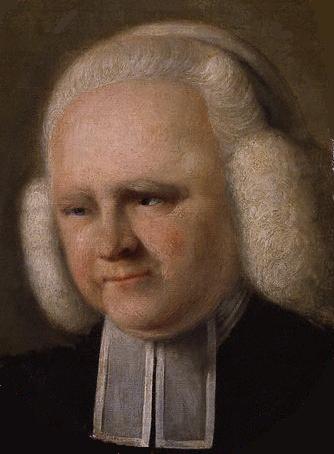
Evangelist George Whitefield knew how to preach to the masses of British North America, and he had the hair to prove it.

So, too, did it lead Americans to their independence.  The American Revolution–and the various conflicts between colonial assemblies and royal governors–of the 18th century in many ways echoed the struggles between Parliament and the Stuart monarchs in 17th-century England.  Americans did not revolt because they rejected bad tea or because they resented taxation–they revolted because they weren’t represented.  Americans did not have a say in the taxes that were (not unfairly) levied on the colonies to help pay for the French and Indian War (the similarities to the Leave campaign should be obvious).  Rule of law was circumvented, and Americans would not abide such a trampling of their rights

Thus, we come to the English–and then American–commitment to representative rule.  The United States really took the lead here, though Great Britain began expanding the franchise and reforming parliamentary representation in the 19th century as white manhood suffrage became the norm in Jacksonian America.  (Here’s a fun aside:  there used to exist parliamentary seats that represented places with no people in them.)  Regardless, the notion that the people should be represented in their government–and should be able to hold it accountable with fair, free, and frequent elections–is an important part of America’s constitutionally-limited, representative, federal republic.

Europe as an entity lacks all of these qualities.  Yes, certain members states have some of these qualities to varying degrees, but the European Union as a whole is sorely lacking in these areas.

Culture and Language:  The United States had the unique opportunity to create a nation afresh.  Europe has had no such luxury, and seems to be inexorably divided into different languages and cultures.  This division is not necessarily bad, but it makes unity much more difficult.  It explains the natural struggle against “ever closer union,” a struggle that is often visceral because people sense there is something artificial and disingenuous about the Europhile vision of a united Europe.  There are, after all, still traditionalists living (and voting) throughout Europe.

 “[S]ecularism is the new, unifying religion of Europe.”

The long, oft-ancient histories of these nations makes it even more difficult for them to share a common worldview.  Even secular, progressive Europe still experiences the lingering cultural effects of centuries of faith.  France might have thrown out God with the French Revolution, but the “First Daughter of the Church” is still suffused, albeit in a subtle, weakened way, with centuries of faith.  Such a faith culture, even hollowed out, will naturally, if imperceptibly, struggle to  reconcile itself with that of other, contradictory traditions.

I suspect this explains why the European Union seems hell-bent on advancing as many socially progressive causes as possible:  secularism is the new, unifying religion of Europe.  But there will always be push-back against this dehumanizing, nihilistic vision of man’s place in the universe.

Language, too, transmits the ideas and values of a people.  I am no linguist, but–unlike French theorists like Jacques Derrida–I believe that words have power and transmit meaning.  Such meaning is deep, part of the warp and woof of life.  Why else would educated societies devote so much time to learning and analyzing language and literature?  There’s no need to read Shakespeare if you just want to a basically literate workforce.  No, there must be some power in language.  Linguistic diversity, therefore, is a beautiful thing, but it also means that different cultural values are transmitted differently throughout Europe.  No one associates Russian, for example, with greater freedom and sober living.

But I digress.

Rule of Law:  Of course different nations in Europe have rule of law (except Belarus).  The European Union, however, does not.  Yes, it might have European law, but this law is promulgated by an unelected committee of elites, figures who don’t identify strongly with their nations of origin, but rather with a vague, secular-progressive idea of Europe, one that barely tolerates dissent or input from the people.  Furthermore, how does one reconcile, say, French civil law with English common law?  The deep divisions of history are huge hurdles to overcome.

Representative Government:  As I’ve stated many times, the European Union is not representative.  That’s why the Brexit vote was so important, and why it has drawn so many comparisons to the American Revolution:  the normal people of Britain rose up against an unelected, unaccountable elite and boldly proclaimed their right to self-determination.  Brits seized back the ability to hold their elected leaders accountable.

The elite, Europhile vision of a United States of Europe is one of non-representative, coerced redistribution.  Give the proles bread and circuses, and they will submit on bended knee to the edicts of Brussels.  Remember, the “Remain” side of the Brexit debate was primarily premised on maintaining access to EU goodies, not about the people’s ability to choose such a course.

Nothing could be further from the vision of America’s Founders and Framers.  They possessed a healthy skepticism about unbridled democracy, but recognized that the people were the source of government’s authority; that the people govern themselves most effectively; and that the people should be able to hold their leaders accountable.  Yes, liberty comes at a price–many prices, in fact.  One of those is the ever-present risk that the people will make mistakes.

Inevitably, they will.  But a common, tolerant culture; a shared respect for the rule of law; and an understanding of the rights and responsibilities of republican government will guide voters to wisdom more often than folly.

Self-government does not always fit neatly into the schemes of elite technocrats and busy-body regulators.  But it ultimately makes for a happier, freer, and more prosperous society.

Lincoln on Education

The following is adapted from remarks to the Florence County (SC) Republican Party on the evening of 10 September 2018.  The monthly program featured members of and candidates for the local school board, so I spoke briefly about President Abraham Lincoln’s education, and his views thereof.

We’re gathered here tonight to hear from members of and candidates for School Board; in that spirit, I’d like to speak briefly about education, particularly the education of the first Republican President, Abraham Lincoln.

From what I’ve read, Lincoln’s entire formal education consisted of around a year of schooling.  He would have a week or two here and there throughout his childhood in Kentucky and Indiana, and then return to working on the family’s farm.

Despite little formal education, Lincoln taught himself throughout his life.  He loved to read, and would read deeply on a variety of subjects, obtaining books whenever and wherever he could.  One of his contemporaries commented that “I never saw Abe after he was twelve that he didn’t have a book in his hand or in his pocket. It didn’t seem natural to see a feller read like that.”  When he sat for the bar exam, he’d read law books on his own time to prepare.

Lincoln also believed in education as a source of patriotism, morality, and self-improvement—what we might call “upward mobility.”  He was not a man who wanted to stay on the farm, and his self-education was a means to escape poverty.

If you’ll indulge me, I’d like to quote Lincoln at length from his 1832 speech “To the People of Sangamo County”:

“Upon the subject of education, not presuming to dictate any plan or system respecting it, I can only say that I view it as the most important subject which we as a people can be engaged in. That every man may receive at least, a moderate education, and thereby be enabled to read the histories of his own and other countries, by which he may duly appreciate the value of our free institutions, appears to be an object of vital importance, even on this account alone, to say nothing of the advantages and satisfaction to be derived from all being able to read the scriptures and other works, both of a religious and moral nature, for themselves. For my part, I desire to see the time when education, and by its means, morality, sobriety, enterprise and industry, shall become much more general than at present, and should be gratified to have it in my power to contribute something to the advancement of any measure which might have a tendency to accelerate the happy period.”

Here we can see Lincoln’s belief that education lays the foundation for patriotism—we understand our freedoms better when we understood what they cost, and that others lack them.  We see, too, the power of education to teach us the virtuous and the good.  From that morality flows, as Lincoln said, “sobriety, enterprise, and industry,” the tripartite tools to improve our material conditions.

Patriotism, morality, and industry—these were the three benefits of education Lincoln espoused.  Coming from the man who wrote the Gettysburg Address, I think we should take Lincoln’s views on education seriously.