Best SOTU Ever

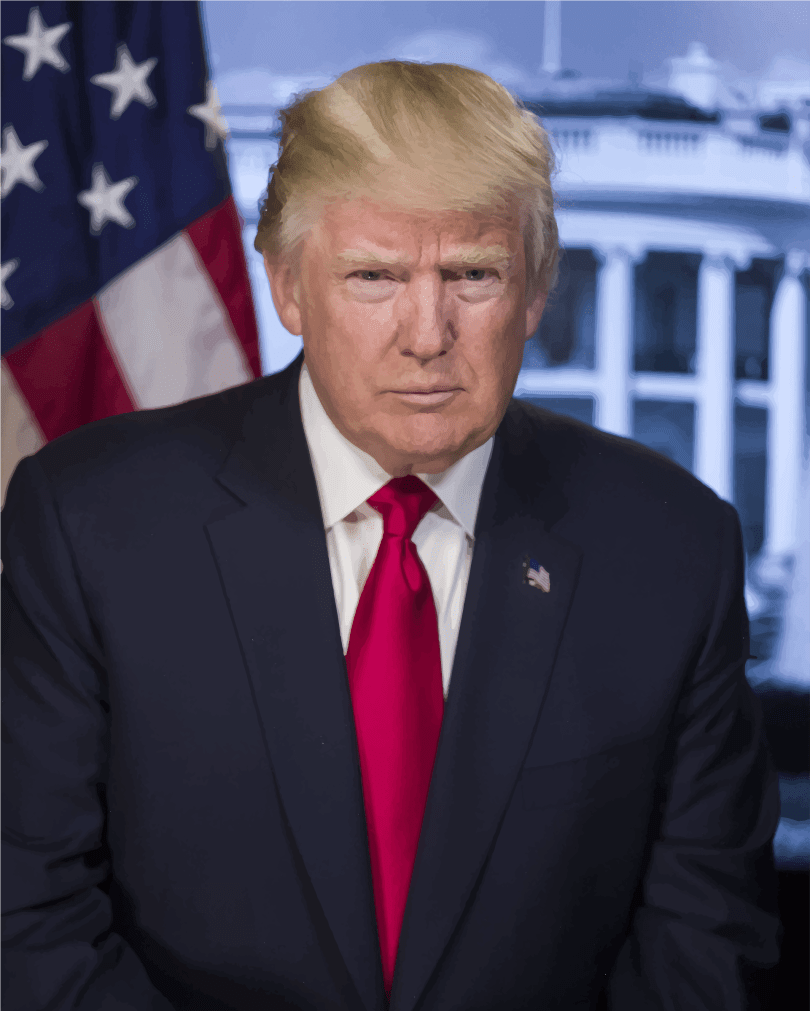
I was wrong, as were most conservative (and some progressive) commentators:  President Trump was right to hold out for a real State of the Union Address, rather than reviving the Jeffersonian tradition of the written address.

The president’s State of the Union speech was a tour de force:  he spoke eloquently of America’s role in advancing civil and human rights; the sanctity of human life, born and unborn; the economic development of the United States in the last two years; and the crisis at the border.

It was an address that was optimistic and accurate.  Unlike most SOTU addresses, which tend to be tedious attempts to inflate small bits of good news beyond all reasonable proportions, Trump’s 2019 address described, in detail, just how great America is, and how far we’ve come in two short years.

It’s little wonder Speaker of the House Nancy Pelosi wanted to cancel the speech:  how do Democrats respond to that?  The first part of the speech was full of positive economic news, news that can’t be ignored or denied.  The president detailed explosive wage and job growth, including the lowest unemployment rates for black, Hispanic, and Asian Americans in history.

Beyond the economic good news—and the vow that the United States will never be a socialist country—it was a fun speech (well, it was a bit long, and dragged a smidge, but not much).  Even Democrats started getting up and dancing around at one point!  Congress sang “Happy Birthday” to a Holocaust survivor.  President Trump cut some jokes, and was clearly having a blast.  As any performer knows, if you’re having fun on stage, the people in the audience will have fun, too.

If you missed the speech, go to YouTube, shut the office door, and fire that baby up while you file TPS reports.  You won’t regret it.

The Facts on the Border Crisis

As I’ve learned more about immigration—and especially since reading Pat Buchanan’s Death of the West—I’ve come to believe it is the defining crisis of this moment in American history.  The debate is not, as it has been in the past, primarily around how much immigration is desirable; rather, the question has morphed beyond reason into “does a wealthy nation have the right to define and enforce its own immigration laws?”

That used to be axiomatic to what it meant to be a nation:  by definition, a nation had the right to defend its borders, and—of course!—to have them!

Now, there’s a twisted logic that, because the United States has loads of wealth (and won tons of land from Mexico in the Treaty of Guadelupe-Hidalgo, after we soundly defeated them and captured Mexico City), we somehow have a moral obligation to surrender our sovereignty to every hard-luck case in the Western Hemisphere (and beyond).

America is a melting pot, but if you dump a bunch of salt into the soup all at once, it becomes inedible—the salt takes over.

Case in point:  the aforementioned Mexican War.  That conflict had its root in the Texas Revolution, in which the Republic of Texas gained its independence in 1836.  Texas was a province of Mexico, and the Mexican government wanted to encourage settlement, so it invited Southern yanquis to move in with their slaves.

Those American settlers had two requirements:  they had to convert to Catholicism (the official state religion of Mexico), and they had to become Mexican citizens.  A handful of token conversions later, and the Texans were in.

In 1829, Mexico abolished slavery throughout its territories.  The slaveholding Texans protested; rather than face the threat of secession of its unassimilated but wealthy minority, the Mexican government relented, granting unprecedented, asymmetrical “states’ rights” to Texas.

While Mexicans resented Texas’s special treatment, everything was fine until the military dictator General Lopez de Santa Anna rose to power.  Santa Anna vowed to end Texas’s exemption from federal law.  When he moved to enforce his decree with the Mexican Army, the Texans declared independence; after their defeat at the Alamo, American volunteers flooded in to help Texas gain its independence.

The moral of the story here is clear:  a large minority of unassimilated foreigners successfully ignored the laws of their host country, before ultimately breaking off to form a short-lived nation, before annexing into the nation of their native culture.

Mexico is playing the same playbook in reverse; indeed, some Mexican radicals call the influx of unassimilated, illegal migrants into the southwestern United States the reconquista, or “reconquest.”

Death of the West is the best feature-length discussion of that process.  For a shorter, more immediate discussion of the impact of illegal alien migration, the White House has published a page of statistics about the crisis at the border: https://www.whitehouse.gov/briefings-statements/crisis-southern-border-urgent-ignore/

Stop screwing around—and build the wall!

The Good Populism

I’ve been kicking around a course idea for a couple of years now:  History of Conservative Thought.  I’ll be offering the course this summer for high school students; if it “makes” (gets enough enrollment to run), I’ll have to put together a quality syllabus.  The scope of the course will essentially begin with the Enlightenment and the American and French Revolutions, and extend to the present populist-nationalist movements in Europe and the United States.

I have a few ideas for course readings already, including Richard Weaver‘s Ideas Have Consequences and excerpts from Milton and Rose Friedman’s Free to Choose.  I also need to include some shorter readings, and I’ll probably include a couple of podcast episodes.  Of course, with only eight weeks, it’ll be a fairly focused course (if you have any recommendations for readings or possible topics, leave a comment below, or e-mail me).

We’ll see if it makes.  Regardless, one reading I will definitely include is a popular essay from New Criterion; indeed, it was their most popular essay in 2018.  The piece, “The Good Populism” by ancient historian Victor Davis Hanson, is a consideration of healthy, middle-class populist movements in the United States.

Populism—like its cousin, nationalism—suffers from a public relations problem.  Hanson argues effectively that there are different kinds of populism, and it shouldn’t, by default, be considered a bad word.  Conservatives tend to get hung up on populism as an essentially Leftist phenomenon—think corrupt Louisiana Governor Huey Long in the 1930s, or Senator Bernie Sanders or Congressbabe Alexandria Ocasio-Cortez today—while progressives link it to nationalism, which they perceive as inherently fascistic.

In fact, as Hanson argues, the “good” populism is the populism of the middle-class, those who love their country, want to enjoy the fruits of their labor, and generally want their values and property to be protected.  To quote Hanson:

The antithesis to such radical populism was likely thought by ancient conservative historians to be the “good” populism of the past—and what the contemporary media might call the “bad” populism of the present: the push-back of small property owners and the middle classes against the power of oppressive government, steep taxation, and internationalism, coupled with unhappiness over imperialism and foreign wars and a preference for liberty rather than mandated equality. Think of the second century B.C. Gracchi brothers rather than Juvenal’s “bread-and-circuses” imperial Roman underclass, the American rather than the French Revolution, or the Tea Party versus Occupy Wall Street.

Since Trump’s triumphant rise in 2015-2016, we’ve seen the reinvigoration of this kind of “good populism,” which was dormant for many years, but smoldering below the surface.

Grab a cup of coffee and give yourself fifteen minutes to read Hanson’s essay.  It’s a great discussion of a much-maligned, oft-misunderstood term: https://www.newcriterion.com/issues/2018/6/the-good-populism-9842

Friday Musings: Populism is East versus West

I share my classroom with a veteran history teacher, who teaches my school’s eighth grade South Carolina History course.  The students are currently covering the events leading up to the American Revolution, particularly the unpopular Proclamation Line of 1763.  His discussion of the topic led me to a minor epiphany.

First, some historical context:  after the British defeated the French and their allies in the French and Indian War (the Seven Years’ War in Europe), millions of acres of land west of the Appalachian Mountains were open to American settlement.  The Americans were bursting with pride in delivering a hard-fought victory against Britain’s major European foe, and were eager to enjoy the spoils of war:  the newly opened lands.

Unfortunately, Parliament stalled land-hungry settlers with a well-intentioned but misguided policy:  the Proclamation Line of 1763.  According to an act of Parliament, there was to be no settlement west of the Appalachian Mountains.  The land was to be left to the Indians living there.

The policy was not without merit:  the British spent a great deal of blood and treasure fighting Indians during the French and Indian War, and while the conflict was global in nature, most of the fighting occurred in British North America and present-day Canada.  A major source of bad blood was the tendency of Americans to move onto Indian-owned lands; similarly, rapacious Indians would raid vulnerable settlers in the western parts of colonies (such raids fomented an early populist uprising of farmers in western Virginia, Bacon’s Rebellion, in 1676).  The British sought to avoid another costly war with the natives by preventing their future antagonism:  keep Americans off that land.

Americans, understandably, were livid.  For one, they saw it as Britain rewarding the very foes they’d just vanquished (keep in mind, too, the ferocity of native warriors—there’s a reason we name our military hardware and athletic teams “The Braves” and the like).  They also believed this land was their destiny and their birthright—having defeated a tenacious foe, they were ready to head west.

What got me thinking was a comment my colleague made; to paraphrase:  “If Parliament had just sat down with the colonists and discussed it with them, they could have avoided a lot of disaster.”  That comment made me realize:  so much populism is a conflict between an indifferent Eastern (now bicoastal) elite, and an energetic, cantankerous Western settler-class.

That is, by no means, a novel insight (see also:  Bacon’s Rebellion).  The insight, however, is the repeated unwillingness of elite interests to try to understand or cope with the sources of the common man’s difficulties.  Some differences are, indeed, intractable, but it seems that, in many cases, elites could hear out and account for the problems of the common folk.

Indeed, in many cases, both are right.  Consider the historic struggles between Thomas Jefferson and Alexander Hamilton.  Thank goodness George Washington heeded Hamilton’s advice for how to structure the finances of the young nation.  Hamilton’s fiscal policies set the United States on firm footing, building investor confidence and shoring up the American government’s credit.

On the other hand, Jefferson was right that Congress had no explicit authority to establish a national bank, and that we shouldn’t become too dependent on urban industrialization and finance, lest we lose our sense of republican virtue.

There are, increasingly, fundamental disconnects between America’s urban elites and rural commoners.  Witness New York State’s catastrophic, plainly satanic abortion law, which (from all the discussion around it), seems to allow for abortion while a woman is still in labor.  There’s no compromising with an idea that is, unarguably, evil.

That said, elites should take seriously the common American’s keen sense for fair play.  Illegal (and mass legal) immigration is deleterious not only because it is illegal, but because it hurts native-born Americans, driving down their wages (for the benefit of the elites) and transforming their neighborhoods and towns.  Americans will welcome a reasonable number of legal immigrants with open arms, but they expect immigrants to come legally, to assimilate, and to become loyal American citizens (including breaking ties with their old countries).

The elites are people, too, and often act in what they believe is for the greater good, or for long-term national preservation (at least, this statement seemed accurate in America’s past; our postmodern elites seem largely committed to undermining core American principles).  That said, they’ve adopted the Left’s prevailing ethos of de facto nihilism and materialist self-indulgence, along with the Left’s disdain for the common man.

In short, the elites have lost any sense of noblesse oblige, of obligation to maintaining a good, happy, healthy society.  They are as far removed from their fellow countrymen as East is from West.

TBT: Brexit: The Antidote to Supranational Tyranny

The first indication that a major sea-change in Western politics was underway was the historic Brexit vote in June 2016.  The mere fact that Britain voted to leave the European Union boosted nationalist movements in Europe, and reflected the growing discontent of Britons with the policies of their elites.  That frustration manifested itself outside of Britain, and seemed to presage—at least in hindsight—Trump’s unlikely, underdog victory in November of that year.

The following is my first piece on Brexit, dated 13 June 2016.  I wrote it in response to a student’s inquiry.  That launched a series of pieces on Brexit that I will—eventually—compile into an eBook, the title of which will draw from a phrase I coined for this article:  “supranational tyranny.”

In essence, I argued then (and still argue now) that Brexit was, at bottom, a referendum on national sovereignty.  Issues like trade and immigration, while quite important, were merely the outgrowth of that fundamental issue.  Brexit, in so many words and in so many ways, simply asked, “Can a country make its own decisions about its own destiny?”  Like so many fundamentals, that we even have to ask the question demonstrates how far postmodern deconstructionism has taken us.  Regardless, the people of Britain resoundingly answered, “YES!”  The vote to leave was not an endorsement of xenophobia or anything else:  it was a vote for national sovereignty.

The European Union was a classic bait-and-switch:  Britain joined under the pretense that it was entering an economic free trade zone.  That morphed—it seems, based on the EU’s charter and its goal of “ever closer union”, deliberately and by design—into the supranational, undemocratic behemoth it is today, with decisions largely dictated from Germany and its toadie, France.  When the people lost the ability to control their own borders and immigration policies—the bare-bone essentials of what constitute a “nation” and “national sovereignty”—they seized the opening and voted for liberty and sovereignty over continued acquiescence in exchange for goodies.

Here is June 2016’s “Brexit:  The Antidote to Supranational Tyranny“:

I’ve been planning to do a few pieces on the question of “Brexit”–whether or not the United Kingdom should leave the European Union, or to remain a part of it–but originally intended to wait until the 23 June referendum drew closer.  However, over the weekend I received this e-mail from a student:

A summer vacation well spent.
In case you can’t read the e-mail, here’s the text in full:
Dear Mr[.] Cook (Self entitled defender of Rock & Roll),
I know this isn’t the average email you get from a student, political. However, with one of the most impactful votes to effect [
sic] the US economy to take place in just 11 days, June 23, I would like to ask how you felt on the United Kingdom’s vote on whether to stay in the EU or leave it. US news has refused to cover this major event due to irresponsibility and foolishness. Just wanted to know your thoughts on this vital subject.

(Please note that I am blessed to teach some very bright students.)

Brexit is a hugely complicated issue; however, viewed through the lens of national sovereignty versus the dubious claims of supranational organizations, the ultimate solution is, in my mind, a no-brainer:  the people of Great Britain should vote “Leave” this June.

Now for some preliminary disclaimers, lest I be burned in effigy:

To any British readers, please do not presume that an upstart, boorish American is preaching at you about what to do with your national destiny.  If the situation were reversed, I’d rightfully scoff at any attempts from “Europeans” to tell my country how to function.  However, I ask that all readers approach my arguments for Brexit in a philosophical and rational way; that is, treat them in the context of one mind reasoning from a set a premises, not as an American lecturing foreign nationals about their sovereign politics.

(British readers–if you exist–please feel free to leave your comments, reflections, reactions, and bitter recriminations below; I respect and welcome your perspective, which is far more accurate and attuned to the realities of the situation than my own.)

I’d also like to acknowledge the influence of a book review I read over the weekend in the 9 May 2016 edition of National Review(Volume LXVIII, No. 8).  The review, written by John Fonte and entitled “The EU’s Soft Utopia,” is of the book The Totalitarian Temptation:  Global Governance and the Crisis of Democracy in Europe by Todd Huizinga, a long-time observer of European Union politics.  I highly recommend you seek out this review.  I intend to read the book soon.

 ***

Now that those pleasantries are out of the way, I’d like to lay out my case, clumsy though it may be.  My remarks are adapted from those I sent to the young man above.

The Brexit issue is one of huge importance to the US, the UK, and Europe, and while it has not been covered heavily in the mainstream media, I’ve read a number of articles about it in both National Review and the Weekly Standard.

The question of whether or not to vote “Remain” or “Leave” really depends on your perspective and your goals, or what you think the European Union is supposed to do.  The EU itself tries to appear unsure of its goals, but its mission clearly states that it seeks “ever closer union” of the various member nation-states.

The EU began life as essentially a large economic free trade zone that gradually expanded, and which then adopted a common currency in the late 1990s (a move, we now know, that was fraught with peril, especially as it is very difficult for disparate nations at different points of economic development and national sovereignty to share a single currency effectively; see also Greece).  My perception is that the EU wants to become, ultimately, the “United States of Europe”; indeed, this goal is straightforwardly expressed by many pro-Europe observers.  The question, then, is this goal desirable or not?

 The United States of Europe, where six-weeks paid vacation is a basic human right.

It certainly has elements that are attractive.  In theory, a politically unified Europe becomes a powerful check against Vladimir Putin’s Russia.  Many of the “far-right” populist parties in European nations (France’s National Front, Germany’s Alternativ für Deutschland, etc.) are gaining traction now due to the flood of (often violent) Islamic “refugees” into Europe, and many of those groups view Putin’s ultra-nationalistic Russia warmly (some, too, are allegedly bankrolled by Russia).  Moving toward greater union would help resolve the economic problems the euro faces, as it would allow the EU to change monetary and fiscal policy in its member states, which would no longer look like America under the Articles of Confederation, but would instead look more like America under the Constitution.

At least, that’s how we’re supposed to view it.  Unfortunately, that comparison quickly falls apart under scrutiny.  The constitutional order our Framers carefully constructed in 1787 functions verydifferently than the European Union conceived of by its architects.  The EU is largely run by an unelected, globalist-progressive bureaucracy that is both unaccountable to the peoples and sovereign member states of Europe, and which has already acted to oust democratically-elected leaders (see also:  Italy).  Sure, there’s the European Parliament, which is currently (and ironically) dominated by members from Euroskeptic parties like UKIP, but it has only limited functions and can essentially only vote to block decisions made by the European Commission, itself made up of unelected commissioners.

The EU, then, cares not for democratic input, national sovereignty (and, therefore, borders), or federalism.  A United States of Europe would be a heavily centralized unit that might allow some state sovereignty in some limited areas, but would ultimately have vast, unchecked control over its members, with little regard for what the people in those member states want (just look at Germany and Angela Merkel’s increasingly unpopular–and arguably dangerous–stance on the refugee crisis).

So, while a large, intact European Union would present a unified front against Russia, it would also be a largely undemocratic front against the United States.  Some have argued that the EU is necessary to keep NATO viable, but I don’t buy this argument.  NATO has functioned well, if somewhat inconsistently, with a couple of dozen or so sovereign states for decades.  If Britain votes “Leave,” how would this dynamic substantially change in the long-run?

A United States of Europe would be a heavily centralized unit that might allow some state sovereignty in some limited areas, but would ultimately have vast, unchecked control over its members, with little regard for what the people in those member states want….”

Ultimately, the Brexit vote is a referendum on national sovereignty.  If national sovereignty has any meaning and significance for the people of Britain–and for the world–British voters will resoundingly vote “no” to the EU.

Would such an outcome have ripple effects politically and economically?  Absolutely.  Britain might struggle temporarily because of the (admittedly) huge institutional and economic disruptions, but it would soon rock back to its feet, as it would find itself freed of the EU’s overbearing economic regulations and rules.  Britain is also well-positioned to leave, as it prudently maintained the British pound, and could very likely continue to accept euros for everyday economic exchanges.

The European Union might callously block trade with Britain, but Britain’s large financial and consumer markets would quickly erode any such vindictive measures.  President Obama has darkly warned that Britain would be at “the back of the queue” for future trade deals, which would be a slap to the face to the Churchillian, Anglo-American “special relationship.”  Our next president would, if he or she is wise, quickly embrace a “most-favored nation” treaty with Britain to keep trade open and affordable between our nations.

Putin might take advantage of the situation temporarily, but Europe and Britain would likely come together rapidly in the face of any Russian aggression.  Putin is wily and will take any advantage he can, which is all the more reason for the Obama administration to put aside its pro-EU stance and to support an independent Britain should the British people vote “Leave.”

Just because Putin might benefit doesn’t mean that Brexit is ultimately a bad idea.  A “Leave” vote would, in a paradoxical way, be healthy for the EU, as it would likely lead to the exit of nations that have no business being under the euro, such as Greece and Spain.  It would also inspire and embolden other nations to push for greater transparency, accountability, and democratization from the European Union’s leaders and institutions.

Most importantly, though, it would strike a blow against the totalizing, globalist elitism of the EU bureaucracy.  Brussels might see itself as enlightened, progressive, cosmopolitan–and, as a result, more humane–but it’s still authoritarian and anti-democratic-republican in the way it functions and pursues its vision.

Therefore, while I recognize the potential geopolitical and economic risks, I sincerely pray that the good people of the United Kingdom will strike a blow for republican self-government, national sovereignty, and liberty, and vote “Leave” this June.

The time for Brexit is now.  Like ripping off an old bandage, the initial pain will sting, but only briefly.  The old wound will heal, and a new, freer nation will enjoy the fruits of its sovereignty.

The Life of Roger Stone

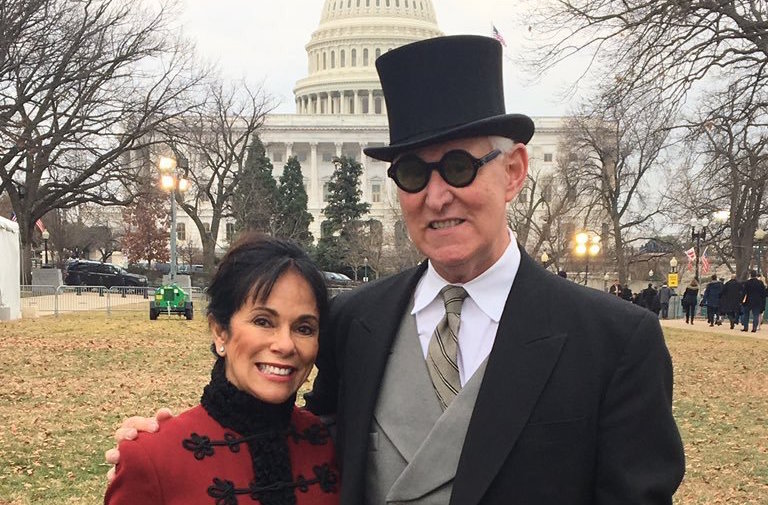
Flamboyant political trickster and Barnum-esque huckster Roger Stone was arrested last week as part of the out-of-control Mueller investigation into alleged Russian collusion in the 2016 presidential election.  Stone’s arrest suggests the desperation in Mueller’s witch hunt.

Stone himself is an endlessly fascinating individual, and I have a soft-spot for over-the-top confidence men, which is essentially what Stone is (or how he presents himself).  In reading some of the news coverage about his arrest, I stumbled upon a 2007 profile of the famed master of the dark arts, “Roger Stone, Political Animal.”

The author is Matt Labash, one of the best long-form writers the now-defunct The Weekly Standard ever employed.  I’ve totally written off The Weekly Standard as a pathologically anti-Trump publication, especially with Bill Kristol going off the deep end politically (and maybe psychologically), actively encouraging the FBI’s mendacious, corrupt attempts to overthrow the duly-elected President of the United States.

That said, Labash is an excellent writer.  When I taught US Government regularly, I would assign students another Labash piece, a lengthy profile of former Louisiana Governor (and convicted felon) Edwin Edwards, entitled “Conviction Politician.”  Labash wrote that profile when Edwards, then 86, was attempting to run for Congress.  Edwards would go on to lose that race—the first time he ever lost a run for office—but Labash’s profile made me want to vote for Edwards, and not because it casts the corrupt four-time governor in a positive light.  Rather, Labash possesses a knack for drawing out the humor and humanity in deeply flawed, larger-than-life characters (some great Edwards quotes:  he said the only way he’d lose an election was if he was “caught in bed with a dead girl or a live boy”; when discussing Klansman David Duke, Edwards said the only thing they had in common was they’re “both wizards under the sheets”).

That jeweler’s eye for humanizing moral failure is beautifully apparent in the 2007 Stone profile.  Labash is also sympathetic to his subject, without necessarily condoning his trickiness:  unlike many reporters, Labash actually likes Roger Stone.

It’s also interesting reading about politics pre-2015-2016, what we might call “B.T.”:  “Before Trump.”  That’s especially the case when Donald Trump is involved (Stone, a longtime Trump friend and ally, only half-jokingly called Trump the p-word in reference to a botched run for the Reform Party nomination early in this century).  It’s hard to conceive now, after four years of Trumpism, of a time when The Donald didn’t dominate our political discussions, when we basically debated the merits between two or more members of both parties’ elites (I don’t completely buy the “Uniparty” theory—there were clearly important philosophical differences between Romney and Obama, for example, in 2012—but I’m willing to concede that elites in both parties are two sides of the same elitist coin in terms of their interests and positions in life).

Reading about Roger Stone in a pre-Trump political age, on the cusp of the Great Recession and before even the meteoric rise of Barack Obama is fun and a bit disconcerting:  it’s hard to remember exactly what it was like back then, as we’ve gone through the looking glass into a whole new paradigm.  Such is the power of the red-pilling that came in the wake of Trump’s rise.

But this post is (ostensibly) about Stone.  I highly recommend you carve out thirty minutes to read the Labash profile in full—after all, it’s Wednesday, and all the real work for the week got done Monday or will get done hastily Friday morning, before you ease your way into the weekend.  I had a hard time finding a “representative sample” to highlight from this piece, but I settled (and not entirely to my satisfaction) on this excerpt discussing a young Stone’s possible roll in splitting the Liberal Party of New York’s vote from the Democrats, giving Ronald Reagan the edge—and New York’s electoral votes—in 1980:

Stone, who going back to his class elections in high school has been a proponent of recruiting patsy candidates to split the other guy’s support, remembers suggesting to Cohn that if they could figure out a way to make John Anderson the Liberal party nominee in New York, with Jimmy Carter picking up the Democratic nod, Reagan might win the state in a three-way race. “Roy says, ‘Let me look into it.'” Cohn then told him, “‘You need to go visit this lawyer’–a lawyer who shall remain nameless–‘and see what his number is.’ I said, ‘Roy, I don’t understand.’ Roy says, ‘How much cash he wants, dumbf–.'” Stone balked when he found out the guy wanted $125,000 in cash to grease the skids, and Cohn wanted to know what the problem was. Stone told him he didn’t have $125,000, and Cohn said, “That’s not the problem. How does he want it?”

Cohn sent Stone on an errand a few days later. “There’s a suitcase,” Stone says. “I don’t look in the suitcase . . . I don’t even know what was in the suitcase . . . I take the suitcase to the law office. I drop it off. Two days later, they have a convention. Liberals decide they’re endorsing John Anderson for president. It’s a three-way race now in New York State. Reagan wins with 46 percent of the vote. I paid his law firm. Legal fees. I don’t know what he did for the money, but whatever it was, the Liberal party reached its right conclusion out of a matter of principle.”

I ask him how he feels about this in retrospect. He seems to feel pretty good–now that certain statutes of limitations are up. He cites one of Stone’s Rules, by way of Malcolm X, his “brother under the skin”: “By any means necessary.” “Reagan got the electoral votes in New York State, we saved the country,” Stone says with characteristic understatement. “[More] Carter would’ve been an unmitigated disaster.”

Who knows if that story is true or not—after all, this is Roger Stone—but there’s no doubt the Liberal Party nominated Anderson, and Reagan won a plurality in the Empire State.  If it’s true, Stone might have saved the Republic.

Labash’s piece also revealed to the world “Stone’s Rules,” which Stone has compiled into a book.  From Labash:

[Stone] often sets his pronouncements off with the utterance “Stone’s Rules,” signifying listeners that one of his shot-glass commandments is coming down, a pithy dictate uttered with the unbending certitude one usually associates with the Book of Deuteronomy. Some original, some borrowed, Stone’s Rules address everything from fashion to food to how to screw people. And one of his favorite Stone’s Rules is “Unless you can fake sincerity, you’ll get nowhere in this business.” He is honest about his dishonesty. “Politics with me isn’t theater,” he admits. “It’s performance art. Sometimes, for its own sake.”

The performance for the sake of itself is a recurring theme with Stone, who seems to embroil himself in controversy just for the thrill of it.  He could have had a lucrative, quiet career in political consulting, but from reading Labash’s piece—and from watching Roger Stone on television and YouTube—that doesn’t seem like a life that would appeal to him.

That, in my mind, is the appeal of Stone—like Milo Yiannopolous, he relishes the dirt and grime of the arena, and he digs into it while dressed impeccably.  He’s a despicable, perfidious, disreputable con man—and I love him for it.

Reblogs: Of Grills and Men

Traditional Christian blogger Dalrock wrote two posts Monday about grilling, specifically grilling in the context of traditional masculinity and fatherhood.  The occasion for these posts is the infamous Gillette razor ad, which basically scolds men for not being noodle-wristed soy boys and pliant betas.

I really thought that after 2016, when a swaggering alpha male with a supermodel wife won the presidency, we’d see fewer of these hectoring, pedantic social justice ads.  Sadly, feminized, postmodern Corporate America still allows radical feminists to scare off their customers.

If you’ve seen the ad, you’ll recall there’s a scene with a row of dads grilling in an endless backyard, intoning “boys will boys” while two kids wail on each other (as if that’s an accurate depiction of fatherhood).  Dalrock’s first post Monday, “The symbolism of the line of men grilling in the Gilette ad,” quotes from a piece from Post Millenial, in which the author points out the significance of that scene (Dalrock’s quotation of Barbara Kay’s “‘Toxic Masculinity’ in Advertising:  Keeping Women Scared and Men Shamed“):

For what does a neatly-dressed man standing behind a barbecue signify? Think of every Father’s Day ad you have ever seen. How many of them feature barbecue tools? Maybe 50%? Why? Because when men barbecue, they are usually in a back yard. If men have a back yard, it means they live in a house. If they have a house, they are generally married with children. When men barbecue, they are usually feeding their families and friends and having fun doing it. In other words, barbecue men are deeply invested in family life.

They are, in short, fathers. And what is the easiest way to produce boys who do not understand or respect the boundaries between positive and negative masculinity? Take away their fathers.

The barbecue men are the reason most boys with loving fathers grow up to be strong, productive men: men who will never be a threat to anyone—except to bad guys who never learned the boundaries for—or how to positively channel—aggression, because so many of them had no fathers to teach them.

The ad is not just an attack on men, per se, but on married fathers, a key demographic in the war against unruly hooligans.  Let’s be clear here:  the problem isn’t “toxic masculinity”; it’s a lack of masculinity.  Boys without fathers are the major problem.

Consider the male child of a single mother:  outside of an uncle or grandfather, his formative years will be devoid of male influence.  Nearly all of his teachers will be female until at least middle school.  His absent father will be a lingering shadow in his life, unconsciously imprinting him with the idea that men are unreliable and that he has no obligation to his hypothetical future offspring.  Such a child has a higher propensity for loafer-lightening flamboyance (probably).  There are a host of negative consequences of fatherlessness.

Dalrock’s second piece looks at a 2015 Slate “think-piece” about a man who hates himself for loving to grill.  It is painful to read the quotations from the essay.  It affirms a central tenant of postmodern political philosophy, especially radical feminism:  you’re not allowed to enjoy anything.

Dalrock elaborates in that piece that the point is to feminize grilling; that is, to bring women into a traditionally male space, and to make men feel bad if they want to keep it a male space.  This topic is a major theme of Dalrock’s writing:  the forced infiltration of men’s private spaces, such as social clubs, with women, depriving men of any kind of separate world they can enjoy on their own terms.

Check out the pieces linked (caution:  you will cringe incredibly hard reading that Slate piece, but it is from Slate, after all) and leave your comments below.

The League of Nations

For the past five years, Western civilization has been observing and memorializing the Great War, what we now call the First World War. That war was so destructive, it single-handedly cost the West its mojo. Before the war, Western civilization was supremely confident, believing in the rightness and righteousness of its own ideals. After it, self-doubt and nihilism gripped the hearts of once-great nations.

Some of that antebellum self-confidence was founded on the sandy foundation of positivist idealism, and some of it on the misguided internationalism that tied European nations together in a strangling, inflexible web of secret alliances and global brinksmanship. But for all its faults—and the mostly pointless slaughter of millions of young men on the battlefields of Europe—the West was (and is) the best.

Friday, 25 January 2019 quietly marked another milestone in the rolling commemoration of the Great War: the opening, 100 years ago, of the Versailles Peace Conference, the gathering that planted the seeds for the Second World War. New Criterion published a short essay on the anniversary that discusses the maneuvering at the Conference with lively detail; it’s even more impressive when you realize the author, Daniel M. Bring, is still in college.

The League of Nations was the precursor to the United Nations, and the godfather of various supranational entities. In that context, it is rather inauspicious, and is the root of many evils. It was a stunningly ineffective organization, too, that failed to uphold its obligations to collective security.

The United States famously did not join the League, as the Senate refused to ratify the Treaty of Versailles, which included membership in the organization. Senator Henry Cabot Lodge of Massachusetts led the charge against ratification, arguing that Article X of the League charter would compel the United States to join in foreign wars that may have little bearing on actual American interests.

Such a degree of foreign policy realism would be refreshing in today’s political climate; as it was, Lodge’s reservations were entirely consistent with American foreign policy dating back to George Washington and John Quincy Adams. The United States did not formally make peace with Germany until 1921, with the signing of the Treaty of Berlin.

Without American support—and in the wake of the global Great Depression—the League of Nations floundered and failed. To quote Bring:

In discussions of (especially, recent) history, there is much said by historians about hindsight and counterfactual scenarios. What if the United States had lent its strength to the League’s success? What if the League had levied more effective sanctions and even executed military countermeasures? But in the end, these hypotheticals cannot change the past.
“All that matters is that which occurred. Within thirty years from the League’s creation, tens of millions, both soldiers and civilians, were dead in a second great war.”

The post Second World War global order has endured reasonably well, with its broad commitment to global security underpinned with American might. That order flourished, however, in the face of the long Cold War and the mostly-united fronts of a long ideological struggle with Soviet Communism. In the absence of such a major external threat—radical Islamism notwithstanding—the raison d’etre for open-ended, supranational regimes is largely gone, and such organizations are ineffective at best or tyrannical at worst.

The United Nations is a clown college for Third World dictators and their lackeys. The European Union is an undemocratic dystopia under German rule (didn’t we fight two world wars to prevent that outcome?). NATO (perhaps inadvertently) antagonizes Russia by extending into the Baltic region, and American lives are obligated to prop up those very regions should Russia interfere. Further, NATO is only truly effective with American backing and support—a major sticking point for President Trump, who wants member nations to meet their obligations to funding it (and they even balk at that minimal request).

Nineteenth-century isolationism no longer appears to be a viable option for the United States, but constant interventionism and multilateralism come with all the costs and none of the benefits of empire, and severely stretch America’s blood and treasure. An earnest reevaluation of the effectiveness of our international institutions is long overdue; kudos to President Trump for questioning the orthodoxy and probing new possibilities.

As part of that re-examination, let us look back to the idealistic, but unhappy, failure of the League—and the costs its failure entailed for humanity.

Reblog: New White Shoe Review for You

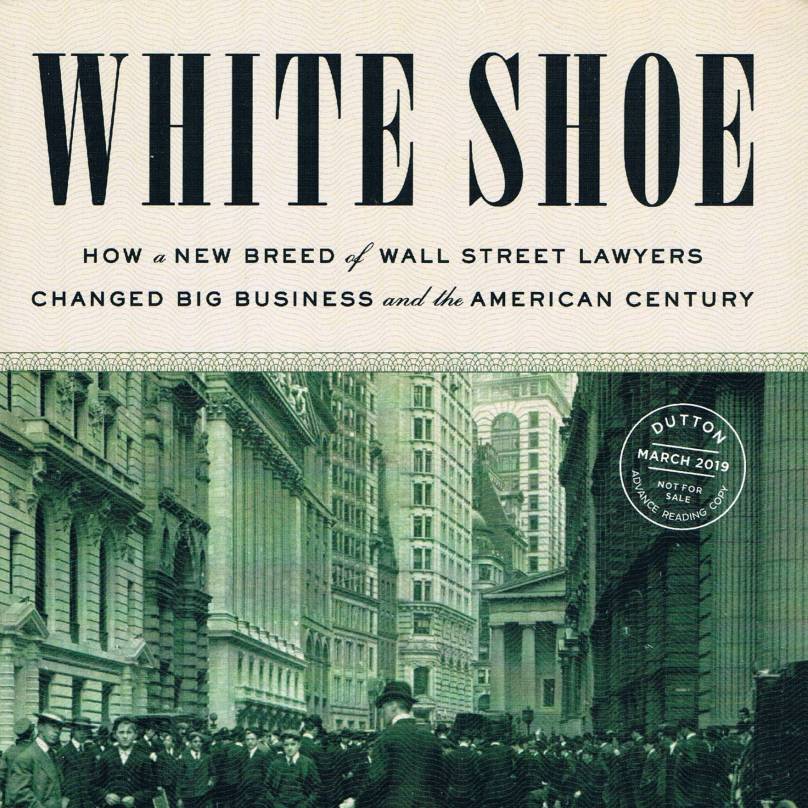
My good friend and fellow blogger Frederick Ingram of Corporate History International has written an intriguing review of what appears to be a quite intriguing book: historian John Oller’s White Shoe: How a New Bread of Wall Street Lawyers Changed Big Business and the American Century. Based on Ingram’s review alone, the book is a fascinating dive into the heady politics of early twentieth-century America, the transition from the relative laissez-faire capitalism of the so-called “Gilded Age” into the economic, political, and social reforms of the Progressive Era.

The Progressive Movement fundamentally transformed the United States, in many ways (constitutionally) for the worse. But it was an attempt to rectify some of the excesses of the Gilded Age, and to ensure that workers were not merely cogs in faceless corporate machines. In reading Ingram’s review, I heard echoes of Tucker Carlson’s recent on-air musings, particularly the idea that efficiency is not a god to be worshipped blindly, and that capitalism is great, but it should work for us, not the other way around.

The more things change, the more they stay the same: Carlson’s diagnosis of America’s current ills echoes attorney (and future Supreme Court justice) Louis Brandeis’s “curse of bigness,” the argument against efficiency-for-its-own-sake. I was struck, while reading Ingram’s review, how much our own age mirrors the period that, in many ways, begat our current crises: the Progressive Era of 100 years ago.

According to Ingram, a consensus of sorts was reached among these big Wall Street Lawyers (WSLs), which ultimately prevented radicalism and presented “capitalism with a human face”:

“The end of ‘The Last Great Epoch’ coincided with the end of World War I, flanked by the funerals of the earlier generation of great industrialists and white shoe pioneers. ‘Each year has the significance of a hundred,’ said William Nelson Cromwell in 1918, and this applied not just to armistice negotiations but vast swaths of human society. Business, law, and government in the US would be professionalized and regulated, but still relatively free by world standards. The reforms advocated by enlightened and informed WSLs formed a barrier against imported radicalism. Even rightwing attorneys backed movements such as social security, child labor prohibitions, and even minimum wage.”


Ingram, as I mentioned, is a good friend, and we’ve had some lively discussions over the years about the “big questions” of life. His thoughtfulness and reflexivity are in full display in his review here, as he links insights from this work to concurrent readings of Jordan Peterson and Christopher Andrews. He also brings in his own experiences working in “BigLaw,” as he calls it, the grueling world of billable hours and 80+-hour workweeks.

To (indulgently) block-quote Ingram once more:

“Having worked as a BigLaw accounting clerk myself, I have an issue with the Cravath System and the slavish devotion to billable hours. Is your spouse really going to leave you if you don’t make $250,000 this year? Will your children no longer look up to you? Is that worth being a cortisol-addled prick 80 hours a week, every weekday of your miserable life? Wouldn’t it be wiser to make, I don’t know, $100k or even $50k and have your peace of mind back?”


As much as I admire the energy and drive of the restless striver—and as much as I over-work myself—Ingram makes a compelling point. Money doesn’t buy happiness (although it certainly buys a great deal of freedom), and the pursuit of it can lead other, more enduring obligations—family, friends, faith—to wither.

An excellent review, from a good friend. Check it out at https://corporatehistory.international/2019/01/27/new-white-shoe-review-for-you, then pick up a copy of Oller’s book.

fridrix's avatarCorporate History International

White Shoe: How a New Breed of Wall Street Lawyers Changed Big Business and the American Century by John Oller (Dutton: 2019). Review by Frederick C. Ingram, CorporateHistory.International, January 27, 2019.

White Shoe promises to deliver an engaging and revealing tale regarding the handful of New York City attorneys who effectively created big business as we’ve known it, the “new high priests for a new century.” As an accomplished historian (The Swamp Fox: How Francis Marion Saved the American Revolution, Da Capo: 2016) and former Wall Street attorney himself (Willkie Farr & Gallagher), John Oller is well placed to fulfill this tall order.

20190127 white shoe cover squareIn a previous economy, I researched hundreds of corporations for the International Directory of Company Histories, so the prospect of peeking a little beyond the opaque public relations and investor relations curtain intrigued me. I’m also reminded of strolling along Fifth Avenue, whose equally opaque walls…

View original post 1,441 more words

Saturday Reading: SOTU and the Shutdown

A quick post today, as I have a jam-packed Saturday (after a jam-packed week, with another busy week on the horizon—it’s the Year of the Panther, baby!):  the President has reached an agreement to reopen the government for three weeks, it seems in order to get paychecks out to Homeland Security and federal law enforcement more than anything else, with the promise (threat?) to leverage another government shutdown in February to obtain border wall funding.

This compromise feels like a loss; I can only hope President Trump has some clever scheme up his sleeve.  From what I’ve been hearing (most recently on today’s episode of Radio Derb), the polls have shown Americans steadily blaming Trump for the shutdown.  Of course, this prompts me to ask, “do they see the shutdown as positive or negative?”

Certainly there are good federal employees who need paychecks, especially border patrol agents and federal law enforcement, but how many of you actually felt the effects of the shutdown?  At the very least, let’s hope the President took Ben Boychuck’s advice, as well as the advice of his anonymous senior official, to layoff permanently some of the dead weight in the federal bureaucracy.

As Boychuck writes in the Sacramento Bee:

Everyone knows the president cannot fire career government employees willy-nilly. Our civil service laws are ironclad. But a fairly obscure rule would allow the administration to lay off certain workers if they’ve been furloughed for at least 30 days. It’s called a “reduction in force” and it’s perfectly legal as long as the White House adheres to certain criteria, accounting for an employee’s tenure, total federal and military service, and work performance.

According to Boychuck, some 350,000 federal employees are eligible for “reduction in force” according to this obscure rule.  I don’t think anyone is advocating laying off all of those people—surely some 5-10% of them perform useful functions and/or aren’t totally subvervise to the President’s agenda—but I imagine we could do without at least some of them.  Surely even a token culling of the herd would send a powerful warning to feds:  you work for the American people, not your second home.

A part of me worries that our peacocking POTUS might be reopening the government simply to give the State of the Union Address in the House chambers.  That would be a bad move.  The Constitution doesn’t specify the form or venue for the SOTU address.  In fact, it doesn’t even have to be a verbal “address” at all!

Thomas Jefferson—timid about public speaking, and fearful of the kingly connotations—stopped giving a verbal address upon taking office in 1801.  Instead, his annual message was sent to Congress and read aloud by the Speaker or another member, then published throughout the States in newspapers.  Everyone could easily read it, and this approach made perfect sense in a pre-mass-communications age.

The Jefferson approach endured until the presidency of Democrat and progressive Woodrow Wilson.  Remember, Wilson hated our Constitution (PDF), and believed it was an archaic document that did not work adequately in the dynamic, industrial world of the early twentieth century.  He idolized the British Parliament, and sought to make the presidency more akin to the position of Prime Minister—the first among equal voting members in the legislature.  He believed that approach, called fusion of powers, was more efficient and democratic (“democratic” in those days being the Left’s preferred way to advance progressive ideology and policy, though in practice that meant electing representatives who would farm out their law-making powers to unelected technocrats in the federal bureaucracy).

Regardless, the die was cast, and with the advent of television, the State of the Union Address has become a ponderous, grandiose political event that doesn’t really tell us anything useful about the state of the nation, but just how awesome whoever the current president is.  This time, those boastful claims would be mostly true, but was it worth reopening the government to do it on time?

Boychuck, among others on the Right, were calling for the President to end the modern, monarchical spectacle of the State of the Union, returning it to Jeffersonian simplicity.  As much as I don’t want to deny the president his moment in the sun, that approach seems prudent, and more in accord with the republican nature of our Constitution.