Lazy Sunday XXX: Trump, Part I

It’s hard to believe we’ve reached thirty Lazy Sundays.  I’ve found these posts are an excellent way to link to multiple posts simultaneously; I’ve written so many now that I occasionally forget that I’ve written some of them, but Lazy Sunday is always there to curate and aggregate those forgotten posts.

Indeed, today’s post marks 280 days of consecutive posting.  That’s forty weeks of at least one post per day.  Noah would be getting off the Ark right about now.

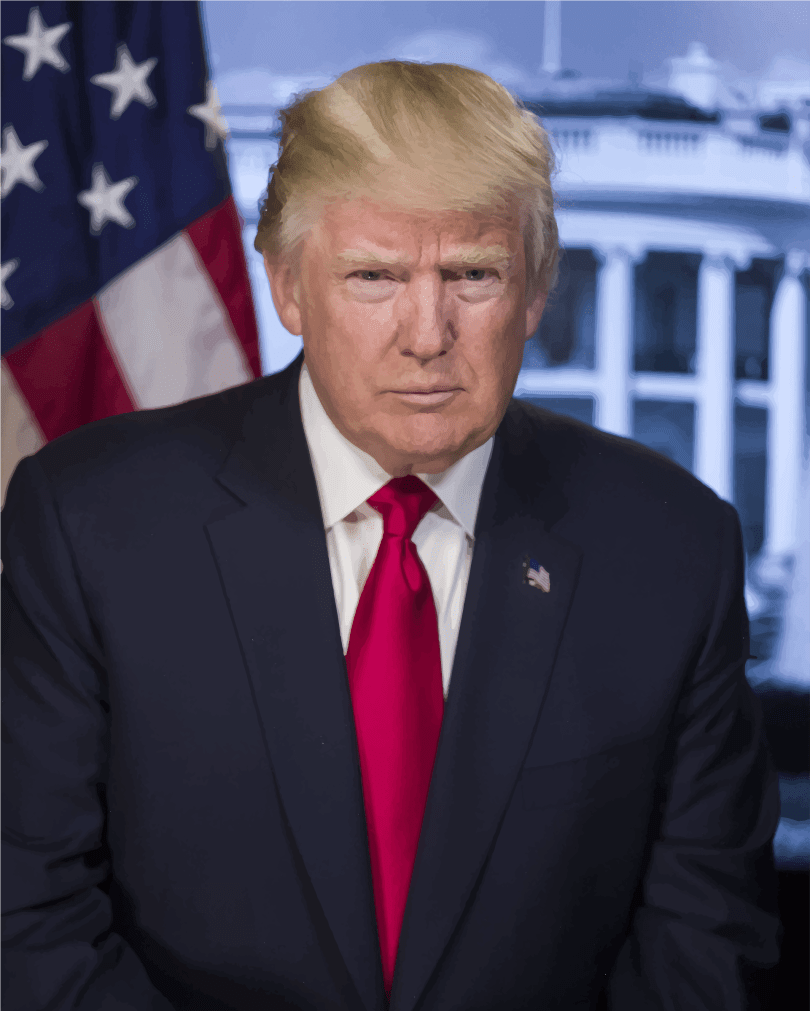
So, to celebrate the thirtieth week of posts—and to honor our amazing, if embattled, President—today’s edition of Lazy Sunday is dedicated to the God-Emperor himself, Donald J. Trump.

  • Indian Man Worships Trump as a God” – This little piece was a bit of a throwaway novelty, but I still find it amusing:  an Indian gentleman devoted himself to GEOTUS so intensely, his parents moved out of the house.  I was hoping some Twitter-savvy user would get this piece to Trump or Sarah Huckabee Sanders, and President Trump could use it as an opportunity to witness to this well-intentioned-but-misguided man.
  • Mueller Probe Complete, Trump Vindicated” – The subject of a recent TBT feature, I wrote this piece when the Mueller Report first broke and all indicators were that “Russian collusion” was, at best, way overblown.  Yes, yes—Mueller insisted that Trump wasn’t “exonerated,” but he and the Democrats had to admit sheepishly that the drum they’d been beating for nearly three years was busted (not that they actually did admit that).  Of course, now they’ve just changed from one scary Eastern European country to another with tales of “Ukrainian collusion” to bolster a bogus impeachment inquiry.  Sigh.
  • Symbolism and Trumpism” – An unfortunate side effect of Protestant efficiency and pragmatism is the lack of attention to symbols, which we tend to view with suspicion—“it might be an idol!”  But symbols matter immensely to uniting a people.  That’s the key insight this piece explores, care of an American Greatness essay about Trump’s ability to understand the need for and use of unifying symbols like the National Anthem, the American Flag, and so on.
  • Trump’s Economy and 2020” – President Trump can boast a hugely successful economy, almost directly as a result of his tax cuts and regulatory reforms.  After Trump’s election, I could almost physically sense a weight lifting off my shoulders, and those of millions of Americans—and I was doing okay even in President Obama’s moribund economy.  Even in 2016, with things gradually improving from the low-point of the Great Recession in 2009, the job market seemed tight.  By the time Trump was inaugurated in January 2017, phenomenal economic growth was well underway.  Here’s hoping that buoyant economy continues to roar through 2020.
  • “#MAGAWeek2019: President Trump’s Independence Day Speech“:  This post was a Subscribe Star exclusive, so you’ll have to pay a buck to read the full thing, but it’s about how great President Trump’s Independence Day speech was.  After all the hand-wringing from the Left and the noodle-wristed Right about Trump hosting a yuge military display on the Fourth of July (see also:  “Symbolism and Trumpism“), Trump delivered a speech that reminded us of why we can be proud to be a part of this incredible, unprecedented nation.  I didn’t hear the whole “airport at Yorktown” comment, but I’m also not attuned to picking up Trump’s every minor error and calling it treason the way Leftists are.

That’ll do it for this “big league” Lazy Sunday.  Enjoy your day off, and Keep America Great!

God Bless,

—TPP

Other Lazy Sunday Installments:

Lazy Sunday XXIX: The New Criterion

Conservatives, especially conservative writers and publishers, tend to get so fixated on policy wonkery and political debates, we sometimes lose sight of culture.  One reason I appreciate blogger buddy photog’s blog, Orion’s Cold Fire, so much is that he makes room for reviews of sci-fi novels, Twilight Zone episodes, and the like.

One publication that makes culture the centerpiece of its mission is The New Criterion, which takes the idea of reviewing the best in art, literature, music, and drama very seriously.  I recently re-subscribed TNC after having a lapsed subscription for a couple of years, and I’m eager to get my first issue in forty-eight weeks.

With that in mind, this week’s Lazy Sunday is dedicated to pieces the writers at The New Criterion inspired:

  • Civilization is Worth It” – This piece discusses an excellent audio version of a piece about Rousseau’s ideas regarding civilization (that is to say, Rousseau argued civilization was the cause of all of our problems, and we were better of dancing around naked in caves).  It’s definitely worth a listen.
  • E.T.A. Hoffman & Romanticism” – This very short post covered a charming little essay about E.T.A. Hoffman, arguably the founder of the Romantic movement in literature, as well as a brief discussion of the consequences, both positive and negative, of the Romantic temperament, and the idea of the brooding, troubled artist.
  • The League of Nations” – Trans- and supranational organizations were all the rage in the twentieth century, and the League of Nations was the first—and the biggest flop—in this do-gooding, globalist trend.  The League of Nations was famously ineffective, which just meant we’d be saddled with an even worse organization, the United Nations, after the League failed to prevent the Second World War.  Now the European Union is creating a tyrannical empire of Belgian bureaucrats in the name of preventing a tyrannical empire of German bureaucrats from trying to conquer Europe again.  Yeesh.
  • The Good Populism” – The counter to the aforementioned tyrannical transnational organizations is good, healthy populism, the kind of middle-class, conservative revolutions that brought us the Declaration of Independence, the Constitution, and Donald Trump (among others).  Super historian and classicist Victor Davis Hanson makes the case for the “good populism,” as opposed to Bernie Bro socialistic populism, in this piece, one of the most popular TNC published in 2018.
  • New Criterion on Principles in Politics” – What’s more important—principles or victory?  That’s not exactly the gist of this piece, but it does examine the tricky debate taking place among the Right currently about how to handle deranged Leftists.  What are the limits of principles?  The David French model of always surrendering—but being polite while doing so—is clearly not an effective way to uphold conservative principles.

That’s it for this Sunday.  Enjoy some erudite cultural criticism!

–TPP

Other Lazy Sunday Installments:

SubscribeStar Saturday: Yemassee Shrimp Festival 2019

Today’s post is a SubscribeStar Saturday exclusive.  To read the full post, subscribe to my SubscribeStar page for $1 a month or more.

Last weekend my girlfriend and I kicked off an ad hoc autumnal tour of various festivals around the State of South Carolina with a trip to Yemassee, South Carolina, for the annual Yemassee Shrimp Festival.  Readers will recall our visit to Aiken’s Makin’ in my hometown of Aiken, South Carolina, earlier in the month.  That visit got us thinking about other fall festivals we could attend.

I stumbled upon the Shrimp Festival while researching the Yemasee War (note the single “S” in the tribal name; I’m not sure when the town decided to add the second), a brutal Indian war in which various tribes banded together to wipe out the Carolina colony.  The conflict lasted from 1715-1717, and the tide only turned for the colonists after the Cherokee Indians joined forces with the Carolinians in order to defeat their ancient enemy, the Creeks.

In reading about that unfortunate, disruptive colonial war, I came across the Shrimp Festival.  I love small-town boosterism, and these little festivals bring a good bit of money into rural communities.

More importantly, they’re just plain fun.  Where else can you eat curly fries hand-cut from a gigantic spud and fried fresh to order, or see a chihuahua dressed as a taco, complete with sombrero?  Yes, both of those were just part of the fun at the Yemassee Shrimp Festival.

To read the rest of this post, subscribe to my SubscribeStar page for $1 a month or more.

Touring the Solar System in Rural Maine

The Portly Politico is striving towards self-sufficiency.  If you would like to support my work, consider subscribing to my SubscribeStar page.  Your subscription of $1/month or more gains you access to exclusive content every Saturday, including annual #MAGAWeek posts.  If you’ve received any value from my scribblings, I would very much appreciate your support.

Regular readers know that I love localism, and communities coming together to solve problems—or even just to throw fun festivals.  I also enjoy learning about space and our Solar System.

So I was thrilled to read an interesting Quora answer to a question about the scale of the Solar System that combined easily digestible math with a statewide Solar System project.  The question, paraphrased, is thus:  if Earth were the size of a golf ball, how big would the Solar System, etc., be?

The answer, from contributor Jennifer George, a self-described “Bibliomaniac” and “Information Omnivore,” also paraphrased, is simple:  travel up Highway 1 in the State of Maine.

Read More »

Lazy Sunday XXVIII: World History

Most of my pieces here at The Portly Politico focus on American politics and culture, with some occasional dabbling in British and European affairs.  But contrary to Ron Swanson’s historiographical claim, history did not begin in 1776 (though everything that came before may have been a mistake).

As such, I’ve written a few pieces about events, current and historical, that take place in more exotic locales.  While I am a parochial homebody, I appreciate travel and the contributions of other cultures (I still wish I’d seen London and Paris before they became part of the Caliphate).  I wish I had the time to do more of it (on that note, stay tuned for details of my trip to the Yemassee Shrimp Festival).

So, here’s some worldly pieces for your Lazy Sunday:

  • North Korea Reflections” – I wrote this little piece on the occasion of President Trump’s historic summit with North Korean dictator Kim Jong-un in Singapore.  My interpretation of the summit was cautiously optimistic.  It’s still unclear what the future holds for US-Nork relations, but the gambit seemed to work—North Korea is a still a bloodthirsty, repressive, totalitarian regime, but they aren’t lobbing missiles around constantly anymore.
  • The Impermanence of Knowledge and Culture:  The Great Library and Notre Dame” – this post was a synthesis of two events—the destruction of the Great Library at Alexandria, and the burning of a substantial portion of the Notre Dame Cathedral.  The fire at the latter riled up conservatives and traditionalists because the structure had endured for so long as a symbol of Christianity and of France’s faithfulness.  France is not a very faithful country now, but Notre Dame remains a powerful symbol of man’s capacity for focusing on the greatness of God.  The major point of this piece was to drive home how even great edifices eventually crumble, and that knowledge and culture must be preserved actively if they are to endure.
  • Sri Lankan Church Bombings” – coming on the heels of the catastrophic Notre Dame fire, the island nation of Sri Lanka was shaken on Easter Sunday of this year with Islamic terrorist attacks on churches.  Democrats referred to the slain Christians as “Easter worshippers” in what appeared to be a concerted effort to appear politically-correct.  Yeesh.
  • America’s Roman Roots” – I wrote this piece earlier in the week, based on an excellent op-ed a colleague sent my way.  Commentators often fixate on the similarities between the United States today and the Roman Empire, but often miss the parallels to the Roman Republic.  Those parallels exist because the Framers of the Constitution pulled heavily from Roman tradition, even naming key institutions like the Senate after their Roman counterparts.  The Roman Republic holds valuable lessons for Americans for how to craft a robust society that enables citizens to live worthwhile lives.

That wraps up this little tour around the globe.  Rome, France, Sri Lanka and North Korea—not a bad start, though I’d better get Africa and Latin America into the mix soon, lest I catch flack from the SJWs for lack of inclusion.

Happy Sunday!

—TPP

Other Lazy Sunday Installments:

America’s Roman Roots

The Portly Politico is striving towards self-sufficiency.  If you would like to support my work, consider subscribing to my SubscribeStar page.  Your subscription of $1/month or more gains you access to exclusive content every Saturday, including annual #MAGAWeek posts.  If you’ve received any value from my scribblings, I would very much appreciate your support.

Armchair historians and dime-a-dozen political pundits (like yours portly) love to compare the United States to the Roman Empire, usually during its decadent latter-day decline.  The comparison is an easy one to make; just like Rome in the fourth and fifth centuries, the United States possesses an underclass of wage slaves; an obsession with mystery religions and spiritualistic fads; an immigration crisis; a decadent, self-indulgent quasi-morality; declining birth rates; and a sense the precious liberty of the old Republic has been lost.

Yet for all those declinist comparisons—apt though they may be—Americans should extend their historical gaze back further, to the Roman Republic.  That is what Dr. Steele Brand, Assistant Professor of History at The King’s College, urges Americans to do in an op-ed entitled “Why knowing Roman history is key to preserving America’s future” (thanks to a dear former of colleague of mine—and a regular reader of this blog—for sharing this piece).

Read More »

May We Never Forget

Today’s Number of the Day from pollster Scott Rasmussen is a poignant 9/11 memorial:  204 New York City firefighters have died due to illnesses from that fateful day.  That’s in addition to the 343 NYFD firefighters who gave their lives on September 11, 2001 (the NYFD maintains a list of “line of duty deaths” dating back to 1865; deaths 809 through 1151 were the result of the 9/11 terrorist attacks).  Rasmussen also notes that 2977 people died in the attacks.

Read More »

Remembering 1519

The start of the school year always means the start of the grand narrative of American history.  It dawned on me some years ago that, over the course of roughly 180 days, I undertake an annual, oral retelling of the story of the United States.  One day, I plan to record my lectures, taking the best bits, and compiling them into a lengthy podcast series.  After that, I’ll never have to teach again!

Regardless, the story always starts the same:  a brief overview of the pre-Columbian Americans (what we used to call “Indians,” and more clumsily “Native Americans”), followed up with Spanish exploration from Christopher Columbus through Hernan Cortez and on.

A major part of those early lessons is the encounter of the bloodthirsty Aztecs and the gold-mad Spaniards.  Students love the story of the advanced Aztecs, sacrificing humans to ensure the sunrise, and the arrival of the fiery-haired Cortez and his ragtag band of conquistadors and buccaneers.

Read More »

TBT: Lincoln on Education

This week’s TBT feature was also in last Sunday’s “Lazy Sunday XXIV – Education.”  With the school year in full swing, it’s always enjoyable to look back at the benefits of education—a reminder of why getting education right is so important.

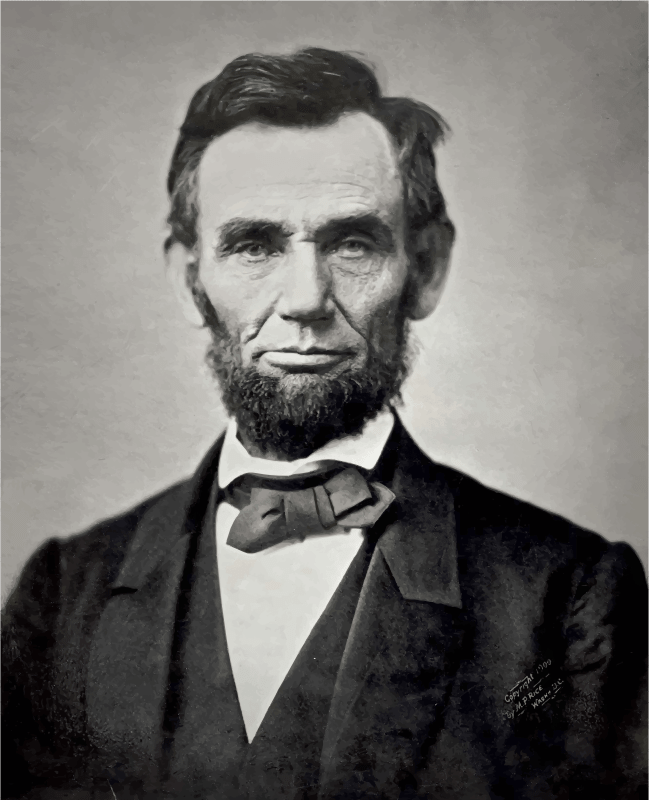
Abraham Lincoln was largely self-educated, and he was motivated, it seems, by both a desire to improve his condition in life, and by a genuine love of learning.  As an avid reader myself, I can related to the anecdote (relayed below) of young Abe walking around with “a book in his hand or in his pocket.”

This little piece was an “Historical Moment,” a monthly feature for the Florence County (SC) GOP’s public events.  If I recall correctly, the FCGOP Chairman skipped over my segment in the program (presumably by mistake, but perhaps to save time), so while I wrote this brief talk for the September 2018 meeting, I did not deliver it publicly until the October meeting (it was published on this blog in September).

I hope you’ll find this adaptation of my talk enjoyable.  Here is “Lincoln on Education“:

We’re gathered here tonight to hear from members of and candidates for School Board; in that spirit, I’d like to speak briefly about education, particularly the education of the first Republican President, Abraham Lincoln.

From what I’ve read, Lincoln’s entire formal education consisted of around a year of schooling.  He would have a week or two here and there throughout his childhood in Kentucky and Indiana, and then return to working on the family’s farm.

Despite little formal education, Lincoln taught himself throughout his life.  He loved to read, and would read deeply on a variety of subjects, obtaining books whenever and wherever he could.  One of his contemporaries commented that “I never saw Abe after he was twelve that he didn’t have a book in his hand or in his pocket. It didn’t seem natural to see a feller read like that.”  When he sat for the bar exam, he’d read law books on his own time to prepare.

Lincoln also believed in education as a source of patriotism, morality, and self-improvement—what we might call “upward mobility.”  He was not a man who wanted to stay on the farm, and his self-education was a means to escape poverty.

If you’ll indulge me, I’d like to quote Lincoln at length from his 1832 speech “To the People of Sangamo County”:

“Upon the subject of education, not presuming to dictate any plan or system respecting it, I can only say that I view it as the most important subject which we as a people can be engaged in. That every man may receive at least, a moderate education, and thereby be enabled to read the histories of his own and other countries, by which he may duly appreciate the value of our free institutions, appears to be an object of vital importance, even on this account alone, to say nothing of the advantages and satisfaction to be derived from all being able to read the scriptures and other works, both of a religious and moral nature, for themselves. For my part, I desire to see the time when education, and by its means, morality, sobriety, enterprise and industry, shall become much more general than at present, and should be gratified to have it in my power to contribute something to the advancement of any measure which might have a tendency to accelerate the happy period.”

Here we can see Lincoln’s belief that education lays the foundation for patriotism—we understand our freedoms better when we understood what they cost, and that others lack them.  We see, too, the power of education to teach us the virtuous and the good.  From that morality flows, as Lincoln said, “sobriety, enterprise, and industry,” the tripartite tools to improve our material conditions.

Patriotism, morality, and industry—these were the three benefits of education Lincoln espoused.  Coming from the man who wrote the Gettysburg Address, I think we should take Lincoln’s views on education seriously.

Belated SubscribeStar Saturday: A Little American History – And Some Reflections on Teaching It

This past weekend’s SubscribeStar Saturday post was delayed until Sunday evening.  The end of the first week of school, followed by a very late night/early morning drive, with that followed up by a long day of family events, meant that my perfect attendance record for Saturday posts had to suffer.

But you can read that post—which went up last night—with a subscription to my SubscribeStar page!

Here’s a sneak peek:

Robert Kennedy was a strong contender for the Democratic Party primary in 1968, especially among the progressive wing, before Sirhan Sirhan, a Palestinian terrorist, shot him. His death left Vice President Hubert Humphrey as the only viable candidate. Remember, LBJ declined to run for reelection in 1968 because the Vietnam War was so deeply unpopular among antiwar Democrats, many of whom were radicals who were exerting greater control over their party (sound familiar?).

The Democratic National Convention devolved into riots and chaos, with Humphrey nearly succumbing to tear gas in his Chicago hotel room. Humphrey managed to close the gap with Nixon, but it was a three-way race (with segregationist George Wallace, Governor of Alabama, running as a third party candidate), and Nixon won on a law and order platform.

To read the rest of this post, subscribe to my SubscribeStar page for $1 a month or more.