O Little Town of Bethlehem and the Pressures of Songwriting

Somewhere—I think it was in one of the Civilization games, but I can’t seem to find the exact quotation—I heard a pithy saying, something along the lines of “Genius is a combination of pressure and time.”  It’s one of those expressions that instantly rings true.

Years ago, a coffee shop in a nearby town (it’s now become a hip, upscale dining spot—and it axed the live music) used to host a quirky songwriting competition.  The premise was simple—every month, participants would pay $5 entry fee into a pot, and a “secret judge” would pick a winner, who would win that evening’s pot.  Sometimes there would be a small “second round” of the top three contenders for that evening (I won once, back in January 2014, when I believe I debuted “Greek Fair“; I was surprised, but also thankful that I wouldn’t spend $5 a month for the rest of the year).

Read More »

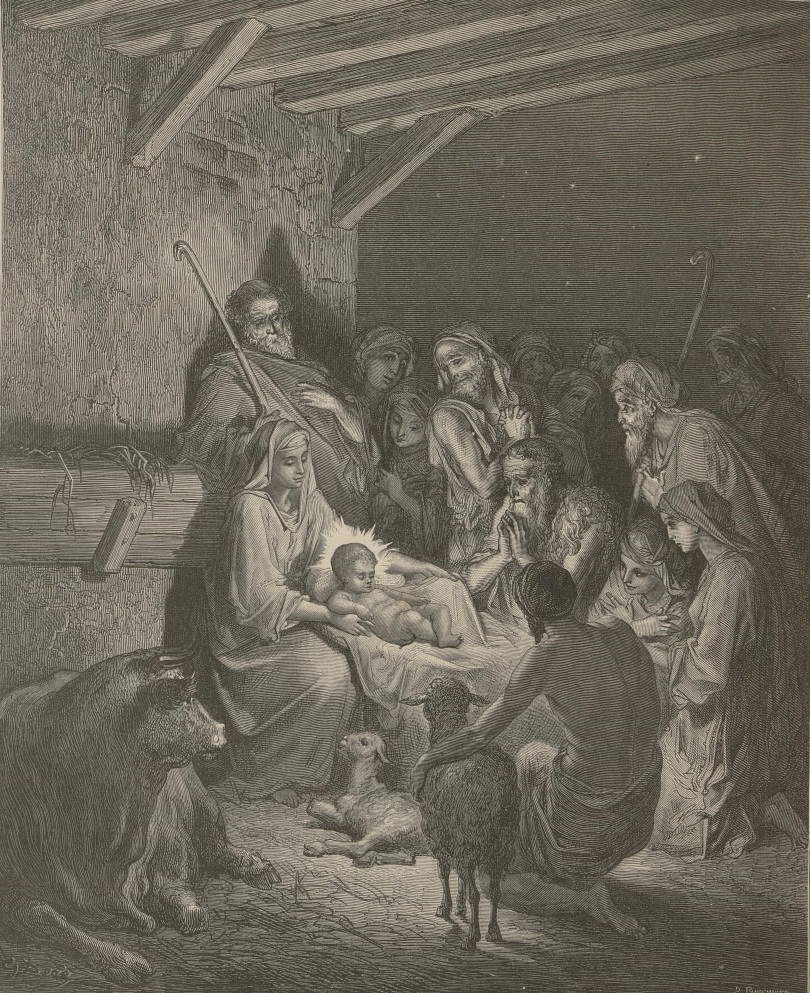
Away in a Manger

The political scene still strikes me as incredibly boring—a sad testament to how jaded our politics have become, that we don’t get more riled up about impeachment proceedings.  It’s also a testament to the perfidy and disingenuous of congressional Democrats:  everyone knows the articles of impeachment are a politically-motivated farce and, to use GEOTUS’s preferred name, a “witch hunt.”

It’s sad that President Trump will be impeached, and I’m nervous that squishy neocons and RINOs in the Senate will betray him.  That would be the ultimate kick in the teeth—the elites backhanding their own citizens for daring to challenge their aloof rule.  I shudder to contemplate the fall out should conviction and removal in the Senate occur.

Until then, it’s all a distracting media circus, with the Democrats and press engaged in a frenzied dance around the cannibal’s pot.  Even then, it manages to be incredibly dull.  At least actual cannibals have some conviction.

All that said, let’s look at more Christmas carols!  Next up:  “Away in a Manger.”

Read More »

A Little Derb’ll Do Ya: Haydn’s “Derbyshire Marches”

My Saturday morning ritual involves “sleeping in” until about 8:30 AM, brewing some coffee, and listening to Radio Derb, John Derbyshire’s weekly podcast for VDare.com.  Derb goes back for years—he used to write for National Review, before they kicked him out for writing “The Talk: Nonblack Version” for Taki’s Magazine.

I first found out about him and his controversial essay from NR, back when I was a devout print subscriber, amid the heady days when campus protests were novel enough to be terrifying.  NR ran a little blurb about Williams College cancelling a scheduled talk from Derb, and I’ve been listening to his podcast—an entertaining mix of news, science, political and cultural commentary, and updates on the president of Turkmenistan—ever since.

Read More »

SubscribeStar Saturday: O Holy Night

Today’s post is a SubscribeStar Saturday exclusive.  To read the full post, subscribe to my SubscribeStar page for $1 a month or more.  For a full rundown of everything your subscription gets, click here.

The unofficial theme of the blog this week has been Christmas music.  What better way to cap off the week than with a post about the best Christmas song ever written, Adolphe Adam’s “O Holy Night“?

Like its cousin “Silent Night,” the story of “O Holy Night” involves a village’s church organ.  In 1843, the church organ of the French village of Roquemaure had recently been renovated, so the parish priest asked a local wine merchant and poet, Placide Cappeau, to write a poem to commemorate the occasion.  That poem, “Cantique de Noël,” would be set to music a short time later by composer and music critic Adolphe Adam—and Christmas history would be made.

To read the rest of this post, subscribe to my SubscribeStar page for $1 a month or more.

Size Matters

The big Christmas concert has come and gone.  It was pretty wild week, but now we’re on the downward slope.

When I first started doing these little Christmas concerts, we had maybe 100 students at the school.  There were no dance classes, and drama was kind of tacked onto English.  The focus was on the music, and in such a small environment, everything was simpler:  setup, planning, logistics.  It was all accomplished more informally.

Now the student body has nearly tripled in size.  With that growth has come added complexity.  Put it all in a gymnasium during basketball season—the sport third to only baseball and hockey for numbers of games and practices—and it makes for a herculean task.

Read More »

TBT: “Silent Night” turns 200

The Christmas season—and a pending Christmas concert—has seen me waxing melodic on the holiday’s wonderful music.  As such, today’s TBT is predictable (if anyone were interested in predicting such a thing):  it’s a look back at a short post about the 200th anniversary of the classic carolSilent Night.”

Like “Joy to the World,” “Silent Night” is one of my favorite carols.  It’s sweet and simple, but can also be rocked up (the 6/8 time signature and three-chord structure lend the tune to bluesy interpretations, and I’ll occasionally slide in some blue notes when playing the song instrumentally).

It looks like it won’t make it into our Christmas program this year—a rarity—but I’ll be sure to make room for it next year.  Its more operatic cousin, “O Holy Night,” will be our finale, though.  I’ve always linked the two tunes mentally because of their similar names and themes (and they’re both in 6/8).  “O Holy Night” really lends itself to a hard rock interpretation, as my annual “O Holy (To)Night” cover version attests.

Without further adieu, here is Christmas 2019’s “‘Silent Night’ turns 200” (now closing in on 201):

One of my favorite Christmas carols, “Silent Night,” turns 200 this Christmas season.

The carol was originally written as a poem in the aftermath of the Napoleonic Wars by a village priest, Joseph Mohr, in the village of Oberndorf, Austria, in 1816. Two years later, Mohr approached the town’s choirmaster and organist, Franz Xaver Gruber, to set the poem to music. Gruber agreed, and the carol enjoyed its first performance to a small congregation, which universally enjoyed its simple sweetness.

Since then, the humble hymn has spread far and wide, and is probably the most recognizable Christmas carol globally today. It’s been covered (likely) thousands of times; it’s certainly become a staple of my various Christmas performances.

This simple, sweet, powerful carol beautifully tells the story of Christ’s birth, as well as the import of that transformative moment in history, that point at which God became Flesh, and sent His Son to live among us.

As much as I enjoy classic hard rock and heavy metal, nothing can beat the tenderness of “Silent Night”—except the operatic majesty of “O, Holy Night,” objectively the best Christmas song ever written.

Merry Christmas, and thank God for sending us His Son, Jesus Christ.

Joy to the World

The musical mood continues here at The Portly Politico—as does the joy (check out my “Joy of” posts here, here, and here).  The Christmas season always lifts my spirits, and the boost from my piece on Milo and Romantic music has further buoyed them (if you’d like to elevate my mood to transcendent heights, consider purchasing some of my music).

With yesterday’s post on Christmas carols, I thought it might be interesting to look deeper into the most joyous of them all:  Isaac Watts‘s “Joy to the World.”

Read More »

SubscribeStar Saturday: The Tedium of (Teaching) Slavery

Today’s post is a SubscribeStar Saturday exclusive.  To read the full post, subscribe to my SubscribeStar page for $1 a month or more.  For a full rundown of everything your subscription gets, click here.

A major part of American history was, of course, slavery.  As I typed that sentence, I nearly wrote “the unfortunate legacy of slavery,” though we’re still living that, just not in the way the race-baiters and social justice warriors claim.

But phrases like “the unfortunate legacy of slavery” have become incredibly cliched.  It and similar phrases (“slavery is our great national sin”) act as magic talismans, incantations that, when invoked, protect the speaker (presumably) from the ultimate curse, the label of “racist.”

Of course, slavery was wrong, and slavery is immoral.  It was our great national sin (paid for, as Lincoln pointed out in his Second Inaugural Address, with the blood “drawn by the sword” in the American Civil War).  It continues to have an “unfortunate legacy,” in that race-baiting charlatans continue to blame it for virtually every pathology in black American culture.

Dang it… I screwed up the incantation with that last bit.  I’d better kiss my job goodbye right now.

To read the rest of this post, subscribe to my SubscribeStar page for $1 a month or more.

Lazy Sunday XXXVIII: Best of the Reblogs, Part III

The Lazy Sundays roll on!  Today marks the first Sunday of Advent season, as we metaphorically prepare for the Birth of Our Lord and Savior, Jesus Christ.  But instead of doing a compilation of heartwarming holiday posts, we’re soldiering on with our “Best of the Reblogs” (see Part I and Part II).

  • Reblog: The Normalization of Ugliness Inevitably Becomes The Denigration of Beauty” – This post was a reblog from the ultra-controversial Chateau Heartiste website, which was so full of edgelord red pillery that the SJWs at WordPress finally pulled the plug.  While there was some truly despicable stuff at CH, it also hosted some hard, gut-punching Truths.  The original post argued that we’ve gone to the extreme of accepting all sorts of grotesqueries not just as people, but as the new standard of beauty—to the point that having objectively beautiful people in advertisements is seen as “hate speech.”  Of course we should love all people, but we don’t—and shouldn’t—pretend that everyone is pretty, or that every lifestyle is healthy.
  • Reblog: Conan the Southerner?” – One of the many great posts from The Abbeville Institute, this bit of literary history detailed the development of Conan the Barbarian, and the muscular barbarian’s creator’s origins and upbringing in hardscrabble Texas.  Conan is not just a wildman from the steppes; he’s a man of the Old South.
  • Galaxy Quest II: Cox Blogged” – I wrote a post, “Galaxy Quest,” about our attempts to understand the vastness of our own galaxy.  Longtime blog (and real life) friend Bette Cox linked me to some of her own work on astronomy and cosmology, and this post was an attempt to bring those writings to a (slightly) wider audience.  I’ve been reading Bette’s material for about a year, and had no idea how much she wrote about astronomy, cosmology, and space.

That’s it for this week’s Lazy Sunday.  Enjoy the start of the Christmas season.

Ho ho ho!

—TPP

Other Lazy Sunday Installments:


TBT: The Influence of Christianity on America’s Founding

My high school American history classes are getting into the American Civil War—or the War of Northern Aggression, or the War for Southern Independence, or whatever you’d like to call it—this week, so we’ve been talking about beginnings a good bit.  The Civil War had deep roots that go back not just to the 1840s or 1850s, and not even to the Constitutional Convention in 1787.

Indeed, the fundamental division dates back to the English Civil War in the 1648, when the Puritan Roundheads under Oliver Cromwell ousted and beheaded Charles I, and established the English Republic (which—the English having little taste for radicalism or dictatorships, fortunately collapses in 1660 with the restoration of the Stuart monarchs).  Loyalists to the king and the monarchical order were the aristocratic Cavaliers.  Those same Puritans of East Anglia settled heavily in Massachusetts following the Pilgrims’ famous landing at Plymouth Rock, and the Cavaliers—in body and spirit—dominated the tidewater plantations of the South.

Read More »