SubscribeStar Saturday: The Twenties

Today’s post is a SubscribeStar Saturday exclusive.  To read the full post, subscribe to my SubscribeStar page for $1 a month or more.  For a full rundown of everything your subscription gets, click here.

It’s (sort of) the start of a new decade, and every blogger and tin-pot commentator (like yours portly) has been putting out prediction posts for the decade.  My good friend and fellow blogger Bette Cox has written not one, but two posts about the coming decade, based on her prayer-conversation with God.

I’ve taken more of the approach of photog at Orion’s Cold Fire:  rather than offering lock-of-the-century predictions, I’ve just commented on things as they stand currently.  I am notoriously bad at making predictions and calling elections.

That said, I thought I’d play to my strengths and instead write about The Twenties—the 1920s.  Yes, it’s a bit hackneyed, but looking back at the past can be instructive of where we are now, if not what our futures hold.

Note to subscribers:  due to a heavy rehearsal schedule today, this post may not be completed until later this evening.  Thank you for your patience.

To read the rest of this post, subscribe to my SubscribeStar page for $1 a month or more.

Birth(day), Death, and Taxes

“Nothing in life is certain except death and taxes,” the old saying goes.  But we are also born, those of us fortunate enough not to fall prey to the abortion industry.  Today marks my thirty-fifth birthday.  I celebrated by paying $162.57 in vehicle property taxes to Darlington County, South Carolina.

Yesterday, I purchased a new vehicle, my first new car in thirteen-and-a-half years, and only the third I’ve ever owned.  It’s a 2017 Nissan Versa Note SV.  The other two were a 1988 Buick Park Avenue Electra, which I bought from my older brother for $800, after my grandparents gave it to him one year, and a 2006 Dodge Caravan, which those same grandparents gave to me as a college graduation gift (after the Buick was totaled when a lady ran a yield sign and smashed into me).

The Buick is long gone, but I kept the Dodge.  I figure it’s worth more to me as stuff-hauler than I would have gotten in trade-in value.  Of course, that means maintaining insurance on both vehicles, and paying taxes on each.

Well, I awoke today to the news that our military assassinated Iranian General Qassem Soleiman last night.  When I first read that Soleiman was “assassinated,” I was picturing a fate similar to the death of the “austere religious scholar,” the ISIS guy, al-Baghdadi: covert operatives swooping in under cover of darkness, swiftly and surely relieving the general of his life.

Read More »

TBT: How the Reformation Shaped the World

It’s a brand new year, and I’m excited for what it holds.  For this week’s TBT, I looked back to the first post of 2019—which then snowballed into a year-and-counting of daily posts.

This piece drew inspiration from a Pager U video (links below), and featured some of my off-the-cuff reflections on the influence of the Protestant Reformation.

I’ll let the original speak for itself.  Here is 2019’s “How the Reformation Shaped the World“:

There’s a video up on Prager University called “How the Reformation Shaped the World” (PDF transcript for those who prefer to read).  Stephen Cornils of the Wartburg Theological Seminary gives an adequate, broad overview of the impact of the Protestant Reformation (albeit with some noise about Martin Luther’s anti-Semitism, which, while accurate, smacks of throwing a sop to politically-correct hand-wringers).  You can view the video in full below.

I’ve written about the influence of Christianity (and it was, notably, Protestant Christianity) on the founding of America, and I’ve discussed how shared Protestantism helped create an American identity.  Indeed, I would argue that, without Protestantism, there would be no America, as such.

I would also argue—perhaps more controversially—that America’s commitment to Protestantism as opposed to Catholicism allowed the nation to avoid the anticlerical upheavals seen in France and other predominantly and officially Catholic countries.  While there were official, established churches at the State level into the 19th-century—which I wrote about in “The Influence of Christianity on America’s Founding“—the lack of federal establishment, and the general movement towards greater religious liberty, ensured a proliferation of Protestant denominations in the early Republic.

Catholicism inherently insists upon a top-down hierarchy of control.  Luther’s view of man’s relation to God is horizontal, as Bishop James D. Heiser argues in his extended sermon The One True God, the Two Kingdoms, and the Three Estates (one of my Christmas gifts, incidentally, and a good, quick read for just $5).  That is, every man is accountable to God directly, and is responsible for accepting Christ and maintaining his relationship with God.  That horizontal, rather than vertical, relationship infuses Western Civilization with a sense of individualism, the effects of which have been far-reaching and both positive and negative.

Regardless, the impact of the Protestant Reformation is staggering to consider.  The Catholic Church in the 16th century was an increasingly sclerotic and corrupt institution, one that had fallen from its great height as the pacifying influence upon a barbaric, post-Roman Europe (of course, the Counter Reformation reinvigorated and, in part, helped purify the Church).  With the advent of the printing press and translations into national languages, conditions were ripe for an explosion of religious reform in the West.  The ripple effects of the Reformation still pulse through Western life and culture.

That said, I’m not anti-Catholic, nor is that the intent of this post.  In today’s political and theological climate, committed followers of Christ must band together, be they Catholic or Protestant.  I don’t “buy” Catholic theology in toto, but I respect the Catholic Church’s longstanding traditions and consistent institutional logic.  Thomas Aquinas’s cosmological argument in the Summa Theologica is pretty much what I learned growing up as an Evangelical Protestant.  And I’m broadly sympathetic to the traditional Catholic argument that the Reformation busted up the orderly cosmos of medieval European society (see Richard Weaver‘s various essays for further elucidation of this idea).  A side effect of the Reformation naturally includes many of the cons of modernity.

Ultimately, too, Christians face the double-threat of modern progressive ideology and radical Islamism.  I’ve written about the former in detail, but not so much the latter.  For the moment, suffice it to say that the two are temporary, uneasy, but powerful allies against a traditionalist, conservative, Christian worldview, and both are deeply antithetical to Western values and culture.

These are some broad and slapdash thoughts, ones which I will gradually develop in future posts as necessary.  Any useful resources or insights are welcome—please share in the comments.

Happy New Year!

Lazy Sunday XLII: 2019’s Top Five Posts

2019 is winding down, and with this being the last Sunday of the year, it seemed like the perfect opportunity to look back at the most popular posts of 2019.

These posts aren’t necessarily the best posts—although that’s an entirely subjective measure—just the ones that received the most hits.

When looking through the most popular posts, there were a few surprises.  One thing I’ve learned from blogging is that posts I pour my heart and soul into may walk away with five views (and, oftentimes, only one!).  Then other posts that I dash off in a hurry to make my self-imposed daily goal take off like Rossini rockets, garnering dozens of hits.

Some of that is timing and promotion.  I find that the posts I have ready to launch at 6:30 AM do better on average.  But some generous linkbacks from WhatFinger.com really created some surprises here at the end of the year, surpassing even the exposure I received from Milo Yiannopoulos.  Writing posts about hot, current news items, the dropping links about said items in the comment sections of prominent news sites, also helps drive traffic, but I often lack the time required to do such “planting” (and it is a practice that can come across as spammy if not done with finesse).

Some posts take on a life of their own; I see consistent daily traffic from one of the posts on this list, “Tom Steyer’s Belt.”  Apparently, a bunch of people are as mystified as I am with Steyer’s goofy, virtue-signalling belt.

Well, it’s certainly been an adventure.  And while it may be premature—there are still two days left in the year!—here are the Top Five Posts of 2019:

Read More »

SubscribeStar Saturday: End-of-Decade Reflections; Age and Class

Today’s post is a SubscribeStar Saturday exclusive.  To read the full post, subscribe to my SubscribeStar page for $1 a month or more.  For a full rundown of everything your subscription gets, click here.

Today’s post is a bit of a counterpoint to yesterday’s Trumpian triumphalism—not a repudiation of my own points, but a mild qualifier.  Yesterday’s post discussed the hard numbers behind the Trump economy, and the enormous gains in the S&P 500.

I argued that, unlike the “sugar high” years of the Obama Fed—when stock prices soared, but wages remained low and unemployment high—the growth we’re currently enjoying more accurately reflects the reality on the ground.  Americans are benefiting in their 401(k)s and their IRAs, to be sure, but they’re also enjoying higher wages, and more of us are working than at any point in our history since 1969.

All of that is true, and good.  But as I wrote yesterday’s post, I couldn’t escape the nagging feeling that something is still off.  There remains a real disconnect between the prosperity we see both in reality and on paper, and the sense that there is a lack of prosperity.

Since popular politics is a matter of emotions and feeling far more than it is about reasoned discourse, addressing that enduring sense of economic disparity and privation is critical.  My foolish but troubled generation, which came of age and fought for jobs during the Great Recession, perceives that gap profoundly—with potentially major consequences for the future of the United States and the West.

To read the rest of this post, subscribe to my SubscribeStar page for $1 a month or more.

God Bless Us, Every One: The Gift of the Trump Economy

Christmas Week is always full of blessings.  Thanks to the good folks at pro-MAGA news aggregator Whatfinger News (and a helpful tip from photog of Orion’s Cold Fire on how to submit links to them), The Portly Politico has seen its best week in terms of traffic all year.  Two pieces, “Napoleonic Christmas” and “Christmas and its Symbols” made the main page, leading both to surpass my previous top post for the year, “Milo on Romantic Music.”  Apparently, people still get riled up about Napoleon.

It’s also been a wonderful opportunity to spend time with family and to overeat lots of delicious, rich foods.  If you’ve never heard of the Appalachian delicacy “chocolate butter,” do yourself a favor and look it up.  Yes, it’s even better than the name suggests.

Of course, all of that good cheer requires a solid financial foundation.  And in his three years in office, President Trump has shattered records for unemployment, wage increases, and economic growth.  Economics isn’t everything, but the Trump economy is something for which we should give thanks.

Read More »

TBT: Reblog: Who doesn’t like Christmas? — Esther’s Petition

It’s been a wonderful Christmas season (especially after getting through the stress of staging a fun-filled school Christmas concert).  The day after Christmas—Boxing Day in Canada—is always a joyous day, as we head out to hit the after-Christmas sales and enjoy a little downtime (for those folks that have to work today, my thoughts are with you; if you’re in a certain kind of office job, though, it’s one of those gloriously still days, with nary a phone call for the duration of a shift).

Last Christmas, my real-life blogger friend Bette Cox re-posted one of her own poignant pieces, “Who doesn’t like Christmas?”  I’m one of those fortunate souls for whom Christmas doesn’t carry too heavily the memory of lost loved ones (other than my two wonderful paternal grandparents).  One of my great trepidations in life is that this season of mostly unmitigated Christmas cheer will not endure forever.

But the hands of time tick on—all the more reason to honor our ancestors in our Christmas observances.  As such, I thought it would be apropos to revisit Bette’s post—a reblog of a reblog.

Merry Christmas, and please spare a thought and some prayers for those struggling with loss this Christmas season.

—TPP

A poignant piece from Esther’s Petition, an excellent blog about faith.  It’s been a tough Christmas season for some friends of mine, with death and heartbreak hovering around and darkening the usual brightness of this season.  Ms. Cox writes beautifully—wrenchingly—about how the holidays can be difficult, and how we should strive to be understanding of that difficulty.  –TPP

This is a re-post from November 2010… still appropriate for many people, I think. That rhetorical question from a movie blurb has played over and over in the last week – Christmas movies have arrived on cable TV. But it’s not rhetorical for me. The answer is, “Me.” Christmas used to be a happy time […]

via Who doesn’t like Christmas? — Esther’s Petition

Christmas and its Symbols

It’s Christmas!  Imagine “Hark! The Herald Angels Sing” played on an uptempo French horn and a crackling fire.  That’s how I imagine Christmas morning—like a 1970s Christmas variety show.

In all seriousness, it’s truly the most wonderful time of the year.  Christ is born!  It’s a day for celebrating His Birth with family and friends.  Just like the Wise Men of yore, we exchange presents to celebrate (and to stimulate the economy).

Read More »

Christmas Eve

It’s hard to believe it, but Christmas is nearly here!  As a child, the anticipation seemed too much to bear, and the calendar from Halloween to Christmas seemed to stretch into endless, soggy days.

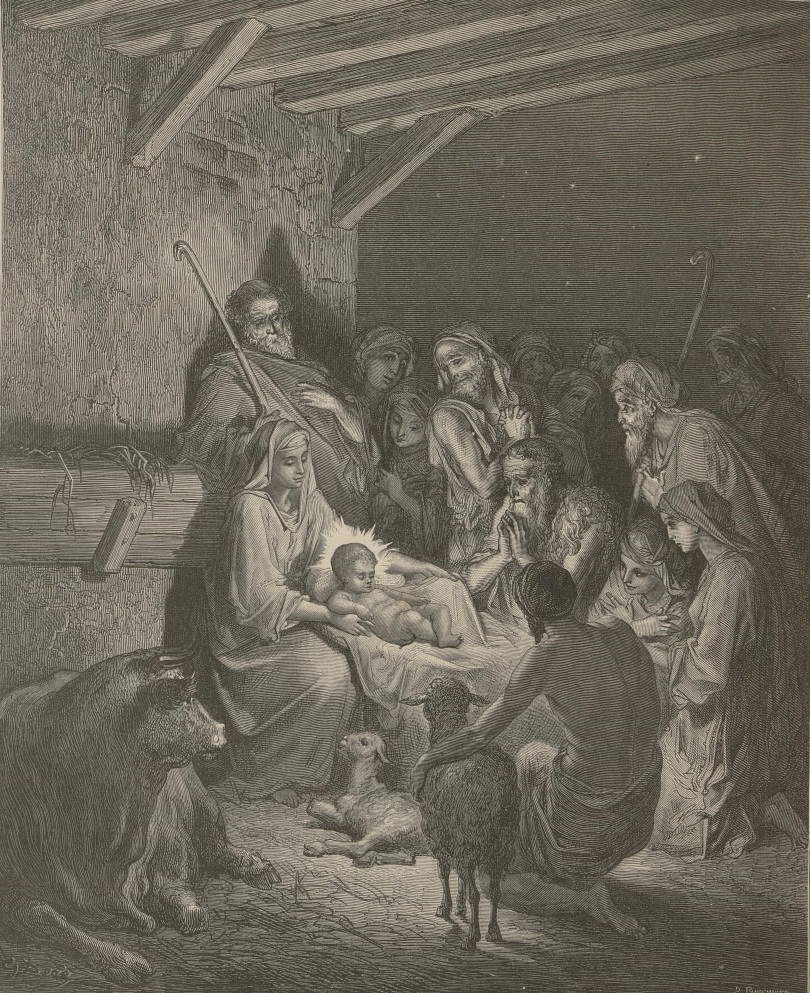
Christmas Eve is always the most magical, mystical part of Christmas time.  Popular depictions of Jesus’ Birth take place, presumably, on Christmas Eve—the angels bursting into the black, silent night above Bethlehem.  The whole event is supernatural—the Virgin Birth, the Star guiding the way to the manger, the angels appearing to the shepherds and singing.  Tradition has it that even the animals in the manger talked at the moment of Christ’s birth (at exactly midnight, of course).  If the rocks can cry out, singing praises to Him, why not some donkeys?

Read More »

Napoleonic Christmas

It’s Christmas Week!  And what a glorious week it is.  It’s been raining persistently in South Carolina since Sunday morning, but I’m enjoying the coziness of the hygge—warm coffee and lazy reading.

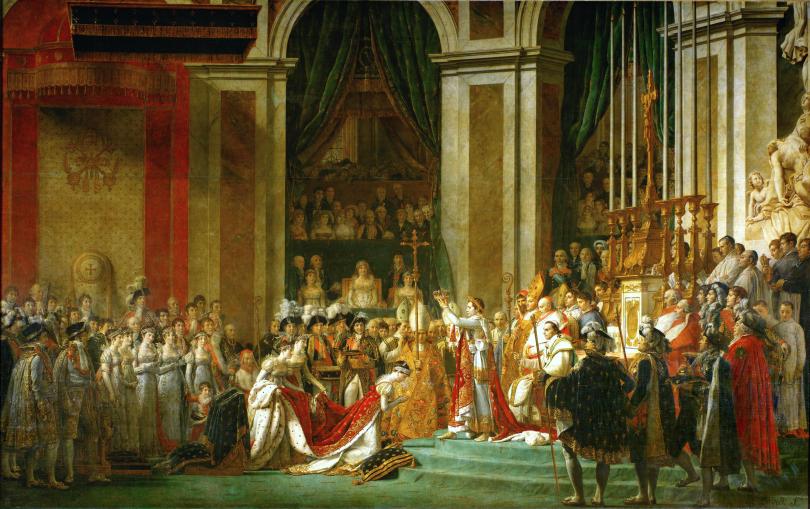
PragerU had a little video up this morning from historian Andrew Roberts about Napoleon.  It’s an interesting take on the not-so-short French emperor—an apologia, really (for those that prefer reading—as I often do—to watching videos, here is a PDF transcript).

Roberts argues that Napoleon was not the necessary precursor to Hitler, et. al.; rather, Napoloen was “sui generis“—a man unto himself.  While I believe the ideas of the French Revolution did unleash the totalitarian forces of Hitlerism, Stalinism, Maoism, and all the rest—a murderous, bloody Pandora’s Box—I’ve never considered Napoleon among their ranks.

Read More »