Walkin’

Yesterday morning, longtime Nebraska Energy Observer contributor Audre Myers shared a charming post, “Walking …“—a reflection of the late 1960s and Woodstock.  Regular commenter Scoop posted an achingly nostalgic response that sums up the significance of Woodstock to that cohort of early Boomers—it was the last incandescent burst of rock ‘n’ roll’s triumph before petering out in the 1970s (which, I would argue, is when hard rock got good).

The tug of nostalgia is a strong one.  I’m only thirty-five, and I already feel it from time to time.  Indeed, I’ve always been a sucker for nostalgia, which a psychologist might argue is one of the reasons I studied history.  Perhaps.  I also just enjoy learning trivia.

Regardless, Audre’s post caught my attention because I have been contemplating the literal, physical act of walking lately (although I often take metaphorical strolls down memory lane, too).  I’ve put on a bit of weight in The Age of The Virus, so I’ve taken up walking as a way to complement a regimen of calorie counting (which is more of a loose, back-of-the-envelope calorie guesstimate each day).

I’m trying to get in around two miles of focused walking a day, mostly around Lamar.  Although work commitments don’t always make that possible, I do find that simply going about my work results in around two miles of walking in aggregate.  I’m curious to see what my step totals will be once the school year resumes, and I’m dashing about between classes, pacing the rows of students, and striding across the boards as I teach.

I’m not a runner, by any means.  My older brother loves to run, and has the physique to show for it.  More power to him, but I know myself well enough to know it’s not something I want to do.  Runners swear oaths to running’s efficacy and delights, but gasping for breath in 100-degree weather with maximum humidity doesn’t appeal to me.  Walking at a brisk clip in that weather, though, is at least bearable—once I’ve embraced the stickiness and the sweat, I can go for a couple of miles easily, and sometimes three or four.

Read More »

Rest in Peace, Herman Cain

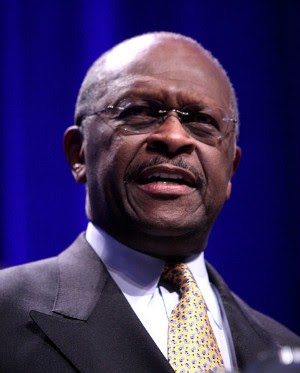
Yesterday, former Godfather’s Pizza CEO and 2012 Republican presidential primary candidate Herman Cain passed away after a long struggle against The Virus.  Cain was 74.

Breitbart calls Cain a “Conservative firebrand,” which was apparent to anyone following the crowded 2011-2012 Republican presidential primaries.  Like 2016, that was a crowded primary field, with tons of conservative darlings and Establishment types alike jumping into the field.  Back in those days, everybody thought Barack Obama was going to be the next Jimmy Carter—an ineffectual, overly-progressive one-termer.  The economy stunk, Obama seemed out of his depth, and conservatives were united and motivated to get out and vote.

Herman Cain quickly set himself apart from the rest of the crowd, though—he wasn’t a career politician, but a successful businessman (according to John Derbyshire, Cain is also somewhat a mathematical genius).  He put out his bold “9-9-9 Plan“—flat, nine percent national sales, income, and corporate tax rates.  Cain’s reasoning:  “If ten percent is good enough for God, nine percent is good enough for the federal government.”  Yes, it was a bit far-fetched, but it was catchy, and in an era of high corporate and income taxes—both of which undermined American business competitiveness domestically and abroad—it resonated with voters.  The implicit reference to the biblical tithe also let voters know Cain was a devoted Christian, which was a welcome change from the open hostility of the Obama administration to religious liberty.

Read More »

TBT: Ideas Have Consequences – Introduction

Yesterday was the last session of the Summer 2020 History of Conservative Thought course.  This summer marks the second run of the course, and it was a fantastic class.  I had three young men enrolled, all quite eager to dive into the material.

I try to avoid lengthy lectures in HoCT, giving the basic background information and scaffolding necessary to put the readings into context.  I want the works to speak for themselves, and for the students to the do the heavy lifting of sussing out meaning and the author’s ideas.  Each week students wrote a short essay or answered a few different guided questions, then we would come in and discuss the material.

With this summer’s group, that model worked very well, as two of the young men in particular loved to plunge into discussions and ask questions.  One of the students was concurrently taking a colleague’s popular Terror and Terrorism course, which leads off each summer with the French Revolution.  That always dovetails nicely with our discussion of Edmund Burke, as we read several excerpts from his Reflections on the Revolution in France.  Burke comes on the heels of our discussion of Russell Kirk’s conservative principles, and helps frame the early portion of the course in the Burkean tradition.

In July, we left the nineteenth century and began looking at the modern conservative movement, with a heavy emphasis on William F. Buckley, Jr., and the notion of fusionism.  Buckley’s National Review catches a good bit of flack on the Right these days, including from this blog, but it truly shaped conservatism in the second half of the twentieth century.  Before National Review, conservatism was a disorganized, disunited hodgepodge of various ideologies, movements, and issues—it was, as Lionel Trilling put it, a “reactionary impulse,” a grumpy attitude about the way things were, but without a cohesive understanding of how to combat the dominance of New Deal liberalism.

For all its noodle-wristed hand-wringing and desperate virtue-signalling today, National Review created the modern conservative movement by giving conservatives their voice, their publication.  It also gave conservatism a politically viable platform of issues that could win in national politics.  That focus on nationalism certainly cuts against the Kirkean/Burkean mold of organic, ordered liberty, but it was the reality of post-war American political life.

We ended with another mid-century conservative, but one fitting far more into the spiritual and moral mold of Burke and Kirk, and far less in the neoliberal and materialist mold of Buckley-style fusionism:  Richard Weaver’s seminal Ideas Have Consequences, which I consider one of the greatest books ever written.  Indeed, I’m a bit of a Weaver fanboy, as he’s been featured twice on my Summer Reading Lists, first in 2016 for Ideas Have Consequences, and again in 2020 for his collection of Southern Essays.

For the course, we just read the “Introduction” to the book, which I try to read every August before school resumes.  It reminds me why I teach, and what is at stake.  Reading Ideas Have Consequences—first published in 1948—today reads like prophecy fulfilled.  Weaver’s core focus on William of Occam as the source of modernity and its related ills might seem a bit far-fetched, but that’s merely the germ from which the analysis of modernity’s fallen view of the world grows.

The real heart of Ideas Have Consequences is the abandonment of the transcendental—of God—in favor for navel-gazing particularism, a constant focus on lower, material concerns.  Unbound from any obligation to or belief in a transcendental moral order, men are left adrift in a world full of isolation, alienation, confusion, and meaninglessness.

I’ll let the rest speak for itself.  Here is 29 July 2019’s “Ideas Have Consequences – Introduction“:

Read More »

#MAGAWeek2020: Calvin Coolidge

This week is , my celebration of the men, women, and ideas that MADE AMERICA GREAT!  Running through this Friday, 10 July 2020, this year’s posts will be SubscribeStar exclusives.  If you want to read the full posts, subscribe to my SubscribeStar page for as little as $1 a month.  You’ll also get access to exclusive content every Saturday.

Americans have come to expect action-packed, robust presidents, those like Theodore Roosevelt, who enjoyed two parts in (here and here).  We want our presidents to be like Harrison Ford in Air Force One:  ready to take down the terrorists, saving his family and his country, single-handedly.

Part of that is a symptom of the aggrandizement of federal and executive power at the expense of States’ rights and legislative authority.  Indeed, Theodore Roosevelt is to blame, in part, for that centralization, though certainly not alone (his cousin Franklin did far more damage in that regard).  He’s also responsible—again, in part—for our vision of the president as a man of action.

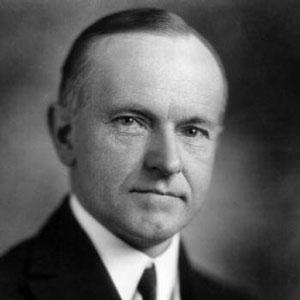
So today’s feature provides a counterpoint to the charismatic, blustering force of TR.  He is a president who, to paraphrase historian Amity Shlaes, resisted the calls to “do something,” and instead did “nothing.”  He is largely forgotten today, although his connection to tax cuts brought him back to popular attention in 2017.

Today, celebrates the life and presidency of a man of few words, but of great significance:  Calvin Coolidge.

To read the rest of today’s post, head to my SubscribeStar page and subscribe for $1 a month or more!

TBT^4: Happy Birthday, America!

It’s a bit late to commemorate Independence Day (and I did it already on Saturday), but it’s (read installments here, here, and here), and it seemed fitting to dedicate this edition of TBT to America’s Birthday.

I’m reblogging a reblog of a reblog from the old site.  Last year’s post was “TBT^2,” or “TBT Squared.”   Well, to be mathematically consistent, I had to square that square, which I think makes it “TBT^4,” or “TBT to the power of four.”  I sure hope I’m right.  Regardless, next year will be “TBT^16,” and so on.

I like the layer of commentary, like my piddling blog posts are Talmudic commentaries on other rabbinical commentaries (or, since I’m Christian, Biblical commentaries on other Biblical commentaries of the Bible).  It’s interesting seeing how what’s changed over the years in this throwback posts.

For example, last Independence Day I had my first SubscribeStar subscriber.  That was fun!  I was also in New Jersey—one of the nicer trips I’ve taken.  This year, it was a Southern Fourth, with lots of barbecue and hash.

On a more somber note, America has seen better days—but also far worse.  I have to remind myself of that latter point, as it’s easy to get black-pilled and give into despair.  It’s a commentary on the softness of my own life that today’s ructions—piddling when compared to conflicts of the past—seem insurmountable.

But even if America is on the rocks in some areas, God is still in control.  We’re still the greatest country in the world, despite what the BLM and AntiFa ingrates think.  To be quite frank, if they hate America so much, they’re welcome to move.

With that, here are past Independence Day posts:

“TBT^2: Happy Birthday, America!” (2019)

It’s Independence Day in the United States!  God Bless America!

I hope everyone has been enjoying #MAGAWeek2019.  Remember, you can read those full entries only on SubscribeStar with a $1/mo. or higher subscription.  Your subscription also includes exclusive access to new content every Saturday, as well as other goodies from time to time.

I’m happy to announce, too, that I have my first subscriber.  You, too, can support my work for just $1 a month (or more).  That’s the price of a large pizza if you paid for it over the course of an entire year—you can’t beat that!

In case you’ve missed them, so far has commemorated our second President, John Adams; our first Secretary of Treasury, Alexander Hamilton; and our national cuisine, fast food.  You can also check out all of #MAGAWeek2018’s entries.

This Fourth of July I’m in New Jersey, and spent a great day yesterday at Coney Island in New York City.  Despite not liking rollercoasters, I rode the historic The Cyclone, which was first constructed in 1927.  I also visited the New York Aquarium, and tried a cheese dog at the original Nathan’s Famous hot dog stand, the one that will host America’s favorite hot dog-eating contest today.  It was all quite touristy, but very fun.

To commemorate the Fourth of July, I’m reheating last year’s TBT feature, itself a reblogging of a classic Fourth of July post from 2016.

Enjoy your independence, and God Bless America!

–TPP

“TBT: Happy Birthday, America!”  (2018)

Two years ago, I dedicated my Fourth of July post to analyzing Lincoln’s Gettysburg Address.  In the spirit of MAGA Week 2018—and to preserve the TPP TBT tradition—I’m re-posting that classic post today.

A major theme of the blog posts from that summer was the idea of America as a nation, an idea I still find endlessly compelling.  The election of President Trump in November 2016 has reinvigorated public debates about the nature of American nationalism, as well as revived, at least partially, a spirit of unabashed patriotism.

As a child, I took it for granted that America was a special place.  When I learned American history as a child, I learned the heroic tales of our Founders.  While revisionist historians certainly have been correct in pointing out the faults of some of these men, I believe it is entirely appropriate to teach children—who are incapable of understanding such nuance—a positive, patriotic view of American history.  We shouldn’t lie to them, but there’s nothing wrong with educating them that, despite its flaws, America is pretty great.

“Happy Birthday, America!” (2016)

Today the United States of America celebrates 240 years of liberty.  240 years ago, Americans boldly banded together to create the greatest nation ever brought forth on this earth.

They did so at the height of their mother country’s dominance.  Great Britain emerged from the French and Indian War in 1763 as the preeminent global power.  Americans had fought in the war, which was international in scope but fought primarily in British North America.  After Britain’s stunning, come-from-behind victory, Americans never felt prouder to be English.

Thirteen short years later, Americans made the unprecedented move to declare their independence.  Then, only twenty years after the Treaty of Paris of 1763 that ended the French and Indian War, another Treaty of Paris (1783) officially ended the American Revolution, extending formal diplomatic recognition to the young United States.  The rapidity of this world-historic shift reflects the deep respect for liberty and the rule of law that beat in the breasts of Americans throughout the original thirteen colonies.

America is founded on ideas, spelled out in the Declaration of Independence and given institutional form and legal protection by the Constitution.  Values–not specific ethnicity–would come to form a new, distinctly American nationalism, one that has created enduring freedom.

***

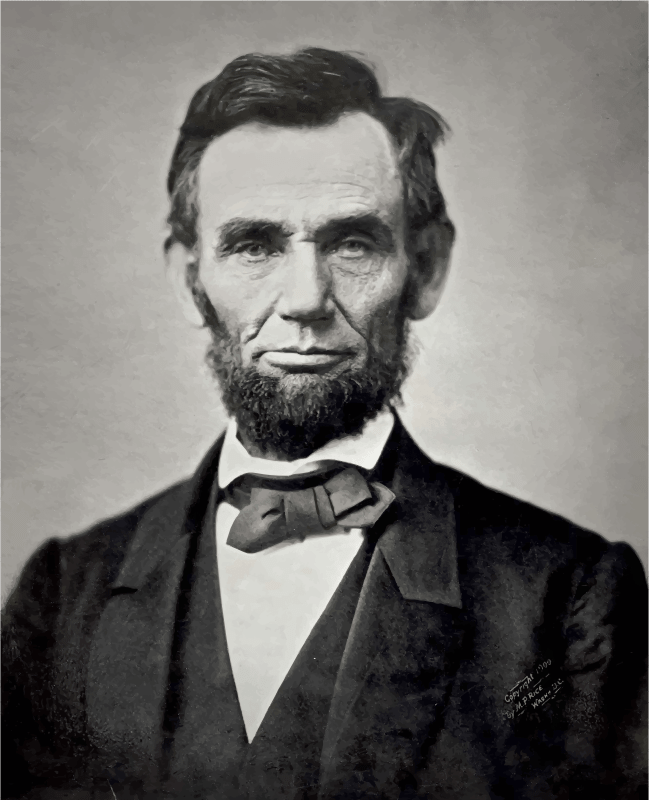
Rather than rehash these ideas, however, I’d instead like to treat you to the greatest political speech ever given in the English language.  It’s all the more remarkable because it continues to inspire even when read silently.  I’m writing, of course, about Abraham Lincoln’s Gettysburg Address.  Here is the transcript (Source:  http://www.gettysburg.com/bog/address.htm):
“Four score and seven years ago, our fathers brought forth on this continent a new nation: conceived in liberty, and dedicated to the proposition that all men are created equal.“Now we are engaged in a great civil war. . .testing whether that nation, or any nation so conceived and so dedicated. . . can long endure. We are met on a great battlefield of that war.“We have come to dedicate a portion of that field as a final resting place for those who here gave their lives that that nation might live. It is altogether fitting and proper that we should do this.

“But, in a larger sense, we cannot dedicate. . .we cannot consecrate. . . we cannot hallow this ground. The brave men, living and dead, who struggled here have consecrated it, far above our poor power to add or detract. The world will little note, nor long remember, what we say here, but it can never forget what they did here. It is for us the living, rather, to be dedicated here to the unfinished work which they who fought here have thus far so nobly advanced.

“It is rather for us to be here dedicated to the great task remaining before us. . .that from these honored dead we take increased devotion to that cause for which they gave the last full measure of devotion. . . that we here highly resolve that these dead shall not have died in vain. . . that this nation, under God, shall have a new birth of freedom. . . and that government of the people. . .by the people. . .for the people. . . shall not perish from the earth. “

 ***
The Gettysburg Address is elegant in its simplicity.  At less than 300 words, it was a remarkably short speech for the time (political and commemorative speeches often ran to two or three hours).  Yet its power is undiminished all these years later.  President Lincoln was only wrong about one thing:  the claim that the “world will little note, nor long remember, what we say here” has proven untrue.
I will likely write a deeper analysis of the Address in November to commemorate its delivery; in the meantime, I ask you to read and reread the speech, and to reflect on its timeless truths.
God Bless America!
–TPP

To read different versions of the Gettysburg Address–there are several versions extant–check out this excellent page from Abraham Lincoln Online:  http://www.abrahamlincolnonline.org/lincoln/speeches/gettysburg.htm.

#MAGAWeek2020: Theodore Roosevelt, Part II

This week is , my celebration of the men, women, and ideas that MADE AMERICA GREAT!  Running through this Friday, 10 July 2020, this year’s posts will be SubscribeStar exclusives.  If you want to read the full posts, subscribe to my SubscribeStar page for as little as $1 a month.  You’ll also get access to exclusive content every Saturday.

Yesterday featured Part I of this two-part biography of President Theodore Roosevelt.  Part I dealt largely with Roosevelt’s life and achievements outside of the presidency; today’s post will examine his accomplishments as President of the United States.

Upon the death of William McKinley—a great, if now neglected, president in his own right—the young Theodore Roosevelt ascended to the presidency.  Old Guard Republicans had sought to smother Roosevelt’s career in national politics with a long, dull tenure as Vice President.  Now—thanks to the tragedy of an assassin’s bullet—Roosevelt took the “bully pulpit.”

Roosevelt was a Progressive, in the context of the time—he embraced a number of ideas Progressive reformers pushed—but he was also fundamentally conservative.  Roosevelt sought to conserve America’s promise of a “square deal to every man,” a promise that was seriously threatened.

To read the rest of today’s post, head to my SubscribeStar page and subscribe for $1 a month or more!

#MAGAWeek2020: Theodore Roosevelt, Part I

This week marks the beginning of , my celebration of the men, women, and ideas that MADE AMERICA GREAT!  Starting today (Monday, 6 July 2020) and running through this Friday, 10 July 2020, this year’s posts will be SubscribeStar exclusives.  If you want to read the full posts, subscribe to my SubscribeStar page for as little as $1 a month.  You’ll also get access to exclusive content every Saturday.

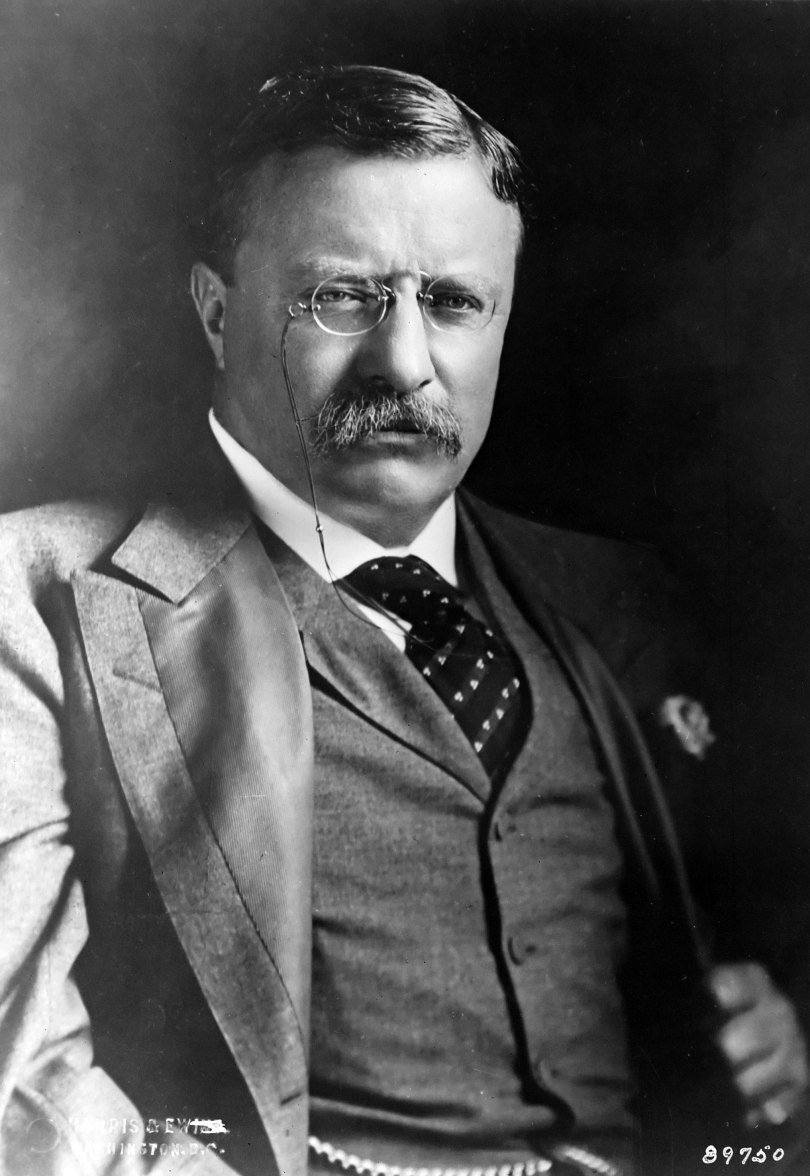
It’s that time of year again—a week of posts!  This year, I’m kicking off the festivities with America’s youngest and most dynamic president, Theodore Roosevelt.

Roosevelt’s presidency, like that of the similarly charismatic and action-packed Andrew Jackson, is a source of controversy among conservatives.  He was very clearly a Progressive Republican, and pushed for some of the measures that have created so many difficulties for conservatives and our nation today.  He used the power and influence of his office—his “bully pulpit”—to intervene in the economy, primarily by busting up “trusts,” major monopolistic companies with immense economic and political influence.

In light of the current dominance of Big Tech oligarchs and officious technocrats in the government and private sector, however, conservatives would do well to reassess Teddy Roosevelt’s presidency.  While conservatives typically abhor excessive federal activity and intervention, Roosevelt’s robust execution mitigated the worst excesses of the Gilded Age robber barons and renewed the promise of a “Square Deal” for every American.  For that reason and more, he should be celebrated for Making America Great Again.

To read the rest of today’s post, head to my SubscribeStar page and subscribe for $1 a month or more!

SubscribeStar Saturday: Independence Day 2020

Today’s post is a SubscribeStar Saturday exclusive.  To read the full post, subscribe to my SubscribeStar page for $1 a month or more.  For a full rundown of everything your subscription gets, click here.  NEW TIER: $3 a month gets one edition of Sunday Doodles every month!

America turns 244-years old today.  We’re living through a moment that is unusually difficult, as racial grievance mongers and hipster terrorists loot cities and topple statues.  Even Mount Rushmore, where President Trump gave a powerful speech last night, is under attack—some defeated tribe sees it as a legacy of white imperialism (which, let’s be honest, ended millennia of Neolithic tribal warfare).

But America survived worse than our present crisis.  We went through a similar—and, to the discredit of today’s milquetoast (yet, to be clear, still dangerous) activists, far bloodier and gutsier—wave of radical upheaval in the 1960s and the 1970s.  We saved Europe in two World Wars.  We endured the Great Depression—and many other economic downturns.  We’ve been through four presidential assassinations (Lincoln, Garfield, McKinley, and Kennedy).  We reconciled following a protracted and brutal civil war.

It’s easy to forget sometimes, when the Leftist mobs and their corporate and governmental enablers seem so dominant, that America has conquered far greater crises than these current ructions.  What we have achieved before, we can achieve again.

To read the rest of this post, subscribe to my SubscribeStar page for $1 a month or more.

TBT: Southern Conservatism: John Randolph of Roanoke

A lodestar of modern conservatism is that the federal government is too powerful and overreaching, and that power should be devolved back to the States and local governments.  That such devolution rarely occurs, even under Republican presidents, is just further evidence of how entrenched the bureaucratic class is within the Beltway swamp.  It’s easy to see the extension of federal power since the New Deal programs of the 1930s and the government’s control of the economy during the Second World War, followed by Johnson’s Great Society and various big government schemes to solve our problems.

But these concerns about the growth of federal power are not new, and there were already grumblings about them in the earliest years of the Republic.  In yesterday’s History of Conservative Thought session, we analyzed John Randolph of Roanoke‘s “King Numbers” speech, in which the aging but feisty Virginia decried the overreach of federal power—in 1830!

The occasion for Randolph’s speech was the Virginia Constitutional Convention of 1829-1830, in which the State sought to revise its constitution with a number of—as Randolph called them—“innovations,” including age requirements to serve in the Virginia House of Delegates (25) and the State Senate (30).  Another proposed change was the elimination of property qualifications to vote.

Randolph vehemently opposed these reforms on the grounds that the Virginia Constitution in its then-current form was the greatest charter of government ever conceived, and that it had been wholly sufficient in serving as the sole block on the expansion of federal power.  Randolph also argued that the US Constitution, rather than dealing with the external issues of national defense and regulating foreign affairs and commerce, had instead turned its focus inwards, seeking to regulate the States.

It’s fascinating to read now, nearly two hundred years later, Randolph’s antebellum arguments against the aggrandizement of federal power, at a point when the federal government under the Constitution was barely forty-years old.  One of Randolph’s most interesting points was that, regardless of what the Constitution said it was designed to do, the reality was much different.

One of the students asked what Randolph would think if he saw things today, and I said, “He’d probably have a stroke.”  Far from being the last stand against and check on federal authority, Virginia now is the compliant handmaiden to federal expansion, as Northern Virginia is the home of the Swamp People that operate the federal bureaucracy.

It’s unfortunate that we’ve forgotten Randolph today.  Even in his own time, he was considered somewhat of an eccentric.  But eccentrics make life interesting, and this one certainly issued some strong warnings, even at that early date, about the danger of excessive federal power and the erosion of States’ rights.

With that, here is 24 June 2019’s “Southern Conservatism: John Randolph of Roanoke“:

As my History of Conservative Thought course rolls on, I’m learning more about the forgotten byways and overgrown, stately ruins of the various branches of conservatism.  Students this week are reading a couple of documents from John Adams and Alexander Hamilton, the two founders of the Federalist Party, and key to the passage of the Constitution.  Hamilton, the author of the bulk of the pro-ratification Federalist Papers, also created the financial system upon which the United States functions today.

Hamilton and Adams have both enjoyed renewed interest in recent years, Hamilton due to the smash Broadway musical about his life, and Adams from a critically-acclaimed HBO series (one that, sadly, takes some unnecessary artistic license with the past).  In the case of Hamilton, American history students are often enthusiastic to get to him in my AP US History course, and Hamilton mega-fans often know more about the first Secretary of Treasury than I do.

But we’re reading a speech from another important figure from American history, albeit one largely forgotten:  John Randolph of Roanoke.

Randolph of Roanoke, sometimes considered the “American Burke,” was part of the Virginia planter aristocracy and a staunch republican, in the sense that he opposed centralization of power while supporting a strict interpretation of the Constitution and a limited government at every level.  He was one of the so-called “Old Republicans,” a group within the dominant Democratic-Republican Party of the Jeffersonian and Jacksonian era that adhered strictly to the Constitution, and which believed the States possessed a check on the federal government’s power.

He was also a traditionalist, and his powerful “King Numbers” speech at the Virginia Constitutional Convention in 1829-1830 represents a hearty endorsement of conservative principles, prudently applied.

Randolph of Roanoke makes several important points in the speech, but two stick out to me immediately:  his detestation for the tyranny of majority (the “King Numbers” referenced throughout the speech), and his love of Old Virginia.  On the latter point, he was quite eloquent:  not only did he argue that Virginia was a bulwark against an overreaching federal government (remember, he’s making this point in 1830), he also notes that its constitution was entirely sufficient to the task.

He argues early in the speech that there is no need to change Virginia’s constitution, because no one had brought any provable objections against it!  It’s the essence of a conservative argument.  Further, Randolph of Roanoke decried the mania for what he called “innovation,” a kind of reform-for-reform’s-sake, at the expense of the tried-and-true.

As to the tyranny of the majority, Randolph of Roanoke points in “King Numbers” to the absurdity of giving some men or factions greater power simply because they can win by one or two votes.  He uses examples—unfamiliar to many modern readers—of the Tariff of 1816 (one of my tariffs the Southern planters and yeoman farmers alike found odious and burdensome) and the Missouri Compromise of 1820, the latter passing by a mere two votes.

We praise “democracy” now, but the Founders of our nation feared unbridled democracy as a form of mob rule, which would inevitably yield tyranny at the hands of a charismatic demagogue.  Randolph of Roanoke makes the rather compelling point that even in representative government, mere majoritarianism can be quite destructive, as the side with the majority actually benefits if it can seize that majority by a narrow margin:  that’s just more of their opponents who lose!

Randolph of Roanoke, like many men of his time and station, was an unapologetic defender of slavery, which likely accounts for part of his fall from our curricula (although he emancipated all of his slaves upon his death).  His anti-nationalism (in the sense that he was opposed to a powerful federal government) is also at odds with the prevailing trend in American history textbooks to applaud whenever the national government aggrandized itself at the expense of the States.

Regardless, we would do well to read him again.  He was, even for his time, a bit of an oddball, but his quick wit and vast depth of knowledge, as well as his love his State (he believed Virginia was the great inheritor of Greco-Roman and British Common Law) were inspiring to his fellow Virginians.  They could be inspiring for us, too, and all lovers of liberty.

Fifty Years of Radical Violence

On the Right, we tend to point to the 1960s as the decade when everything went wrong—the rise of the counterculture, the anti-war movement, the radicalization of campuses.  Or we’ll look back to the Progressive Era of the first two decades of the twentieth century, or the Frankfurt School that introduced “Cultural Marxism” to our universities.  Deep students of ideological infiltration will point to the American infatuation with German Idealists and the German model for higher education.

But in focusing so intensely on the 1960s, we overlook the following decade—the sleazy, variety show-filled 1970s.  Of course, what we think of as the cultural and social upheaval of the 1960s really occurred mostly in early 1970s.  Indeed, I suspect that so much of the romanticizing (on the Left) of the 1960s is because of the Civil Rights Movement, which now holds a place of uncritical holiness in our national mythology.  It probably also has to do with the dominance of early Baby Boomers in media and the culture for so long—they built the counterculture, and they still idealized their youthful misadventures as tenured radicals.

Regardless, good old Milo posted a link on his Telegram feed urging followers to “Read this.”  “This” was a book review, of sorts, of Days of Rage: America’s Underground, the FBI, and the Forgotten Age of Revolutionary Violence by Bryan Burrough.  In his review of the book, author Brian Z. Hines writes that

Days of Rage is important, because this stuff is forgotten and it shouldn’t be. The 1970s underground wasn’t small. It was hundreds of people becoming urban guerrillas.  Bombing buildings: the Pentagon, the Capitol, courthouses, restaurants, corporations. Robbing banks. Assassinating police. People really thought that revolution was imminent, and thought violence would bring it about.

Read More »