Gig Day III: Spooktacular

It’s been a pretty wild week; by “wild,” I mean that I’ve spent most of my time during the day working, only to stay up too late playing Heroes of Hammerwatch ($11.99 on Steam), a grinding rogue-like, with my brother and friends.  Talk about burning the candles at both ends.  I also just finished grading a massive stack of quizzes—just in time for a massive stack of tests to rise in their place.

Grading papers is a bit like the mythical hydra in that regard—lop off a few heads, and dozens take their places.  It is easily my least favorite part of the teaching profession.

Regardless, the wild week is going to end on a spooktacular note:  tonight I’m dusting off the keyboard and, for the first time in a few months, playing one of my legendary (and legendarily poorly-attended) coffee shop concerts.

Read More »

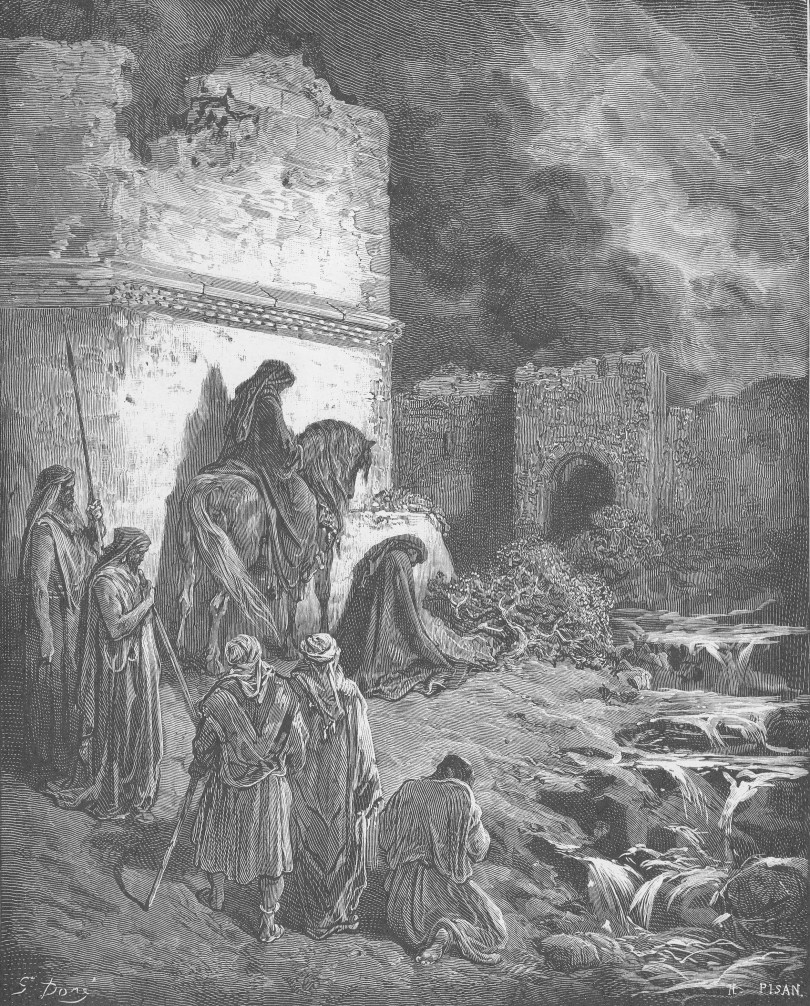
TBT: Nehemiah and National Renewal

In keeping with the unofficially churchy theme of two of this week’s posts (here and here), it seemed like a good opportunity to look back at a post from February about Nehemiah.  In “Nehemiah and National Renewal,” I explored the impact of Nehemiah’s faithful reconstruction of Jerusalem’s collapsed wall in terms of the national renewal it brought (and the spiritual renewal that came with it in a follow-up post):

This past Wednesday, I was asked to fill in for the pastor at the small church I attend.  Being such a small church—our average Sunday morning attendance is about forty—the pastor works another job, and he had a rare business trip.  I suppose he figured he could do worse than asking a high school history teacher to fill in for him.

Fortunately, the lesson was fairly straightforward:  he sent me a handout on Nehemiah 1:1-11, and the focus of the lesson was on the idea of spiritual renewal.

For the biblically illiterate—a shocking number of Americans today, I’m finding (I once had a class full of philosophy students who had never heard the story of the Tower of Babel, which is pretty much Sunday School 101)—the story of Nehemiah is simple:  after an extended period of exile in Babylon, the Israelites were sent back, under the auspices of the Persian Emperor Cyrus the Great, to Jerusalem.  Cyrus sponsored the rebuilding of the Temple in Jerusalem, but the city itself, as well as its walls, remained in a state of disrepair.

There were two waves of Israelite resettlement over the span of a century, but many Israelites remained in Babylon or other parts of the Persian Empire, such as the imperial capital.  Nehemiah was one of those, and would be part of a third wave of resettlement.  He served as cup-bearer to Artaxerxes, the Persian emperor at the time.  The position of cup-bearer was an important and trusted one:  he handled the emperor’s food and drink, ensuring it was not poisoned.

Beyond serving as the royal taste tester, the office carried with it important administrative duties, and gave incredible access to the emperor.  In short, it was a position of great influence, power, and prestige, which positioned Nehemiah nicely for what was to come.

Nehemiah spoke to a fellow Israelite who was visiting the imperial capital, and was distraught to hear of the poor condition of the city and its walls.  He fell to his knees, weeping and crying out to the Lord.  Nehemiah 1 details his prayer to God, calling out in adoration; confessing his and his people’s sins; thanking God for His mercy and gifts; and supplicating God for His Will to be accomplished through Nehemiah.

Specifically, Nehemiah asked God to be used to rebuild the wall around Jerusalem.  As cup-bearer, Nehemiah was able to present his petition to the emperor, who agreed to send Nehemiah to oversee the construction project.  In addition, Artaxerxes provided lumber from the royal forest, as well as funds to bankroll the endeavor.  He also sent letters with Nehemiah detailing his endorsement of the project.

Nehemiah’s work was not finished there, and it was anything but easy.  Initially, surrounding tribes criticized and mocked Nehemiah, questioning his loyalty to Artaxerxes, and saying that rebuilding the walls was a silly waste of time and effort.

However, once the wall reached half its height, his critics began plotting violence.  The plot to attack the workers reached Nehemiah, so he divided the work crews into those building the wall, and those defending their fellow workers from attack.

Having failed to stage an attack on the workers, Nehemiah’s enemies realized that the man himself was the target—cut off the head, kill the snake.  Again, God revealed this plot against Nehemiah, and he was able to avoid assassination.

Finally, the wall was rebuilt in an astonishing fifty-two days, an incredible feat of organization, ingenuity, and faithfulness.  The naysayers were humiliated, and Nehemiah instituted a period of national and spiritual renewal among the Israelites.  His reforms purified the nation spiritually and even ethnically, as old debts were forgiven and marriages to pagan women were dissolved.

It’s a powerful story—indeed, a powerful bit of history—about trusting in God in the face of extremely difficult odds.  But Nehemiah is also a story about national renewal, and the spiritual revival that came with it.

The wall around Jerusalem served a practical purpose—defending the city and its inhabitants from attack (even though the city was under the protection of the Persian Empire, the ancient Near East was, then as now, notoriously tribal, and the collapse of an empire would lead to dozens of ethnic conflicts)—but it was also a symbol of the Israelite nation.

Indeed, the author of the handout I used Wednesday evening writes that the “enemies of Israel could say, ‘What kind of God do you serve?  Look at the mess of your Holy City?’ It was a terrible witness and was cause for reproach from non-believers.”  The poor condition of the Jerusalem and its fortifications reflected the spiritual decay and corruption of the Israelites—they had intermarried with pagan women, adopting their false gods; they were living in rubble; and their reduced condition suggested that their God—the One True God—was not Who He made Himself out to Be.

It’s a bit on the nose, but I can’t help but recognize the parallels between the United States today and Jerusalem then—and between President Trump and Nehemiah (although I think Trump is closer to Cyrus the Great in terms of his spirituality and outlook).

I’m not suggesting Nehemiah was clubbing with Eastern European supermodels.  But like Trump, he faced overwhelming resistance from other nations to his wall project.  The rest of the ancient Near East feared a strong, renewed Israel.  Nehemiah’s return to Jerusalem, and the reconstruction of the wall, led to a period of national revival, as the people regained their identity, expelled the corrosive foreign influence in their midst, and renewed their commitment to God.

America is, spiritually and culturally, in similarly dire straits today.  President Trump has presented himself as a modern-day Nehemiah, come to control our borders, enforce our immigration laws, and restore America’s greatness on the world stage.  While he has made great strides in these areas, he meets resistance, duplicity, and mockery at every turn.

The story of Nehemiah tells us, however, that the struggle is worth the slings and arrows our enemies, both foreign and domestic, will lob at us.  To President Trump, I would urge the following:  stay the course, ignore the haters, take it to God, and BUILD THE WALL!

Hump Day Hodgepodge: Testing Reflections

It’s a busy week here in the world of yours portly.  The end of the first quarter is approaching rapidly, so every spare moment has been dedicated to chipping away at a mountain of history quizzes and tests.  Needless to say, it’s slow going.

As such, school is on my mind—as it is pretty much every waking moment of August through May.  Fellow teachers will understand that teaching is a profession that consumes your mental energy constantly.

Today the school is undertaking the pre-administration of the PSAT, the l’il brother of the SAT, which I proctored this weekend.  Pre-administration is the process whereby students bubble in all of the sensitive personal information on an elaborate Scantron so they can receive their scores—and send them to the gaping maw of the academic-industrial complex.

Read More »

The Desperate Search for Meaning IV: Vanity

Continuing with yesterday’s churchy theme, today’s post deals with a sermon my pastor gave Sunday morning.  Pastor Monday (yep, that’s his name) gave an interesting sermon on one of my favorite books of the Bible, Ecclesiastes.

Ecclesiastes is a unique book in that it is a philosophical treatise.  That’s not to say the rest of the Bible is devoid of philosophy—far from it—but King Solomon’s goal in Ecclesiastes is to find the meaning of life from reason and experience, eschewing the supernatural.

In other words, Solomon seeks to find meaning in life without God.

Read More »

The Joy of Hymnals

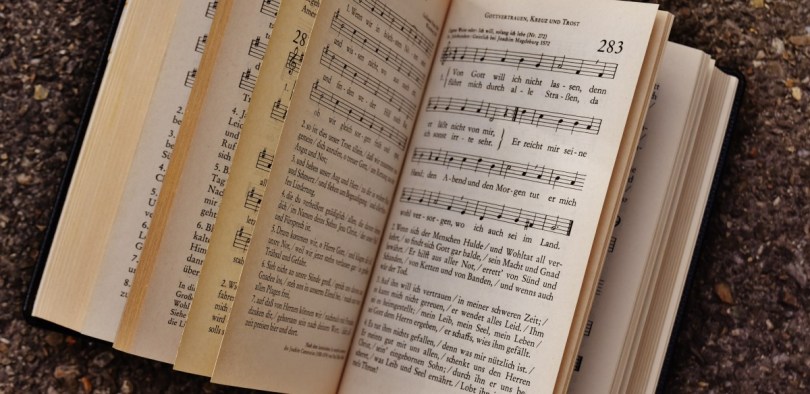
I recently started playing piano for Wednesday night and some Sunday services at my little Free Will Baptist Church.  My church has about thirty or forty attendees on a good Sunday morning, so it’s slim pickings for pianists.

The little old lady who had been playing is very feeble, and she managed to miss more accidentals than a seventh-grade clarinet player due to her failing hearing and eyesight.  As such, she was eager to pass off the monkey’s paw of church piano playing to someone else.

As such, I’ve gradually improved my sightreading.  More importantly, I’ve enjoyed the opportunity to reacquaint myself with some wonderful old hymns—and to learn some for the first time.

Read More »

Lazy Sunday XXX: Trump, Part I

It’s hard to believe we’ve reached thirty Lazy Sundays.  I’ve found these posts are an excellent way to link to multiple posts simultaneously; I’ve written so many now that I occasionally forget that I’ve written some of them, but Lazy Sunday is always there to curate and aggregate those forgotten posts.

Indeed, today’s post marks 280 days of consecutive posting.  That’s forty weeks of at least one post per day.  Noah would be getting off the Ark right about now.

So, to celebrate the thirtieth week of posts—and to honor our amazing, if embattled, President—today’s edition of Lazy Sunday is dedicated to the God-Emperor himself, Donald J. Trump.

  • Indian Man Worships Trump as a God” – This little piece was a bit of a throwaway novelty, but I still find it amusing:  an Indian gentleman devoted himself to GEOTUS so intensely, his parents moved out of the house.  I was hoping some Twitter-savvy user would get this piece to Trump or Sarah Huckabee Sanders, and President Trump could use it as an opportunity to witness to this well-intentioned-but-misguided man.
  • Mueller Probe Complete, Trump Vindicated” – The subject of a recent TBT feature, I wrote this piece when the Mueller Report first broke and all indicators were that “Russian collusion” was, at best, way overblown.  Yes, yes—Mueller insisted that Trump wasn’t “exonerated,” but he and the Democrats had to admit sheepishly that the drum they’d been beating for nearly three years was busted (not that they actually did admit that).  Of course, now they’ve just changed from one scary Eastern European country to another with tales of “Ukrainian collusion” to bolster a bogus impeachment inquiry.  Sigh.
  • Symbolism and Trumpism” – An unfortunate side effect of Protestant efficiency and pragmatism is the lack of attention to symbols, which we tend to view with suspicion—“it might be an idol!”  But symbols matter immensely to uniting a people.  That’s the key insight this piece explores, care of an American Greatness essay about Trump’s ability to understand the need for and use of unifying symbols like the National Anthem, the American Flag, and so on.
  • Trump’s Economy and 2020” – President Trump can boast a hugely successful economy, almost directly as a result of his tax cuts and regulatory reforms.  After Trump’s election, I could almost physically sense a weight lifting off my shoulders, and those of millions of Americans—and I was doing okay even in President Obama’s moribund economy.  Even in 2016, with things gradually improving from the low-point of the Great Recession in 2009, the job market seemed tight.  By the time Trump was inaugurated in January 2017, phenomenal economic growth was well underway.  Here’s hoping that buoyant economy continues to roar through 2020.
  • “#MAGAWeek2019: President Trump’s Independence Day Speech“:  This post was a Subscribe Star exclusive, so you’ll have to pay a buck to read the full thing, but it’s about how great President Trump’s Independence Day speech was.  After all the hand-wringing from the Left and the noodle-wristed Right about Trump hosting a yuge military display on the Fourth of July (see also:  “Symbolism and Trumpism“), Trump delivered a speech that reminded us of why we can be proud to be a part of this incredible, unprecedented nation.  I didn’t hear the whole “airport at Yorktown” comment, but I’m also not attuned to picking up Trump’s every minor error and calling it treason the way Leftists are.

That’ll do it for this “big league” Lazy Sunday.  Enjoy your day off, and Keep America Great!

God Bless,

—TPP

Other Lazy Sunday Installments:

SubscribeStar Saturday: SATurday

Today’s post is a SubscribeStar Saturday exclusive.  To read the full post, subscribe to my SubscribeStar page for $1 a month or more.

Continuing with a recent theme, today’s SubscribeStar Saturday post is all about what I did this weekend—well, at least this Saturday.

After a long, productive week at school—which saw my team of super nerds win their Quiz Bowl regional competition on Thursday—I woke up before the dawn to head back to school.  I signed up to proctor the SAT, the dreaded standardized test that is part of the grand kabuki theatre of higher education admissions.

To read the rest of this post, subscribe to my SubscribeStar page for $1 a month or more.

World Space Week Starts Today

It’s been a long but productive week for yours portly.  Readers will notice that, other than my recent features (yesterday and last Thursday’s posts), I’ve been mostly silent on the impeachment circus.  My general policy in this age of media perfidy is to withhold comment until the real facts have been reported.

The way everything is shaping up, my gut instincts—that there is nothing to claims that President Trump has committed impeachable offenses, defined constitutionally as “high crimes and misdemeanors”—seem validated.  Of course, that won’t stop the Democrats from expending months of energy, treasure, and rhetoric on banging the drum of impeachment.

In general, I’ve been trying to expand the focus of the blog, moving away from strictly writing about politics and politics-adjacent issues to more general interest topics.  My little piece on Saturn from a few weeks ago was enjoyable to write, and seemed to garner some positive feedback.

As such, I was excited to see that today marks the beginning of World Space Week.

Read More »

TBT: More Never Trump Treachery

With all the impeachment talk swirling, I thought it would be worth it to look back at a piece I wrote in May, focusing on squishy Michigan Congressman Justin Amash, the so-called “libertarian Republican,” as an example of the kind of bitter Never Trumpery that is champing at the bit to see President Trump impeached.

At that time, Amash argued that President Trump’s conduct was impeachable—not any actual crimes he committed, just that the way he comports himself is impeachable.  This claim coming from a guy who allegedly supports the Constitution.

Acting like a boor is not an impeachable offense.  It falls well below the bar of “high crimes and misdemeanors” set by the Constitution.  Further, President Trump’s phone calls to the Ukraine and Australia certainly fall well below that bar; I don’t even think he did anything wrong.

Read More »

The Future of Barbecue

The good folks at the Abbeville Institute have a great piece (originally published at The American Conservative) about the most beloved and controversial of Southern foodstuffs:  barbecue.

Barbecue, as author John Shelton Reed points out, is highly localized.  For me—and any true South Carolinian—the One True ‘Cue is mustard-based pulled pork barbecue from South Carolina.  It’s definitely not beef brisket or anything with ketchup.  It should come from a place that’s only open three or four days a week, and is served with hash and rice.

Unfortunately, much like the “old, weird America” whose passing John Derbyshire regularly mourns, traditional barbecue—regardless of the regional variety—is being shoved out by “mass barbecue,” the kind served up in chains that look like the inside of Uncle Moe’s Family Feedbag.

Read More »